Artwork
Woman Leaving a Bath House (from the series Pictures from Otsu)
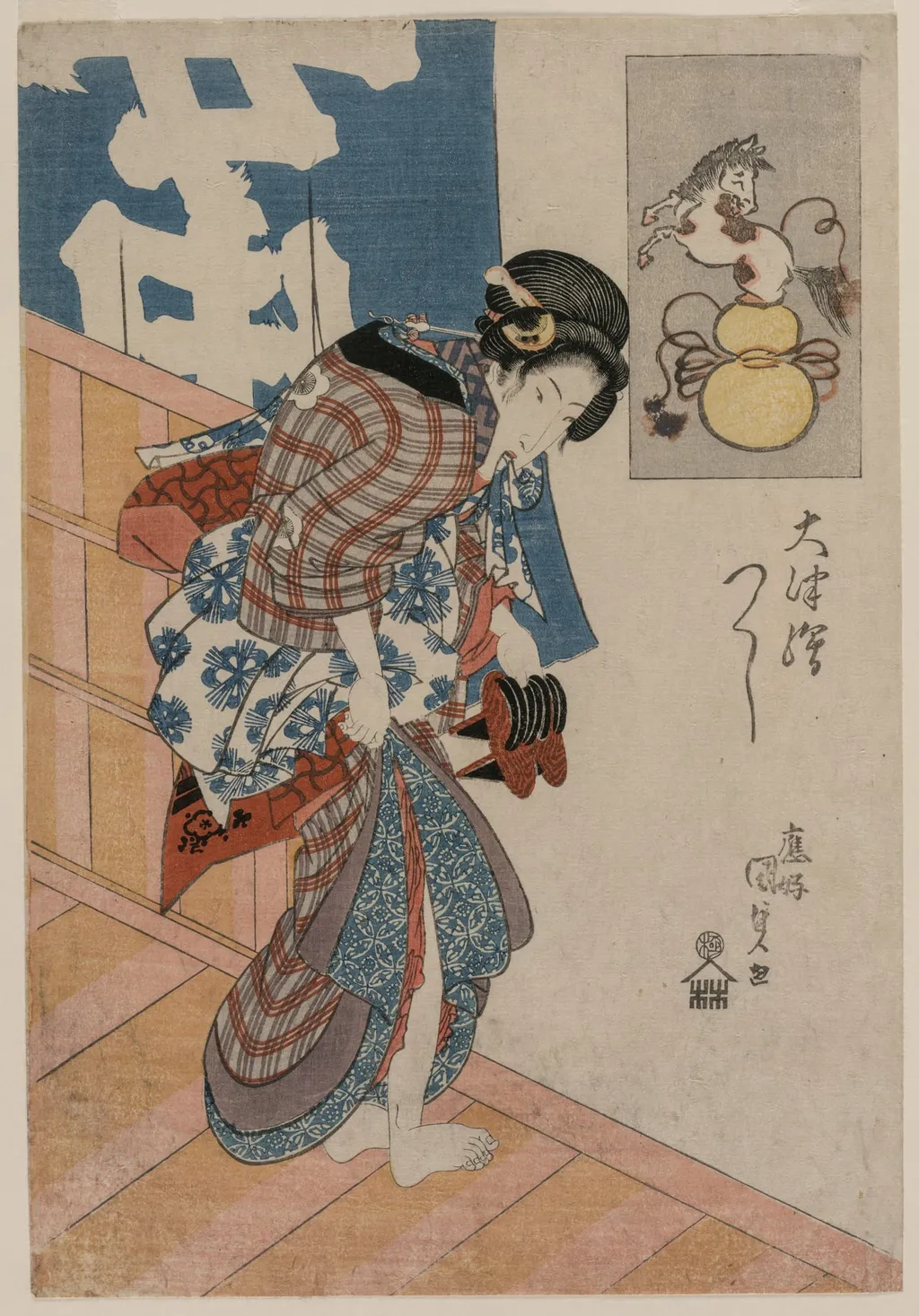
Woman Leaving a Bath House (from the series Pictures from Otsu) is a print by the Romanticist artist Utagawa Kunisada. It dates from 1824 and is held in the collection of the Cleveland Museum of Art.
- Accession no.
- 1940.711
- Credit line
- Bequest of James Parmelee
About this work
It’s a nod to an old folk tale about a magical horse that appears from a gourd.
A woman in a blue robe steps out of a wooden bathhouse, her hair still damp. The scene is quiet, just her, a lantern, and a small dog waiting.
Look at the tiny gourd in the corner. Inside, a horse’s head pokes out. It’s a nod to an old folk tale about a magical horse that appears from a gourd. People in the Edo period loved these playful, hidden stories in art.
If this makes you curious, check out more from japan, edo period (1615–1868).
Overview
Woman Leaving a Bath House is a print from the series Pictures from Otsu, depicting a serene scene of a woman exiting a bathhouse, accompanied by subtle narrative elements.
Subject & Meaning
The print shows a woman in a blue robe stepping out of a wooden bathhouse, her hair damp, with a lantern and a waiting dog nearby. A small gourd in the corner contains a horse's head, alluding to the Daoist immortal Chokaro's story, a popular motif in otsu-e folk paintings.
Technique & Style
The work features a quiet, intimate composition with selective detail, blending everyday life with a mythological reference through the gourd and horse element, characteristic of otsu-e's folk art tradition.
History & Provenance
Created during the Edo period (1615–1868), this print is part of the Pictures from Otsu series, reflecting the period's fondness for incorporating playful, hidden narratives in art.
Context
The inclusion of the horse-in-gourd motif caters to the Edo period audience's appreciation for references to folk tales and Daoist legends, adding a layer of cultural depth to the mundane scene.
Legacy
As part of the Pictures from Otsu series, Woman Leaving a Bath House contributes to the enduring interest in Edo period folk art and its unique blend of everyday life with mythological allusions.
Own this work as a print
Artist & collection

 二代目岩井粂三郎の肖像|Portrait of Iwai Kumesaburō II
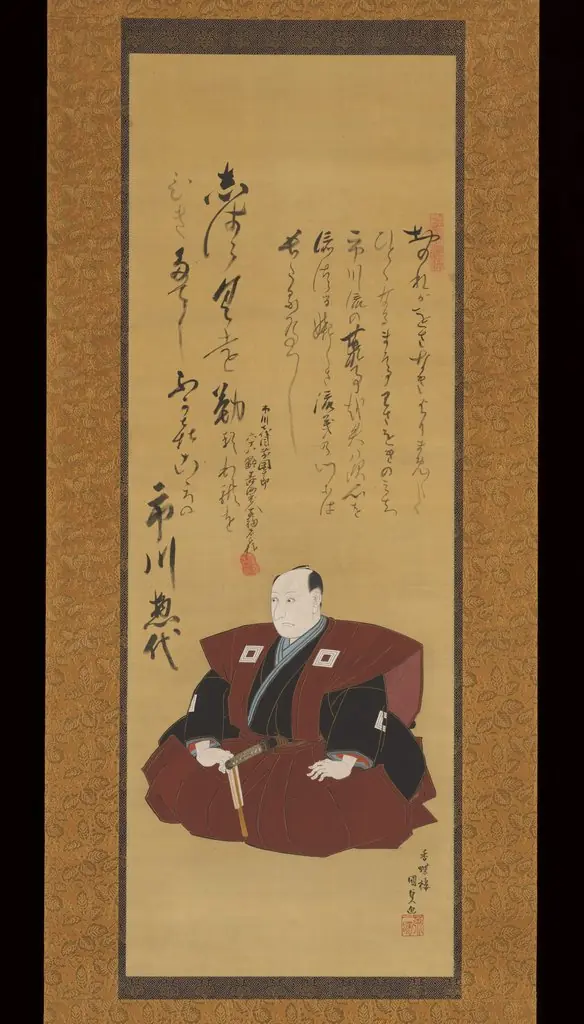 Memorial Portrait of the Actor Ichikawa Ōmezō I
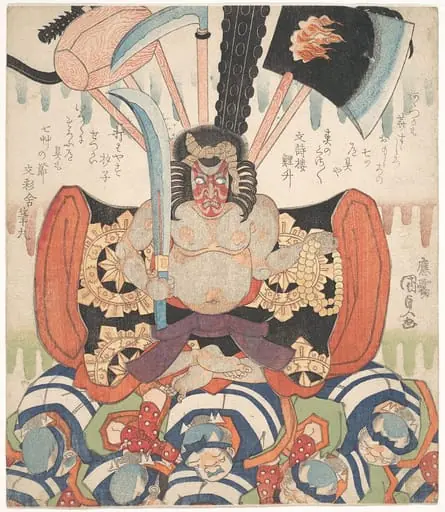 Untitled
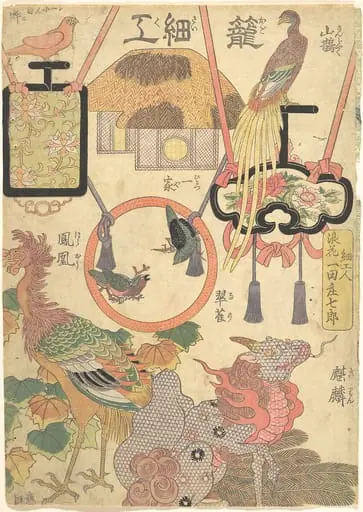 「籠細工 浪花細工人一田庄七郎」|Basketry Work: By the Craftsman Ichida Shōshichirō of Naniwa (Kagosaiku Naniwa saikujin Ichida Shōshichirō)
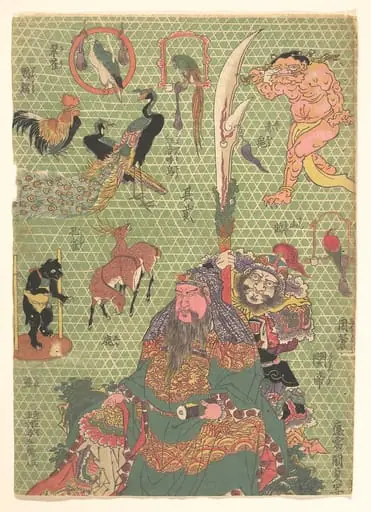 歌川国貞画 「籠細工 浪花細工人 一田庄七郎」|Basketry Work: By the Craftsman Ichida Shōshichirō of Naniwa (Kagozaiku Naniwa saikunin Ichida Shōshichirō)
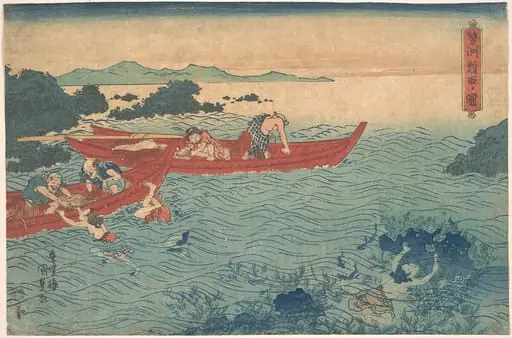 Untitled
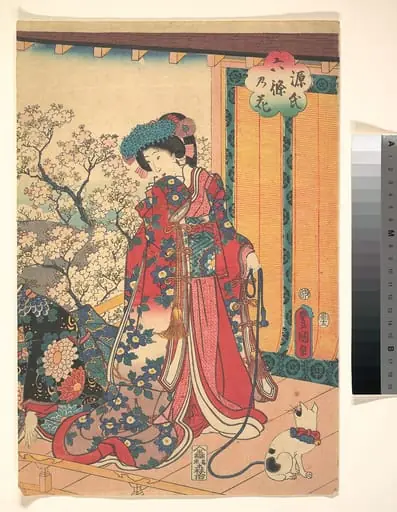 Untitled
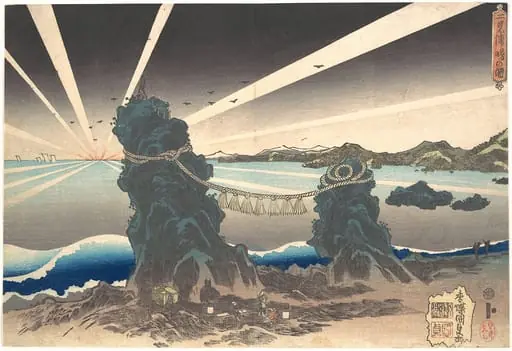 Futami-ga-ura akebono-no kuni|Futami-ga-ura Rocks at Ise, Land of Dawn
- Harumichi no Tsuraki from the series A Pictorial Commentary on One Hundred Poems by One Hundred Poets, no. 31
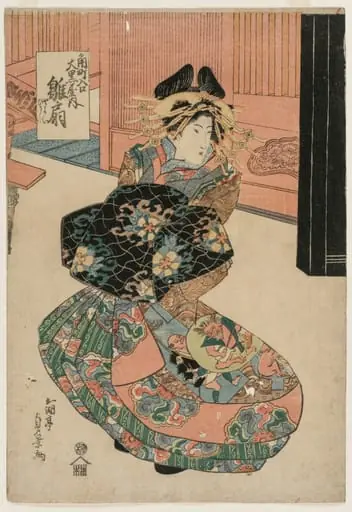 The Courtesan Hinaogi of the Daikokuya at the Entrance of Kadomachi
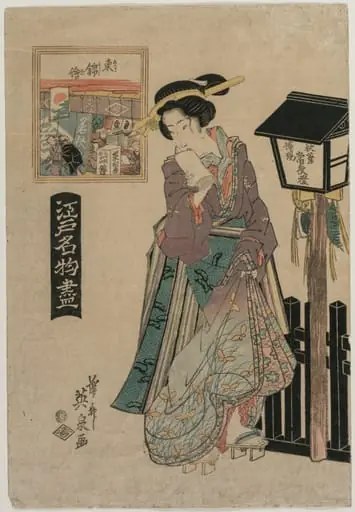 Pictures of Eastern Brocade (from the series Famous Products of Edo)
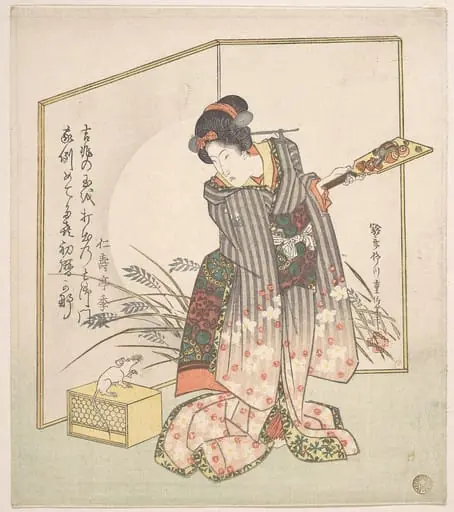 Untitled
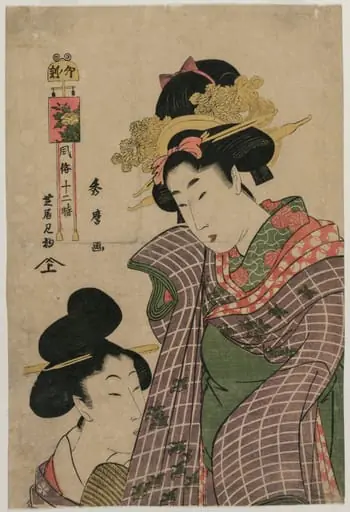 Going to the Kabuki Theater in the Hour of the Hare (From the Series The Twelve Hours with Daily Events)
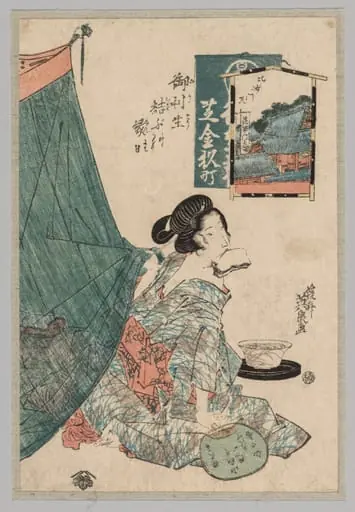 Woman with Papers in Mouth and Fan in Hand
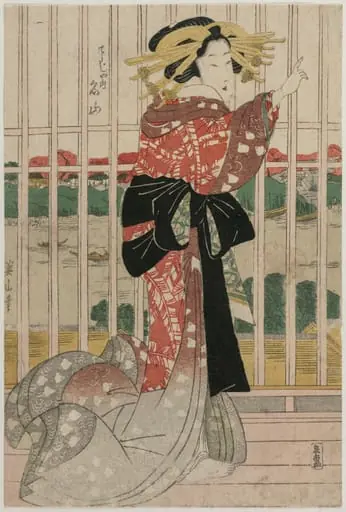 The Courtesan Meizan of the Chojiya on a Balcony Overlooking the Sumida River
 Untitled
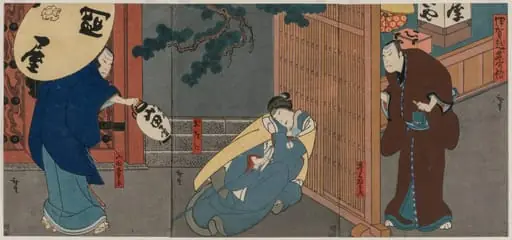 A Tale of Valor at Iga Pass
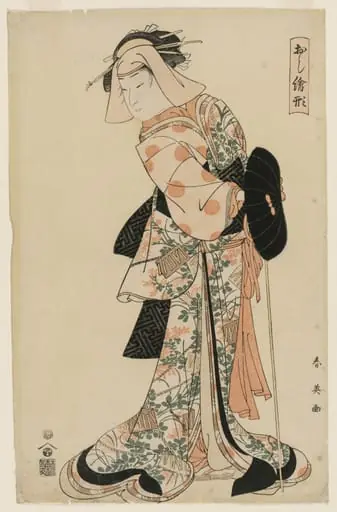 Dancer as Kuzunoha, Fox Spirit Disguised as a Woman
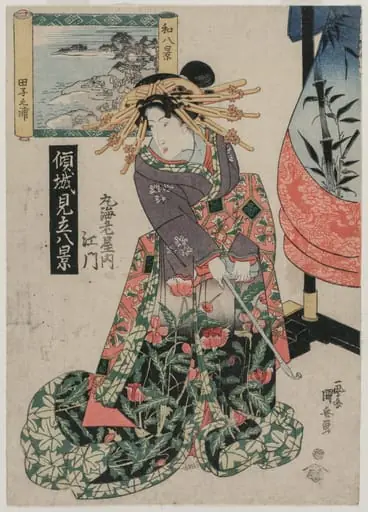 The Courtesan Emon of Maruebiya with a View of Tago Bay (form the series Courtesans with a Playful Group of Eight Views)
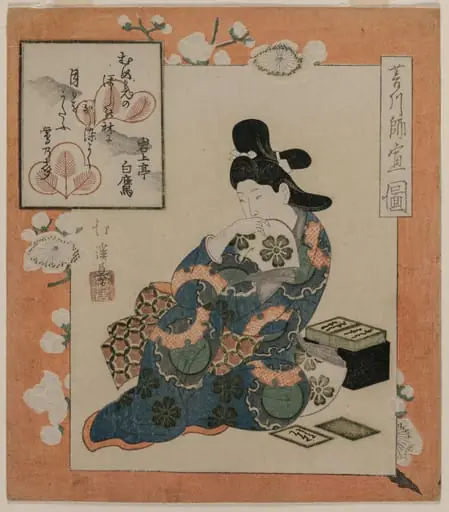 A Picture by Hishikawa Moronobu: Woman with a Set of Poem Cards