Artwork
Iwai Kiyotaro (Edoya) as Okaru (from the series Pictures of Actors Onstage)
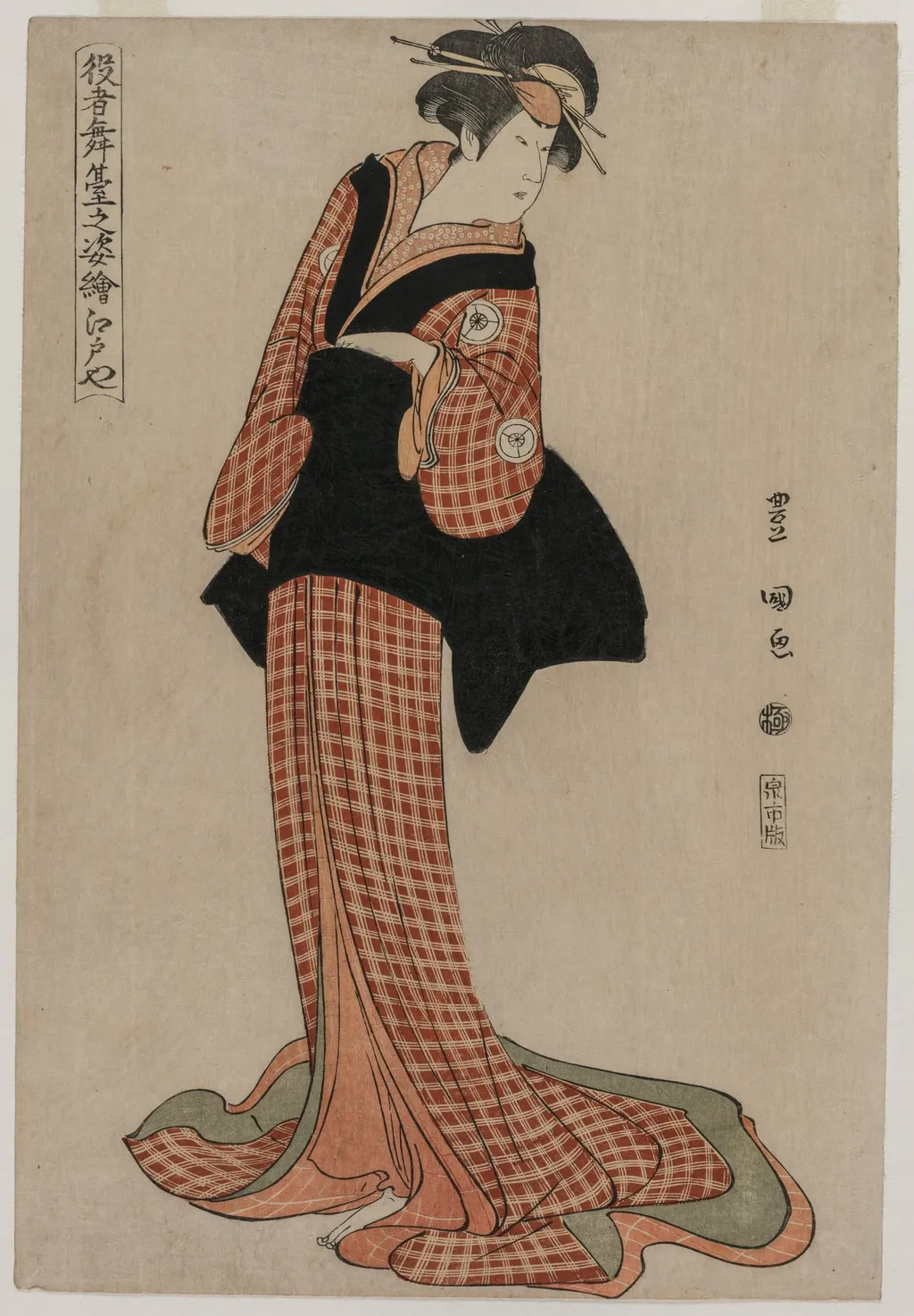
Iwai Kiyotaro (Edoya) as Okaru (from the series Pictures of Actors Onstage) is a print by the Romanticist artist Utagawa Toyokuni I. It dates from 1794 and is held in the collection of the Cleveland Museum of Art.
- Accession no.
- 1930.215
- Credit line
- Bequest of Edward L. Whittemore
About this work
Overview
The plain background isolates the figure, directing full attention to the actor's performance and the intricate details of the attire.
Created in 1794, 'Iwai Kiyotaro (Edoya) as Okaru' is a woodblock print by Utagawa Toyokuni from his influential series Pictures of Actors Onstage (Kokkei no Uchi). The work depicts the kabuki actor Iwai Kiyotaro in the female role of Okaru, a character type known as onnagata. Toyokuni renders the figure in a dynamic, close-up composition that emphasizes the actor's expressive posture and elaborate costume.
The subject wears a long robe featuring a distinctive red and black checkered pattern, with wide sleeves and a high, stylized hairstyle secured by a decorative pin. A light-colored undergarment is visible at the neckline. The plain background isolates the figure, directing full attention to the actor's performance and the intricate details of the attire.
This print exemplifies Toyokuni's mastery in capturing the vitality of kabuki theater during the late Edo period. It marked a significant shift in ukiyo-e portraiture, moving away from static, idealized representations toward more energetic and psychologically immediate depictions of actors. The work remains a key example of the artist's contribution to the yakusha-e (actor print) genre.
Subject & Meaning
The figure is a female character, Okaru, portrayed in a long, flowing robe with a distinctive red‑and‑black checkered pattern. She holds one hand near her chest, a pose that suggests a moment of emotional intensity or declaration within the drama. The high coiffure topped by an ornamental hairpin identifies the theatrical persona and signals the character’s status onstage.
Technique & Style
Toyokuni employs the ukiyo‑e woodblock method, using flat, saturated colors bounded by crisp, black outlines, a hallmark of late‑eighteenth‑century prints. The bold lines define the garment’s pattern and the figure’s exaggerated sleeves, while the plain background eliminates distraction, focusing attention on the actor’s costume and expression. This approach reflects the period’s emphasis on clear visual storytelling.
History & Provenance
Created during the peak of Toyokuni’s career, the print was originally circulated as a popular souvenir for theatergoers. It entered the Cleveland Museum of Art’s collection through acquisition in the twentieth century, joining a broader assemblage of Japanese prints that document the vibrant kabuki culture of Edo‑period Japan.
Own this work as a print
Artist & collection

Artist
Toyokuni was a born showman who made sure the energy of Edo’s kabuki stage never faded on paper.

- 二代目中村二代目中村野塩のお軽|The Actor Nakamura Noshio II as the Courtesan Okaru
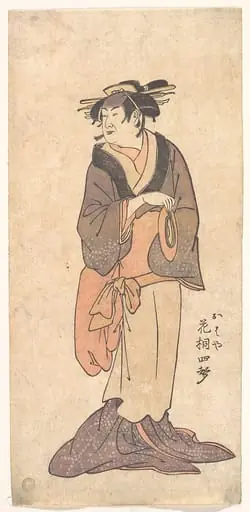 「おはや 花桐四声」(三代目豊松)|The Onnagata Actor Hanagiri Toyomatsu (Shisei) III as Ohaya
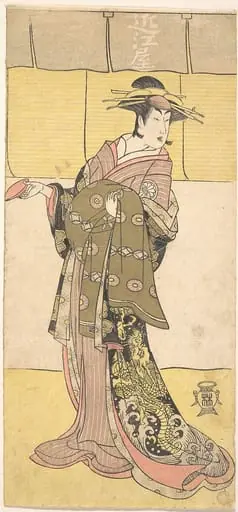 三代目瀬川菊之丞の近江屋の遊女|The Actor Segawa Kikunojō as a Courtesan of the Ōmiya Brothel
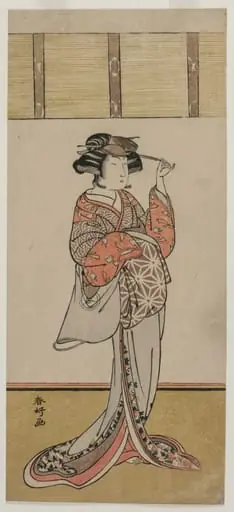 Iwai Hanshiro IV as Oiso no Tora
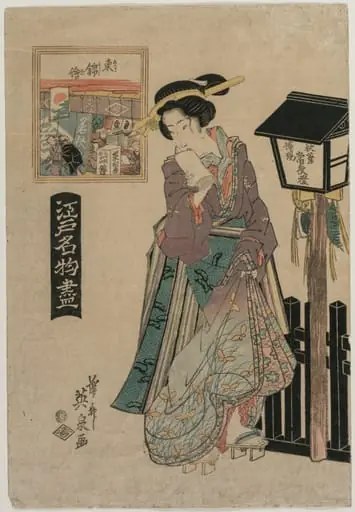 Pictures of Eastern Brocade (from the series Famous Products of Edo)
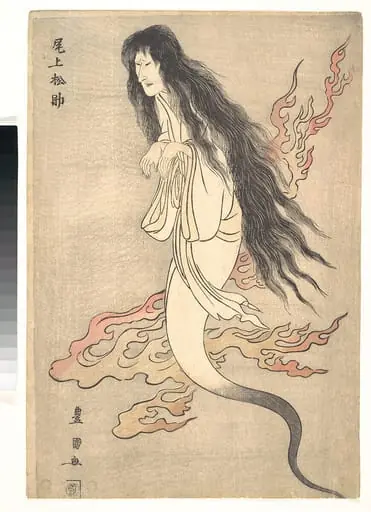
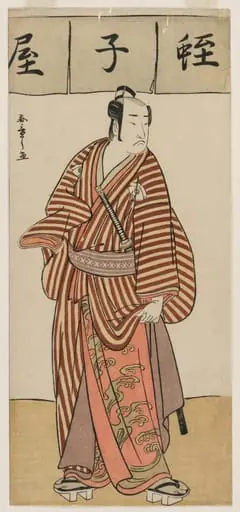 Onoe Matsusuke I as Ebisu, from The Stand-In Seven Gods of Good Fortune
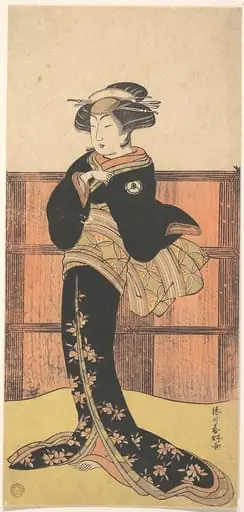 勝川春好画 四代目岩井半四郎|Kabuki Actor Iwai Hanshirō IV