Artwork
Samson
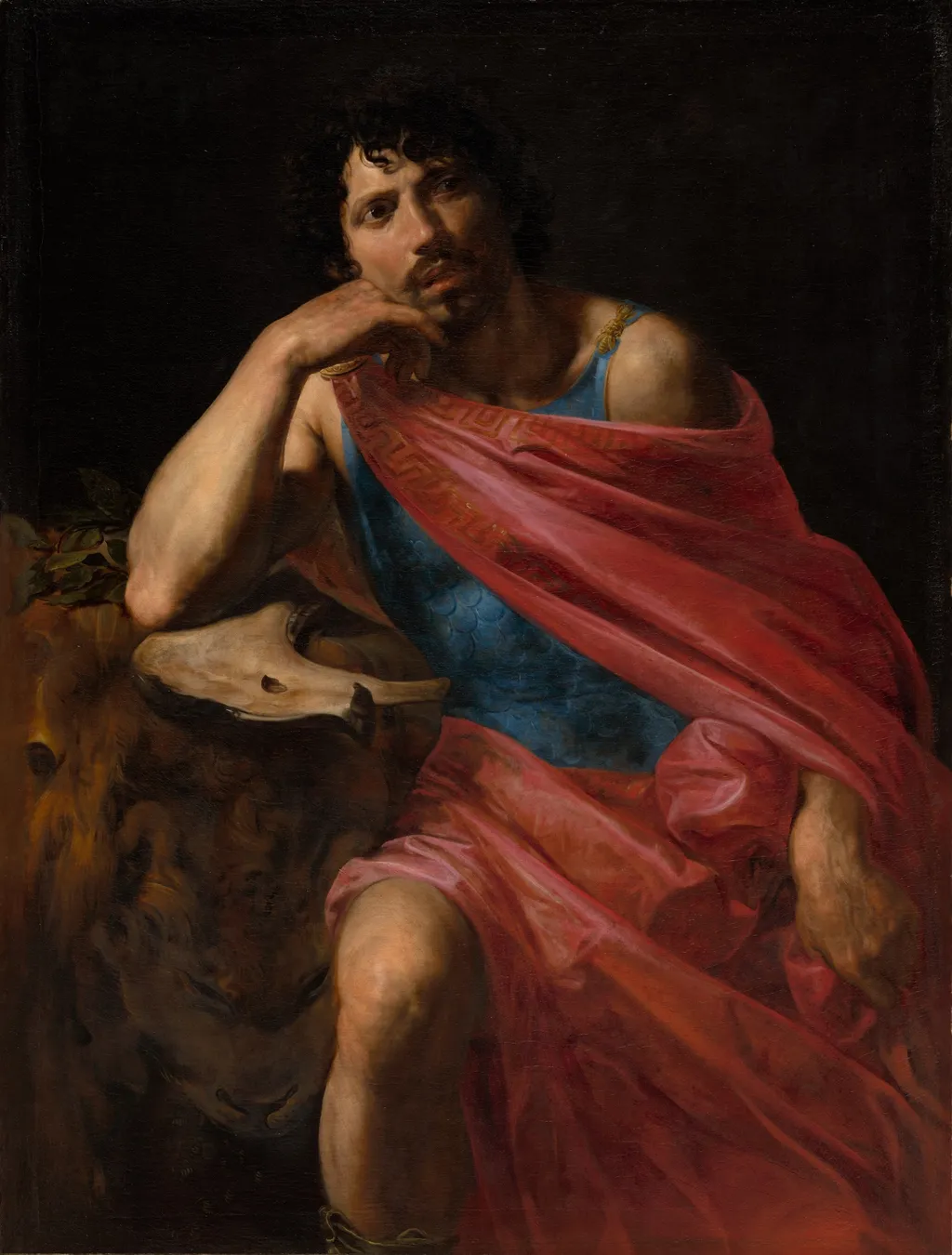
Samson is an oil painting by the Caravaggisti artist Valentin de Boulogne. It dates from 1630 and is held in the collection of the Cleveland Museum of Art.
About this work
Subject & Meaning
The work functions as a commissioned piece for Cardinal Francesco Barberini, incorporating his family emblem of bees on a brooch within the composition.
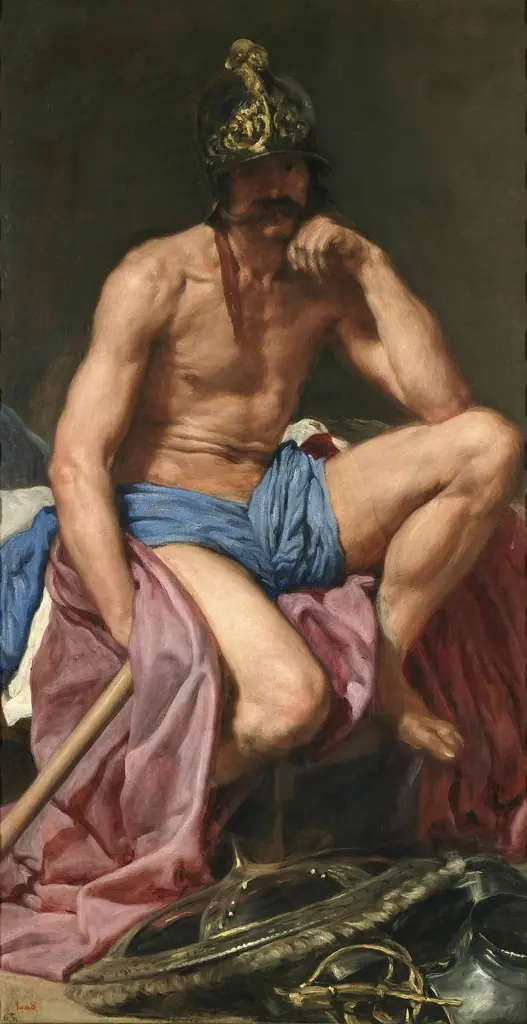
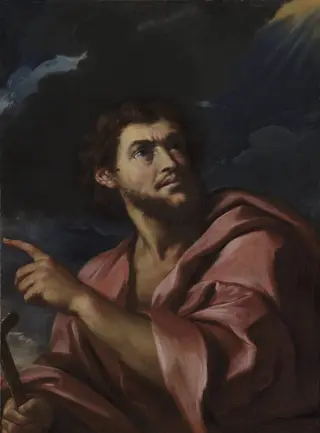
Valentin de Boulogne's 1630 painting depicts Samson, the biblical hero from the Book of Judges, rendered in a Caravaggesque portrait style against a dark background. The young man is shown seated, wearing a blue breastplate beneath pink drapery, leaning on the skin of the lion he slew with his bare hands. Resting atop the fur is the jawbone of an ass, the weapon he used to massacre the Philistines.
Unlike typical action scenes, Samson appears pensive and melancholic, gazing toward the upper right corner. The work functions as a commissioned piece for Cardinal Francesco Barberini, incorporating his family emblem of bees on a brooch within the composition. This iconography combines the physical attributes of Samson's strength with a contemplative mood, symbolizing the hero's internal state alongside his legendary feats.
Technique & Style
The painting is executed in oil on canvas, employing a vertical format measuring approximately 135.6 cm in height by 102.8 cm in width. The composition adopts a Caravaggesque approach, with a strong chiaroscuro effect and a dark background that isolates the figure. Valentin de Boulogne depicts Samson as a young man seated in contemplative solitude, his posture leaning on the lion's pelt he has slain, its fur rendered with tactile realism.
He wears a blue cuirass beneath a pink drapery, and a brooch with Barberini bees is visible, indicating its commission by Cardinal Francesco Barberini. The figure's inclined head and distant gaze convey a meditative mood, while the inclusion of the ass's jawbone and lion skin reference the biblical narrative. The overall handling emphasizes naturalistic detail and dramatic lighting, characteristic of the French Caravaggisti.
History & Provenance
The Samson painting was executed by Valentin de Boulogne circa 1630-1631, as indicated by its dated inception and stylistic placement within the artist's Caravaggesque output. The work was commissioned by Cardinal Francesco Barberini, whose familial bee emblem is rendered on a brooch worn by the figure. After leaving the Barberini circle, the canvas entered the art market and was purchased from the dealer Edoardo Almagià.
Since 1972 it has been housed in the Cleveland Museum of Art, where it remains part of the permanent collection.
Valentin de Boulogne's painting Samson, executed around 1630, is held in the collection of the Cleveland Museum of Art in Cleveland, Ohio. The institution acquired the work in 1972, assigning it the accession number 1972.50. Prior to entering the museum's holdings, the canvas was purchased from Edoardo Almagià; it was originally commissioned by Cardinal Francesco Barberini, whose family emblem of bees appears on a brooch within the composition.
Specific records of physical exhibition loans are not detailed in the available documentation, which primarily confirms its status as a permanent fixture in the Cleveland museum since its 1972 acquisition.
Context
Valentin de Boulogne's Samson (1630) has been situated within the Caravaggisti tradition for its dramatic chiaroscuro and naturalistic depiction of the biblical hero. The painting's vertical format and stark tenebrism align with Caravaggio's influence, while the seated, pensive Samson, clad in a blue cuirass and pink drapery, evokes a psychological intensity absent from earlier, idealized representations. The inclusion of the lion's pelt and ass's jaw, key to the narrative, underscores Boulogne's adherence to the biblical text while emphasizing physicality over heroism.
Commissioned by Cardinal Francesco Barberini, the work reflects the patron's emblematic bees on a brooch, embedding political and familial symbolism within the religious subject. Acquired in 1972 by the Cleveland Museum of Art, the painting's reception has centered on its Caravaggesque stylization and the artist's ability to merge Counter-Reformation iconography with psychological depth, marking it as a significant example of seventeenth-century French Caravaggism.
Overview
This oil painting, titled Samson, presents a solitary male figure in a state of introspection. Dressed in a blue tunic and a vibrant red cloak, he gazes thoughtfully to the side, his chin supported by one hand. In his other hand, he grasps a lion's jawbone, a key element hinting at his legendary past. The artwork focuses on Samson's moment of reflection, following a profound personal setback.
Own this work as a print
Artist & collection
Artist
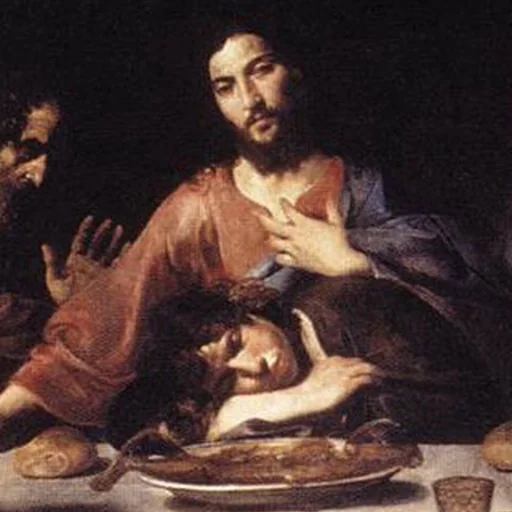
Valentin de Boulogne (before 3 January 1591 – 19 August 1632), sometimes referred to as Le Valentin, was a French painter in the tenebrist style.