Artwork
The Seconda Macchina for the Chinea of 1772: A Square with a Game Market and the Pantheon Fountain
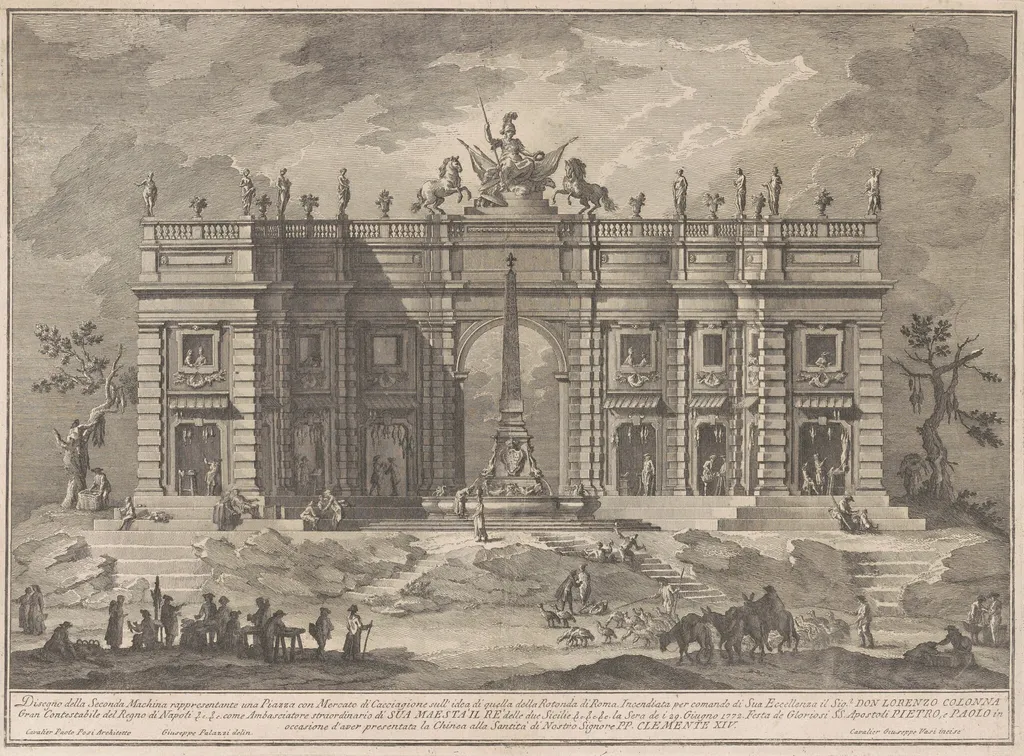
The Seconda Macchina for the Chinea of 1772: A Square with a Game Market and the Pantheon Fountain is an ink print by the Romanticist artist Giuseppe Vasi. It dates from 1772 and is held in the collection of the National Gallery of Art.
- Inscription
- Inscribed:Lettered LL: "Cavalier Paolo Posi Architetto" and "Giuseppe Palazzi delin." and LR: "Cavalier Giuseppe Vasi incise" Lettered LC, below image: "Disegno della Seconda Machina rappresentante una Piazza con Mercato di Cacciagione sull'idea di quella della Rotonda di Roma ... 29 Giugno 1772 ... Clemente XIV"
About this work
Overview
Giuseppe Vasi’s 1772 etching, titled The Seconda Macchina for the Chinea, depicts a bustling urban square dominated by a large central edifice. The composition includes a fountain before the building, a balcony lined with statues, and a crowd of pedestrians, riders and seated figures scattered across a rocky pavement.
Subject & Meaning
The scene captures a public gathering place during the Chinea festivities, a ceremonial event that brought together military displays and civic celebration. The presence of the fountain and the statuary balcony underscores the square’s role as a focal point for communal activity and visual spectacle.
Technique & Style
Vasi employed the traditional etching process, incising fine lines into a copper plate to render intricate architectural details and the varied textures of stone, water and human figures. The linear network creates a convincing sense of depth, reflecting the prevalent 18th‑century approach to topographical prints.
History & Provenance
Created in 1772 as part of the Seconda Macchina series for the annual Chinea procession, the print was circulated among patrons interested in Rome’s urban landscape. It remains an example of Vasi’s extensive documentation of the city’s public spaces during the late Baroque period.
Own this work as a print
Artist & collection

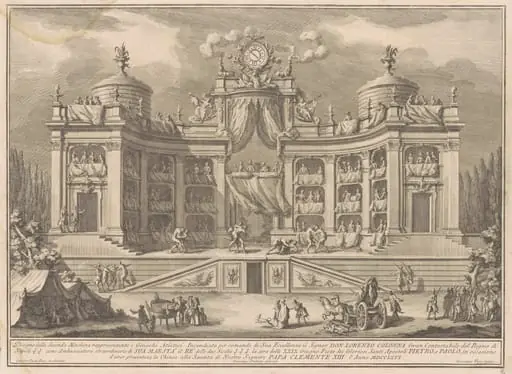 The Seconda Macchina for the Chinea of 1766: A Theater for Athletic Games
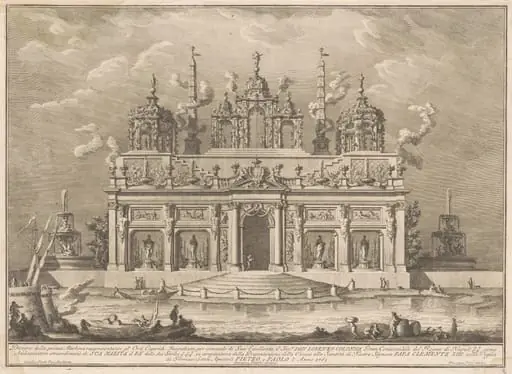 The Prima Macchina for the Chinea of 1765: The Garden of the Hesperides
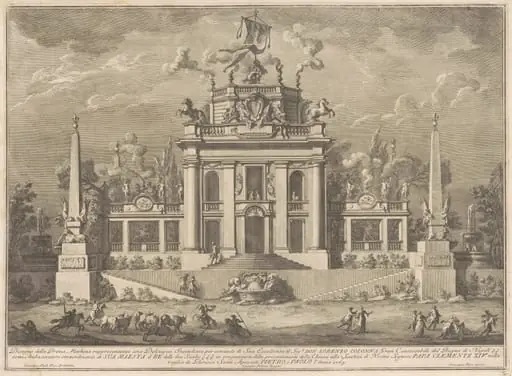 The Prima Macchina for the Chinea of 1769: A "Deliziosa"
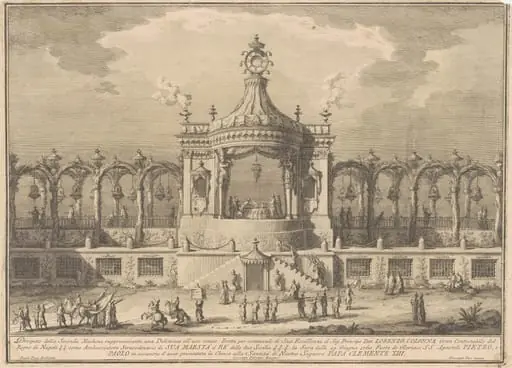 The Seconda Macchina for the Chinea of 1760: A Chinoiserie Pavilion
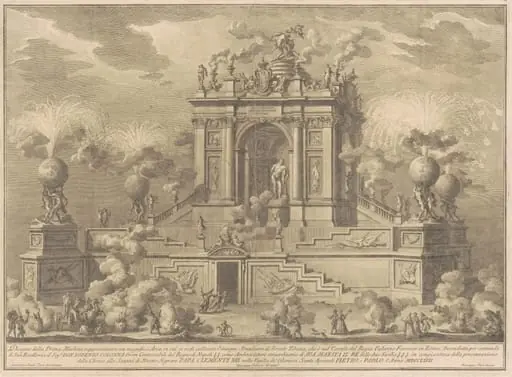 The Prima Macchina for the Chinea of 1767: A Triumphal Arch with the Farnese Hercules
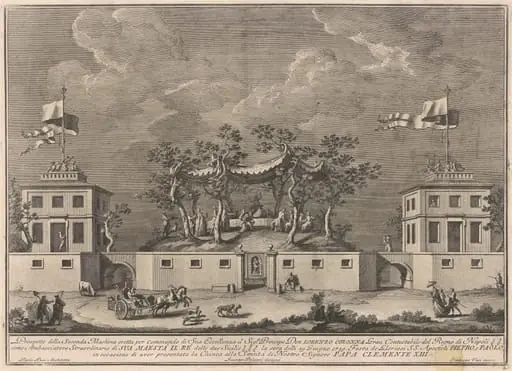 The Seconda Macchina for the Chinea of 1759: A "Deliziosa" with a Bacchanal
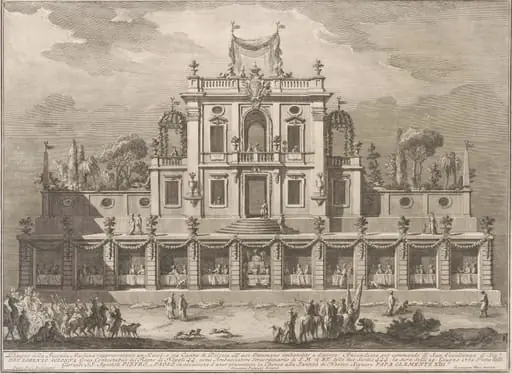 The Seconda Macchina for the Chinea of 1762: A Kiosk, or Pleasure-House in Ottoman Style
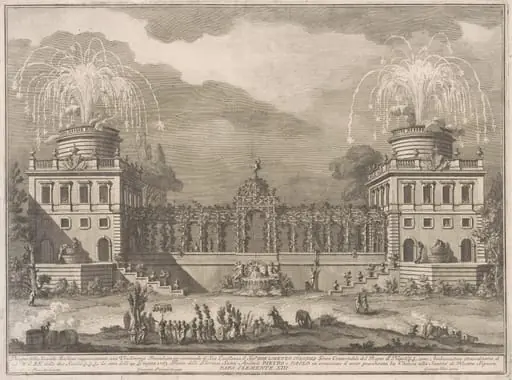 The Seconda Macchina for the Chinea of 1763: The Grape Harvest
- The Seconda Macchina for the Chinea of 1774: A Villa with Ancient Monuments and a Game of "Giostra"
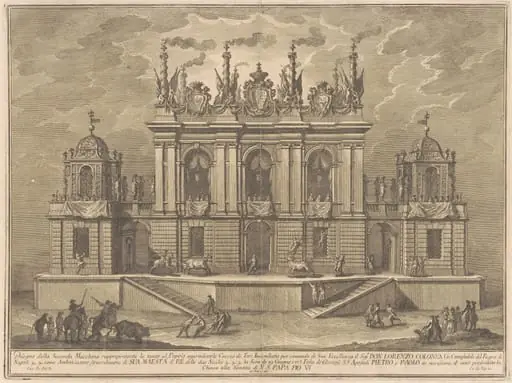 The Seconda Macchina for the Chinea of 1775: A Bull-fight
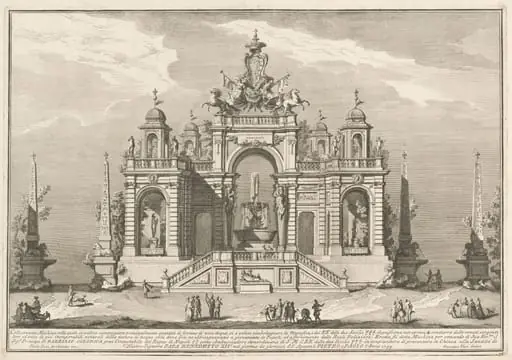 The Seconda Macchina for the Chinea of 1754: An Allegory of Waterworks
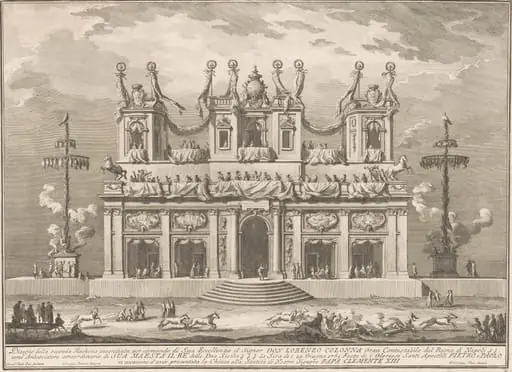 The Seconda Macchina for the Chinea of 1765: A Decorated Building with Cockaigne Poles
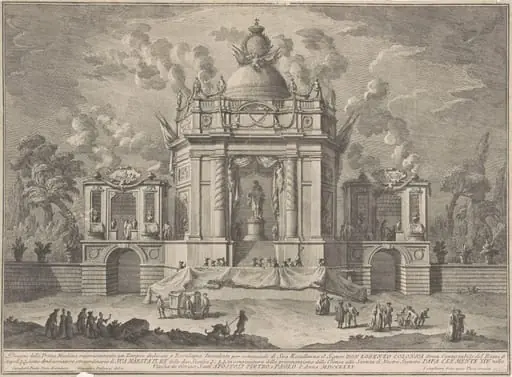 The Prima Macchina for the Chinea of 1771: The Temple of Asclepius
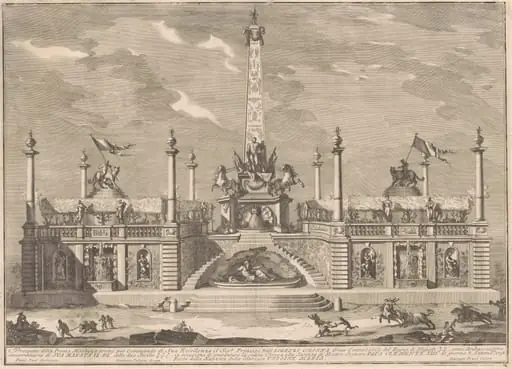 The Prima Macchina for the Chinea of 1758: A "Deliziosa" with Hanging Gardens
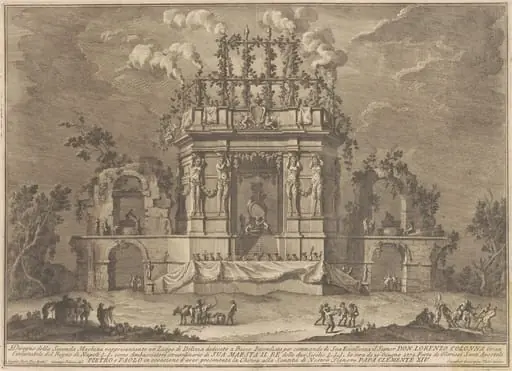 The Seconda Macchina for the Chinea of 1771: A Pleasure Palace Dedicated to Bacchus
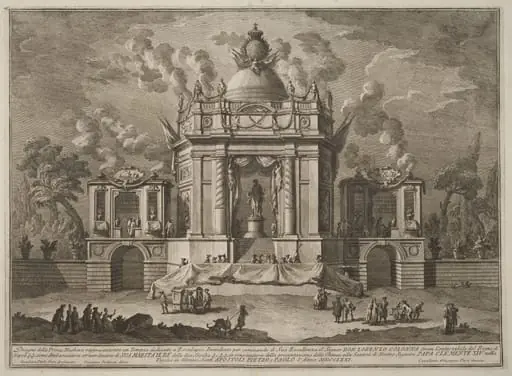 The Prima Macchina for the Chinea of 1771: The Temple of Asclepius
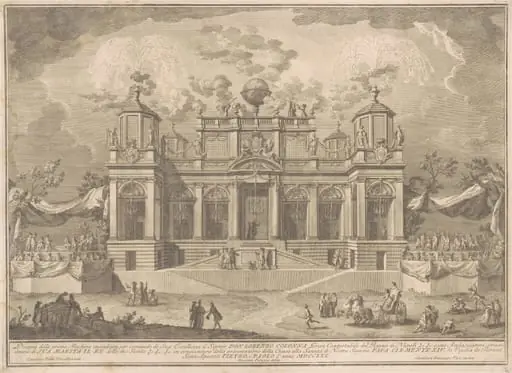 The Prima Macchina for the Chinea of 1770: An Roman Building for Commerce