Artwork
Earth
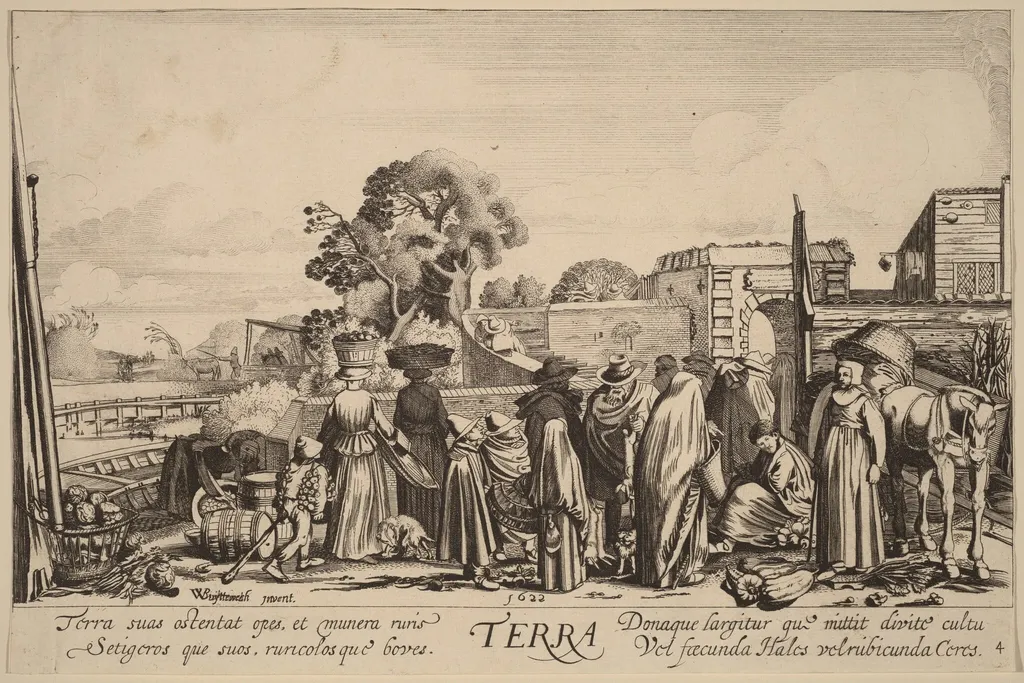
Earth is an ink print by the Renaissance artist Velde, Jan van de, II. It dates from 1617 and is held in the collection of the National Gallery of Art.
About this work
Overview
Jan van de Velde II produced the etching Earth in 1617, part of a series exploring the classical elements. A skilled printmaker in the Dutch Golden Age, he came from a family of artists and specialized in intimate scenes of daily life. This work exemplifies his mastery of etching, using precise lines to capture the texture and rhythm of ordinary moments in a rural Dutch setting.
Subject & Meaning
The scene depicts a quiet roadside gathering: figures in period attire converse, drink, and care for animals near a barrel.
The scene depicts a quiet roadside gathering: figures in period attire converse, drink, and care for animals near a barrel. A woman in a broad hat stands prominently, anchoring the composition. The Latin word TERRA at the base signals a thematic link to the natural world and human activity grounded in the soil. The image avoids grandeur, instead honoring the unremarkable rhythms of rural existence.
Technique & Style
Van de Velde employed fine, controlled etching lines to render textures: the weave of fabric, the roughness of tree bark, and the subtle shadows of figures. The composition is tightly framed, drawing attention to the interplay of figures and environment. Delicate cross-hatching suggests depth without heavy contrast, reflecting the restrained tonal range typical of early 17th-century Dutch printmaking.
History & Provenance
Created in 1617, Earth belongs to a small group of prints by Van de Velde II that explore elemental themes. It was likely circulated among collectors and fellow artists in the Netherlands, where etching was gaining recognition as a fine art medium. The work’s survival in multiple institutional collections suggests early appreciation for its quiet observation and technical precision.
Context
In early 17th-century Holland, artists increasingly turned from religious and mythological subjects to scenes of everyday life. Van de Velde’s work aligns with this shift, reflecting a cultural interest in the dignity of common experience. His etchings, though less known than those of Rembrandt, contributed to the development of printmaking as a vehicle for intimate, observational art.
Legacy
Though not widely celebrated in his time, Van de Velde II’s etchings, including Earth, influenced later generations of Dutch printmakers through their attention to detail and restrained composition. His work remains a quiet example of how ordinary moments, rendered with care, could carry lasting artistic weight within the broader tradition of Northern European print culture.
Own this work as a print
Artist & collection
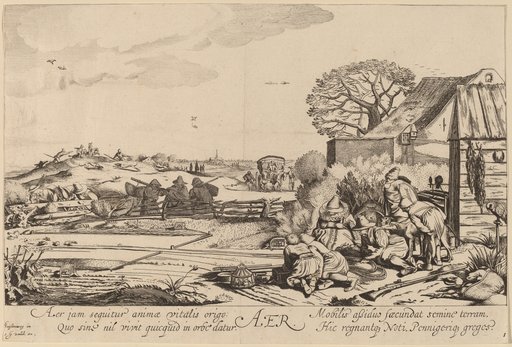
Artist
Jan van de Velde the younger (1593 – c. 1 November 1641) was a Dutch Golden Age painter and printmaker, mostly of animal, landscape and still-life subjects. He was the son of Jan van de Velde the Elder and the father of…

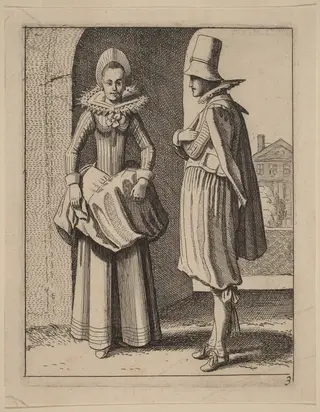
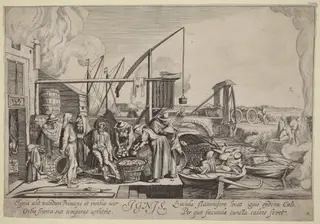
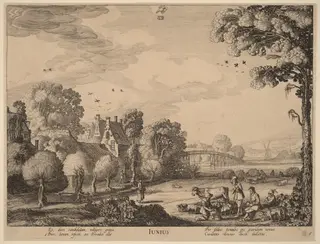
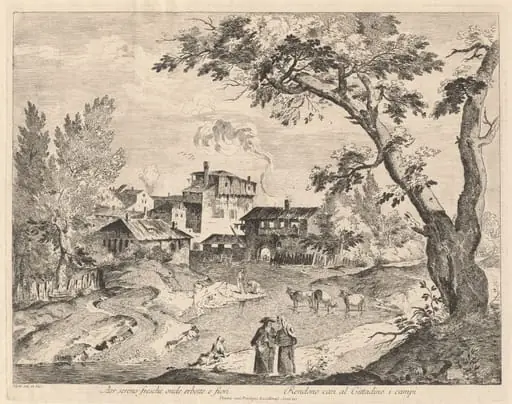
- Rustic Village along a River with Travelers
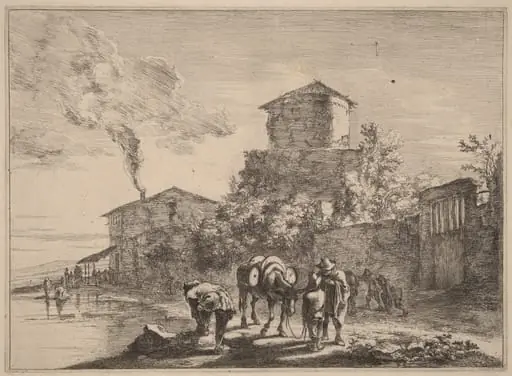 The Hinny Drover, via Appia
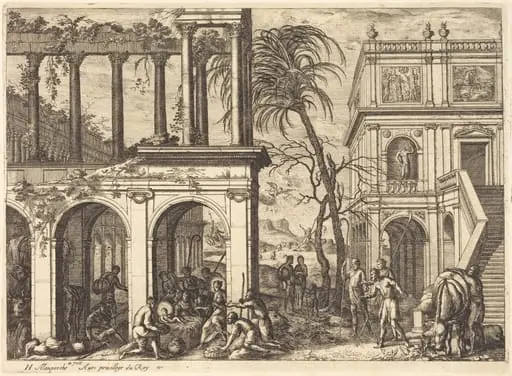 The Adoration of the Shepherds
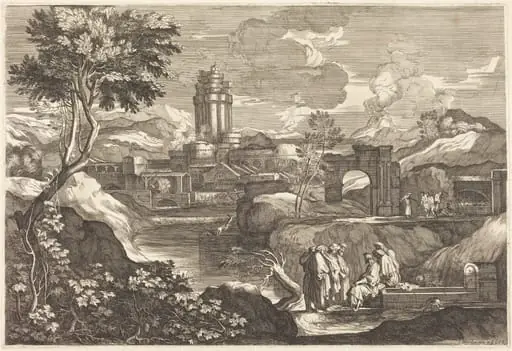 Jesus Telling the Parable of the Father who Sends his Workers to his Vineyard
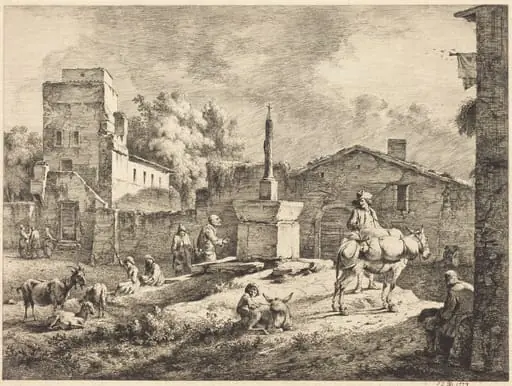 View of Saint-Andéol
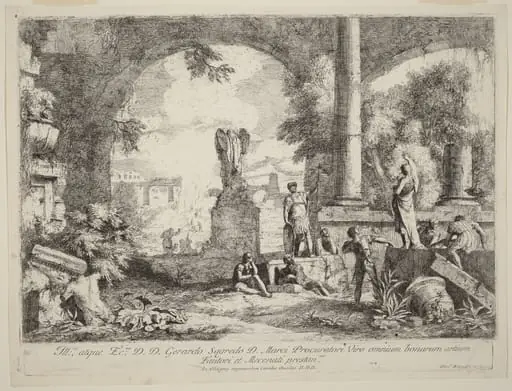 Landscape with Classical Ruins
 Double Arched Bridge
 Illustration and Border Design for Kupfer-Bibel (Copper Bible)
 The Slave Market
 The Pharisees Complain to Our Lord
 The Bent Tree