Artwork
March
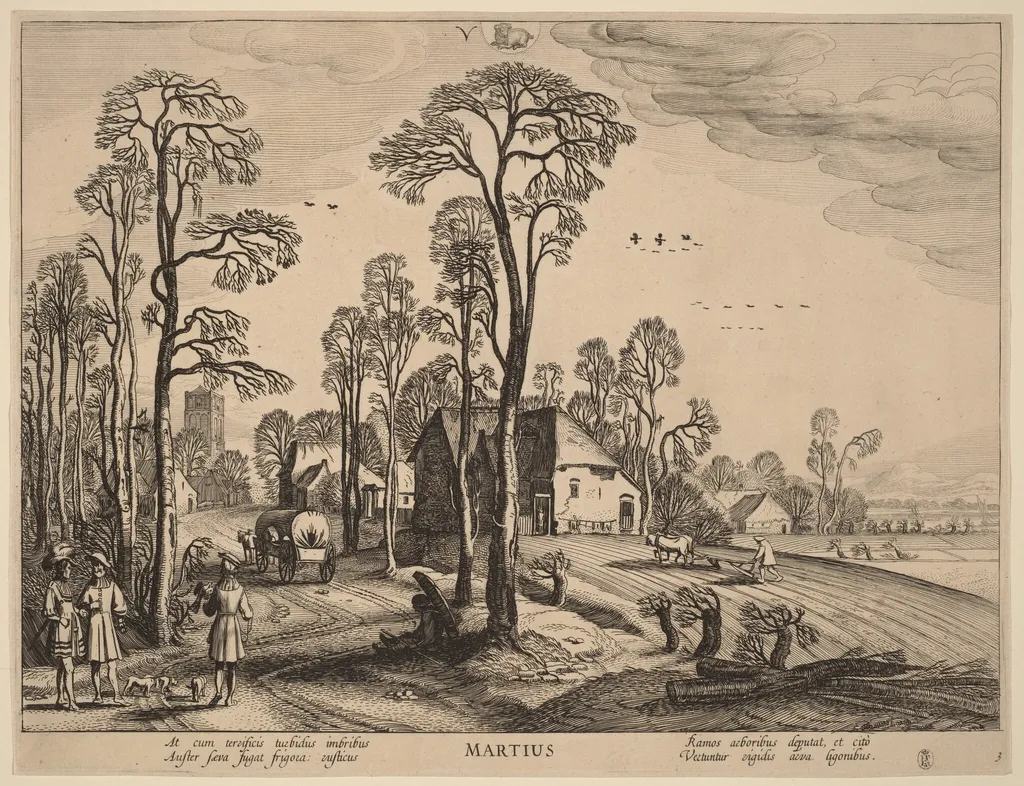
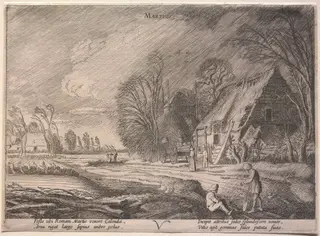
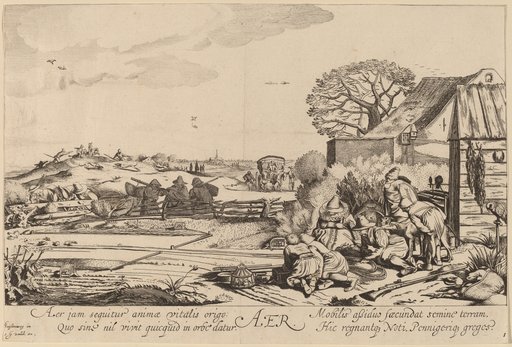
March is an ink print by the Renaissance artist Velde, Jan van de, II. It dates from 1617 and is held in the collection of the National Gallery of Art.
About this work
Overview
Jan van de Velde the Younger produced the etching March in 1617, part of a series capturing seasonal rural life. A Dutch Golden Age printmaker, he specialized in landscapes and everyday scenes, trained by his father and later influencing his own son. This work reflects his interest in nature and the rhythms of village existence, rendered with quiet precision through the etching technique.
Subject & Meaning
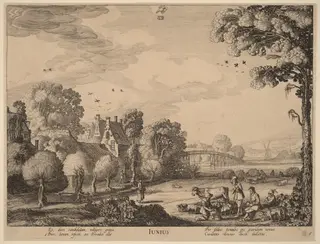
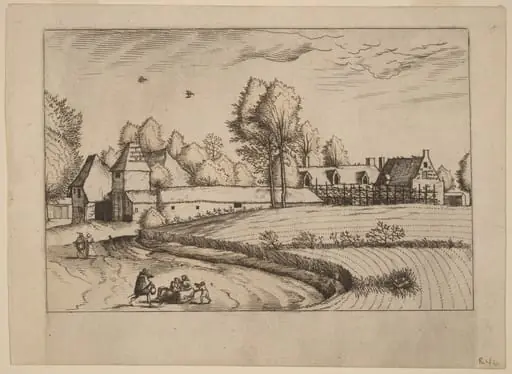
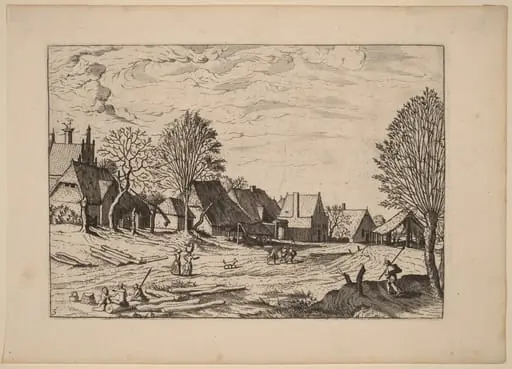
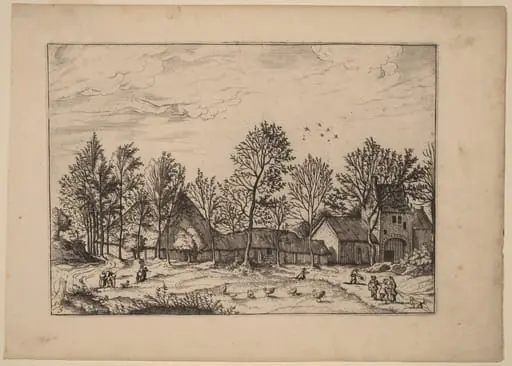
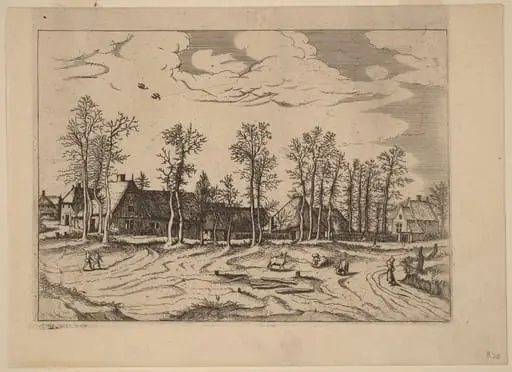
The scene portrays a quiet Dutch village in early spring, with bare trees, muddy ground, and scattered figures engaged in seasonal tasks. A hay wagon, animals near a stream, and distant church tower suggest the quiet labor of rural life. The Latin inscription MARTIUS anchors the image in the third month, emphasizing the transition from winter’s stillness to the renewal of spring.
Technique & Style
Van de Velde employed fine, controlled etched lines to model light and texture, creating depth without heavy shading. The composition is sparse yet deliberate, with vertical tree trunks framing the path and buildings receding into the distance. His use of line conveys the chill of early spring and the dampness of the earth, enhancing realism through restraint rather than detail.
History & Provenance
Created in 1617, March belongs to an early phase of Van de Velde’s career, shortly after he began working independently. The print was likely circulated among collectors and artists in the Netherlands, where seasonal themes were popular. Its survival in multiple institutional collections suggests early recognition of its quiet authority within the printmaking tradition.
Context
In early 17th-century Holland, depictions of the months were common in prints and paintings, often tied to agricultural cycles and civic identity. Van de Velde’s approach aligned with a broader trend of observing daily life with intimacy and accuracy, distinct from grand historical or mythological subjects favored elsewhere in Europe.
Legacy
Van de Velde’s etchings, including March, helped refine the Dutch landscape print as a genre. His subtle handling of light and atmosphere influenced later artists, particularly in the depiction of rural tranquility. Though less celebrated than contemporaries like Rembrandt, his work remains a quiet benchmark in the evolution of Northern European printmaking.
Own this work as a print
Artist & collection
Artist
Jan van de Velde the younger (1593 – c. 1 November 1641) was a Dutch Golden Age painter and printmaker, mostly of animal, landscape and still-life subjects. He was the son of Jan van de Velde the Elder and the father of…