Artwork
July
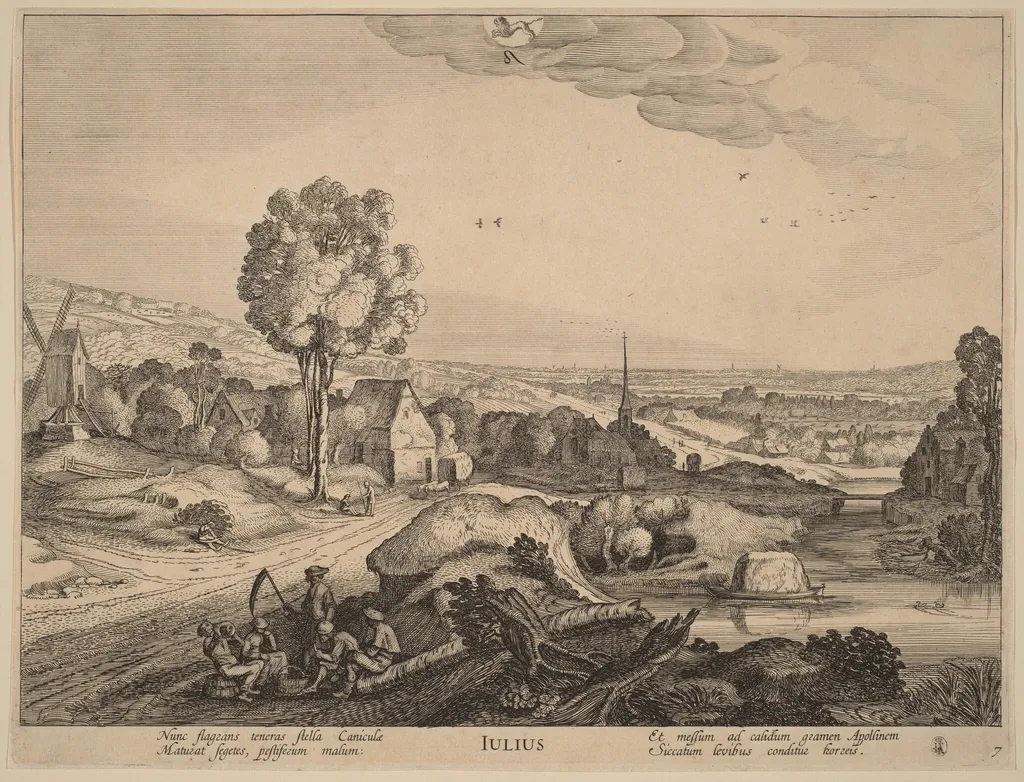
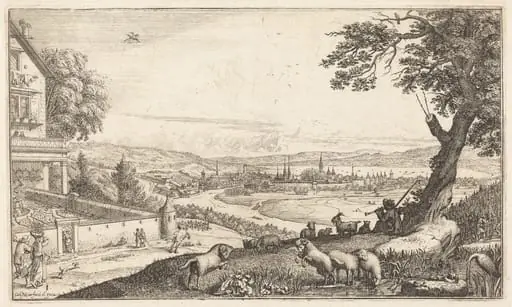
July is an ink print by the Renaissance artist Velde, Jan van de, II. It dates from 1617 and is held in the collection of the National Gallery of Art.
About this work
Overview
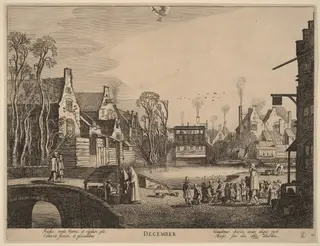
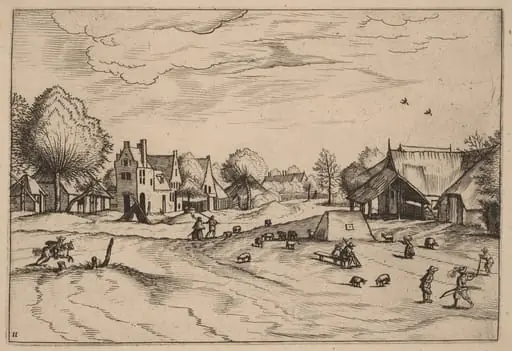
July is an early‑17th‑century etching executed in 1617 by Jan van de Velde the Younger, a Dutch printmaker active during the Golden Age. The work presents a tranquil countryside scene, centered on a meandering river that winds past a modest settlement and a handful of figures engaged in everyday tasks, all set beneath a softly clouded sky.
Subject & Meaning
The composition captures a moment of rural life, with villagers gathered along the riverbank and modest dwellings nestled among gentle hills. The inclusion of ordinary activities suggests an interest in the rhythms of daily existence, reflecting a broader Dutch fascination with the natural world and the simple pleasures of the countryside.
Technique & Style
Created through the etching process, the image relies on delicate line work and nuanced hatching to convey texture and depth. Fine incised lines define the water’s surface, foliage, and architectural details, while subtle tonal variations achieved by varied line density give the scene a sense of atmospheric perspective characteristic of early Dutch landscape prints.
History & Provenance
Jan van de Velde the Younger, son of Jan van de Velde the Elder and father of still‑life painter Jan Jansz van de Velde, produced this print during a prolific period of his career as a specialist printmaker. The etching has been documented in several early modern collections, tracing its ownership through Dutch private hands before entering museum holdings in the 20th century.
Own this work as a print
Artist & collection
Artist
Jan van de Velde the younger (1593 – c. 1 November 1641) was a Dutch Golden Age painter and printmaker, mostly of animal, landscape and still-life subjects. He was the son of Jan van de Velde the Elder and the father of…

 Spring
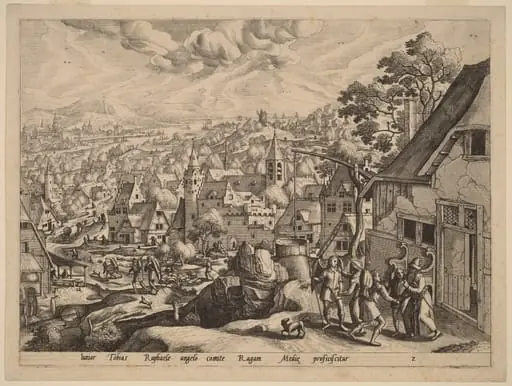 Tobias Taking Leave of his Parents
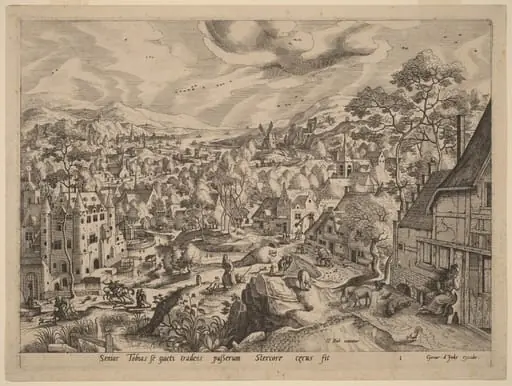 Bird Dropping Blinding Tobit
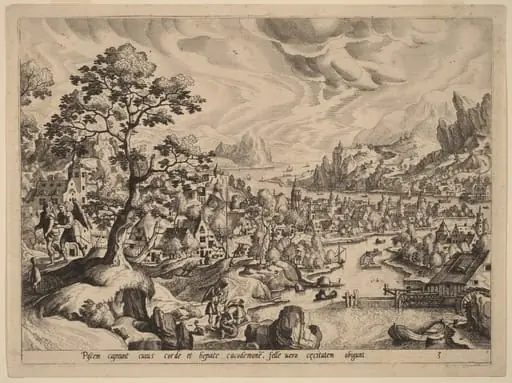 Tobias Catching the Fish in the River Tigris
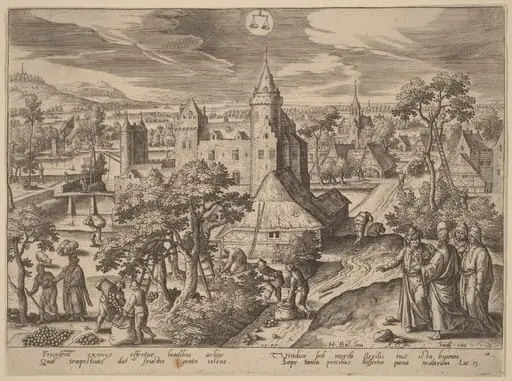 The Parable of the Barren Fig Tree
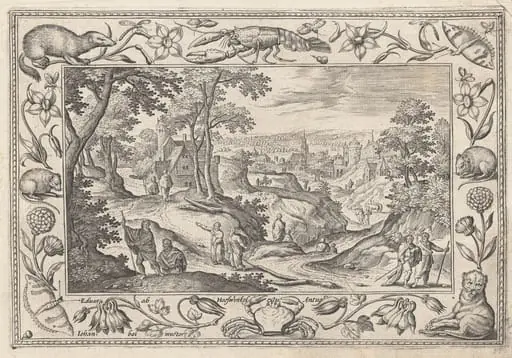 The Sending Out of the Apostles
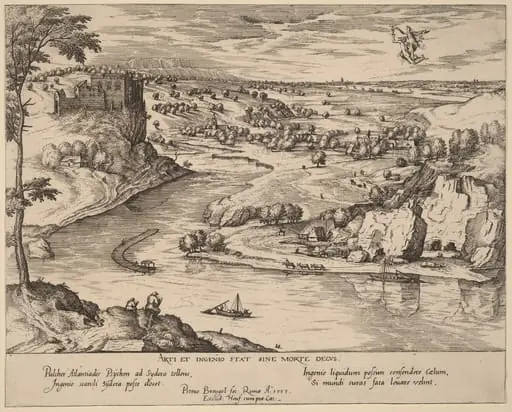 River Landscape with Mercury and Psyche
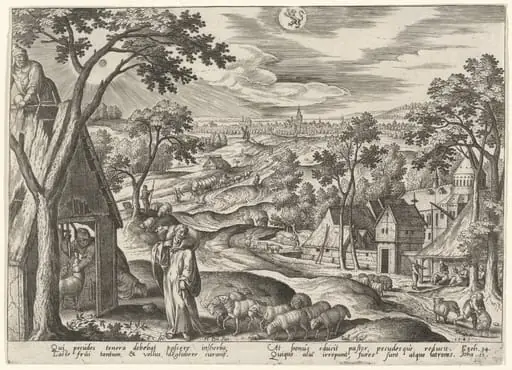 The Good Shepherd
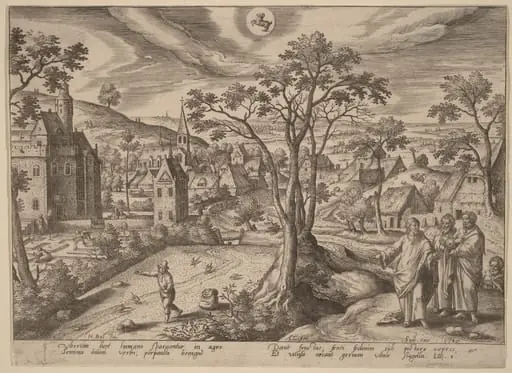 The Parable of the Sower
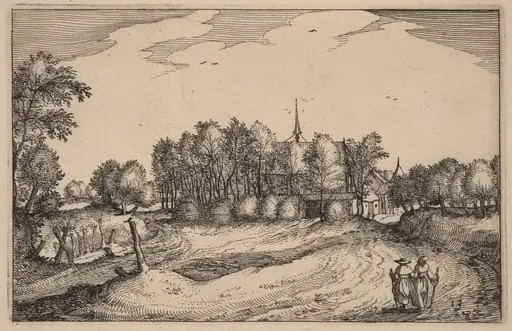 A Convent
 Country Village with Sheep and Sitting Shepherd