Artwork
View of a Dutch Town (Delft?)
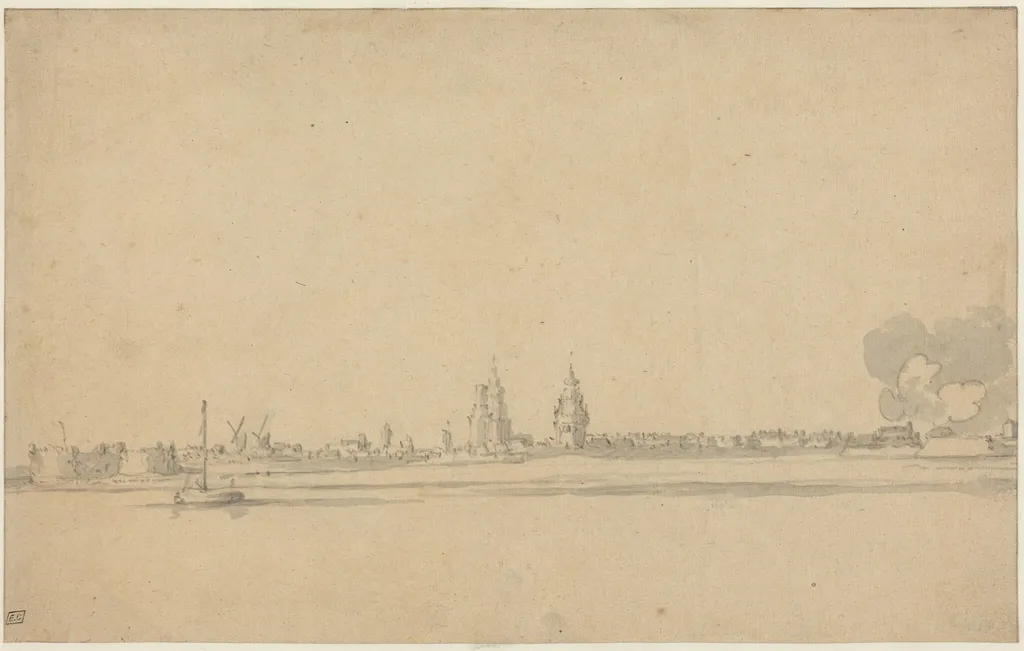
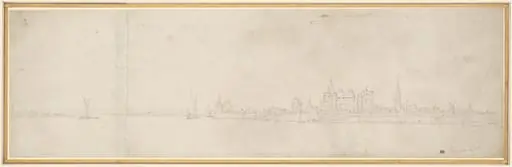
View of a Dutch Town (Delft?) is a graphite drawing by the Baroque artist Willem van de Velde the Younger. It dates from 1670 and is held in the collection of the National Gallery of Art. View of a Dutch Town (Delft?
- Inscription
- Inscribed:lower left corner on mount, by later hand, in graphite: RLTTS +HE; lower right corner on mount, by later hand, in graphite: D17750 L461; verso, lower right, by later hand, in graphite: no. 100 [encircled]; upper left verso, by later hand in very faint graphite: W. V de Velde nov cyi / [not deciphered]; by later hand, center left verso in very faint graphite: [not deciphered] Calando / No [not deciphered]; by later hand, lower right verso in very faint graphite: Velde, Willlem van de [not deciphered] / for a large(?) [not deciphered] lower right corner, by later hand, in graphite: L461 / 749; verso, lower left, by later hand, in graphite: RLTTS
- Markings
- Marked:stamped in black ink: Émile Calando collection (Lugt 837)
About this work
Overview
The composition features a body of water in the foreground populated by small boats, leading the eye toward a large, distinct building on the distant shore.
View of a Dutch Town (Delft?) is a 1670 drawing by Willem van de Velde the Younger, executed in graphite and gray wash on laid paper. The work depicts a tranquil waterfront scene, likely representing Delft, characterized by a low horizon line that emphasizes the expansive sky. The composition features a body of water in the foreground populated by small boats, leading the eye toward a large, distinct building on the distant shore.
Van de Velde employs a nuanced range of gray tones to model the architecture and water, creating atmospheric depth and a sense of calm. The surface shows evidence of stylus incisions, a technique the artist often used to outline forms or transfer designs. Created during the height of the Dutch Golden Age, this piece exemplifies the artist's mastery of marine and cityscape subjects.
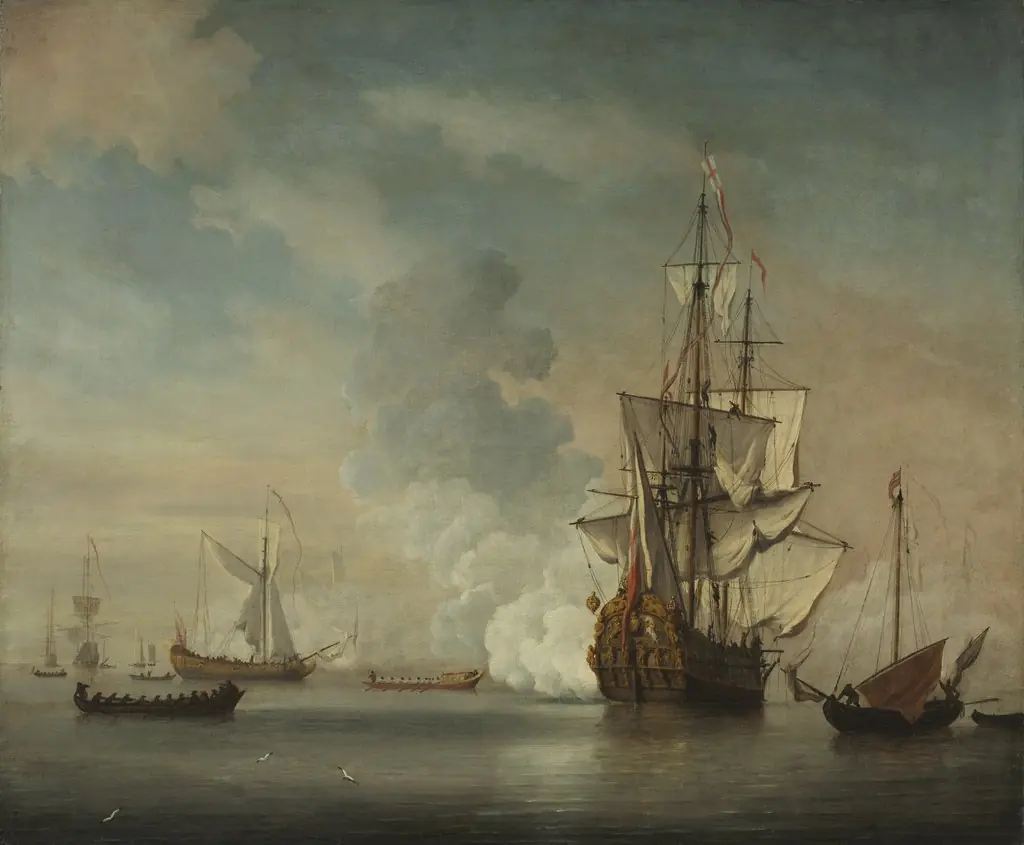
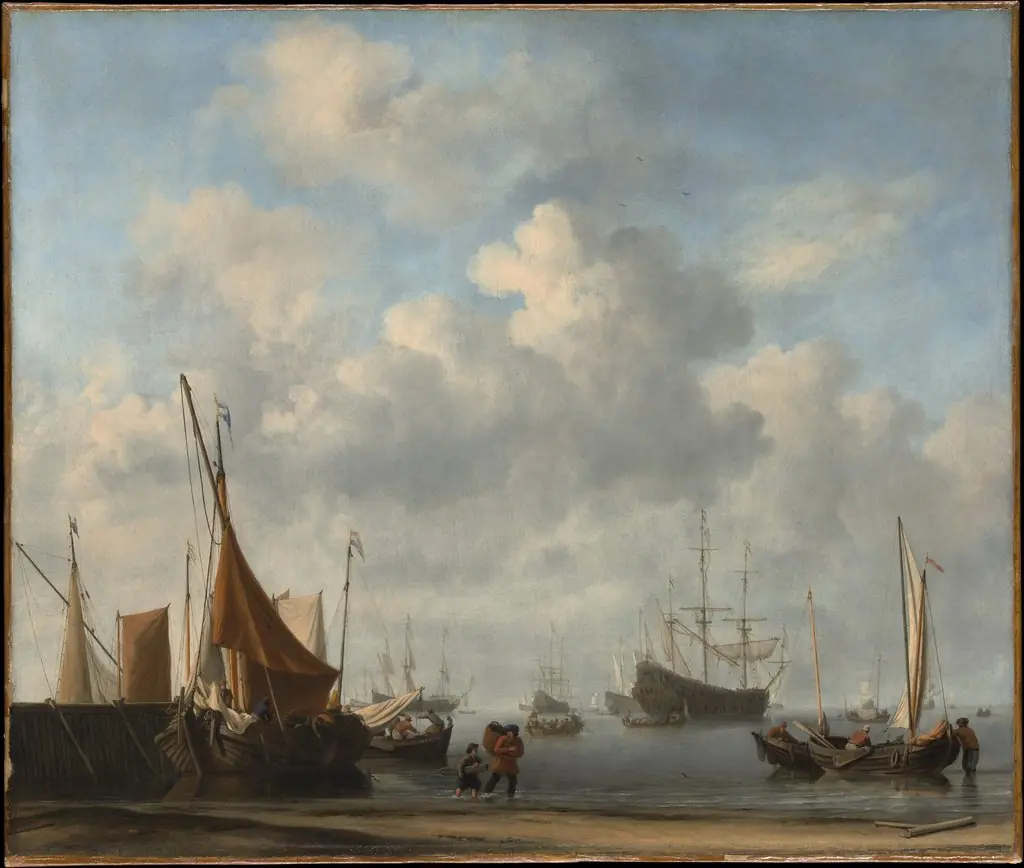
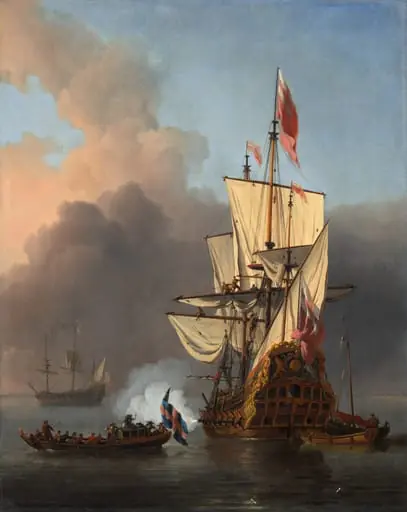
While Van de Velde is best known for his oil paintings of naval battles, his drawings reveal a refined sensitivity to light and weather. This specific work demonstrates his ability to capture the quiet, everyday maritime life of the Netherlands with precision and restraint, serving as a testament to his versatility beyond his more famous seascapes.
Subject & Meaning
The image captures a modest cityscape viewed from the water, emphasizing the relationship between built environment and canal. The presence of small boats suggests everyday commercial activity, while the expansive sky and reflective surface evoke a sense of quiet routine in a 17th‑century Dutch town.
Technique & Style
Van de Velde employs a restrained palette of graphite and diluted gray wash, allowing tonal gradations to model depth. Incised lines add definition to architectural elements, while broader washes suggest atmospheric haze. The balance of precise linear detail with softer tonal areas reflects the artist’s skill in rendering both structure and ambience.
History & Provenance
Created in 1670, the drawing belongs to the oeuvre of the younger van de Velde, known for marine subjects. Its attribution to a specific town remains tentative, with Delft being the most plausible identification based on architectural cues. The work is catalogued as a drawing rather than a finished painting, typical of preparatory studies of the period.
Own this work as a print
Artist & collection
Artist
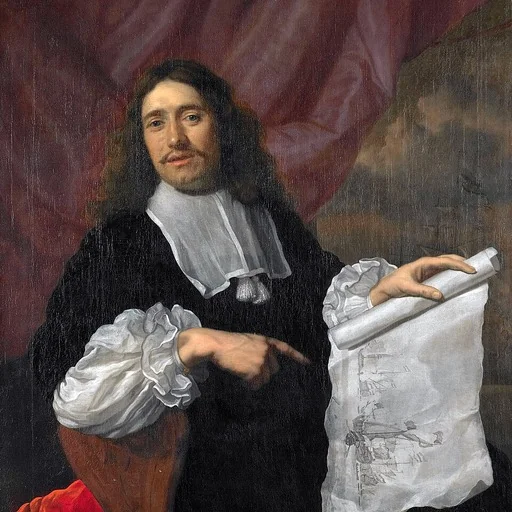
Willem van de Velde the Younger
Willem van de Velde the Younger (18 December 1633 (baptised) – 6 April 1707) was a Dutch painter who specialised in marine art.

![View of Scheveningen [recto], by Jan van Goyen](https://artifactworldgallery.com/img/jan-van-goyen--view-of-scheveningen-recto--0f9cb319c9b082d3-w320.webp)