Artwork
Francis Bacon
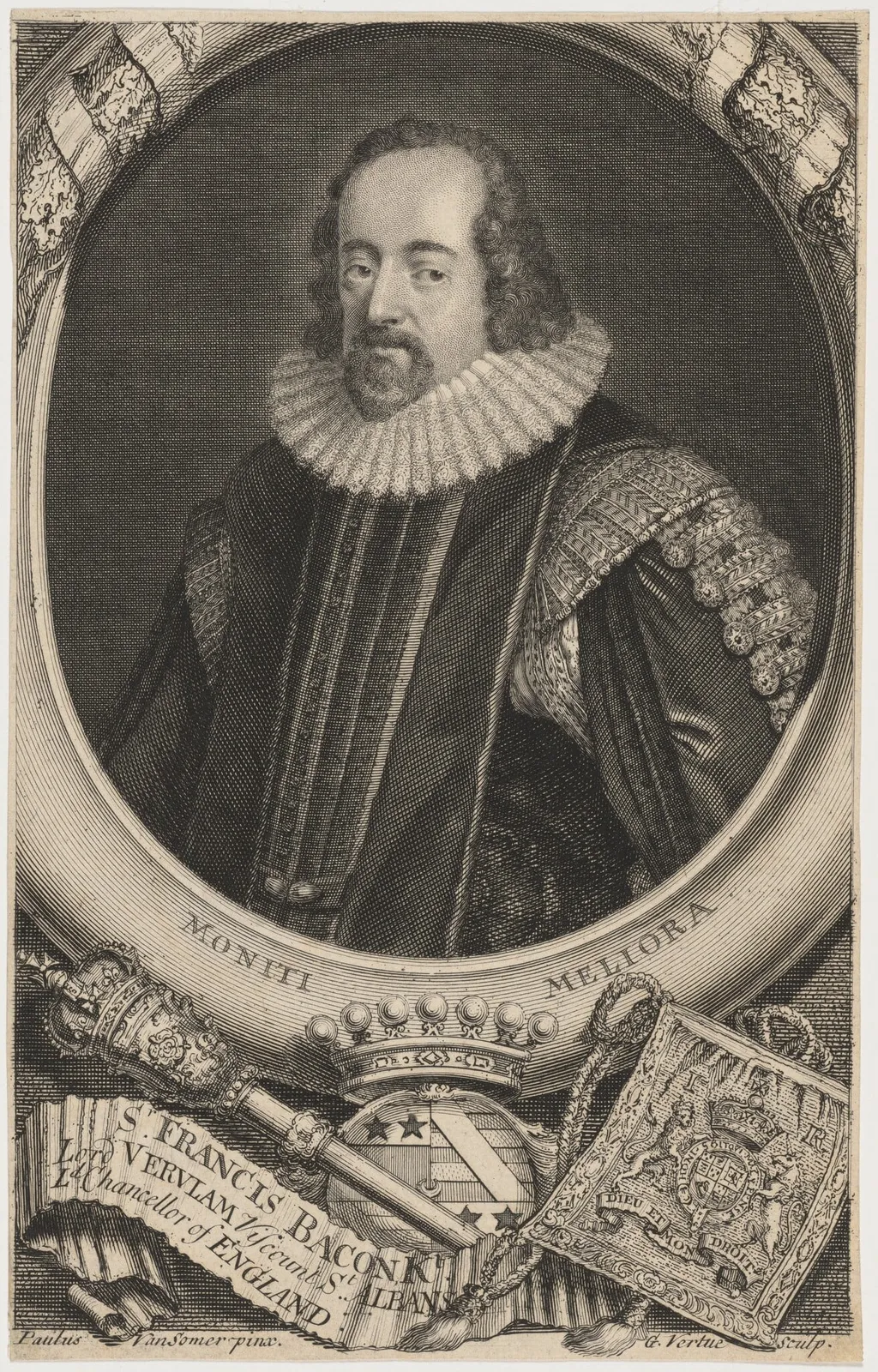
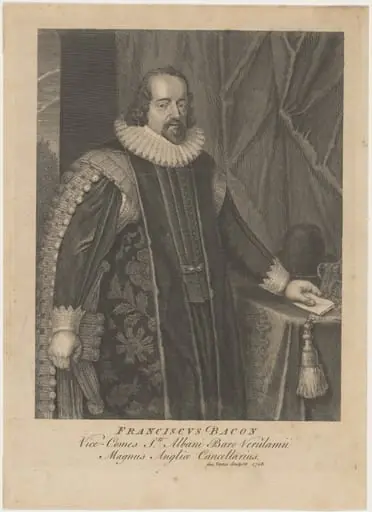
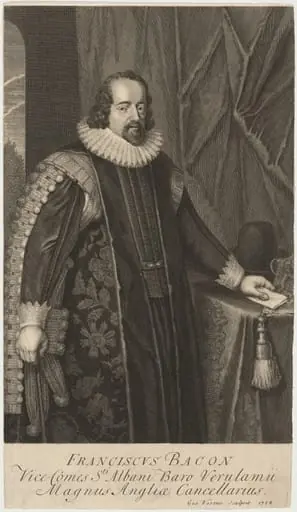
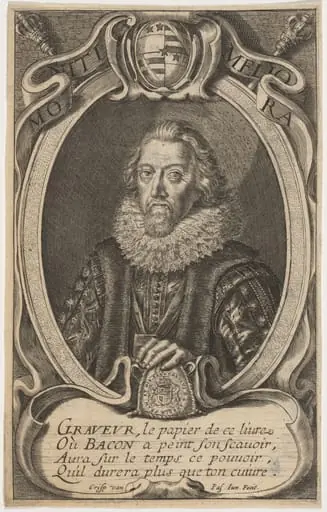
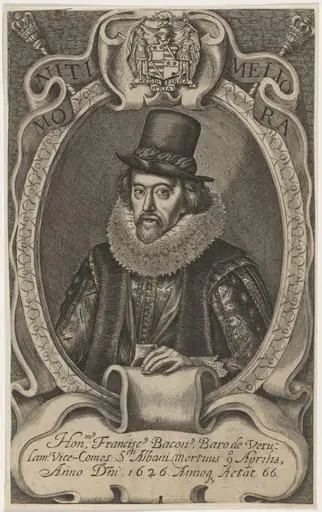
Francis Bacon is an ink print by the Baroque artist George Vertue. It dates from 1734 and is held in the collection of the National Gallery of Art.
About this work
Overview
George Vertue’s 1734 engraving presents a formal portrait of Sir Francis Bacon, identified in the inscription as a former Chancellor of England. Rendered in stark black and white, the image centers the figure within an oval frame, the surrounding border populated with diminutive decorative motifs and lettering that reinforce the work’s commemorative purpose.
Subject & Meaning
The sitter appears as a dignified, bearded gentleman dressed in a dark robe with elaborate cuffs and a gold chain, symbols of his high social standing and official rank. The inscription, “St. Francis Bacon, V.C. Chancellor of England,” underscores his political authority and the esteem in which he was held at the time of the print’s production.
Technique & Style
Executed through copperplate engraving, Vertue employed fine line work to delineate the facial features, clothing texture, and ornamental border. The contrast between deep shadows and delicate hatching creates a sense of volume, while the restrained palette of black ink on paper reflects the conventional portraiture conventions of early‑18th‑century British printmaking.
History & Provenance
Created in 1734, the print was likely intended for distribution among learned circles and institutions that honored Bacon’s contributions to law and philosophy. Surviving copies have appeared in several public collections, indicating that the image served both as a visual record of Bacon’s legacy and as a collectible example of Vertue’s engraving practice.
Own this work as a print
Artist & collection