Artwork
Adoration of the Magi
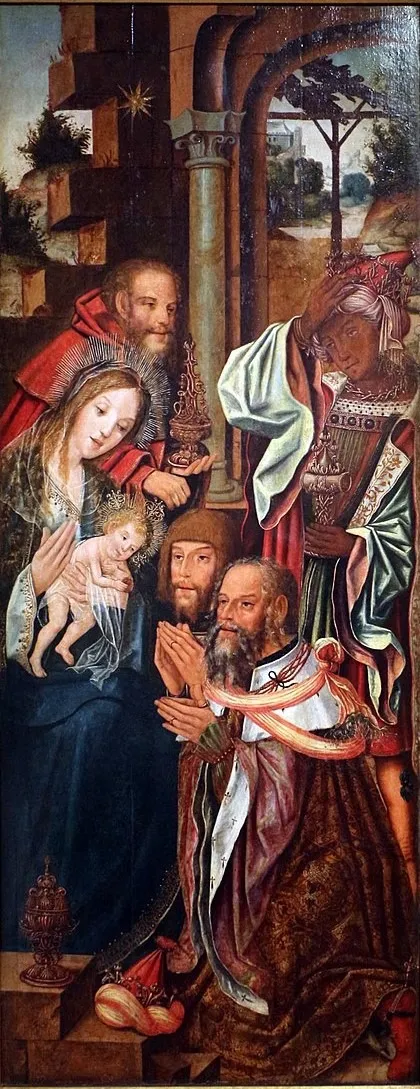
Adoration of the Magi is an oil painting by the Northern Renaissance artist Vicente Gil. It dates from 1513 and is held in the collection of the National Museum of Ancient Art.
About this work
Overview
The painting originally formed part of a sixteenth-century polyptych from the Convento de Santa Maria de Celas, of which six panels survive.
The Adoration of the Magi is a religious painting executed in oil on an oak panel by the Portuguese artist Vicente Gil in 1513. Measuring 186 by 73 centimeters, the work is notable for its vertical format and pyramidal composition. It is currently held by the National Museum of Ancient Art in Lisbon. The painting originally formed part of a sixteenth-century polyptych from the Convento de Santa Maria de Celas, of which six panels survive. It stands as a significant example of the output of the Coimbra workshop founded by Gil at the end of the fifteenth century.
Subject & Meaning
The artwork depicts the biblical episode of the Adoration of the Magi, in which three wise men, having followed a star, pay homage to the infant Jesus and present him with gifts. The composition centers on the Virgin Mary, who holds the nude Christ Child on her lap as three men approach in reverence. One kneels in prayer, another stands holding a covered vessel, and the third, wearing exotic dress with a feathered headdress, holds a similar vessel. A small crown rests on the ground near the kneeling figure, and a star shines in the upper left sky. The scene emphasizes the recognition of Jesus as king of the earth from infancy, drawing upon Christian iconography that expanded the brief Gospel of Matthew account to include the three kings representing the three ages of man and the known continents of Europe, Asia, and Africa.
Technique & Style
Executed in oil paint on an oak panel support, the painting demonstrates the meticulous technique associated with the Coimbra workshop. The artist employed a tight, precise brushwork throughout, achieving a smooth, enamel-like finish on the flesh and fine detail in the textiles and jewelry. The palette is characterized by deep blues, crimson reds, and olive greens, with gold highlights accenting the brocaded fabrics. A defining characteristic of this panel is its exhaustive reliance on gold leaf for the halos, which feature radiating lines, combined with the realistic portrayal of contemporary goldsmithery in the vessels. The figures are concentrated in a reduced space, and the treatment of the garments, anatomies, and especially the eyes reveals the distinctive hand of the workshop. Light falls evenly across the faces and drapery, illuminating the meticulous rendering of patterned velvets and fur trim.
History & Provenance
Created in 1513, the painting was originally part of a larger polyptych housed in the Convento de Santa Maria de Celas. Six panels from this altarpiece are known to have survived into the modern era. The work is attributed to Vicente Gil, who established his Coimbra workshop at the end of the fifteenth century. The painting eventually entered the collection of the National Museum of Ancient Art in Lisbon, where it remains today as an accession of the museum's holdings of Portuguese Renaissance art.
Context
Vicente Gil's Adoration of the Magi is situated within the broader context of early sixteenth-century Portuguese Renaissance art, specifically reflecting the practices of the Coimbra painting workshop he founded. During this period, the Adoration of the Magi was a highly popular subject, allowing artists to display their handling of complex scenes, varied textures like silk and fur, and opulent goldsmith work. The emphasis on contemporary goldsmithery in Gil's panel aligns with the broader artistic trend of the fifteenth and sixteenth centuries, where the Magi's gifts were often contained in spectacular metalwork, and their garments received increasing attention as a display of bravura painting.
Artist & collection
Artist
This Portuguese painter worked in the early 1500s, blending Renaissance techniques with religious scenes.

- Adoration of the Magi
 Adoration of the Magi
 Adoration of the Magi
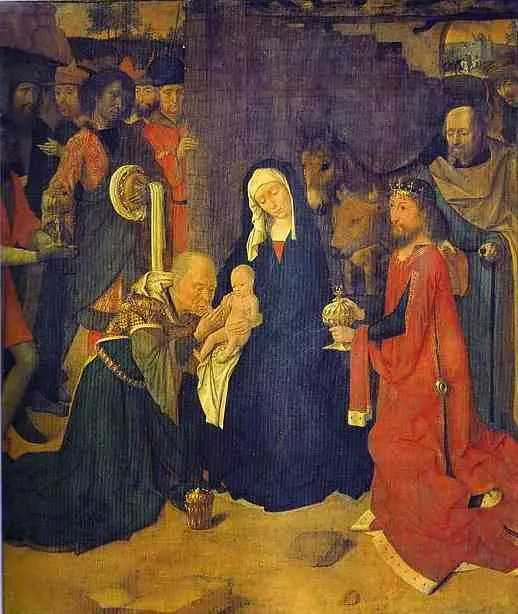 Adoration of the Magi
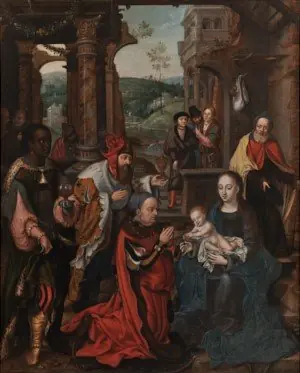 De aanbidding der wijzen
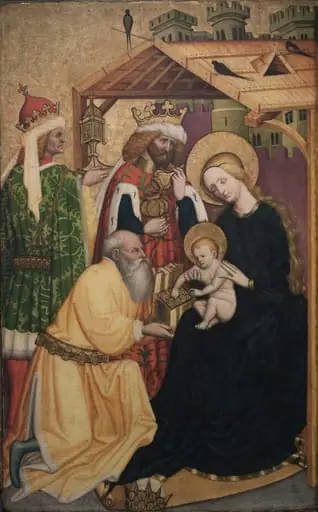 Adoration of the Magi
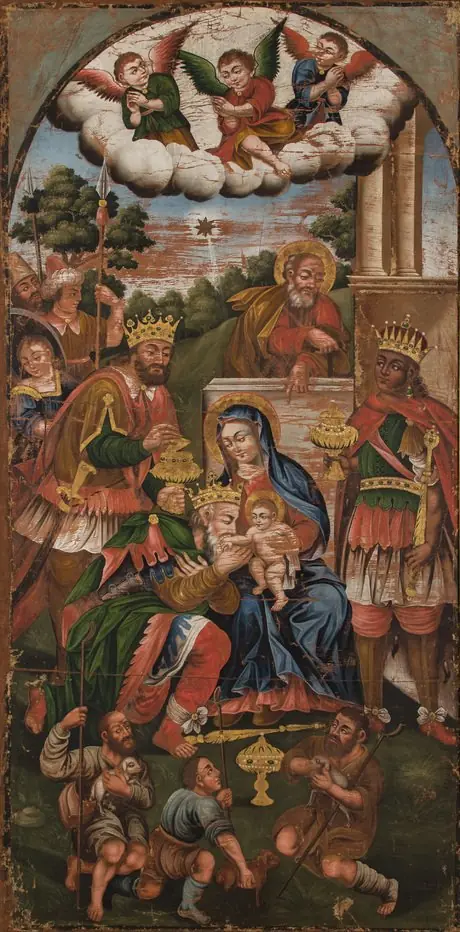 Մոգերի երկրպագությունը
 The Adoration of the Magi
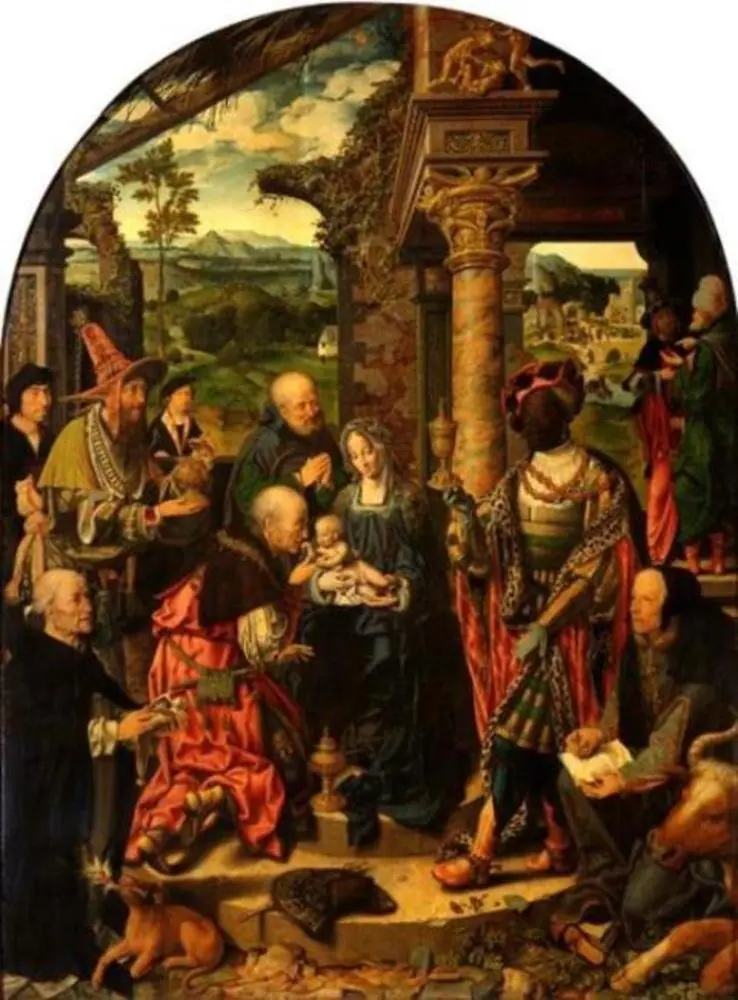 The large Adoration of the Kings
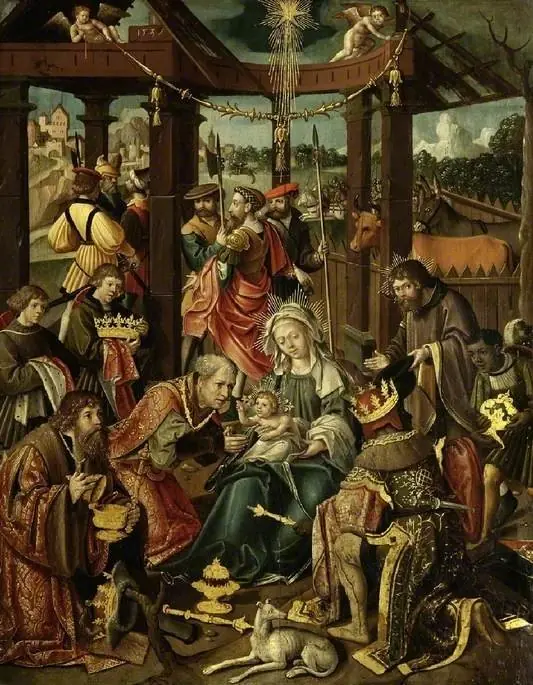 Adoration of the Kings
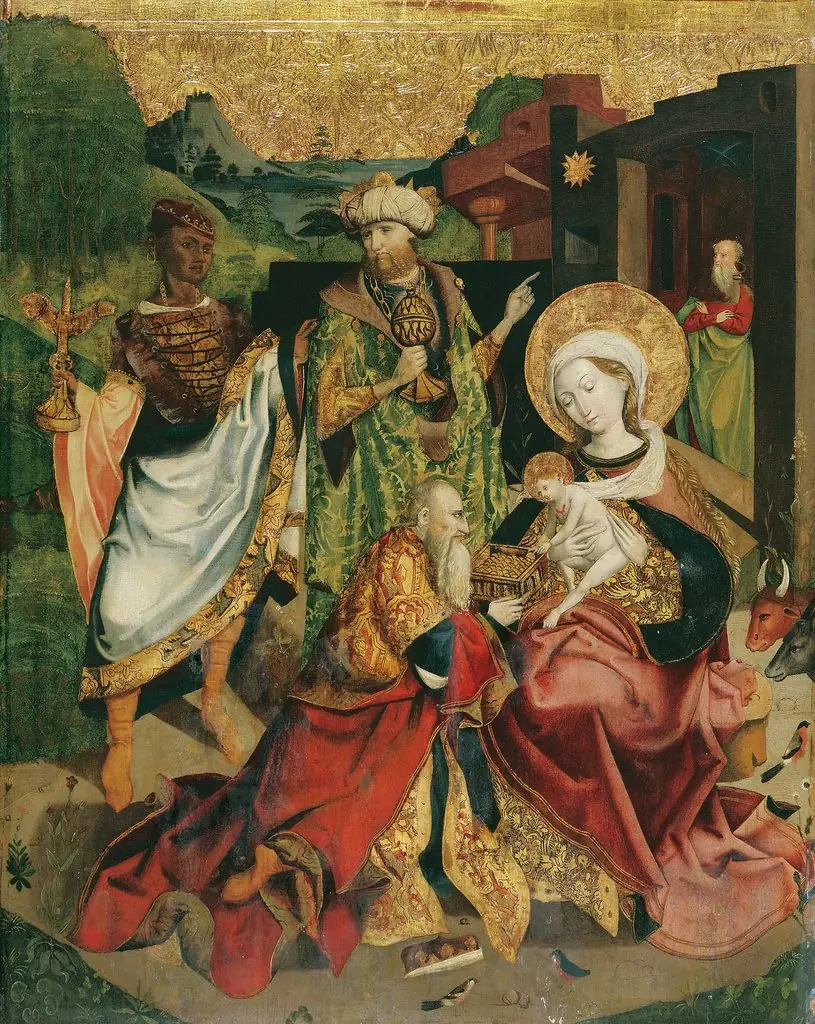 Anbetung der Hl. Drei Könige
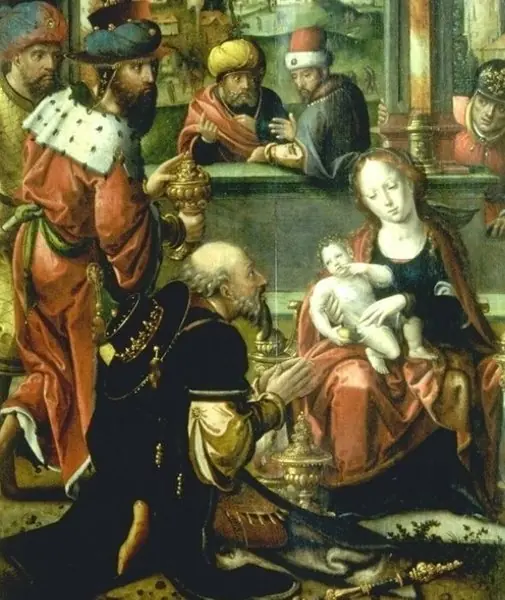 Triptychon mit der Anbetung der Könige (3 Tafeln)