Artwork
Adoration of the Magi
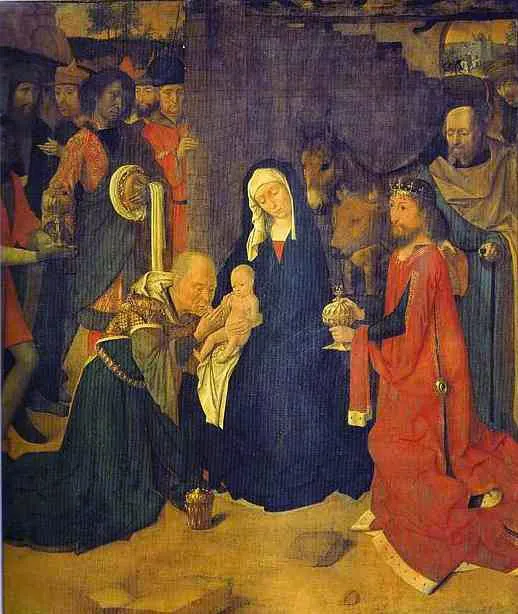
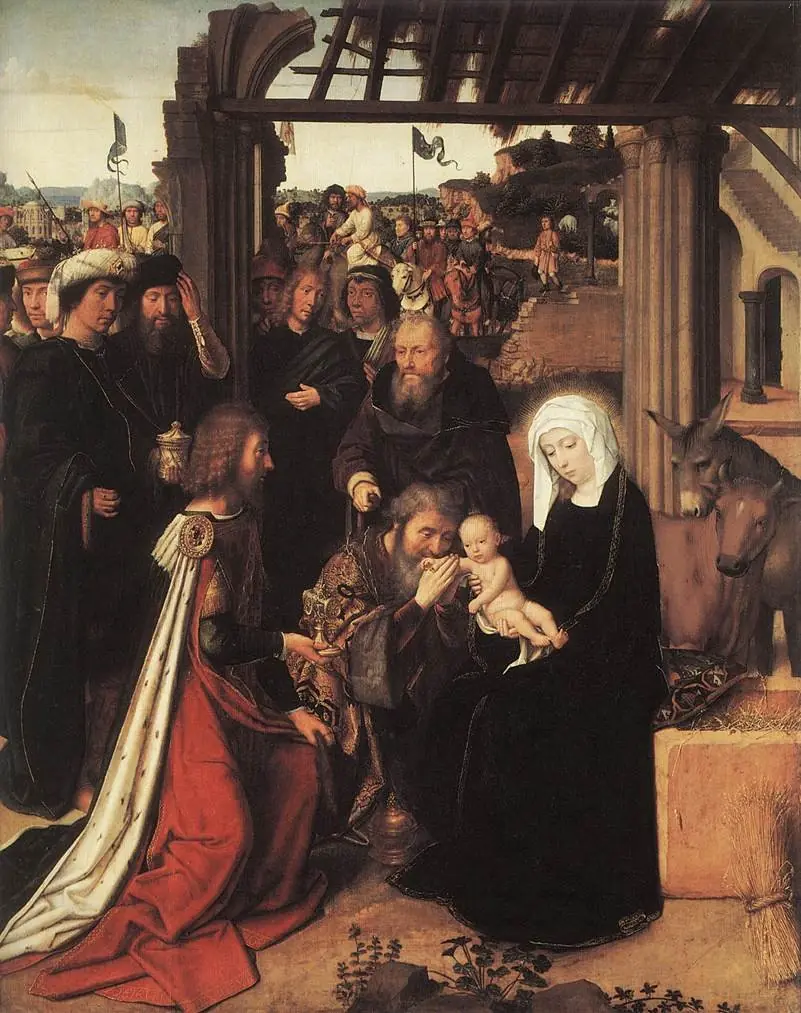
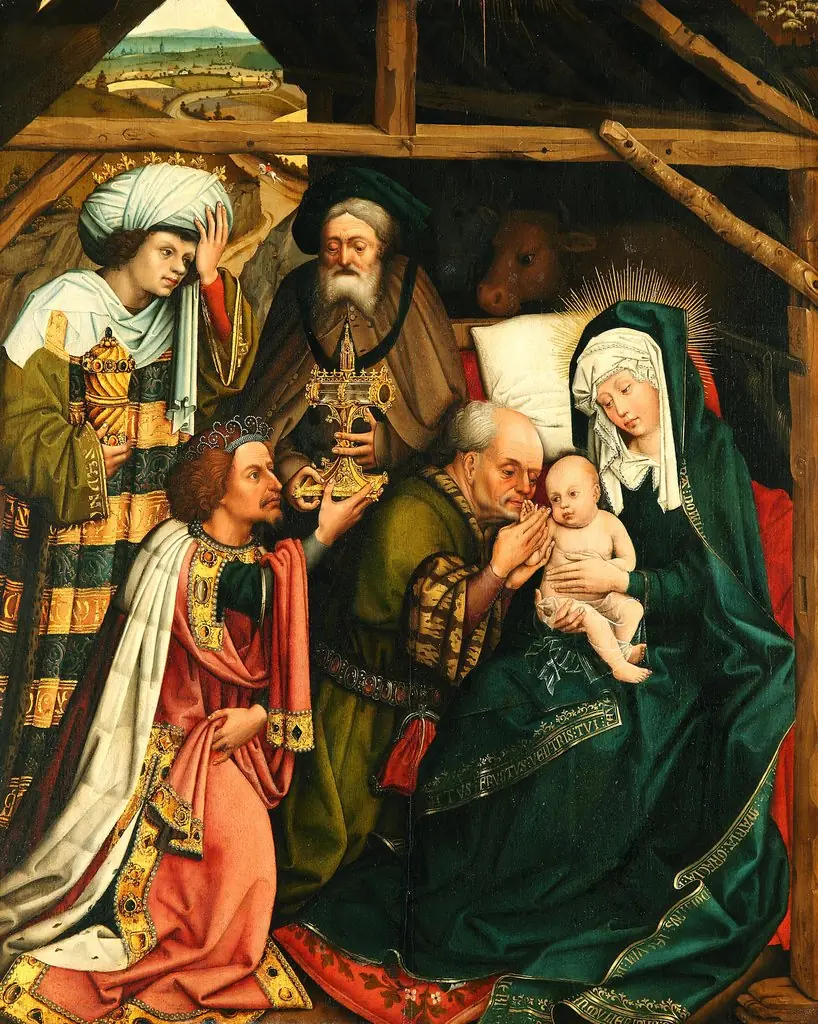
Adoration of the Magi is a tempera painting by the Northern Renaissance artist Gerard David. It dates from 1498 and is held in the collection of the Uffizi Gallery.
About this work
Subject & Meaning
The ruined stable is a conventional iconographic element symbolizing the old order giving way to the new faith brought by Christ's birth.
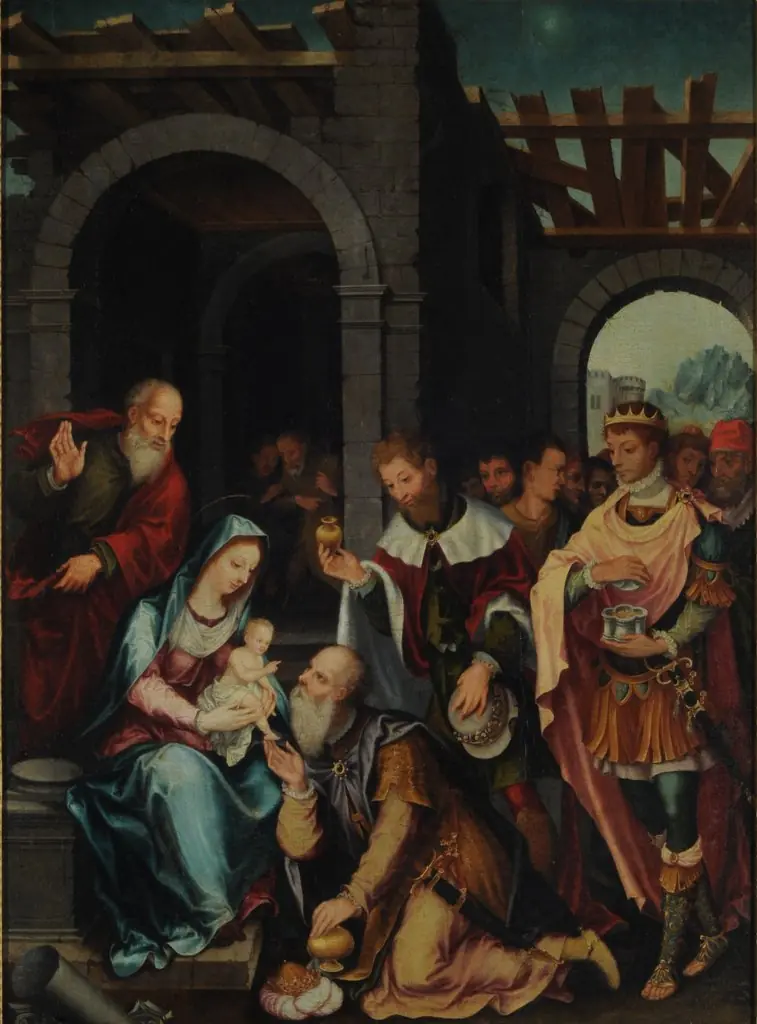
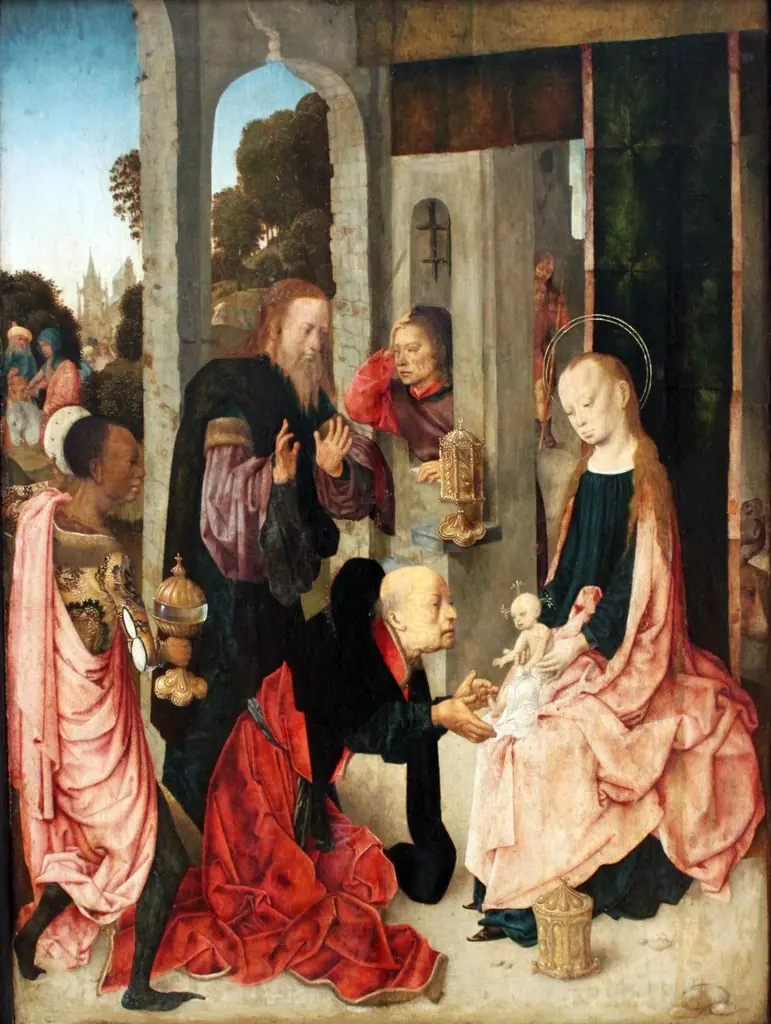
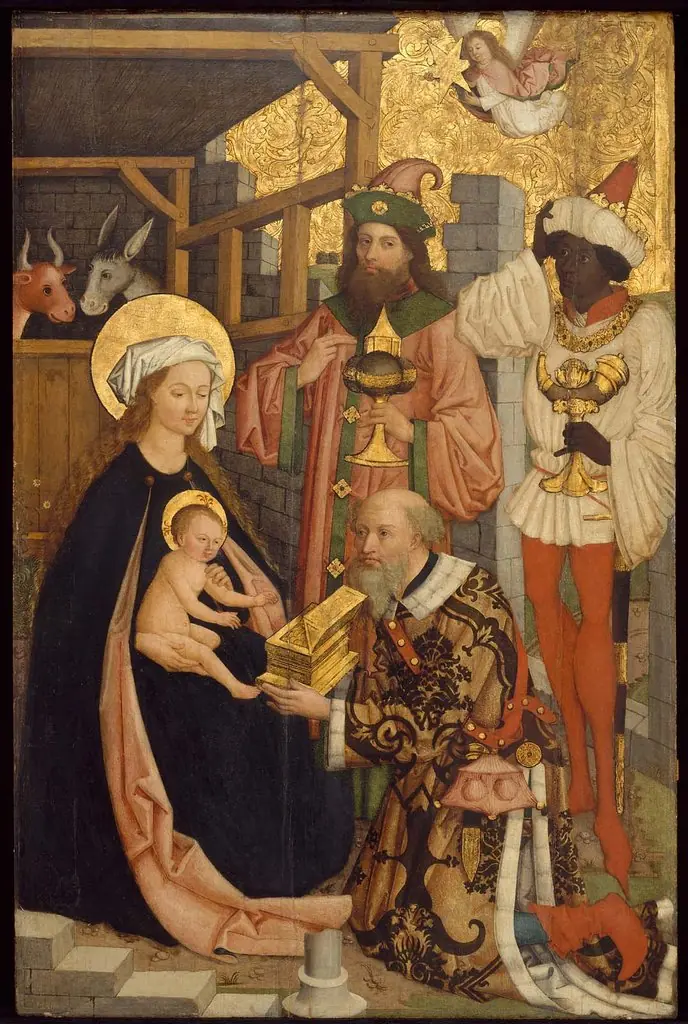
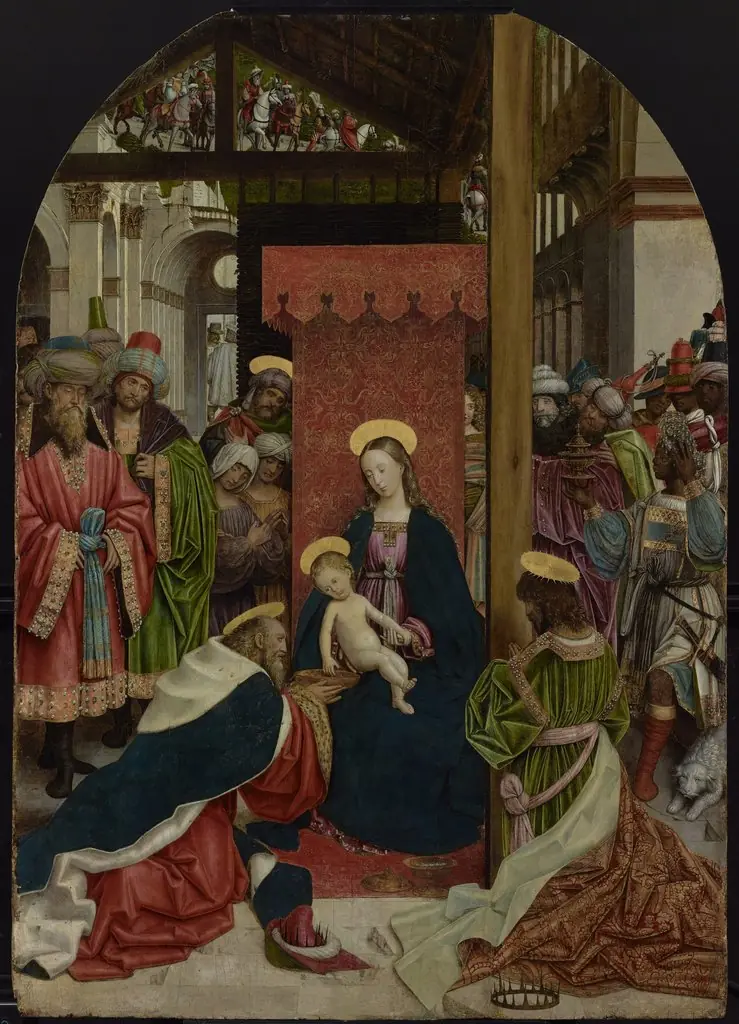
The painting depicts the Adoration of the Magi, a scene in which the Virgin Mary presents the Christ Child to the three Magi for worship, set against the dark backdrop of a ruined stable. The figures are arranged in a pyramidal composition, with Mary and the Child at the center, Saint Joseph standing behind them to the right, the ox and the ass in the middle, and the procession of the Magi to the left. Gaps in the background reveal glimpses of an idyllic landscape, including a castle in the upper right.
The ruined stable is a conventional iconographic element symbolizing the old order giving way to the new faith brought by Christ's birth. The Magi's act of adoration signifies the recognition of the infant Jesus as king by the wider Gentile world, while the inclusion of Joseph, the ox, and the ass fulfills traditional Nativity imagery drawn from the Gospels and apocryphal tradition. The overall mood is one of quiet wonder and hieratic solemnity, expressed through delicate, light linework and abstract, almost weightless drapery that still carries traces of late Gothic sensibility.
Technique & Style
The painting is executed in tempera on canvas, measuring 95 cm in height and 80 cm in width.
Handling shows a fine, delicate line that produces abstracted, weightless drapery, aligning with late Gothic tradition. Composition is organized around a pyramidal arrangement, with the Virgin and Child at the center flanked by the kneeling Magi and attendant figures. The background employs a dark ground for the ruined stable, opening to narrow glimpses of an idyllic landscape with a castle in the upper right. The overall mood is one of hushed, rapt wonder, conveyed through restrained gesture and quiet dignity.
History & Provenance
The painting is dated to c. 1495 and is executed in tempera on canvas, measuring 95 × 80 cm. It entered the Uffizi Gallery in Florence in 1845 from the Accademia di Belle Arti, with no documented earlier provenance. Max Friedländer attributed it to Gerard David and placed it in the artist’s early period, before the 1498 Adoration in Brussels, noting lingering late-Gothic elements and the unusual support of canvas.
The work’s early history remains undocumented prior to its 19th-century appearance at the Accademia.
Gerard David's Adoration of the Magi is held in the Uffizi Gallery in Florence. The work entered the gallery's collection in 1845, having been transferred from the Accademia di Belle Arti, though its earlier provenance remains unknown. It is cataloged as a tempera painting on canvas with dimensions of 95 by 80 cm. The attribution to Gerard David was established by Max Friedländer, who dated the piece to the artist's early period, prior to his 1498 Adoration in Brussels. The painting is currently documented in the official catalog of the Polo Museale di Firenze.
Context
Gerard David's Adoration of the Magi, dated to approximately 1495, is recognized as a significant work of Early Netherlandish painting. Although the attribution to the Flemish master was established by Max Friedländer, the work's unusual technique and canvas support have complicated precise chronological placement. Scholars generally situate the piece within the artist's early phase, preceding his 1498 Adoration in Brussels, due to the persistence of late Gothic stylistic elements.
These features include a thin, delicate line creating abstract drapery and a composition characterized by a sense of tranquil hieratic wonder. The painting's history in the Uffizi Gallery began in 1845, when it arrived from the Academy of Fine Arts without a known prior origin.
Overview
Created in 1498 by the Early Netherlandish artist Gerard David, this tempera panel portrays the biblical scene of the Magi presenting gifts to the infant Christ. The composition centers on a kneeling woman in a blue mantle holding the child, surrounded by richly dressed figures whose gazes converge on the newborn. The work exemplifies the devotional genre typical of the Northern Renaissance and is currently displayed in Florence’s Uffizi Gallery.
Artist & collection

Artist
Gerard David (c. 1460 – 13 August 1523) was an Early Netherlandish painter and manuscript illuminator known for his brilliant use of color. Only a bare outline of his life survives, although some facts are known. He may…

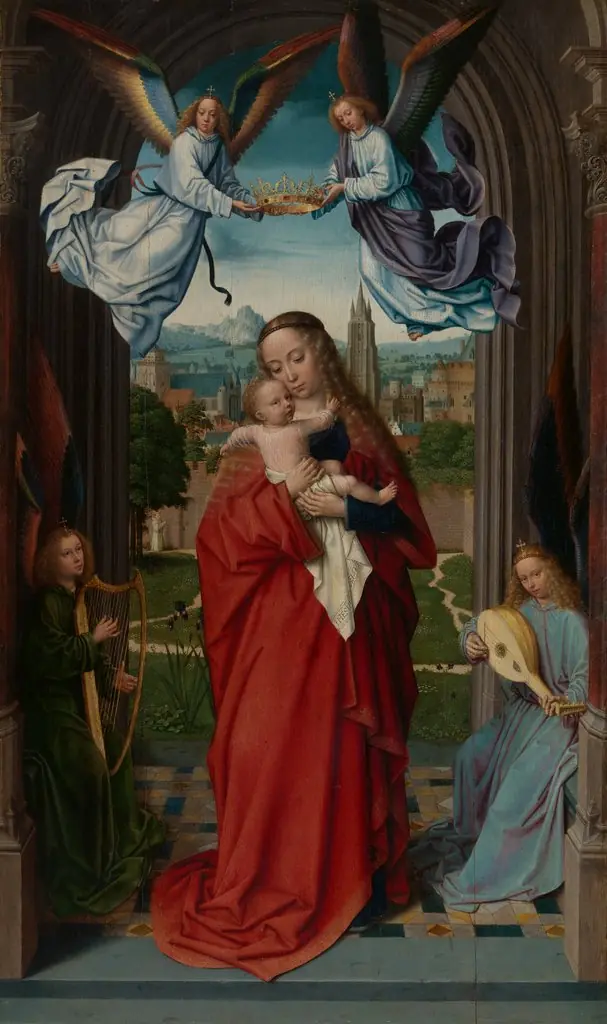 Virgin and Child with Four Angels
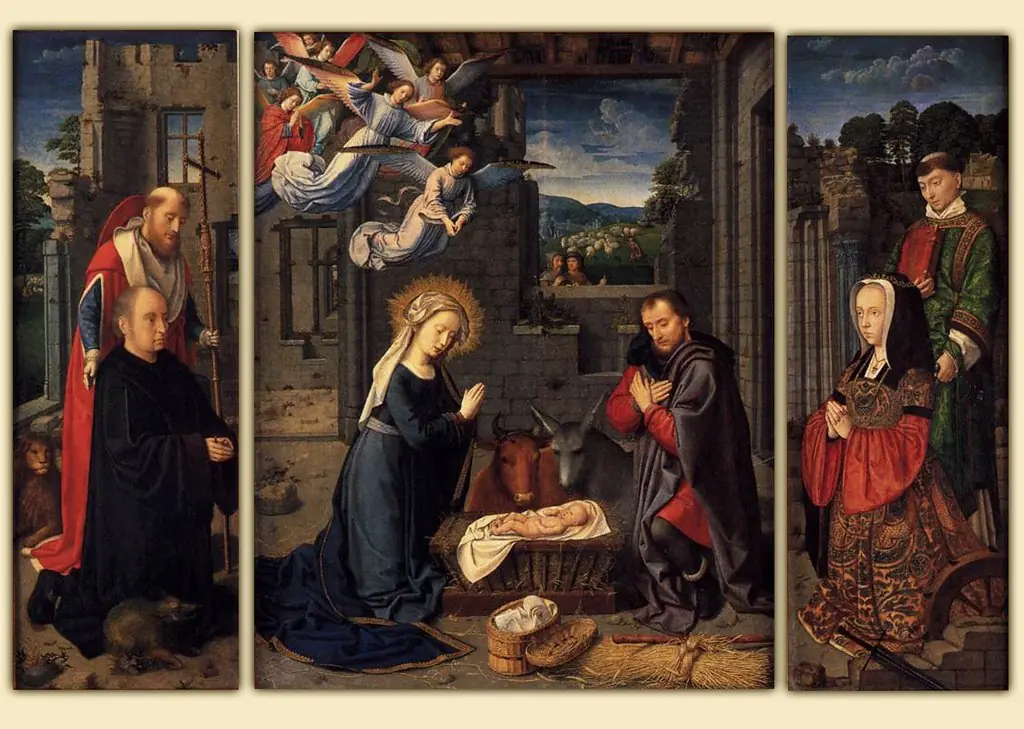 The Nativity with Donors and Saints Jerome and Leonard
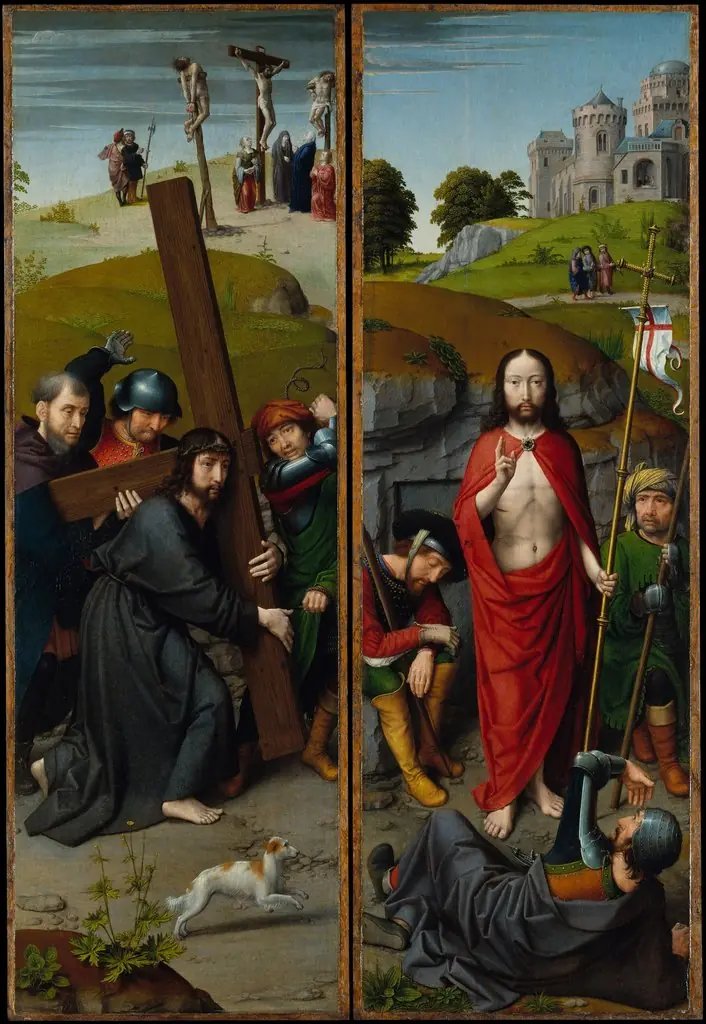 Christ Carrying the Cross, with the Crucifixion; The Resurrection, with the Pilgrims of Emmaus
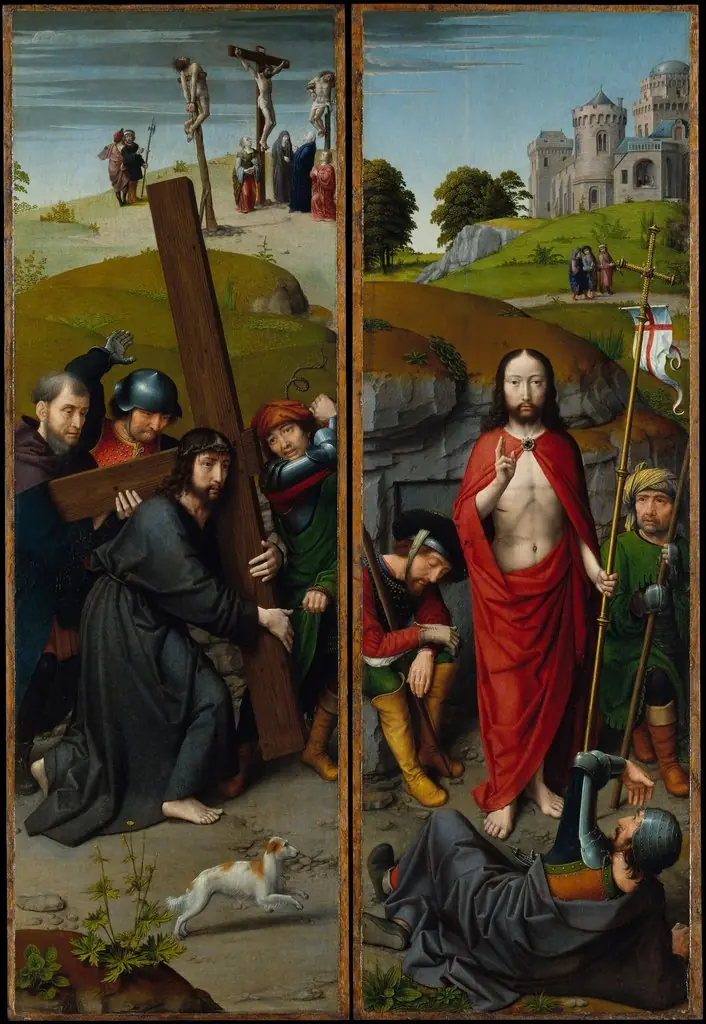 Christ Carrying the Cross, with the Crucifixion; The Resurrection, with the Pilgrims of Emmaus
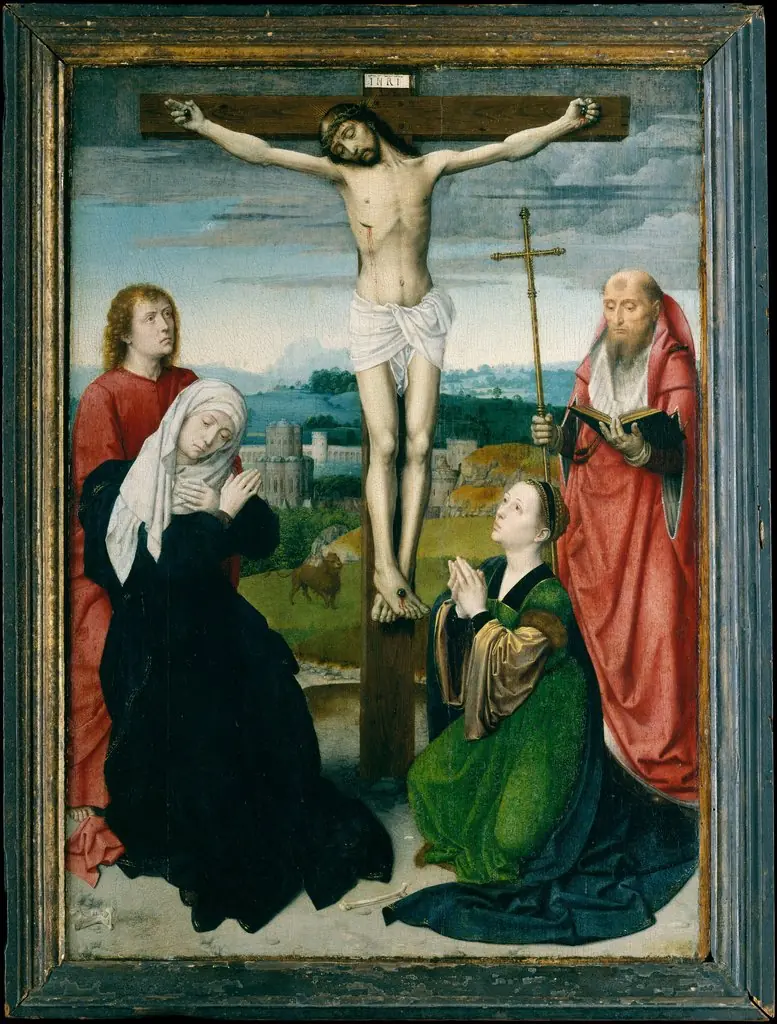 The Crucifixion
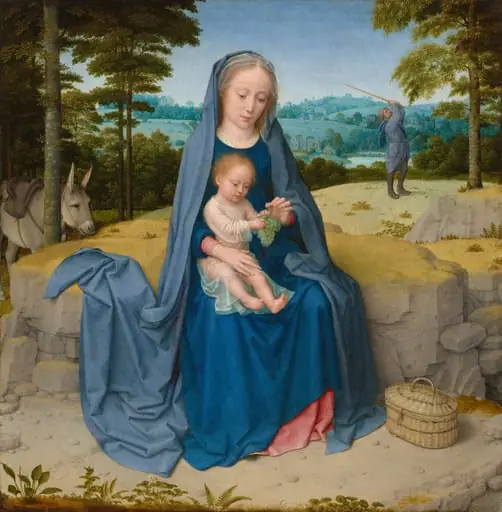 The Rest on the Flight into Egypt
![The Saint Anne Altarpiece: Saint Anne with the Virgin and Child [middle panel], by Gerard David](https://artifactworldgallery.com/img/gerard-david--the-saint-anne-altarpiece-saint-anne-with-the-virgin-and-chi--781e919f9012a004-w320.webp) The Saint Anne Altarpiece: Saint Anne with the Virgin and Child [middle panel]
The Saint Anne Altarpiece: Saint Anne with the Virgin and Child [middle panel]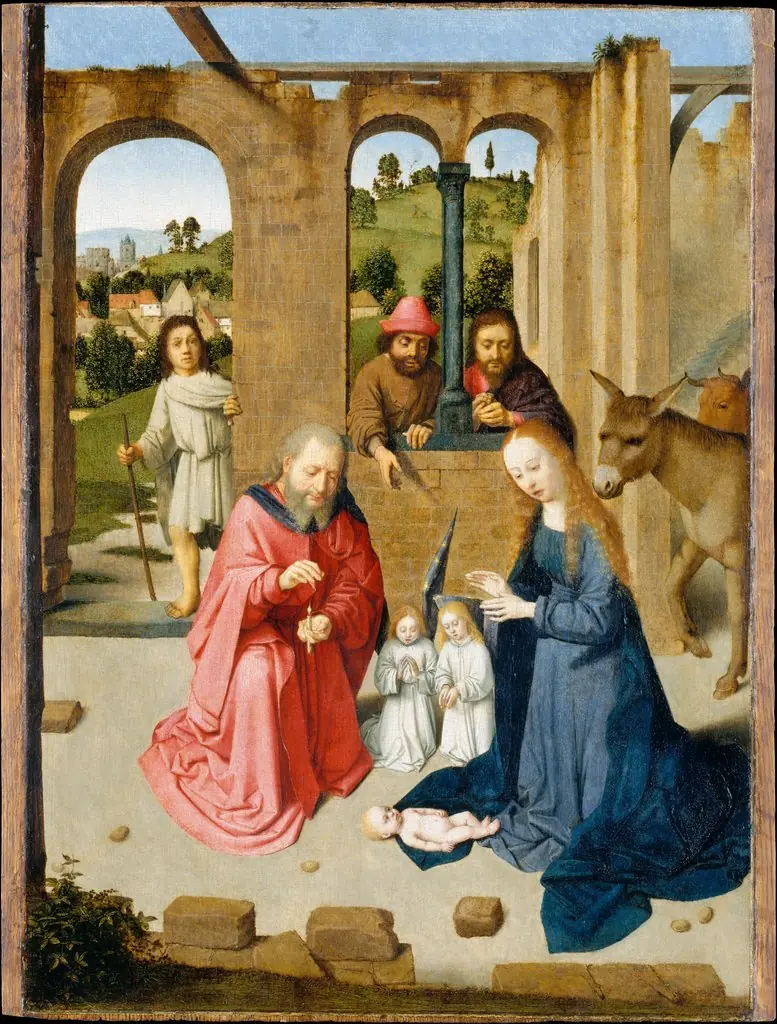 The Nativity