Artwork
Café Terrace at Night
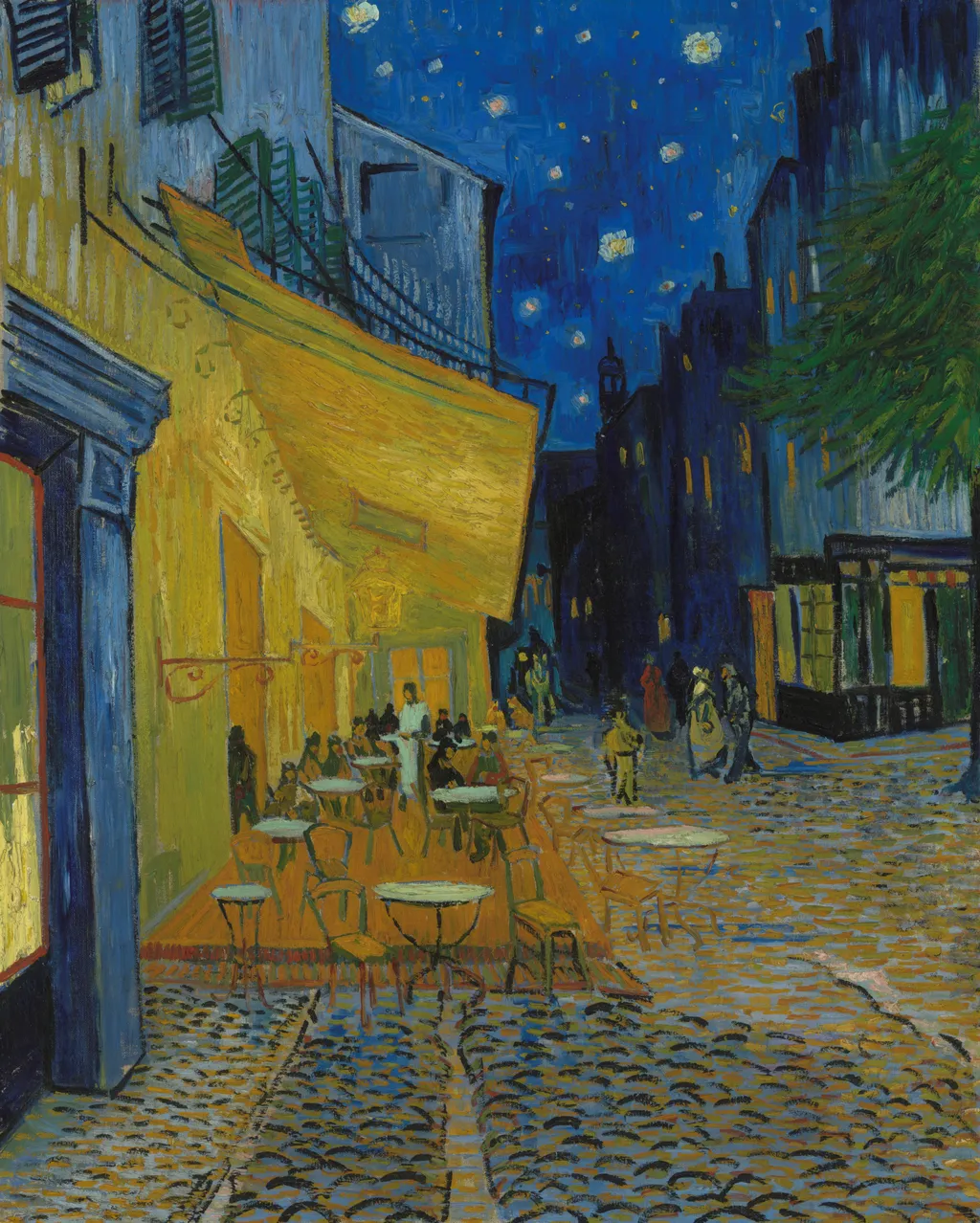
Café Terrace at Night is an oil painting by the Post-Impressionist artist Vincent van Gogh. It dates from 1888 and is held in the collection of the Kröller-Müller Museum.
About this work
Subject & Meaning
The painting is recognized as a pioneering exploration of nocturnal light and perspective, influencing Van Gogh's subsequent starry sky works.
The painting depicts a nighttime café terrace in Arles, illuminated by a yellow lantern that casts light onto the cobblestones and surrounding buildings, with figures of drinkers seated at tables under a starry sky of blue and violet tones. The composition includes the café's façade, a green tree, and the distant spire of a former church, symbolizing the interplay of artificial light and natural night. Van Gogh described the scene as a 'night without black,' emphasizing vibrant blues, violets, and greens rather than traditional dark night palettes, reflecting his fascination with capturing luminous effects directly from observation.
The work draws thematic inspiration from Maupassant's *Bel-ami*, particularly its depiction of illuminated cafés and starry nights, though Maupassant does not mention a 'starry sky.' Art historians have also proposed symbolic interpretations, such as a reimagined Last Supper with twelve diners arranged in a haloed composition, though this remains speculative and unsupported by Van Gogh's explicit statements. The painting is recognized as a pioneering exploration of nocturnal light and perspective, influencing Van Gogh's subsequent starry sky works.
Technique & Style
Café Terrace at Night is an oil painting on canvas executed in Arles in September 1888. Van Gogh applied oil paint to a linen support, using a technique of swift, visible brushstrokes that delineate figures, architectural forms, and a luminous night sky. The composition features a yellow lantern illuminating the café terrace, contrasting with deep blue and violet shadows, while a green tree and star‑filled heavens provide spatial depth. This work marks Van Gogh’s first use of a starry background, establishing a distinctive formal quality of vibrant color juxtaposition and perspective that anticipates later nocturnal canvases.
History & Provenance
Café Terrace at Night was painted by Vincent van Gogh in September 1888 in Arles, France, and is currently housed in the Kröller-Müller Museum in Otterlo, Netherlands. The work was created on canvas with oil paint and measures 80.7 cm by 65.3 cm. Van Gogh described the scene in a letter to his sister, emphasizing his use of color to depict a night without black, where a yellow lantern illuminates the terrace and cobblestones take on a violet-pink hue beneath a starry sky. He noted that he painted the image directly from observation rather than from a daytime sketch. The painting was first exhibited in 1891 under the title Coffeehouse, in the evening (Café, le soir), and has remained in the Kröller-Müller Museum since its acquisition. The café depicted was later restored in the 1990s to match the composition of the painting, including a yellow façade to align with van Gogh's portrayal.
Café Terrace at Night is held by the Kröller-Müller Museum in Otterlo, Netherlands.
It was first exhibited in 1891 under the title Coffeehouse, in the evening (Café, le soir). The painting remains in the museum’s collection, with accession details recorded in its holdings.
Context
Created in September 1888, *Café Terrace at Night* marks a pivotal moment in Vincent van Gogh’s development of the starry sky motif, serving as the first work where he rendered a star-filled background. This innovation directly preceded *Starry Night Over the Rhône*, painted the same month, and the more famous *The Starry Night* a year later. Scholars have identified potential influences from Louis Anquetin’s *Avenue de Clichy: 5 o'clock in the evening*, noting shared perspective and blue-yellow tonality. Additionally, the artist's letters reveal a deliberate rejection of conventional black nightscapes in favor of rich blues, violets, and yellows to capture the luminosity of gaslight. While the painting was initially titled *Coffeehouse, in the evening* upon its 1891 debut, later scholarship has proposed symbolic interpretations, including a theory viewing the twelve figures as a unique, Symbolist Last Supper reflecting the artist's spiritual yearnings.
Legacy
Café Terrace at Night is recognized as the first painting in which Van Gogh employed a starry background, a motif he developed further in Starry Night Over the Rhône, painted the same month, and later in The Starry Night, completed a year afterward. He also reused the starlit backdrop in his Portrait of Eugène Boch. The work was first exhibited in 1891 under the title Coffeehouse, in the evening (Café, le soir).
The actual café in Arles, originally known as "La Terrasse," was refurbished in 1990 and 1991 and repainted yellow to mirror the painting's appearance, and was subsequently renamed "Café van Gogh," cementing the painting's status as a tourist landmark tied to the city's identity.
Own this work as a print
Artist & collection
Artist
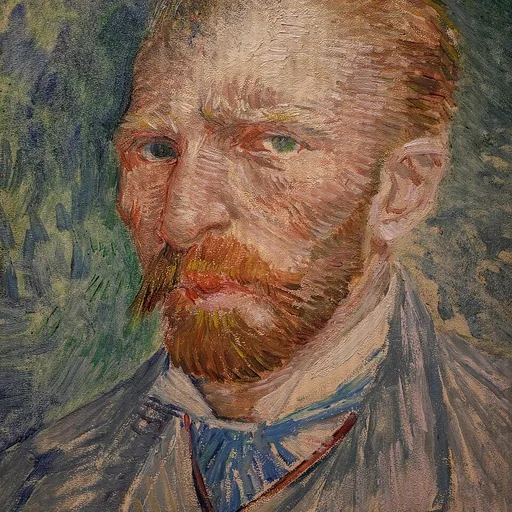
Vincent Willem van Gogh was a Dutch Post-Impressionist painter who is among the most famous and influential figures in the history of Western art.

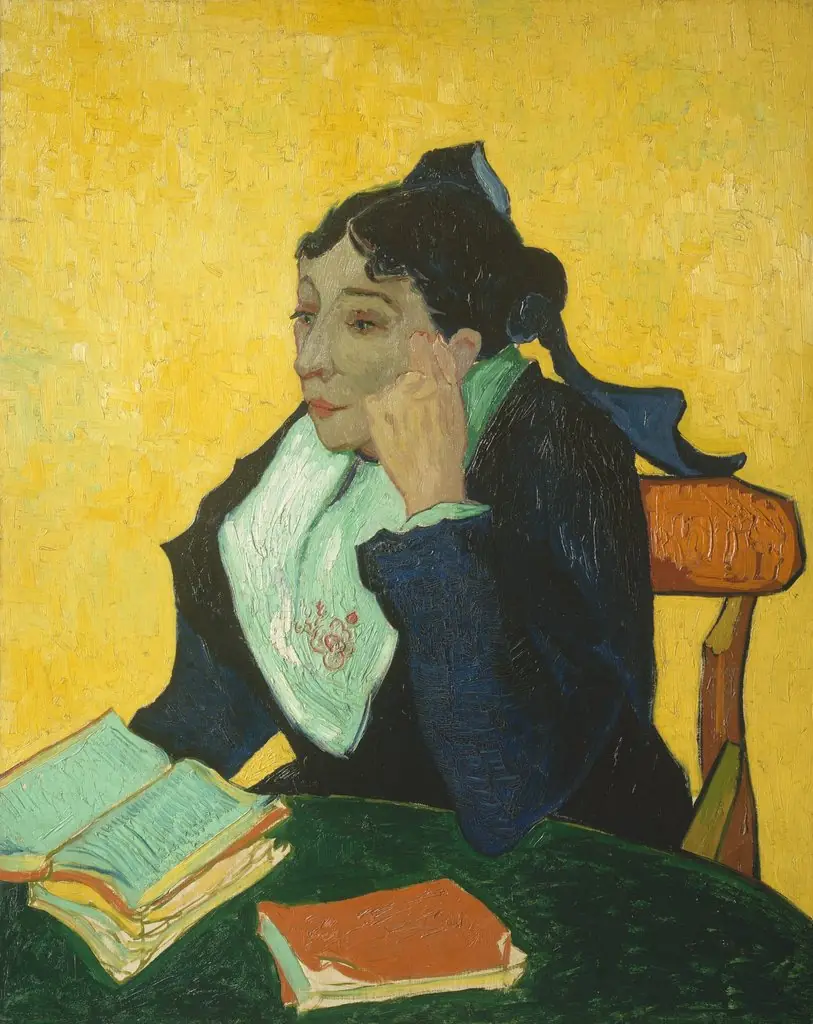
- Road with Cypress and Star
 Bedroom in Arles
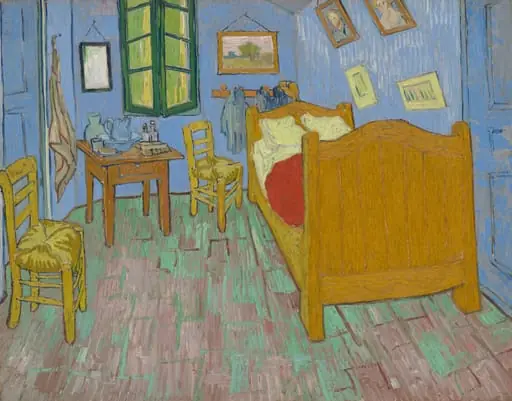 The Bedroom
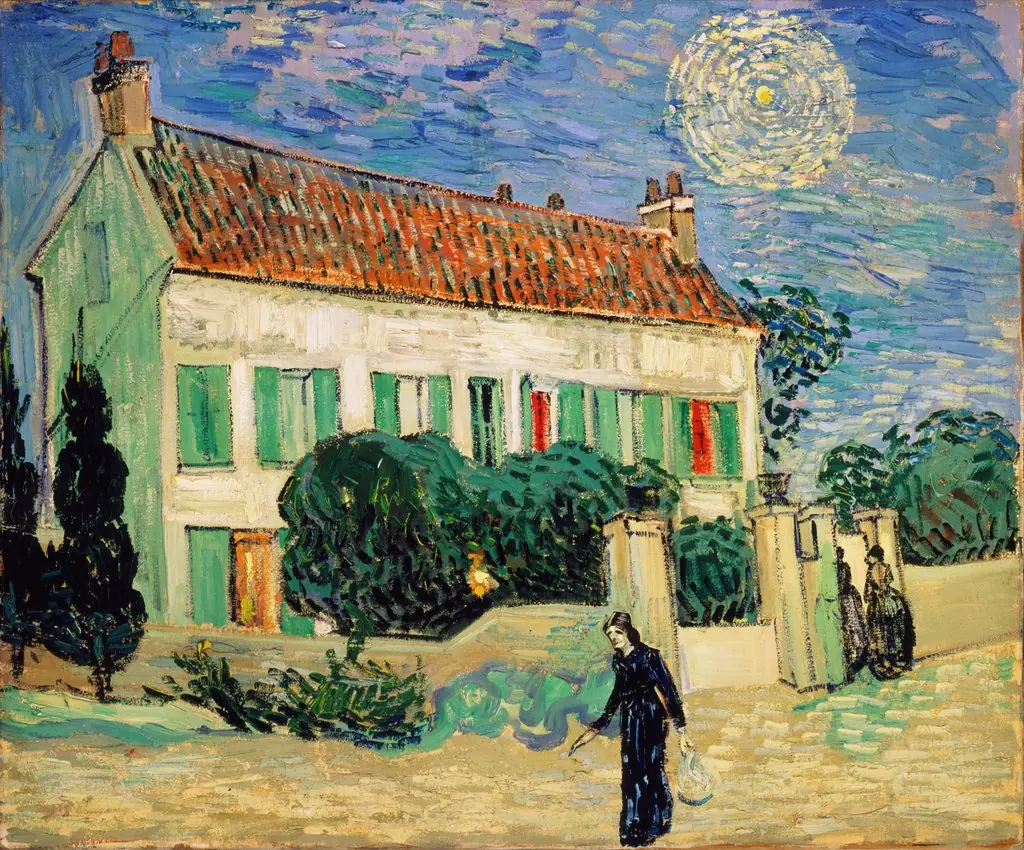 White House at Night
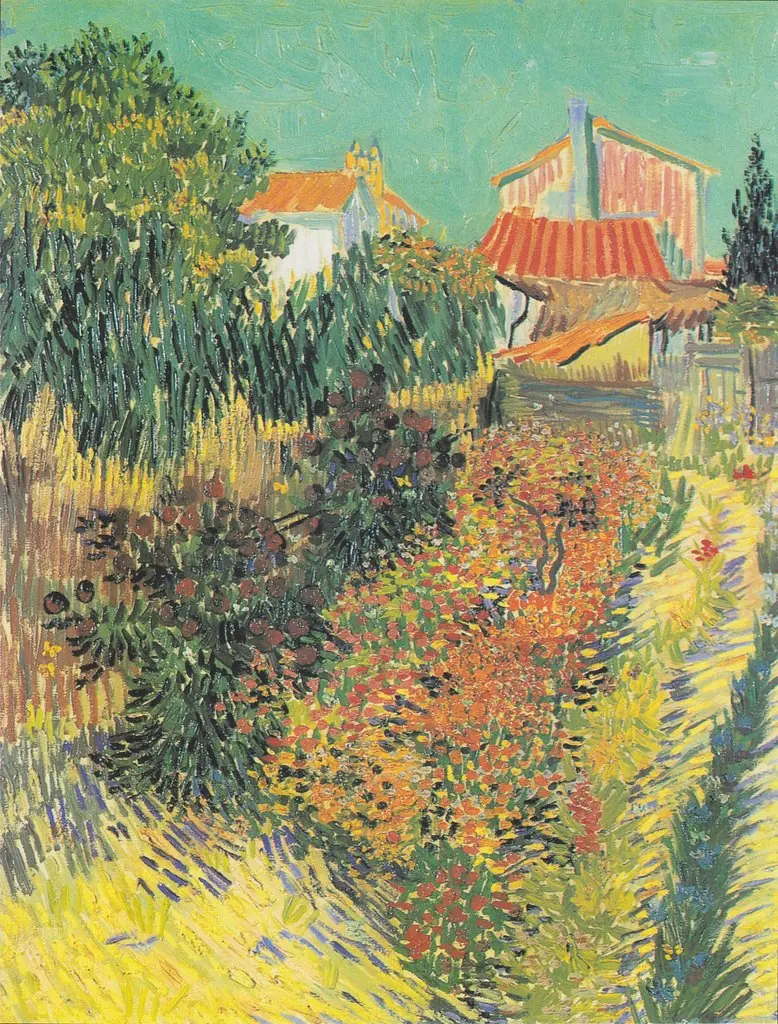 Garden Behind a House
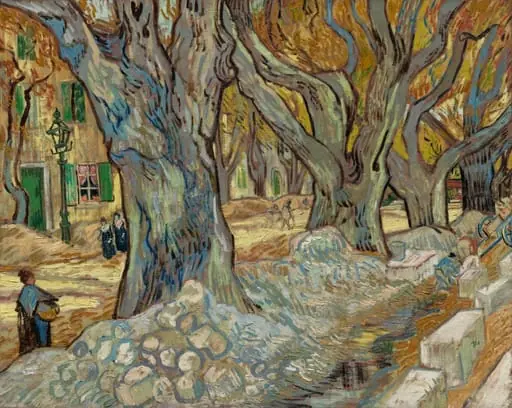 The Large Plane Trees (Road Menders at Saint-Rémy)
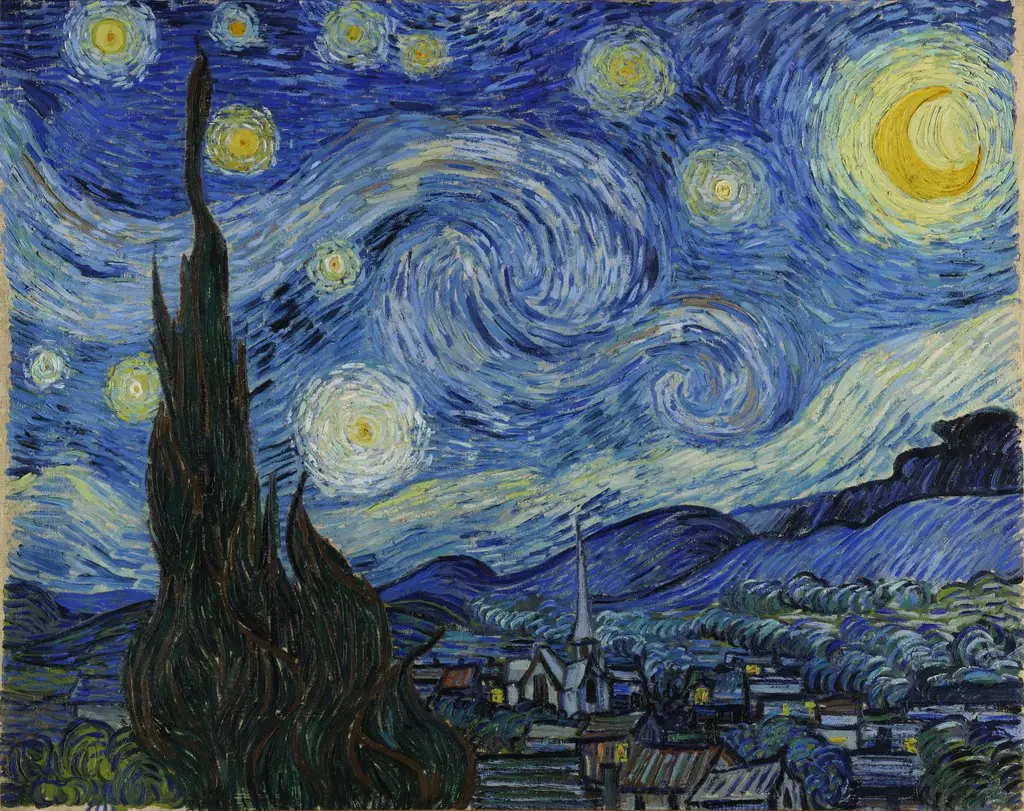 The Starry Night
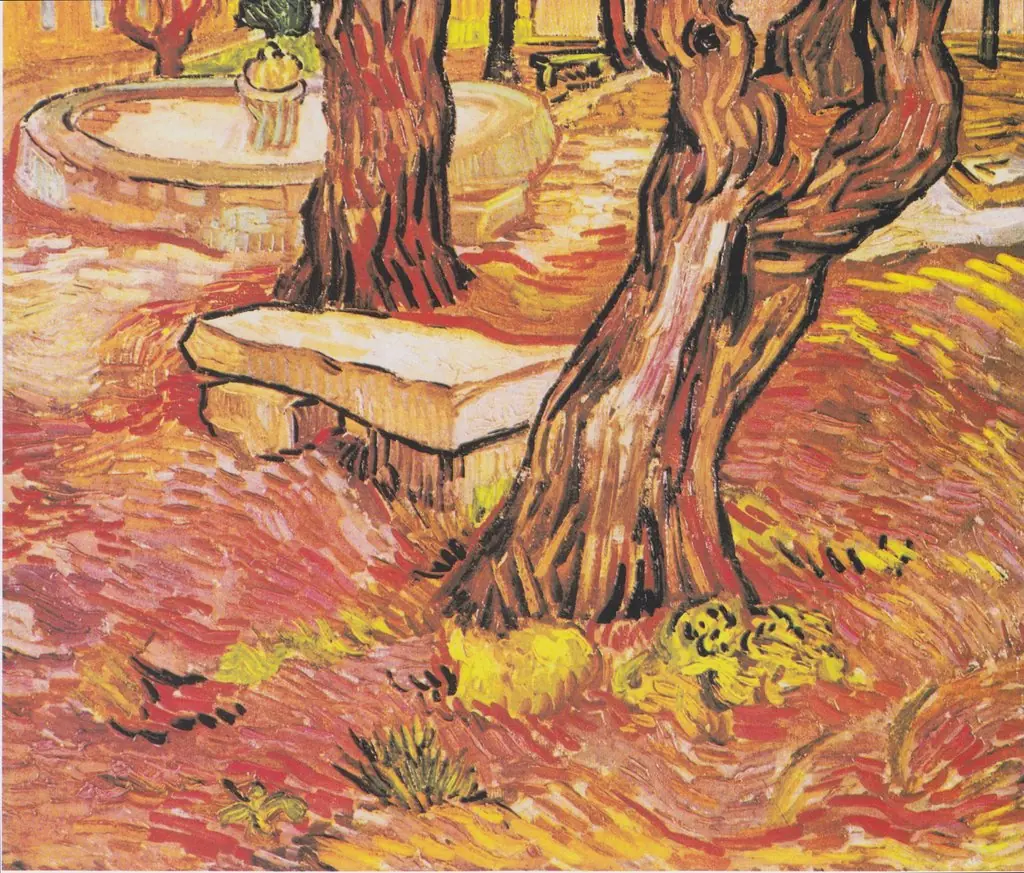 The Stone Bench in the Garden of Saint-Paul Hospital
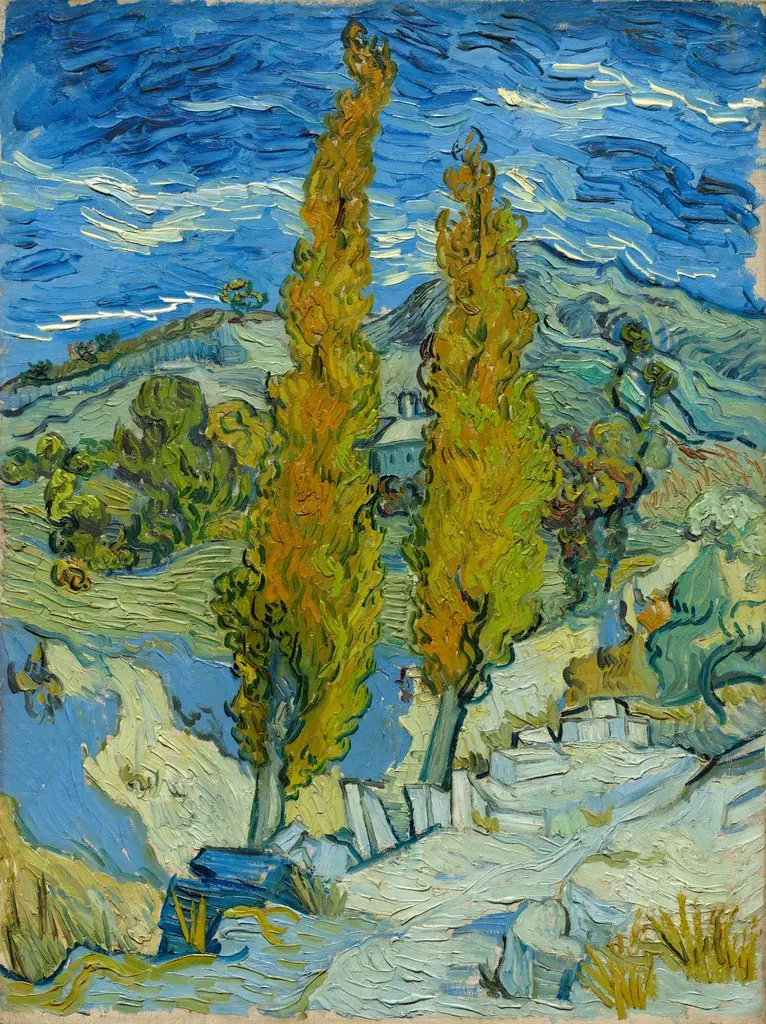 Two Poplars in the Alpilles near Saint-Rémy
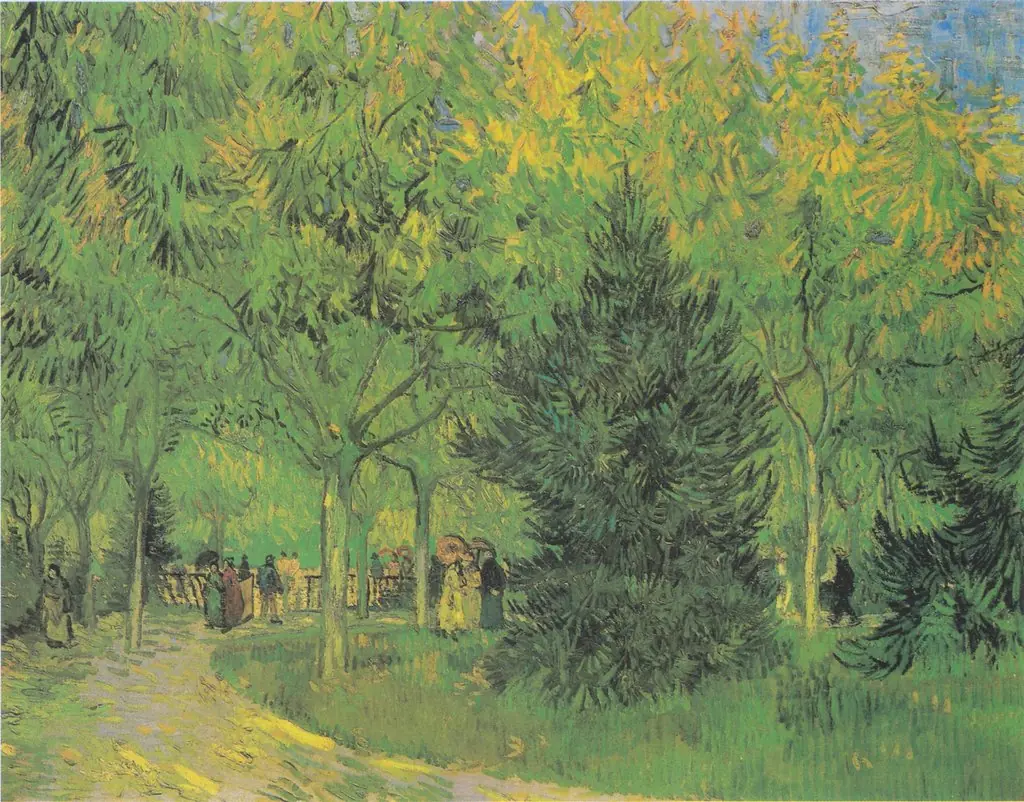 A Lane in the Public Garden at Arles
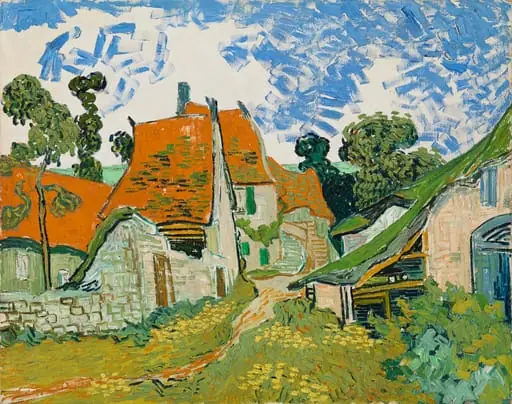 Katu, Auvers-sur-Oise
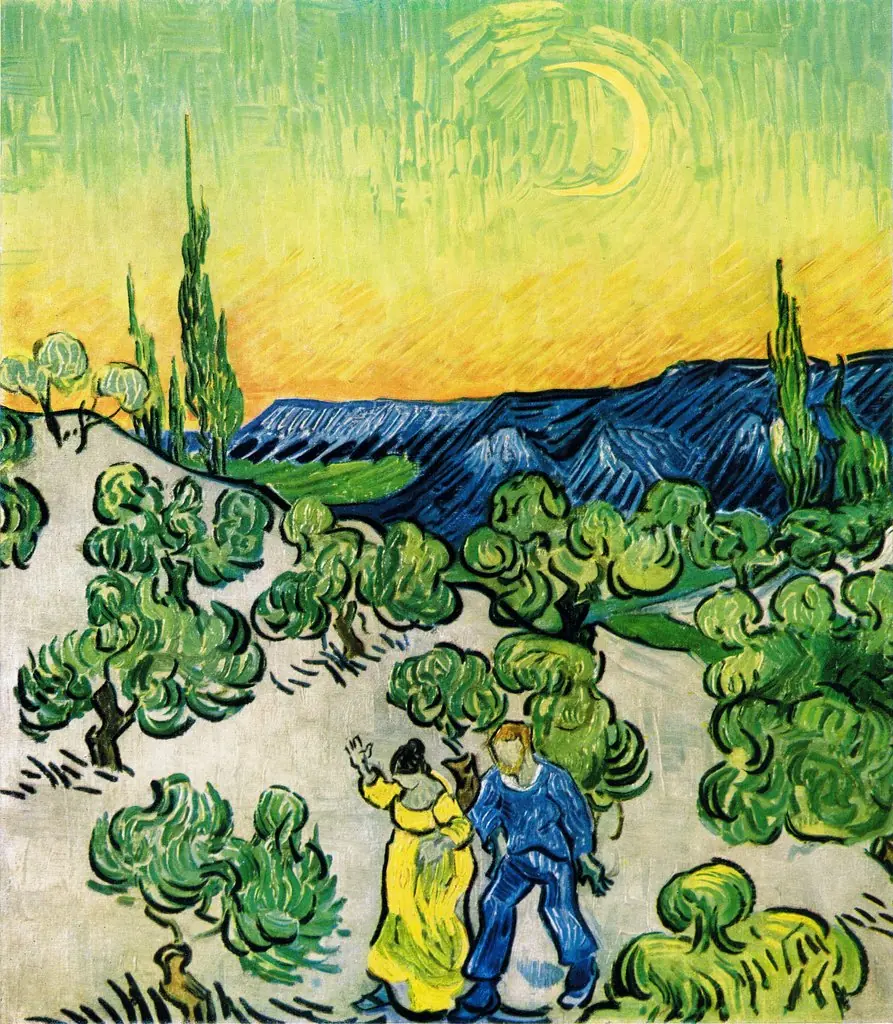 Landscape with Couple Walking and Crescent Moon