Artwork
White House at Night
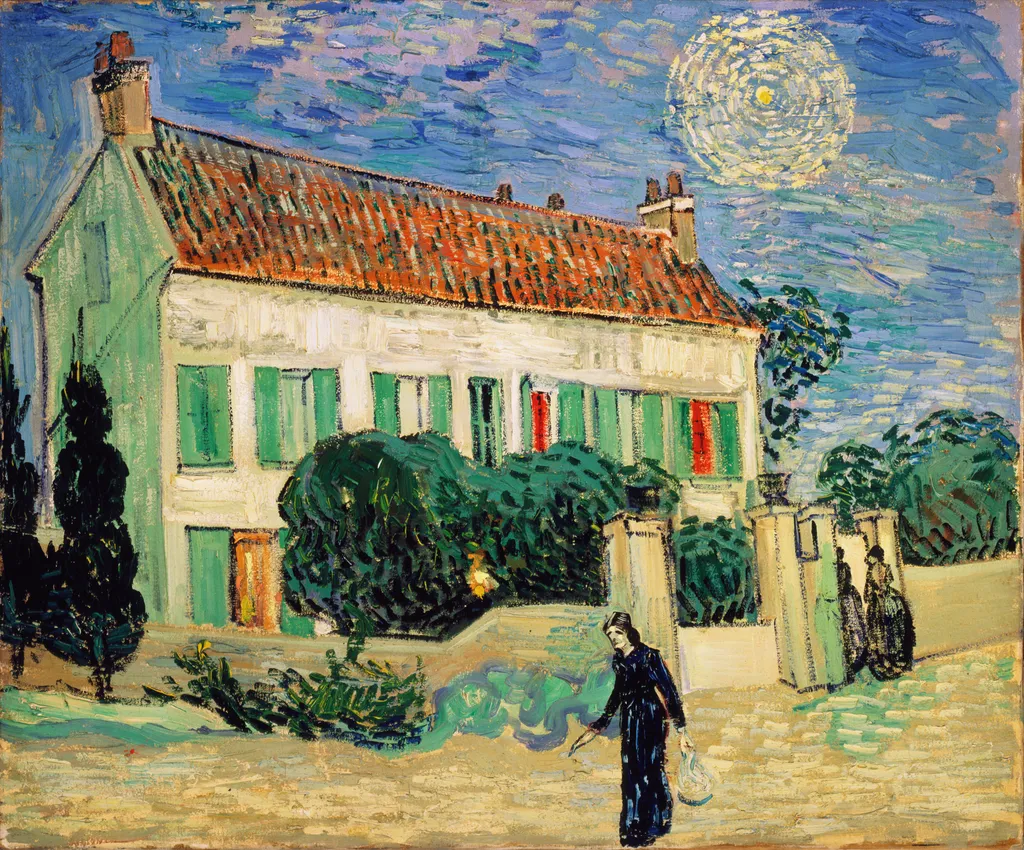
White House at Night is an oil painting by the Post-Impressionist artist Vincent van Gogh. It is held in the collection of the Hermitage Museum.
About this work
Van Gogh painted White House at Night in June 1890. It shows a single house bathed in warm light at dusk. This was his last work before he died six weeks later.
The small town of Auvers-sur-Oise in France inspired many of his late paintings. This spot felt quiet yet full of color to him. The brushwork hints at how quickly he worked those final days.
Next, look up Vincent van Gogh.
Subject & Meaning
The scene includes two women in dark clothing, one rushing toward the house, adding a sense of movement and human presence to the otherwise still landscape.
Vincent van Gogh’s White House at Night depicts a nocturnal scene in Auvers-sur-Oise, centering on a white house illuminated by artificial light and a prominent celestial body. The house, framed by strict horizontal and vertical lines, dominates the composition, its windows glowing with red and orange hues, interpreted by the Hermitage Museum as symbolic of psychological tension, with the windows acting as the home’s “eyes”. The bright object in the sky, identified by astronomers as Venus, was visible in June 1890 and serves as a marker of fate, reflecting van Gogh’s anguish.
The scene includes two women in dark clothing, one rushing toward the house, adding a sense of movement and human presence to the otherwise still landscape.
Symbolically, the work merges domestic tranquility with cosmic unease. The house, a recurring motif in van Gogh’s oeuvre, represents stability, while the star, his final depiction of a celestial body, evokes themes of destiny and existential turmoil. The contrast between the warm, artificial light of the windows and the cool, natural glow of Venus underscores this duality, suggesting a tension between human refuge and the vast, indifferent universe.
Technique & Style
White House at Night is an oil‑on‑canvas work measuring 59 × 72.5 cm, painted in Auvers‑sur‑Oise on 16 June 1890, just six weeks before van Gogh’s death. The surface is built from short, tight horizontal and vertical strokes; the façade is rendered in stark white with gray tonal shifts, while the roof is defined by narrow red, white and black lines. Green and black brushstrokes suggest trees that partially obscure the front, and two windows emit orange and red glows that punctuate the night sky, where a yellow celestial body likely represents Venus.
The composition’s rigid geometry conveys psychological tension, and the painting’s tumultuous provenance includes loss after World War II, Soviet seizure, and a 1995 Hermitage exhibition.
History & Provenance
Vincent van Gogh painted White House at Night on 16 June 1890 in Auvers-sur-Oise, six weeks before his death. In a letter dated 17 June 1890, the artist described the work to his brother Theo. Following Van Gogh's passing, the painting passed to his brother Theo, then to Theo's widow Johanna Bonger, and subsequently to Vincent's uncle, Cornelis van Gogh.
The work later entered the collection of Zurich collector Fritz Meyer-Fierz before being sold to dealer Frederik Muller & Co. It was acquired by Berlin dealer Paul Cassirer in 1926 and eventually reached the private collection of German industrialist Otto Krebs, who kept it at his estate in Holzdorf. After Krebs's death in 1941, the Red Army seized the collection during World War II, transporting it to the Soviet Union.
The painting remained in Hermitage archives for fifty years before being publicly revealed in 1995 as part of an exhibition of looted art.
The painting is held by the Hermitage Museum in St. Petersburg, Russia, where it is part of the Otto Krebs collection. Following World War II, the work was taken to the Soviet Union as looted art and remained in the museum's archives for approximately fifty years. It was publicly exhibited in 1995 as part of a display featuring artworks recovered from private German collections, alongside three other Van Goghs from the same provenance.
Prior to this rediscovery, the painting had been exhibited in Switzerland on several occasions during the 1920s before entering the private collection of German industrialist Otto Krebs.
Legacy
White House at Night was painted by Vincent van Gogh in June 1890 at Auvers‑sur‑Oise, only weeks before his death. The canvas entered the collection of German industrialist Otto Krebs and, after being seized by Soviet forces following World War II, was transferred to the Hermitage archives. For decades the work remained hidden, but it reappeared in 1995 during an exhibition of looted artworks, drawing renewed scholarly attention to its provenance.
Its subsequent display at the Hermitage has made it a focal point in discussions of wartime art restitution and of van Gogh’s final landscapes, cementing its place in the artist’s legacy.
Overview
White House at Night is an oil painting by Vincent van Gogh, created on June 16, 1890, in Auvers-sur-Oise, France. This work, completed just six weeks before his death, depicts a solitary house under a twilight sky. It is currently housed in the Hermitage Museum in St. Petersburg. The painting offers a glimpse into the artist's final creative burst in the quiet French town.
Context
Van Gogh completed this canvas in Auvers-sur-Oise, a village that inspired many of his final paintings. Astronomical analysis, based on the position of the depicted star, suggests the scene was captured around 8:00 PM. Researchers Donald Olson and Russell Doescher identified this celestial body as Venus, which shone brightly in the evening sky of June 1890, grounding the painting in a specific moment in time.
Own this work as a print
Artist & collection
Artist
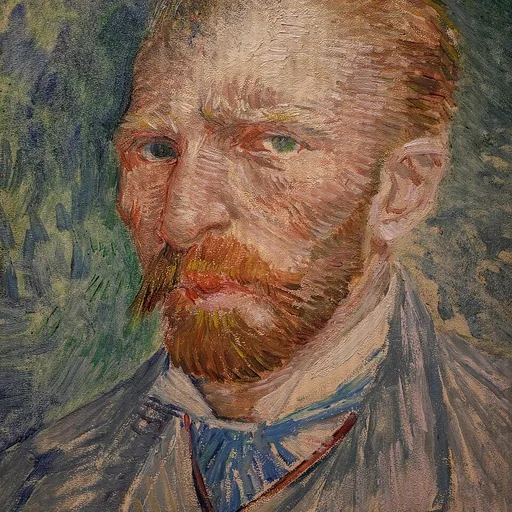
Vincent Willem van Gogh was a Dutch Post-Impressionist painter who is among the most famous and influential figures in the history of Western art.

- Houses in Auvers
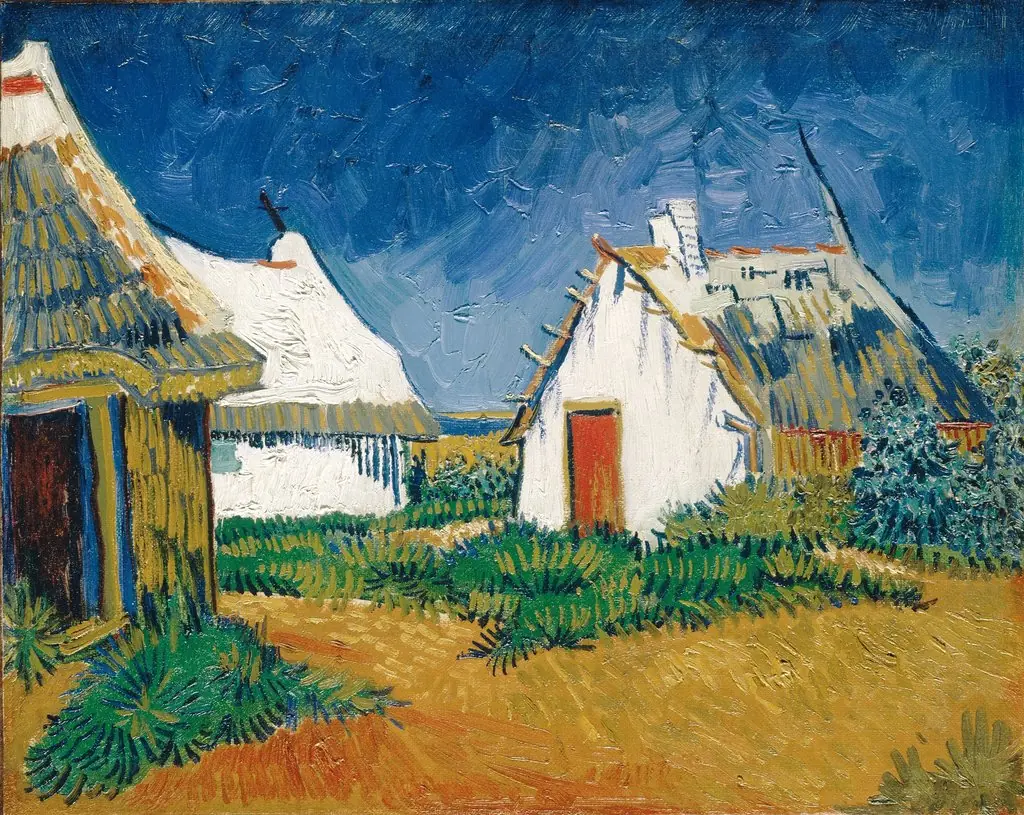 Three White Cottages in Saintes-Maries
 Katu, Auvers-sur-Oise
 Street in Auvers-sur-Oise
 Restaurant de la Sirène at Asnières, The
 Thatched Cottages and Houses
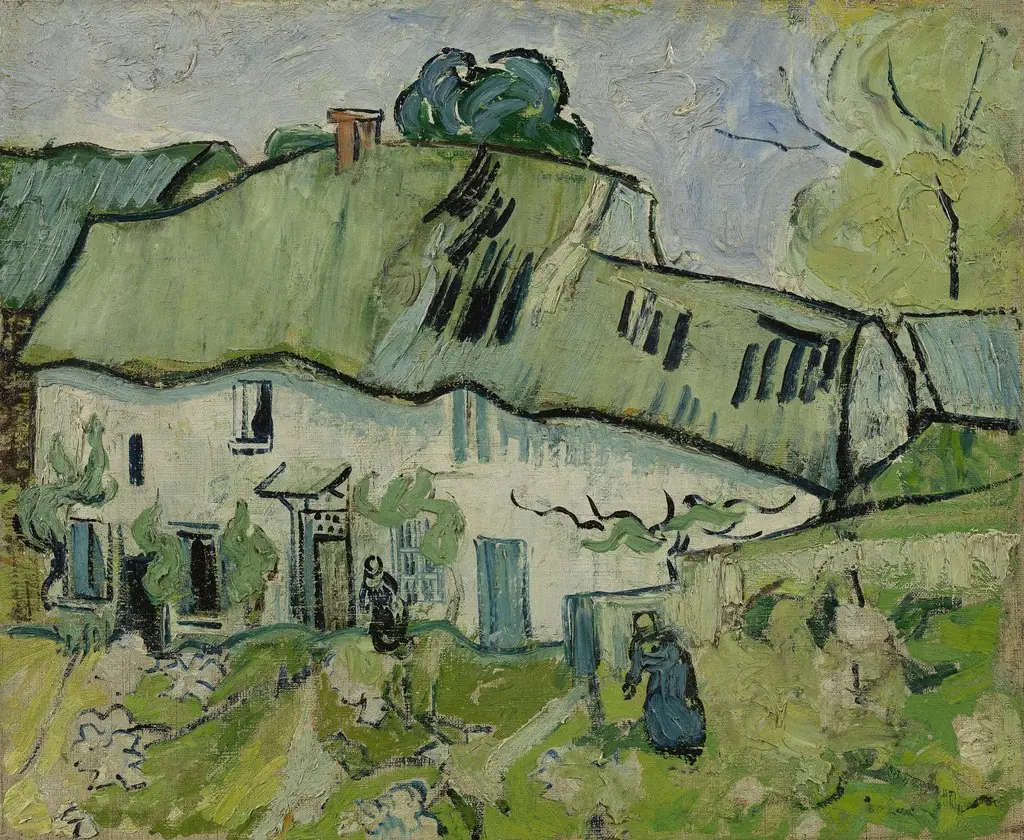 Farmhouse
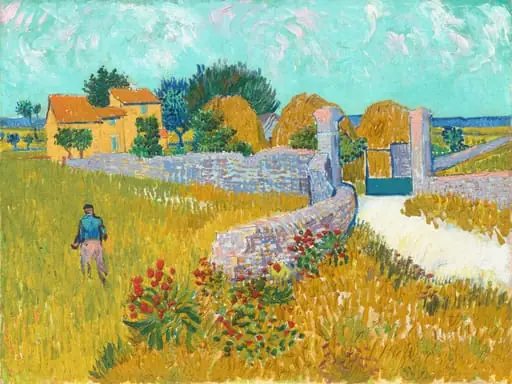 Farmhouse in Provence
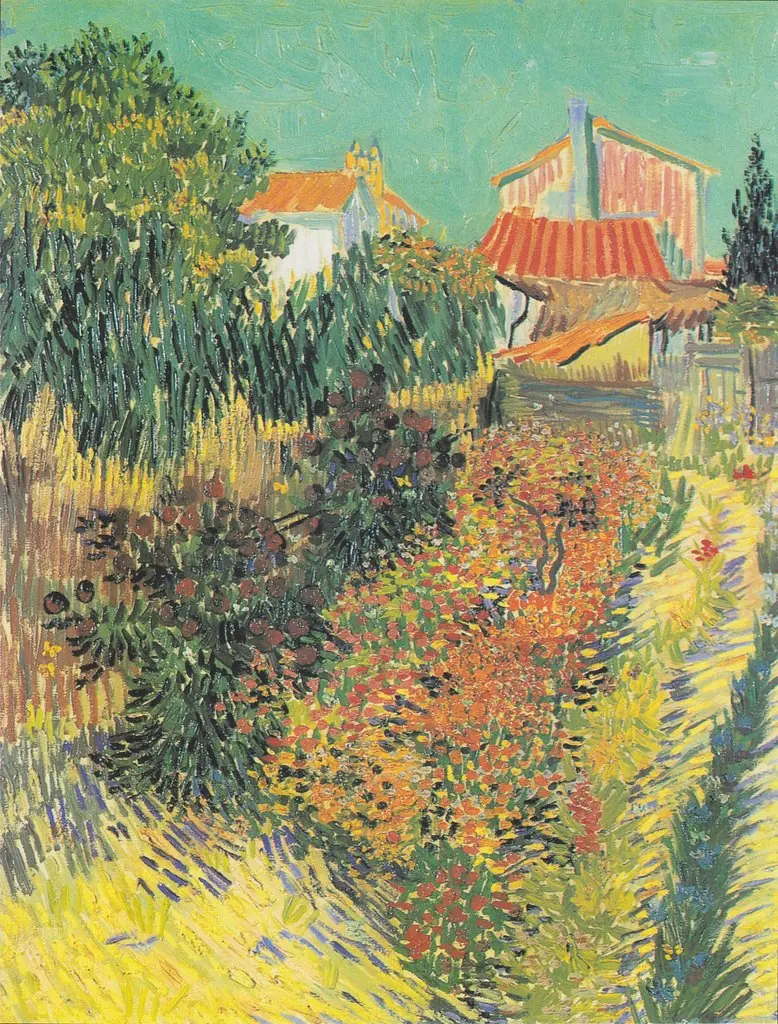 Garden Behind a House
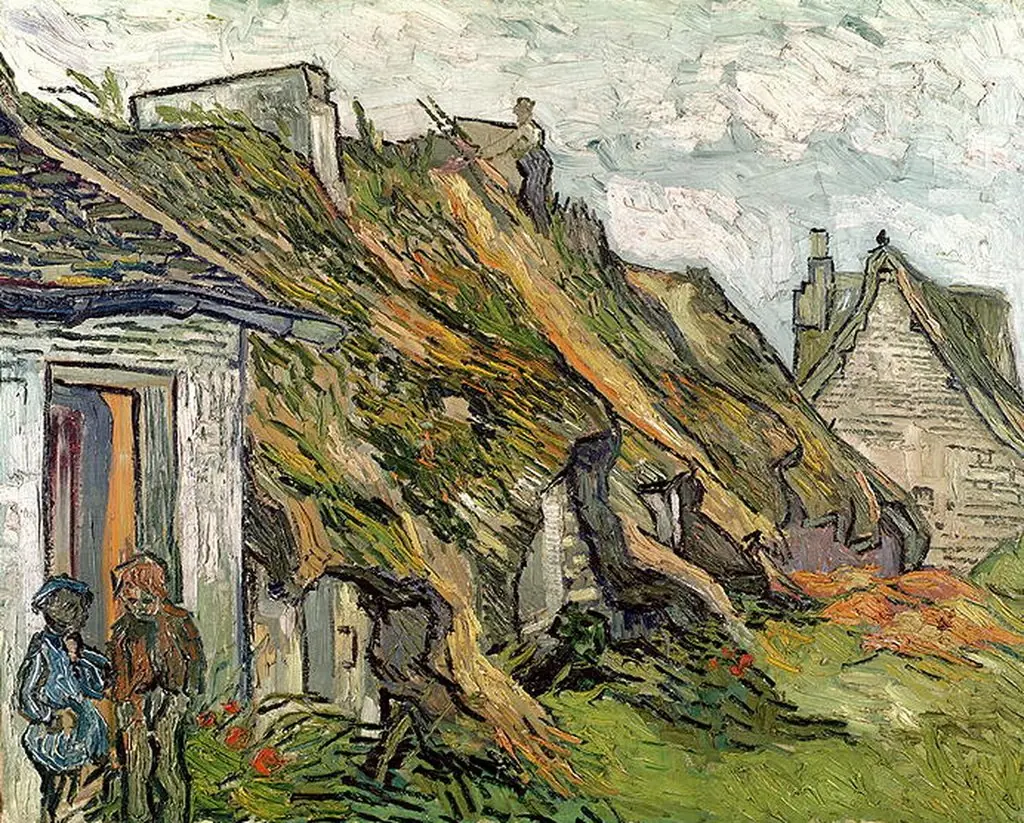 Thatched Sandstone Cottages in Chaponval
 Café Terrace at Night
 The garden at the asylum at Saint-Rémy