Artwork
Wheat Field with Cypresses
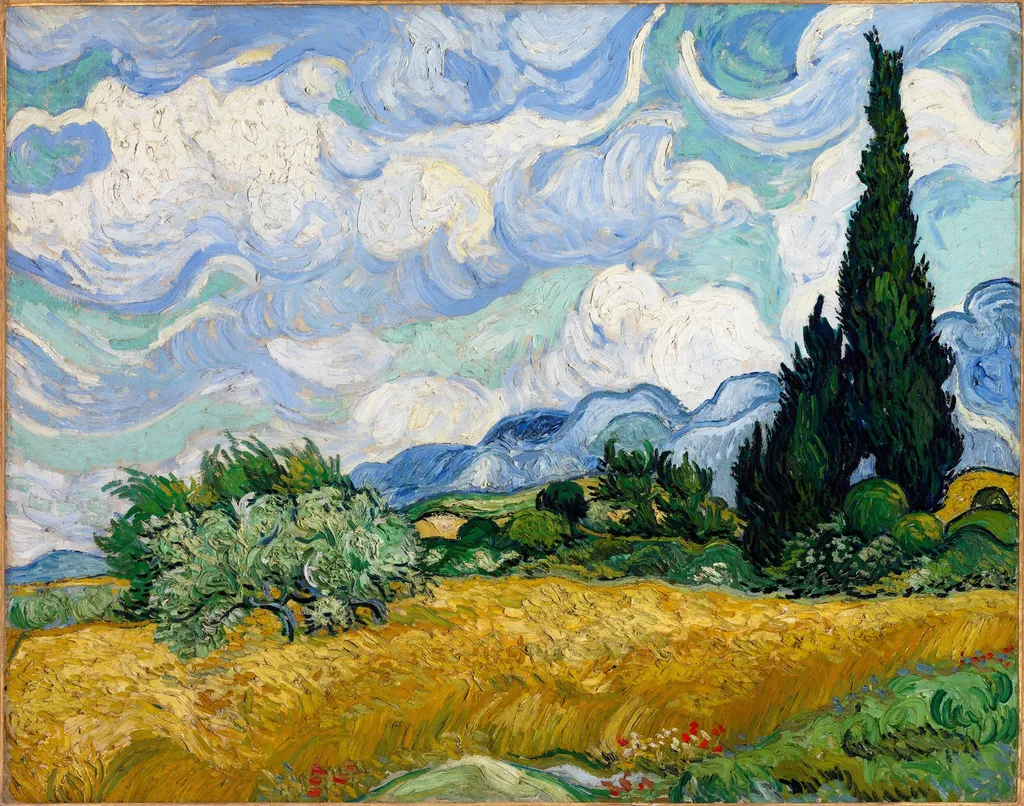
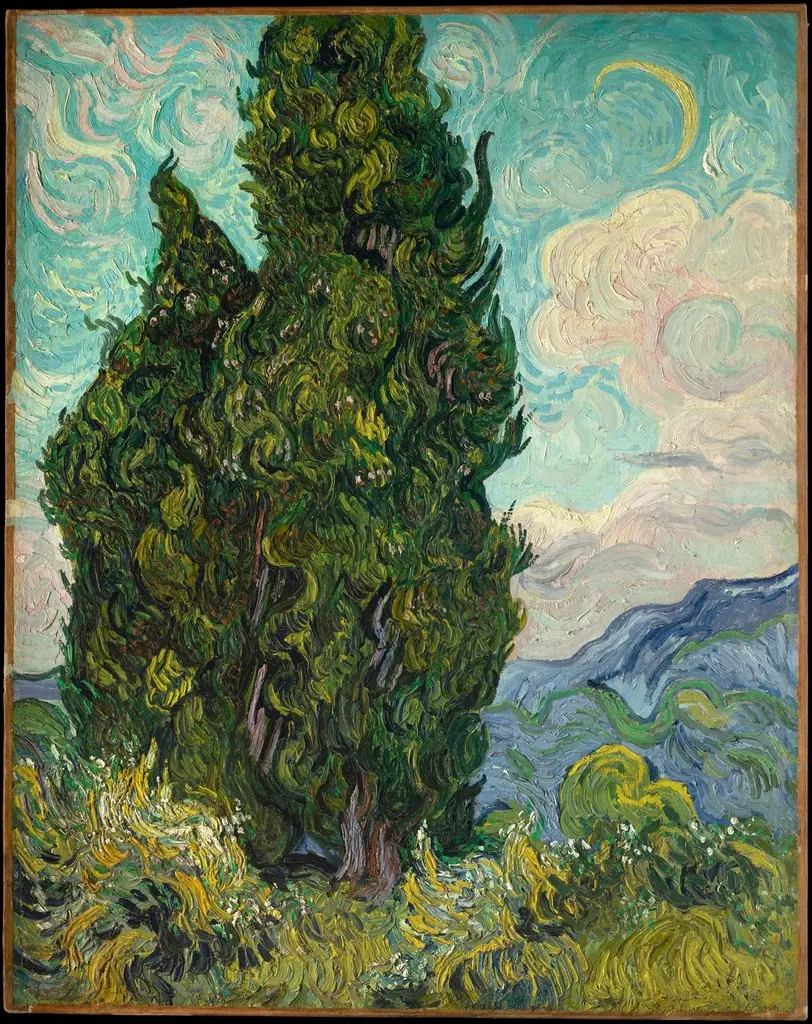
Wheat Field with Cypresses is an oil painting by the Post-Impressionist artist Vincent van Gogh. It dates from 1889 and is held in the collection of the Metropolitan Museum of Art.
About this work
Subject & Meaning
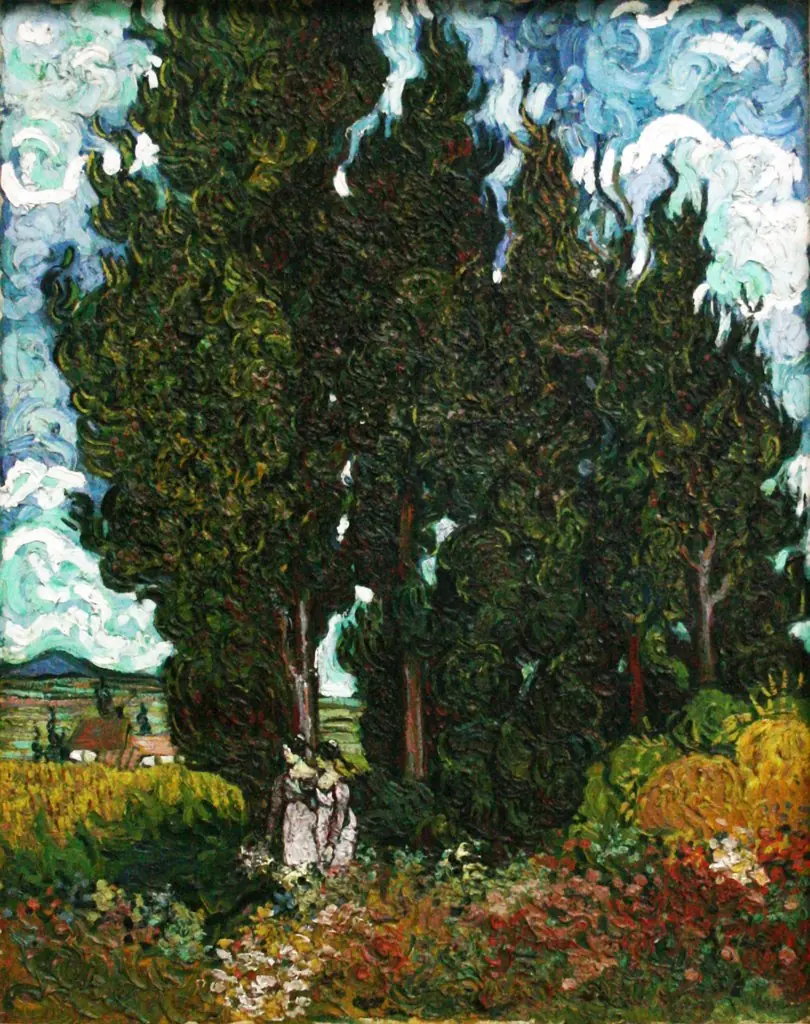
The cypresses rise vertically, their dark, flame-like forms contrasting with the horizontal rhythms of the wheat and the undulating hills beyond.
Wheat Field with Cypresses depicts a sunlit Provençal landscape under a swirling sky, foregrounding a rolling wheat field punctuated by a cluster of cypress trees. The cypresses rise vertically, their dark, flame-like forms contrasting with the horizontal rhythms of the wheat and the undulating hills beyond. The work was executed in June 1889 during Van Gogh’s stay at the asylum in Saint-Rémy-de-Provence, where the natural setting became a focal point for meditations on life, growth, and transience.
Cypresses in Van Gogh’s oeuvre often symbolize death and eternity, while wheat fields evoke sustenance and the cycle of seasons, suggesting a meditation on continuity amid personal turmoil.
Technique & Style
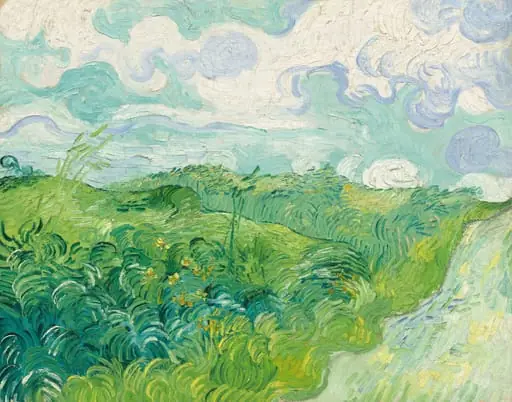
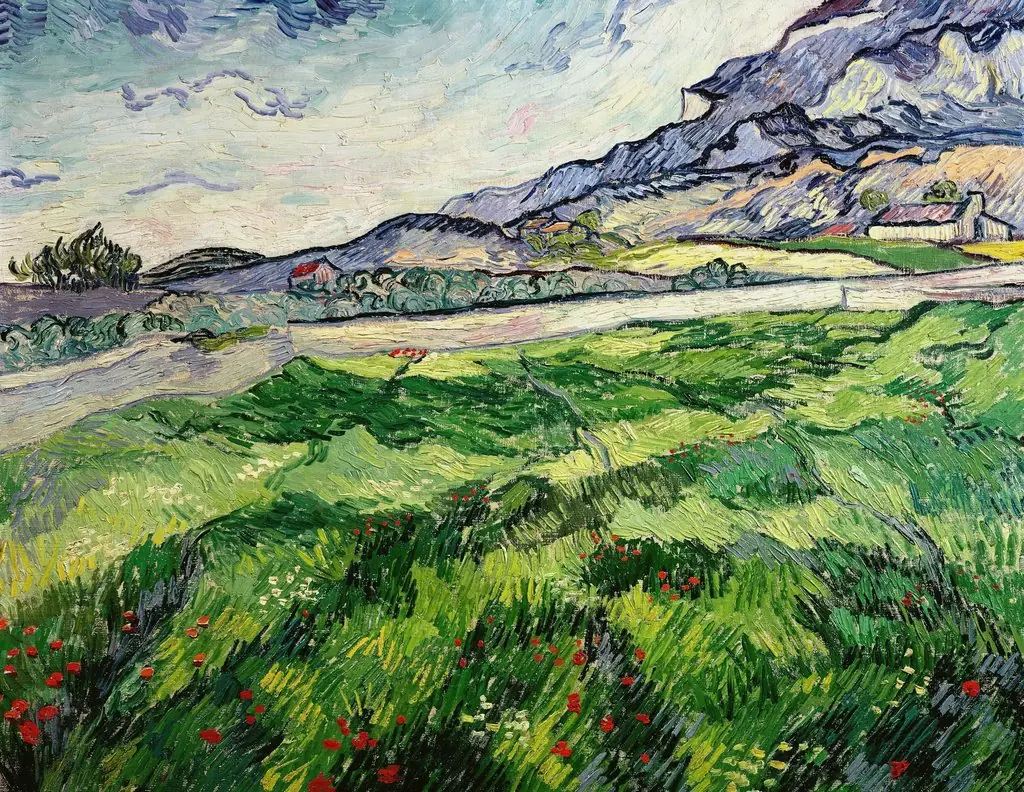
Painted in June 1889 during van Gogh’s stay at the asylum in Saint-Rémy, Wheat Field with Cypresses is executed in oil on canvas. The handling is characteristic of his late period, with thick, directional brushwork and impasto layers that articulate the swirling sky and undulating terrain. Cypresses and wheat stalks are rendered in rhythmic, serpentine strokes, while the distant hills dissolve into feathery, chromatic touches.
The composition favors a high horizon and compressed space, intensifying the vertical thrust of the cypresses against the expansive, churning sky. The palette is bright yet controlled, dominated by greens, yellows, and blues, with selective red and violet accents to heighten luminosity.
History & Provenance
Painted by Vincent van Gogh in the summer of 1889 while he was resident at the Saint‑Rémy asylum, the work was executed in oil on canvas. The painting depicts a wheat field framed by cypress trees and was created in Saint‑Rémy-de‑Provence. It entered the collection of the Metropolitan Museum of Art, where it remains on view.
No record of a specific commission exists; the piece was produced as part of Van Gogh’s personal exploration of rural landscapes during his Saint‑Rémy period.
Wheat Field with Cypresses is held by the Metropolitan Museum of Art in New York, where it is catalogued under accession number F717. The painting entered the museum’s collection as part of the museum’s holdings of Van Gogh works, and its presence in the Met’s galleries has been noted in several temporary displays of post‑Impressionist landscapes, though detailed exhibition records are not specified in the available documentation. The work remains part of the museum’s permanent collection and is occasionally featured in thematic exhibitions of 19th‑century European art.
Context
Painted in June 1889 during Vincent van Gogh’s voluntary confinement at the asylum of Saint-Rémy-de-Provence, Wheat Field with Cypresses exemplifies the artist’s late-career preoccupation with swirling, rhythmic brushwork and heightened chromatic intensity. Scholars such as Ronald Pickvance (1986) and the Metropolitan Museum of Art’s curatorial team situate the canvas within van Gogh’s “repetition” series, multiple versions of a single motif, demonstrating his effort to distill the Provençal landscape into a transcendent, almost visionary idiom. Contemporaries, including fellow artists and critics like Albert Aurier, hailed these works as harbingers of Symbolist and Expressionist tendencies, praising their emotional immediacy over naturalistic fidelity.
Posthumously, the painting has been canonized as a cornerstone of modernist landscape, its dynamic composition and expressive palette influencing generations of artists, from the Fauves to mid-century Abstract Expressionists.
Overview
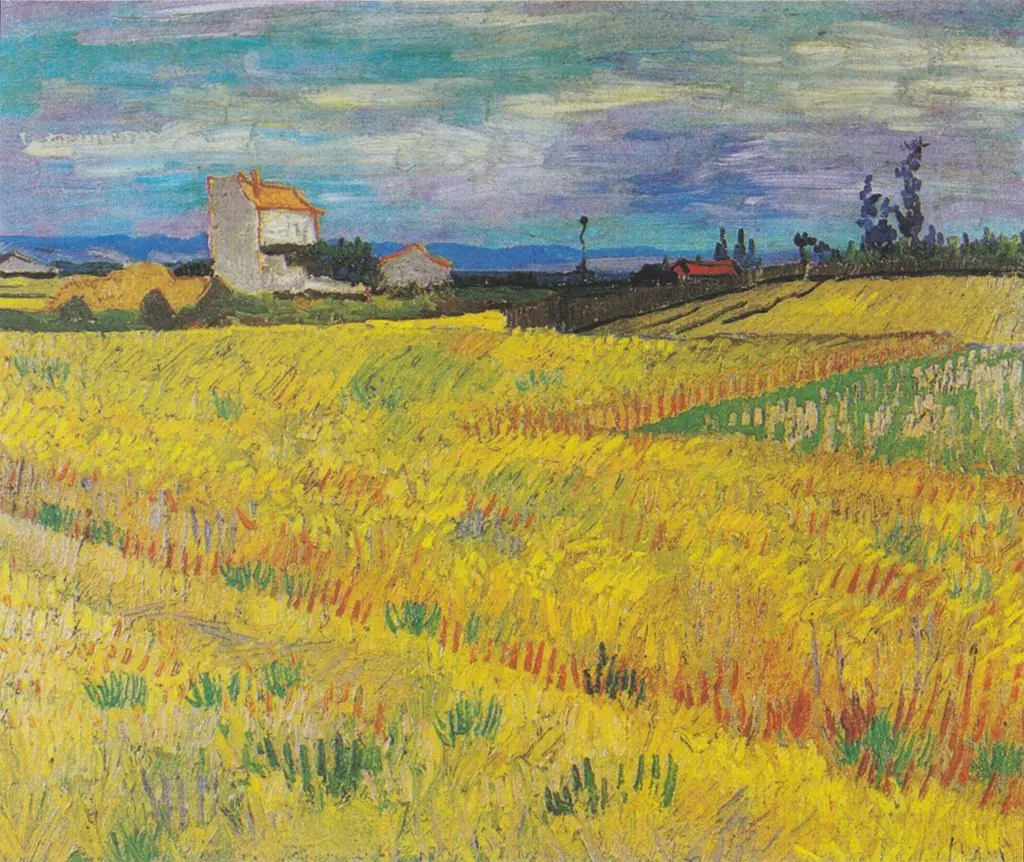
This oil painting, titled Wheat Field with Cypresses, presents a vibrant agricultural landscape under a dynamic sky. The composition features a golden field of wheat, contrasted by the dark, towering forms of cypress trees in the distance. The artist's distinctive application of thick paint conveys a sense of movement and intense color, characteristic of the expressive artistic approaches prevalent at the time.
Own this work as a print
Artist & collection
Artist
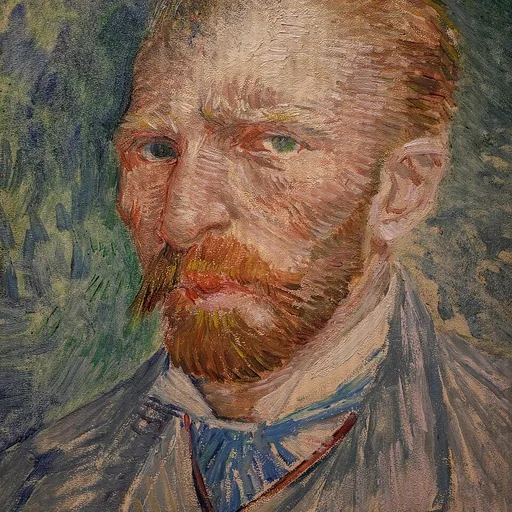
Vincent Willem van Gogh was a Dutch Post-Impressionist painter who is among the most famous and influential figures in the history of Western art.