Artwork
Madonna and Child with Saints and Donor
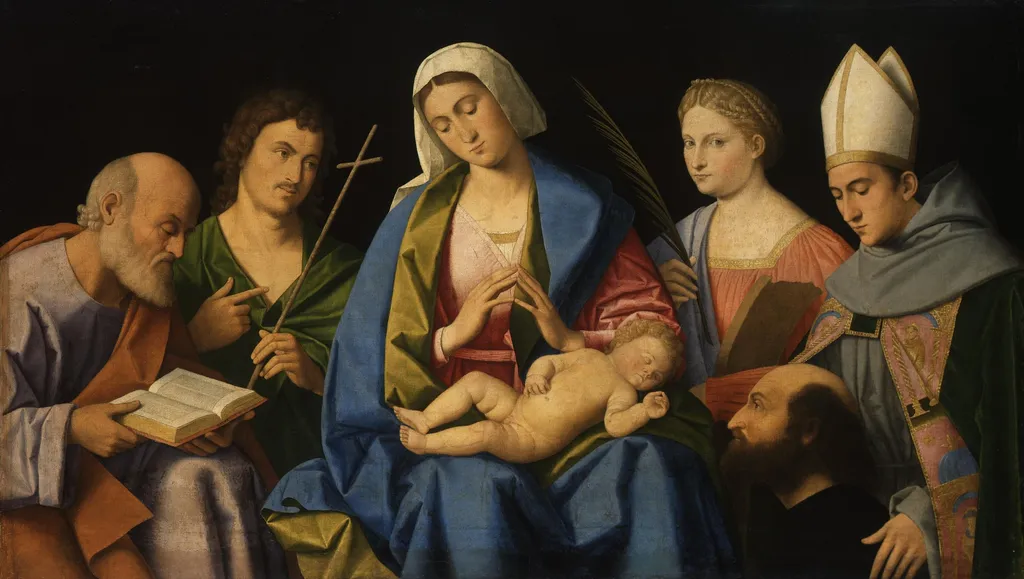
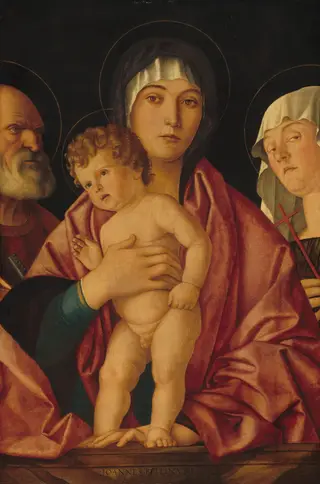
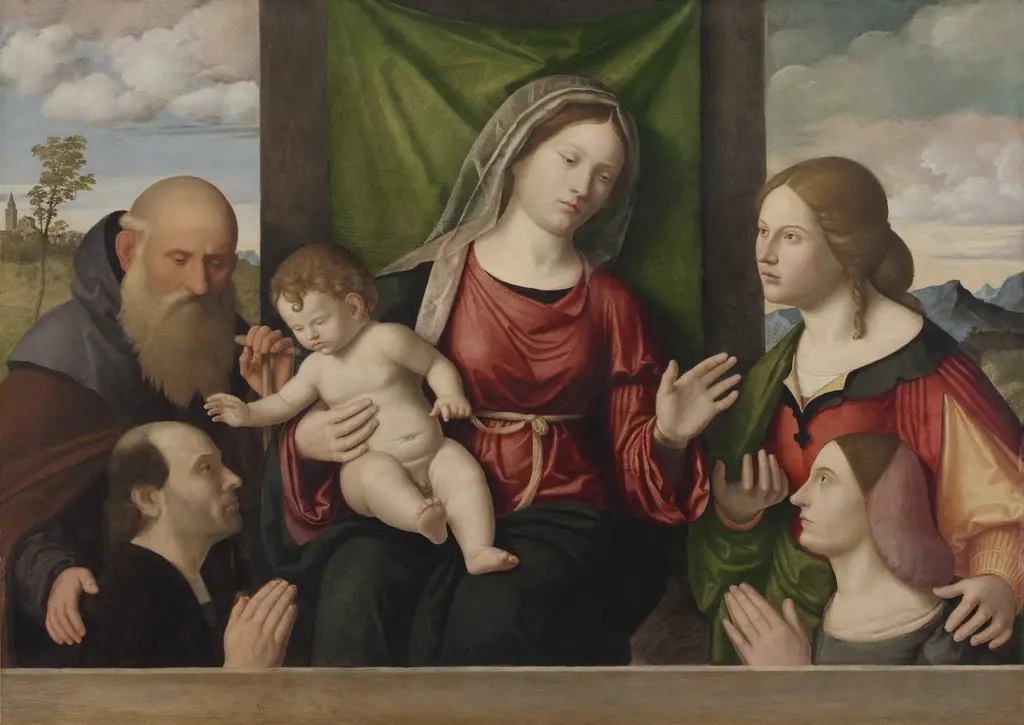
Madonna and Child with Saints and Donor is a paint painting by the High Renaissance artist Vincenzo Catena. It dates from 1512 and is held in the collection of the Gemäldegalerie Berlin.
About this work
Subject & Meaning
The assembled figures include Saint Joseph, John the Baptist, Catherine of Alexandria, and Louis of Toulouse, who surround the central holy pair.
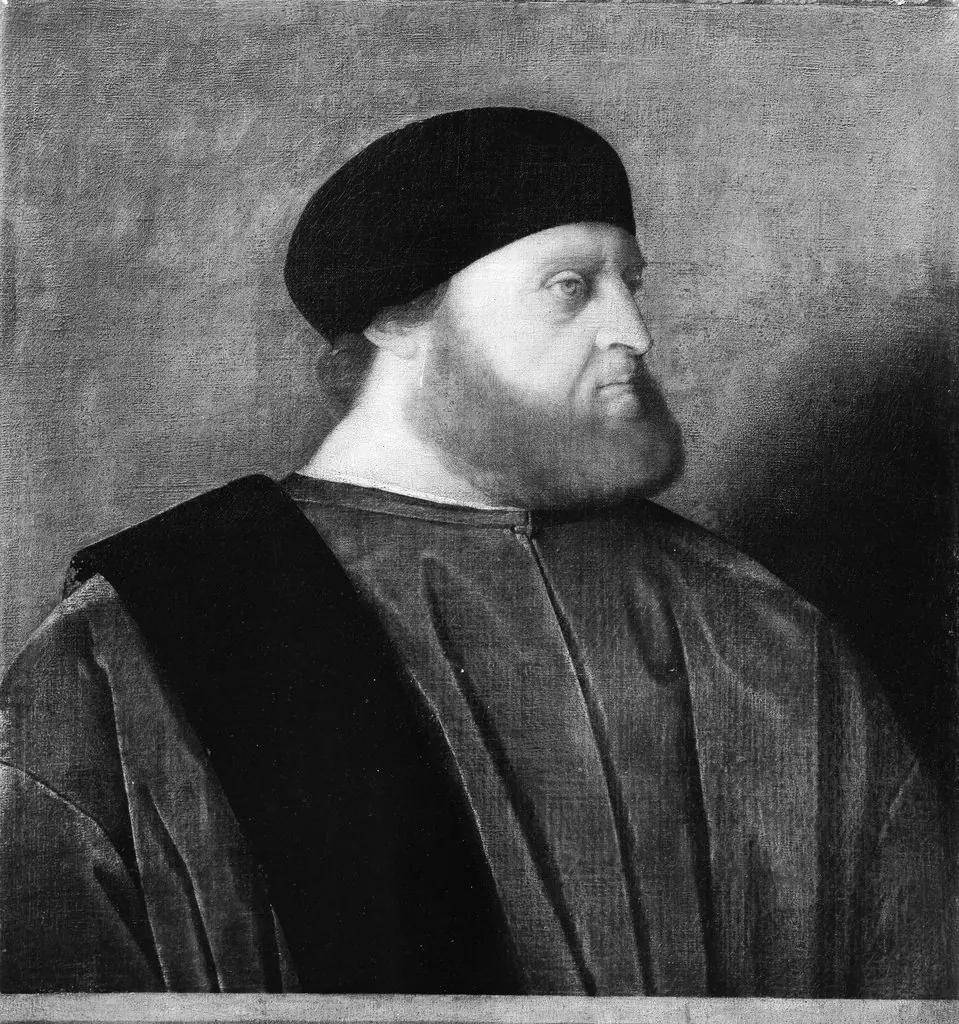
The painting depicts a sacra conversazione, a High Renaissance composition uniting the Virgin Mary and the Christ Child with a group of saints in a shared sacred space. The assembled figures include Saint Joseph, John the Baptist, Catherine of Alexandria, and Louis of Toulouse, who surround the central holy pair. A distinct element of the work is the inclusion of the donor, identified as the poet Ludovico Ariosto, who is presented alongside the saints in a traditional donor portrait format.
This arrangement symbolizes the spiritual connection between the earthly patron and the celestial realm, reflecting the devotional practices of the Venetian school during the early 16th century.
Technique & Style
Created in 1512, Madonna and Child with Saints and Donor is an oil painting executed on canvas. The work measures 90.4 cm in height and 155.5 cm in width, adhering to the formal conventions of the High Renaissance Venetian school. Stylistically, the piece is characterized as a sacra conversazione, a composition that unites the Virgin and Child with a group of saints and a donor within a single pictorial space.
The figures depicted include Mary, the Christ Child, Joseph, John the Baptist, Catherine of Alexandria, and Louis of Toulouse, alongside the donor Ludovico Ariosto. The handling of the medium reflects the religious genre typical of its period, utilizing paint to render the sacred assembly and the donor portrait.
History & Provenance
Vincenzo Catena painted Madonna and Child with Saints and Donor in 1512 in Italy, using oil on canvas to create a sacra conversazione composition that includes the Virgin, the Christ Child, saints, and a donor figure. The work measures 90.4 cm by 155.5 cm and exemplifies High Renaissance style within the Venetian school. After its creation the painting entered the collection of Edward Solly and later became part of the Gemäldegalerie Berlin’s holdings, where it remains on display. Its religious genre and donor portrait reflect the devotional practices of early sixteenth‑century Venice.
Madonna and Child with Saints and Donor, a 1512 painting by Vincenzo Catena, is held in the Gemäldegalerie Berlin. The work was formerly owned by Edward Solly before entering the museum's collection. Its dimensions are recorded as 90.4 cm in height by 155.5 cm in width, and it is executed in paint on canvas. No exhibition history beyond its current placement in the Gemäldegalerie Berlin is documented in the available sources.
Overview
Vincenzo Catena, a Venetian painter active during the High Renaissance, completed Madonna and Child with Saints and Donor in 1512. This oil painting presents a traditional religious gathering, featuring the Virgin Mary and the Christ Child surrounded by various saints and a kneeling patron. The work exemplifies the devotional art prevalent in early 16th-century Venice and is now part of the collection at the Gemäldegalerie Berlin.
Artist & collection
Artist
Vincenzo Catena (c. 1480–1531) was an Italian painter of the Renaissance Venetian school. He is also known as Vincenzo de Biagio.