Artwork
Madonna and Child with Saints and Angels
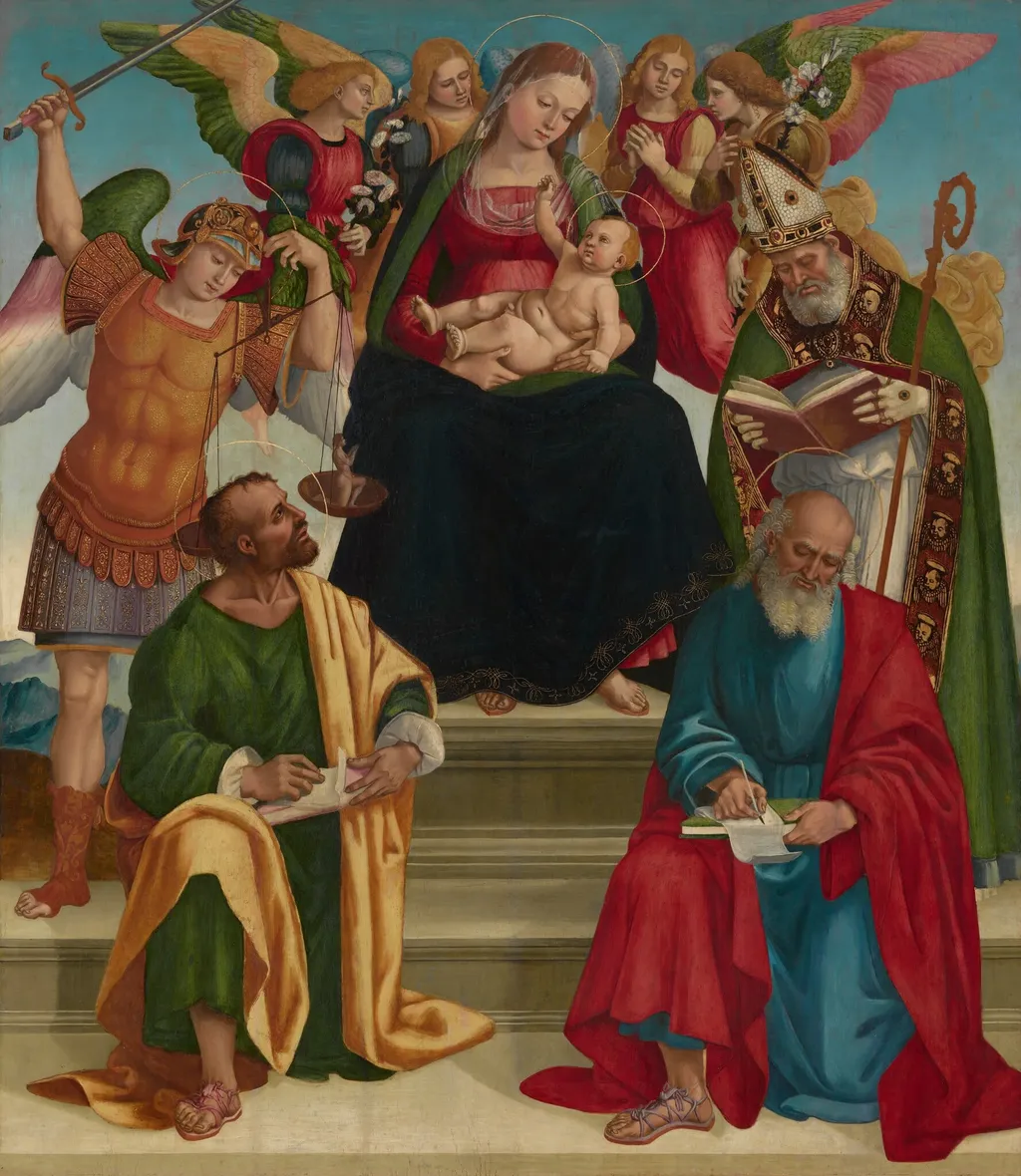
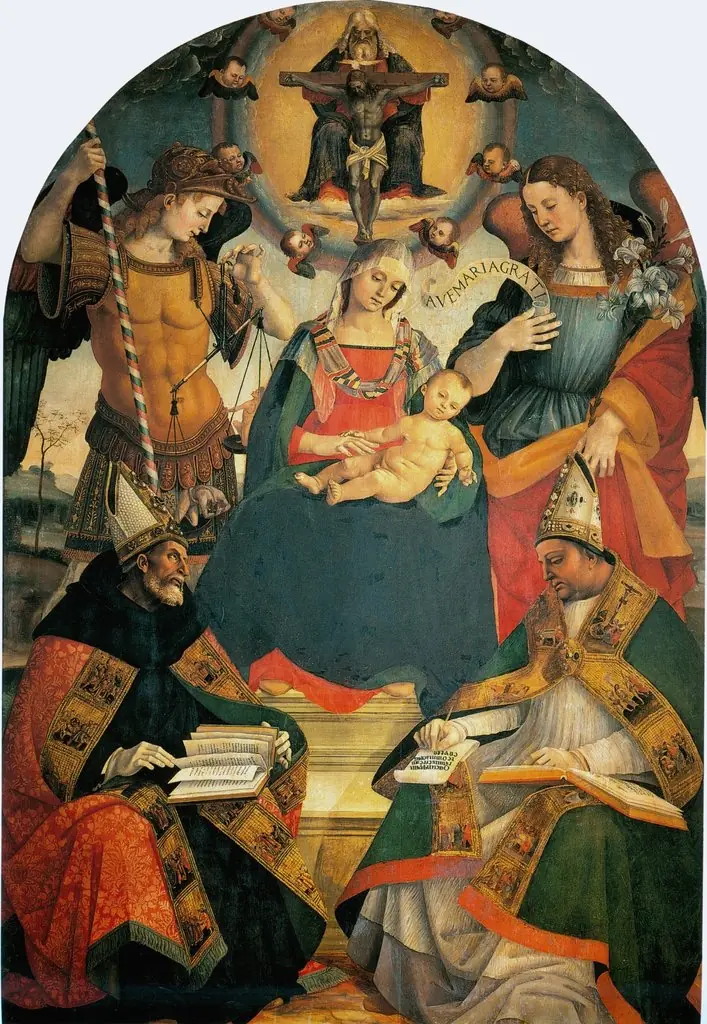
Madonna and Child with Saints and Angels is an oil painting by the Mannerist artist Luca Signorelli. It dates from 1514 and is held in the collection of the National Gallery of Art.
About this work
Subject & Meaning
The painting presents the Madonna and Child as its central subject, with the Virgin Mary holding the Christ Child at the composition's heart.
The painting presents the Madonna and Child as its central subject, with the Virgin Mary holding the Christ Child at the composition's heart. The work belongs to the tradition of Madonna and Child with Saints and Angels, a devotional format in which the Virgin and Infant are venerated and accompanied by attendant holy figures. As a religious painting of the Italian Renaissance, it served a sacred function tied to its original placement in an Albergotti chapel, likely within the Cathedral of Arezzo, where it would have provided a focus for private devotion and commemoration by the patron family.
The pairing of the Madonna with saints and angels reflects the intercessory role attributed to these holy figures, who mediate between the worshipper and the divine, while the Christ Child embodies the Incarnation central to Christian belief.
Technique & Style
Executed in oil on a wooden panel that was subsequently transferred to hardboard, this work measures approximately 155.7 by 135.6 centimeters. Dated to the mid or late 1510s, the painting displays stylistic characteristics consistent with Luca Signorelli's late period, a dating supported by comparisons to contemporary works such as the stained glass window installed in the Albergotti chapel of the Arezzo Cathedral in 1517. The composition focuses on religious subject matter, specifically depicting the Virgin Mary and the Christ Child.
While the original support was wood, the transfer to hardboard represents a significant intervention in the object's physical history and handling. The work's classification as a panel painting aligns with standard practices for religious altarpieces of the Italian Renaissance, though the specific material alteration distinguishes its current technical state from its initial creation.
History & Provenance
The work, an oil panel painting of the Madonna and Child with saints and angels, was created by Luca Signorelli in the mid‑to‑late 1510s. It was commissioned for the Albergotti chapel in the Cathedral of Arezzo, built around 1517, and remained there until the early 17th century, after which it passed to the Marchesi Albergotti family. By 1845 the piece entered the collection of Francesco Lombardi and Ugo Baldi in Florence, later passing through the hands of Ludwig Metzger before being acquired by Alexander Lindsay, 25th Earl of Crawford, in 1875.
The painting subsequently descended through his descendants, was sold at Christie, Manson & Woods in 1946, bought by Wildenstein & Co., then purchased by the Samuel H. Kress Foundation in 1949, gifted to the Honolulu Academy of Arts in 1961, and finally donated to the National Gallery of Art.
The painting is currently held in the collection of the National Gallery of Art in Washington, D.C., as part of the Samuel H. Kress Collection. Its ownership history traces from an Albergotti chapel in Arezzo to the Lindsay family earls of Crawford, who sold it at Christie's in London on October 11, 1946. Following transactions with dealers Koetser and Wildenstein & Co., the Samuel H. Kress Foundation acquired the work in June 1949.
It was initially gifted to the Honolulu Academy of Arts in 1952 but returned to the Foundation in 1960 before being donated to the National Gallery of Art in 1961. The provided sources do not list specific temporary exhibition records for this artwork.
Legacy
The painting entered the National Gallery of Art through the Samuel H. Kress Collection, underscoring its recognized importance in early 20th‑century American holdings, and its provenance traces a continuous ownership from an Albergotti chapel to the Crawford family before acquisition by the Kress Foundation, reflecting its enduring scholarly and collector interest. Its presence in a major public institution facilitates continued study of Signorelli's compositional treatment of the Madonna and Child, reinforcing his reputation within Renaissance art history [1][2]
Overview
Luca Signorelli, an Italian Renaissance painter, created Madonna and Child with Saints and Angels around 1514. This religious composition, executed in oil on panel (later transferred to hardboard), showcases the artist's characteristic skill in draftsmanship. The painting depicts the Virgin Mary and the infant Christ surrounded by a celestial court of saints and angels, reflecting the devotional themes prevalent in early sixteenth-century art.
Context
Luca Signorelli, originally from Cortona in Tuscany, was active across major artistic centers of Italy, including Florence, Siena, and Rome. His career, spanning the Italian Renaissance and extending into the early sixteenth century, included significant commissions such as the expansive fresco cycle of the Last Judgment in Orvieto Cathedral. This work from around 1514 reflects the stylistic developments of the period.
Own this work as a print
Artist & collection
Artist
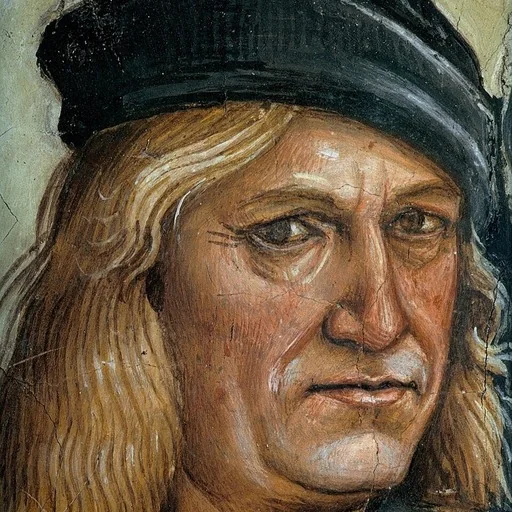
Luca Signorelli (c. 1441/1445 – 16 October 1523) was an Italian Renaissance painter from Cortona, in Tuscany, who was noted in particular for his ability as a draftsman and his use of foreshortening. His massive frescos…

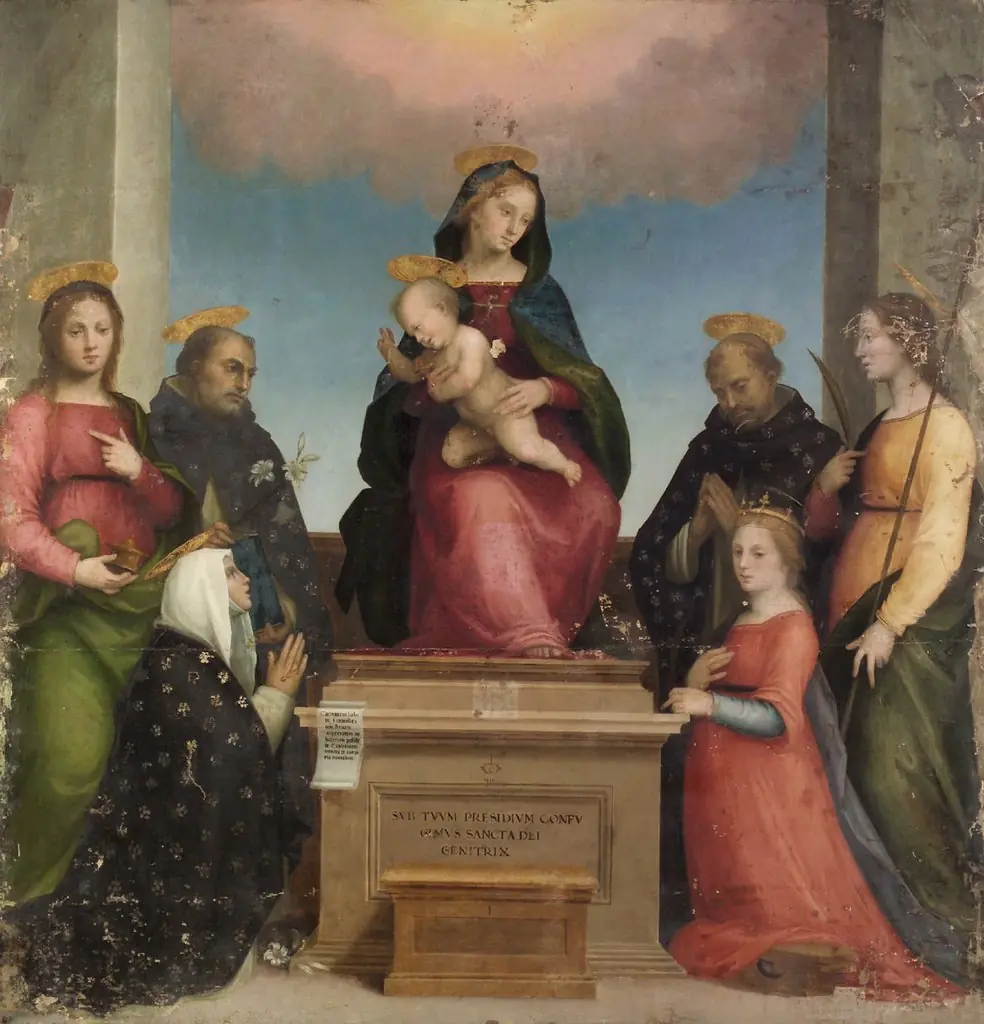 Maria mit Kind und den Hll. Katharina von Siena, Katharina von Alexandrien, Maria Magdalena, Dominikus, Petrus Martyr und einer Märtyrerin
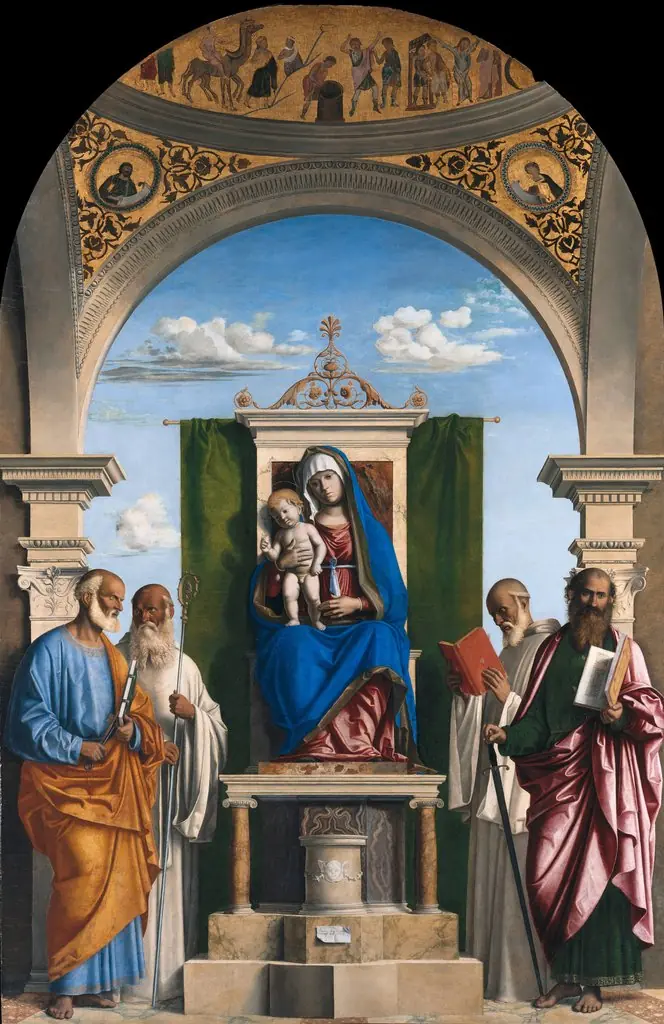 Madonna and Child Enthroned with Saints
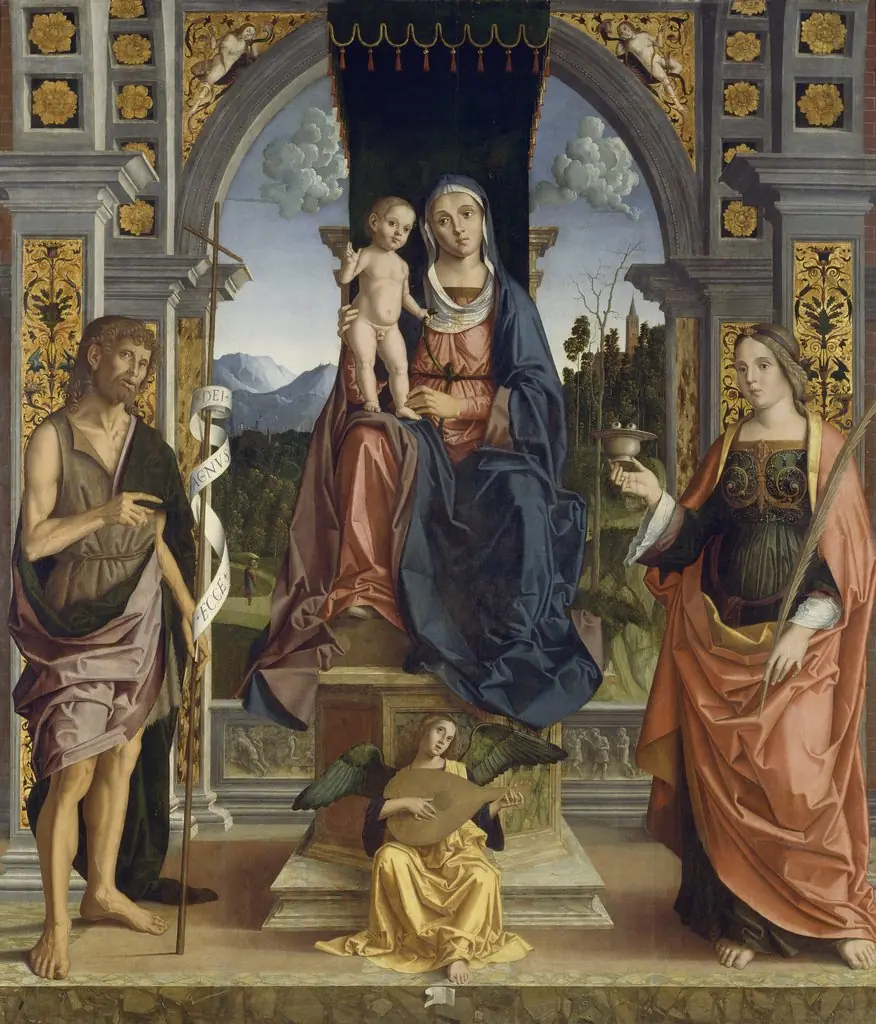 The Virgin and Child Enthroned, with Saints John the Baptist and Lucy
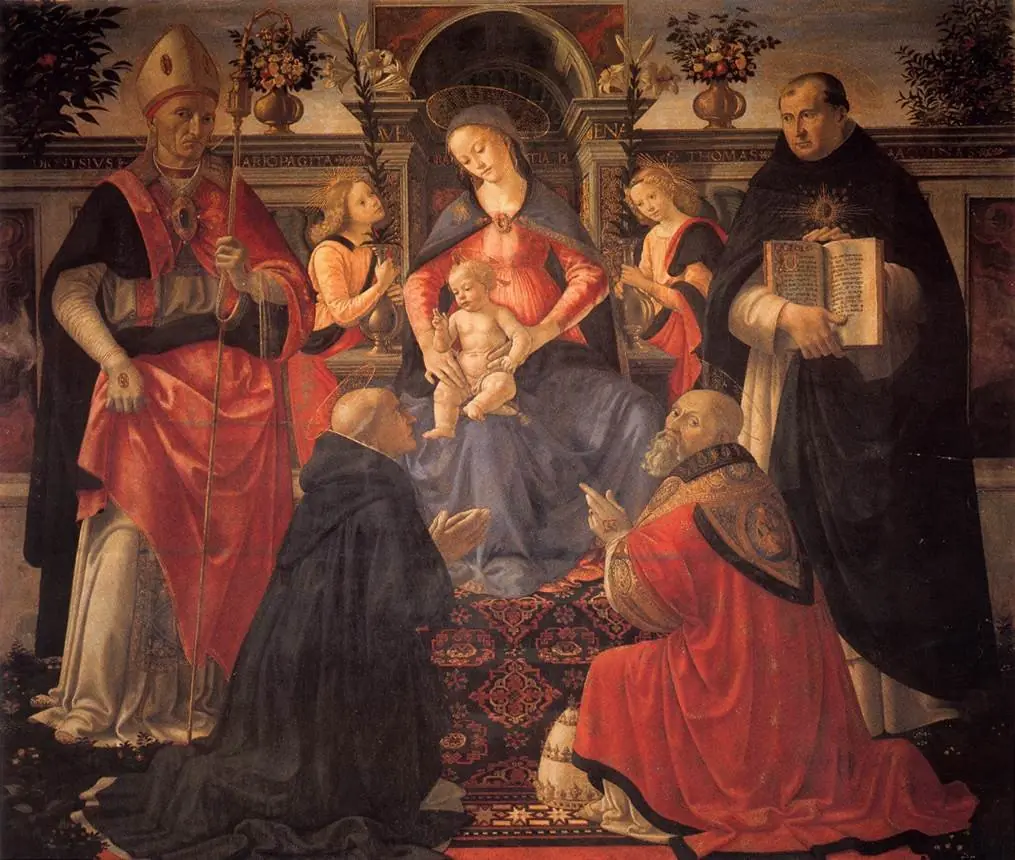 Madonna and Child Enthroned between Angels and Saints
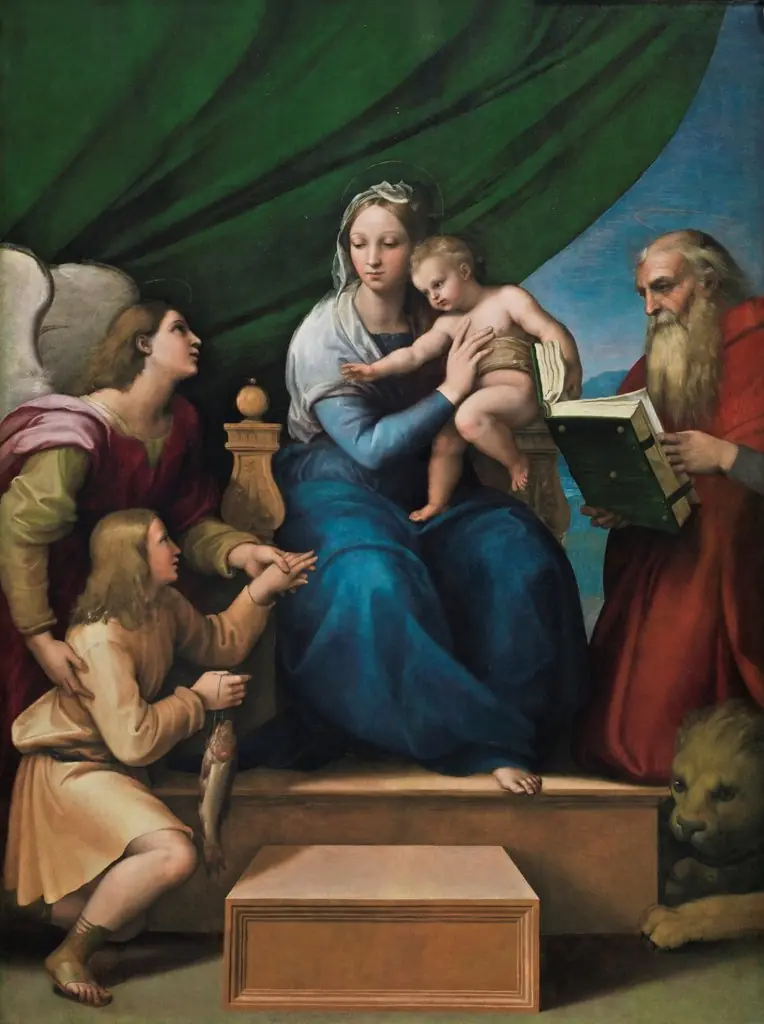 Madonna with the Fish
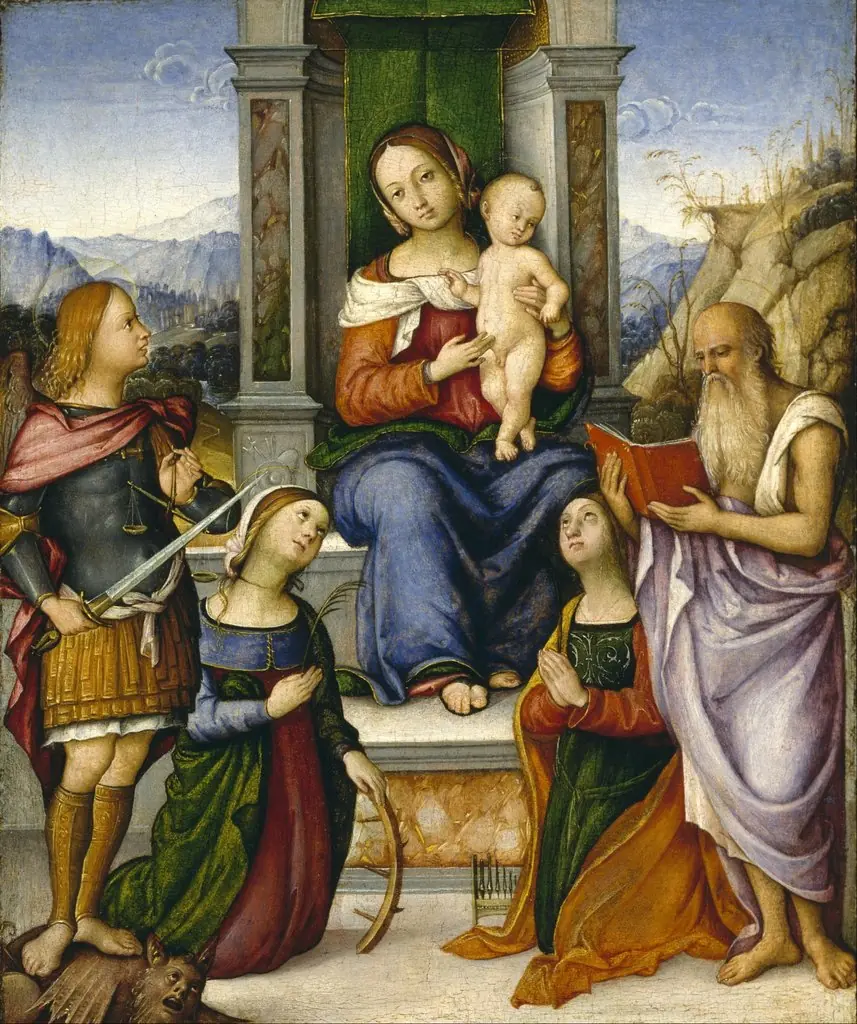 The Virgin and Child Enthroned with Saints Michael, Catherine of Alexandria, Cecilia, and Jerome
 Mary with Child and Four Saints
 Madonna and Child Enthroned with Saints