Artist
Alvise Vivarini
Republic of Venice
Alvise Vivarini is a Republic of Venice Early Renaissance artist. 11 works are cataloged here, principally at Gemäldegalerie Berlin.
Alvise or Luigi Vivarini (1442/1453–1503/1505) was an Italian painter, the leading Venetian artist before Giovanni Bellini. Like Bellini, he was part of a dynasty of painters. His father was Antonio Vivarini and his uncle, with whom he may have trained, was Bartolomeo Vivarini. Another uncle, on his mother's side, was the artist known as Giovanni d'Alemagna, who worked with his brother-in-law Antonio. Alvise may have trained Jacopo de' Barbari. It has sometimes been supposed that, besides the Luigi who was the latest of this pictorial family, there had also been another Luigi who was the earliest (i.e. Antonio's father), this supposition being founded on the fact that one picture is signed with the name, with the date 1414. There is good ground, however, for considering this date to be a forgery of a later time. The works of Vivarini show an advance on those of his predecessors, and some of them are productions of high attainment; one of the best was executed for the Scuola di San Girolamo in Venice, representing the saint caressing his lion, and some monks decamping in terror. The architecture and perspective in this work are superior. Many churches in Venice have examples. Other works by Vivarini are in Treviso, Milan and the National Gallery, London. He painted some remarkable portraits. The Adoration of Christ dated 1476, in the sacristy of the church of Montefiorentino, is one of his early productions. In 1480 he painted a Virgin and Saints for San Francesco, Treviso, now in the Venice Accademia. To about this date belong the SS. Matthew and John the Baptist, in the same collection; and the fresco of Christ Carrying His Cross in Santi Giovanni e Paolo. In 1488, Alvise Vivarini wrote a letter to the Signory of Venice, requesting permission to share with Bellini in the commission to decorate the Hall of Great Council in the Doge's Palace. To this he received a favorable reply, and thereupon executed two paintings, which were burned in the fire of 1577. The subjects, Vasari tells us, were Otho promising to mediate between Venice and Barbarossa and Barbarossa receiving his Son. The Council were so pleased with the pictures that, in 1492, Alvise was named Depentor in Gran Conseio, with a salary of five ducats a month. Notwithstanding this work for the State, he continued to paint altar-pieces for private patrons. The Apotheosis of St. Ambrose (1503) in the Cappella Milimesi of the Frari, Venice, was probably the last production of Alvise, as the inscription tells us that it was completed after his death by Marco Basaiti, one of his pupils.
Overview
Alvise Vivarini, also known as Luigi Vivarini, was an Italian Renaissance painter active in Venice. Born between 1442 and 1453 and dying between 1503 and 1505, he is recognized as the leading Venetian artist before the rise of Giovanni Bellini. As the final member of a prominent dynasty of painters, he advanced the family workshop beyond traditional late Gothic formulas toward a more modern Renaissance sensibility. His works, which include altarpieces and notable portraits, are characterized by their architectural perspective and distinctive use of line and color.
Biography & dates
Born in Venice between 1442 and 1453, Alvise was the son of Antonio Vivarini and the nephew of Bartolomeo Vivarini and, on his mother's side, Giovanni d'Alemagna. He likely trained under his father and uncle in their workshop on the island of Murano. His earliest known signed and dated work is a polyptych from 1476. In 1488, he wrote to the Signory of Venice requesting to share a commission with Bellini to decorate the Hall of the Great Council in the Doge's Palace. He received a favorable reply and executed two large canvases, which were later destroyed in the palace fire of 1577. In 1492, the Council appointed him Depentor in Gran Conseio, granting a salary of five ducats a month. He continued painting for private patrons until his death in Venice between 1503 and 1505.
Style & movement
Vivarini's early style employed tempera and featured sharply drawn contours, rigid folds, and cool colors that gave his figures an elongated, ascetic appearance influenced by Paduan art, particularly Andrea Mantegna. After Antonello da Messina's stay in Venice around 1475, Vivarini adopted oil painting. While he softened his approach under the influence of Antonello and Bellini, he never fully assimilated Antonello's luministic revolution. Instead, he maintained a dry outline and a cold light that rendered his colors with an enamel-like lucidity. His architectural and perspective skills were notably advanced, as seen in the naturalistic rocky landscapes of his later works, and his mature figures exhibit a dynamic torsion that anticipates Mannerism.
Major works
Key works include the 1476 Adoration of Christ polyptych, originally for the convent of Montefiorentino and now in the Galleria Nazionale delle Marche in Urbino. His 1480 Sacra conversazione, painted for San Francesco in Treviso, is now in the Gallerie dell'Accademia in Venice, alongside his Saint John the Baptist. The fresco of Christ Carrying the Cross is in the Basilica of Santi Giovanni e Paolo in Venice. The Pentecost altarpiece of 1478 is in the Bode-Museum in Berlin. His mature masterpiece, the Resurrected Christ, dates to 1497-98 and is located in the church of San Giovanni in Bragora in Venice. His final work, the Apotheosis of St. Ambrose begun in 1503, is in the Cappella Milimesi of the Santa Maria Gloriosa dei Frari in Venice. Other works are held in the National Gallery in London, the National Gallery of Art in Washington, the Pinacoteca di Brera in Milan, and the Musée de Picardie in Amiens.
Influences & students
Vivarini's primary influences were his family members: his father Antonio, his uncle Bartolomeo Vivarini, and his maternal uncle Giovanni d'Alemagna. During his formative years, he also absorbed the art of Lazzaro Bastiani and the Paduan style of Andrea Mantegna. Later, the techniques of Antonello da Messina and Giovanni Bellini prompted a lyrical shift in his work. He led the Vivarini workshop on Murano, which was second only to the Bellini workshop in late fifteenth-century Venice. His documented pupils include Marco Basaiti, who completed his final altarpiece after his death, and Jacopo de' Barbari.
Legacy
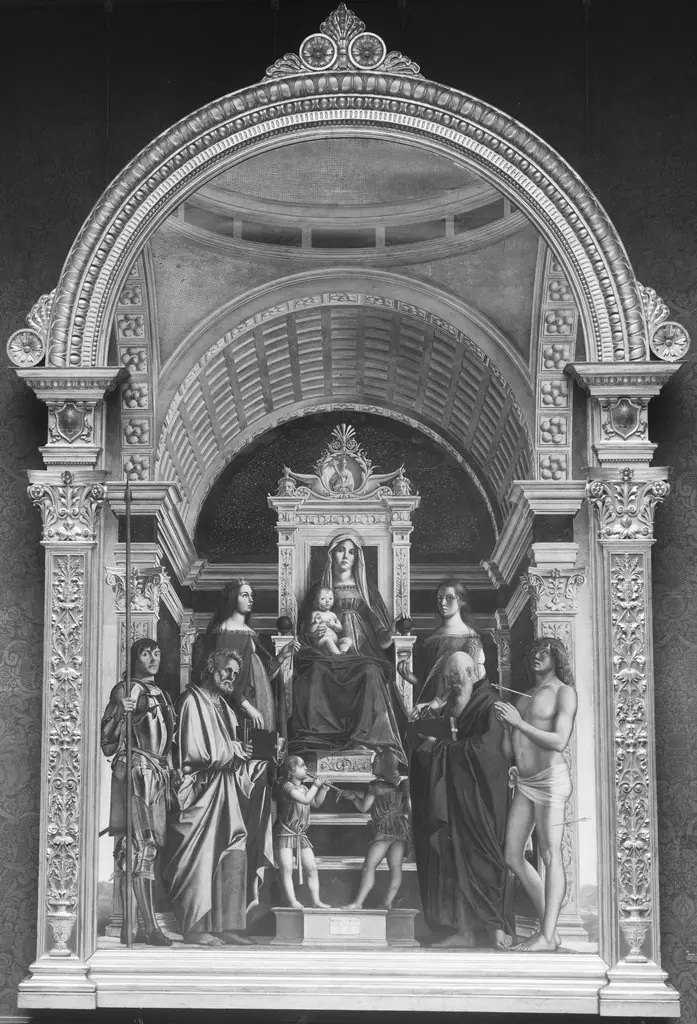
Vivarini's legacy is partly defined by significant losses. His large canvases for the Doge's Palace were destroyed in the 1577 fire, and a Madonna and Child with Six Saints was destroyed in 1945 in Berlin. A painting of Saint Jerome leading the lion into the monastery, once considered among his best, survives only through an engraving. Scholarly debate once posited the existence of an earlier painter named Luigi Vivarini, Antonio's father, based on a painting signed and dated 1414, but this date is now widely considered a later forgery. Despite the destruction of major state commissions, his surviving religious panels and portraits secure his reputation as a transitional figure who bridged late Gothic traditions and the Venetian Renaissance.
Works by Alvise Vivarini
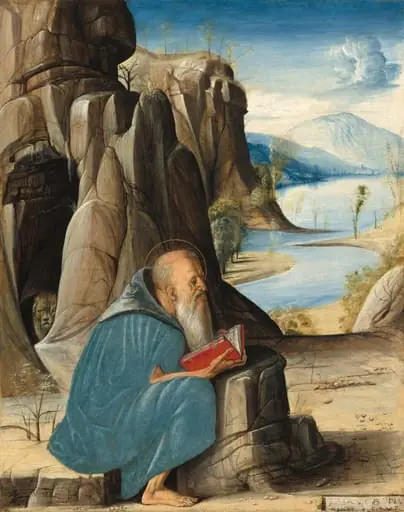
- Saint Jerome Reading
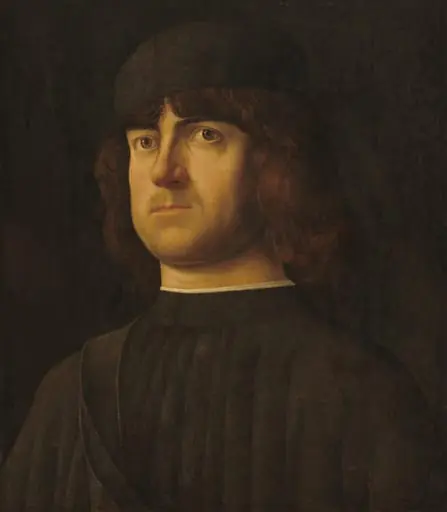
- Portrait of a Man
- Mary enthroned with the child and six saints
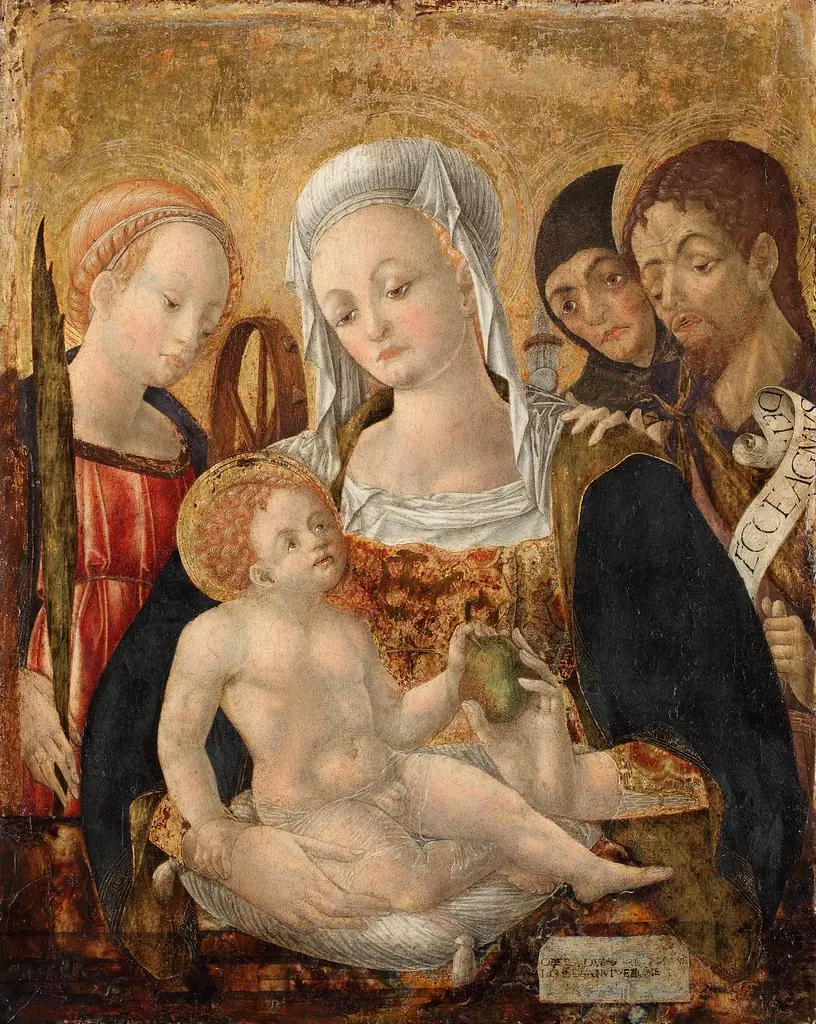
- The Virgin and Child with Sts. Catherine of Alexandria, Clara and John the Baptist
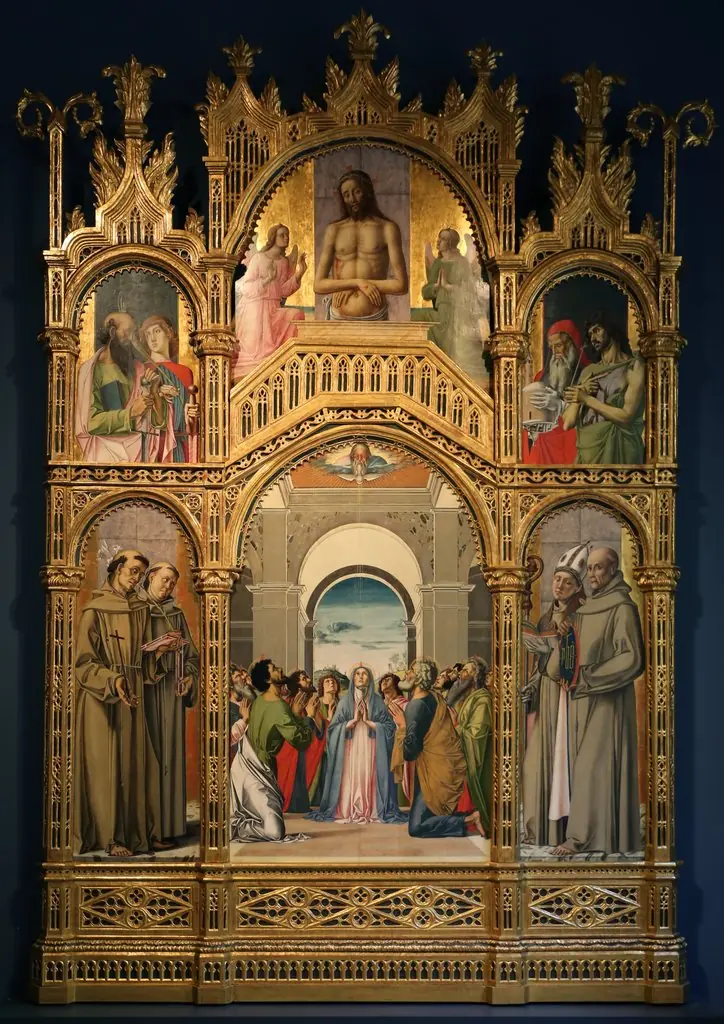 Pentecost table (6 panels)
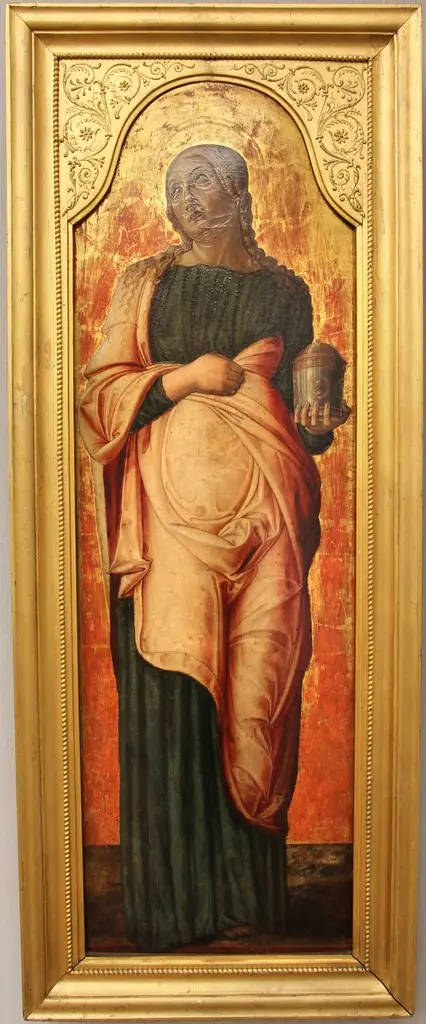 Mary Magdalene
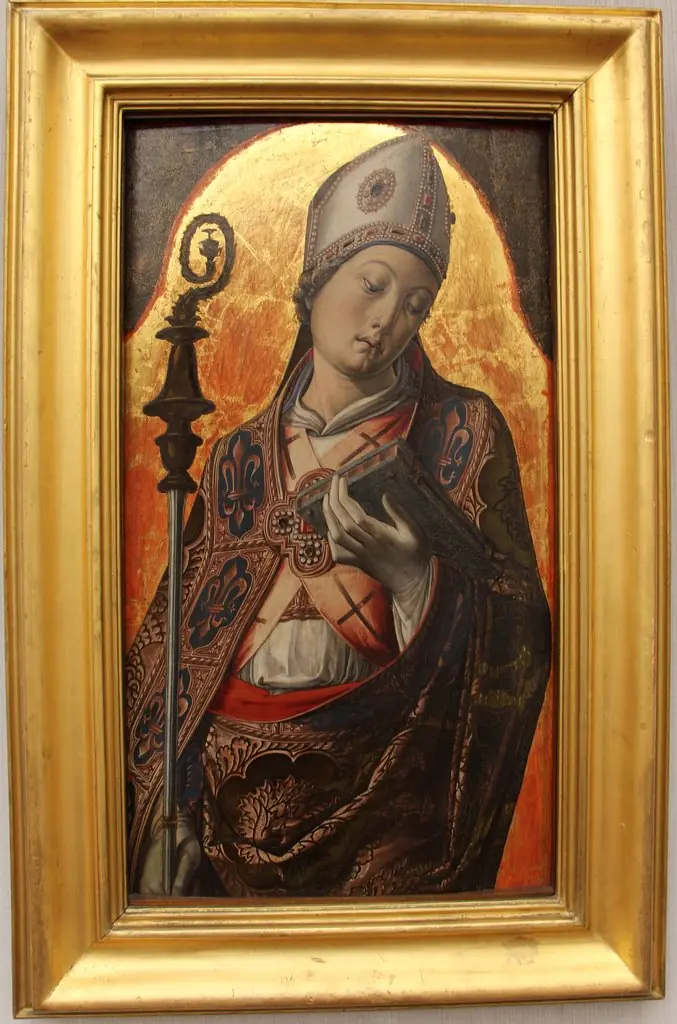 Saint Louis from Toulouse
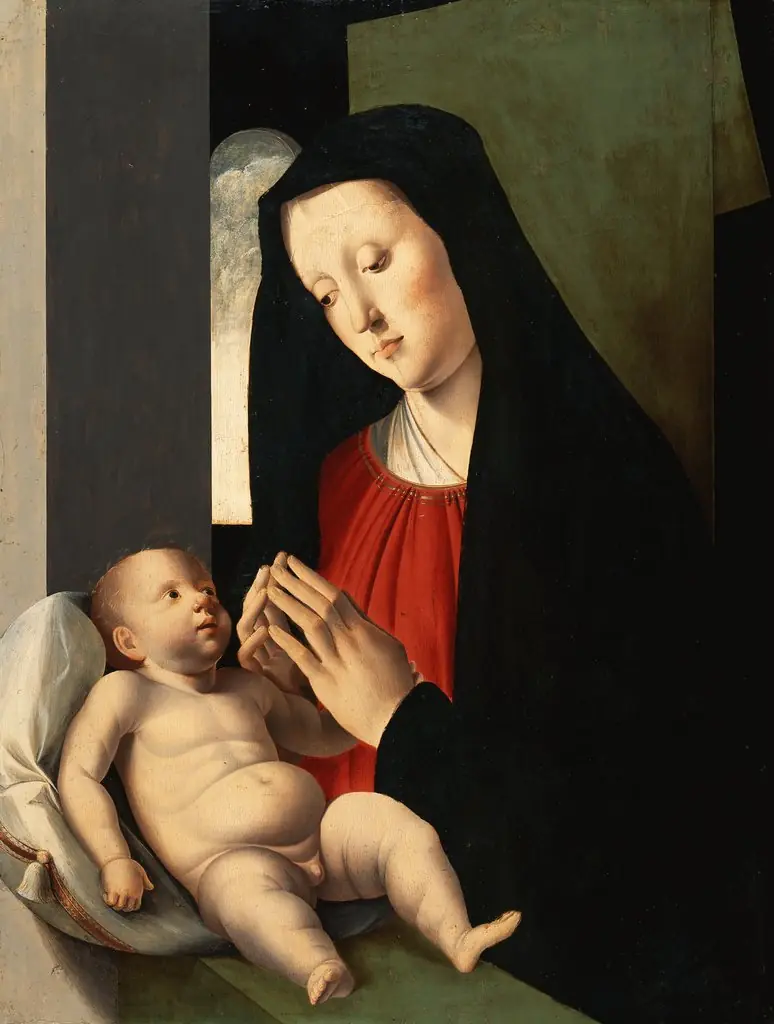 Mary adoring the Child
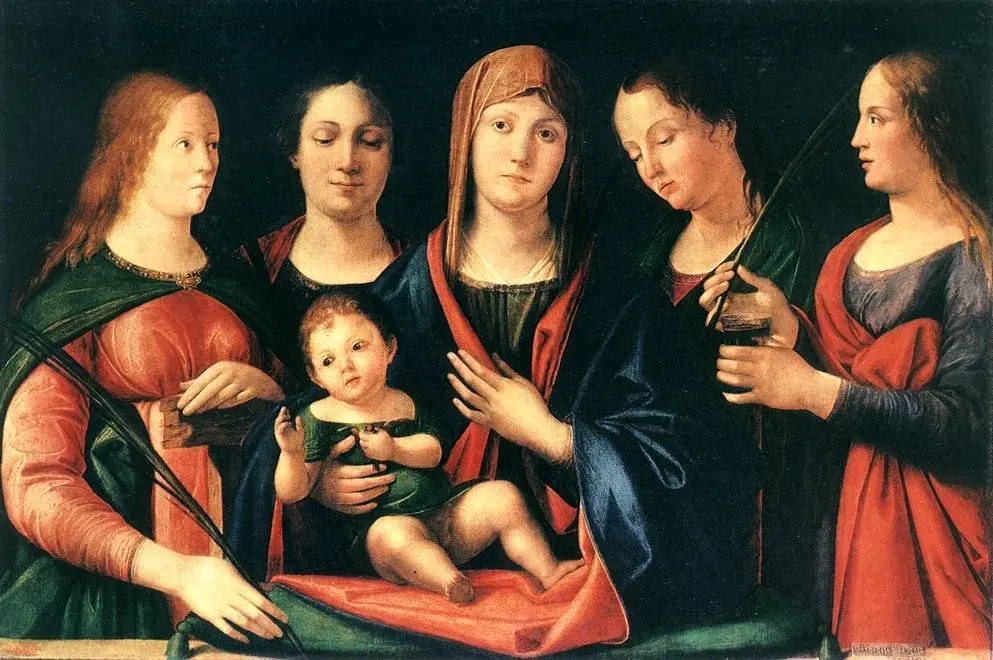 Mary and Child with Sts Mary Magdalene and Catherine
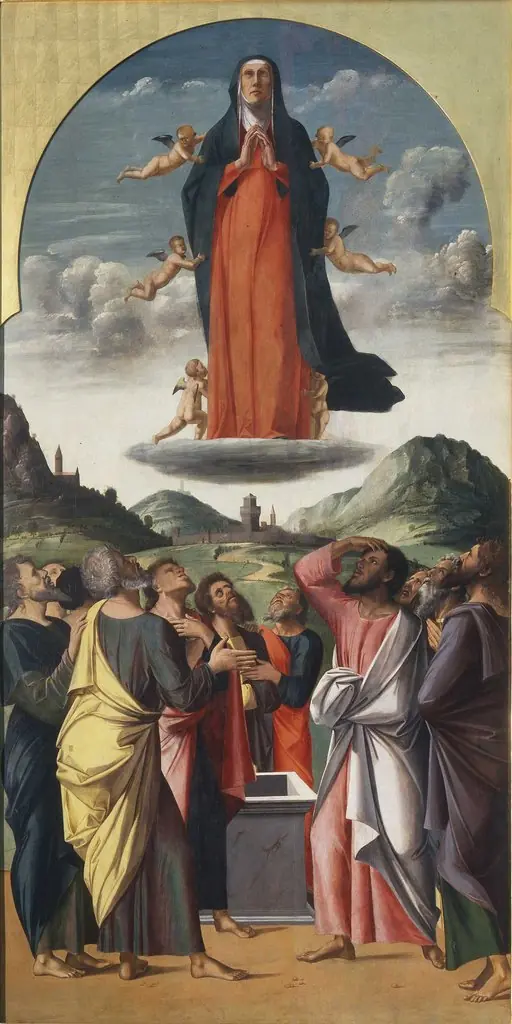 Annunciation
 Madonna in trono col Bambino
Collections represented


Artists in a similar vein