Artwork
Saint Jerome
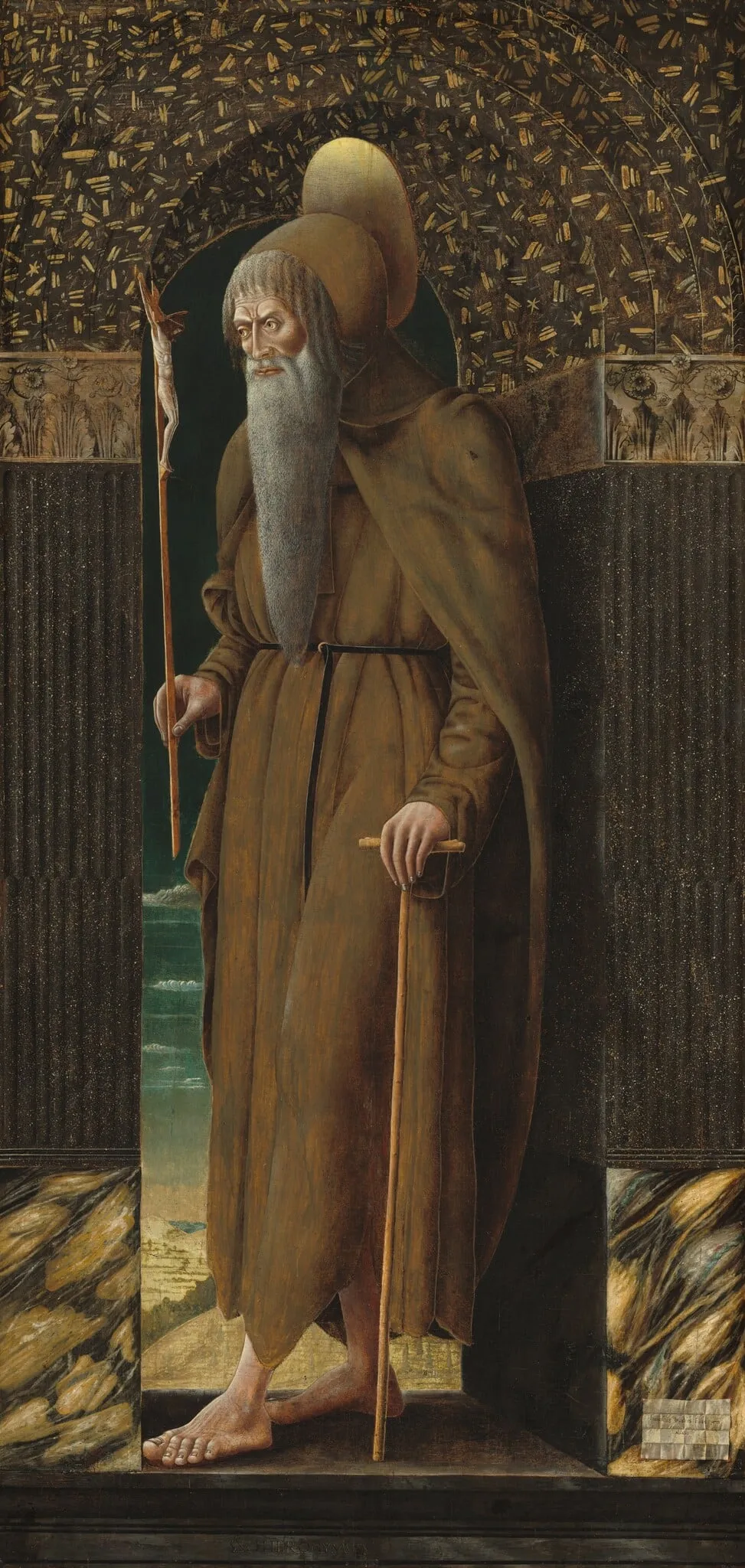
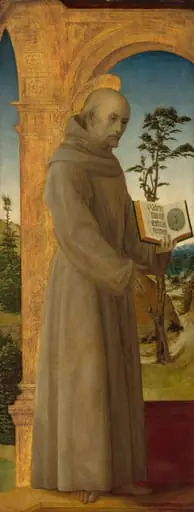
Saint Jerome is a tempera painting by the Early Renaissance artist Francesco Benaglio. It is held in the collection of the National Gallery of Art.
- Inscription
- Inscribed:lower right on the cartellino on the pilaster: Franciscus benalius Filius petri / Albado (Francesco Benaglio, son of Pietro, dealer in cereals); lower center on the step below the saint: .SS. HIERONYMVS.
About this work
Saint Jerome sits at a desk surrounded by books and papers. Francesco Benaglio fills the quiet study with detail, picturing the daily world of a scholar centuries ago. Painted in 1472, tempera on a spruce panel.
Subject & Meaning
Its meaning is rooted in Jerome's role as a Doctor of the Church and ascetic exemplar, embodying both humanist learning and penitential spirituality.
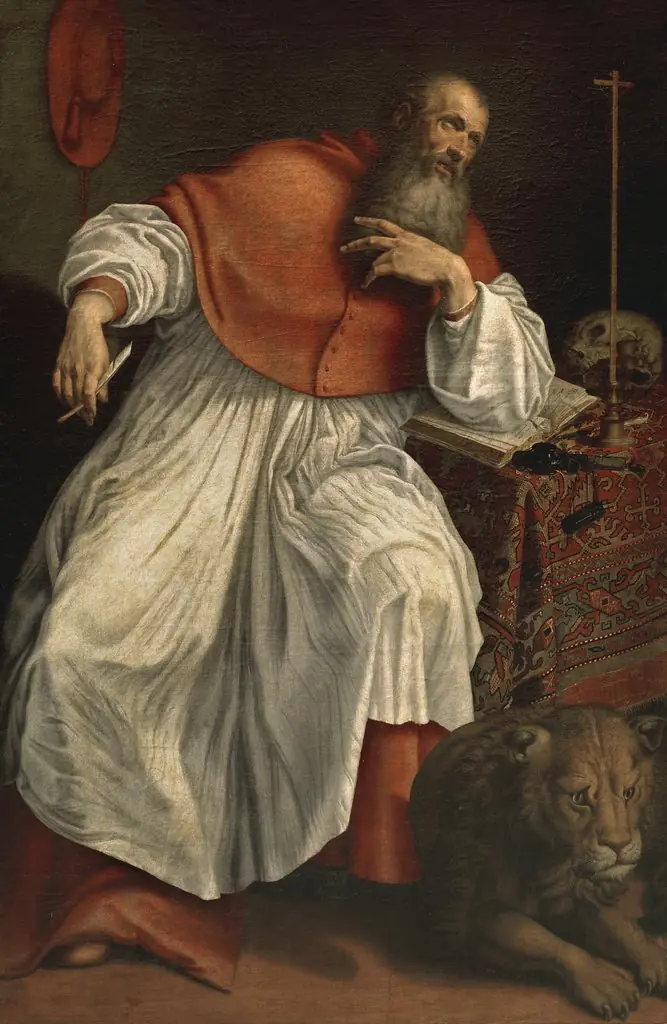
The painting depicts Saint Jerome, the fourth-century Christian scholar and translator of the Bible into Latin (the Vulgate). Francesco Benaglio's panel, executed in 1472 in tempera on spruce, presents Jerome as the principal subject. As a religious painting in the Samuel H. Kress Collection at the National Gallery of Art, the image participates in the long devotional tradition of representing the penitent or studious church father, a theme especially prevalent in Italian Quattrocento art.
Its meaning is rooted in Jerome's role as a Doctor of the Church and ascetic exemplar, embodying both humanist learning and penitential spirituality.
Technique & Style
Francesco Benaglio's Saint Jerome, executed in 1472, is a religious painting created in tempera on a spruce panel. The spruce support serves as the foundation for the tempera pigments. The work measures 139.1 cm in height and 67.3 cm in width, establishing its vertical format, and depicts the figure of Jerome.
Tempera on wood is characteristic of Italian Renaissance panel painting of the late 15th century, combining durability with the luminous quality achievable through tempera application on a wooden surface.
History & Provenance
The painting Saint Jerome, executed in tempera on spruce panel in 1472, depicts the saint. Its early ownership traces to Sir Francis Baring, 1st Bt., who sold it at Christie's in London on 15 March 1805 (lot 51, attributed to Francesco di Ladi). The work subsequently passed to Thomas Winstanley in Liverpool and then to William Roscoe by 1813, remaining in his collection until before 1816.
It entered a private English collection, was resold in 1924 (described as _St. Francis_ by Crivelli), appeared on the London art market by 1933, and was owned by Count Alessandro Contini Bonacossi before being acquired by the Samuel H. Kress Foundation in July 1948; the foundation gifted the work to the National Gallery of Art in 1952. No exhibition history beyond this provenance is documented in the available sources.
Overview
This painting, titled Saint Jerome, was created by Francesco Benaglio around 1472. Executed in tempera on a spruce panel, this religious work offers a focused depiction of the revered Christian scholar. It represents a characteristic example of Italian Renaissance painting from the period, emphasizing a singular devotional figure.
Artist & collection