Artwork
Foot of Hill Rise, Richmond
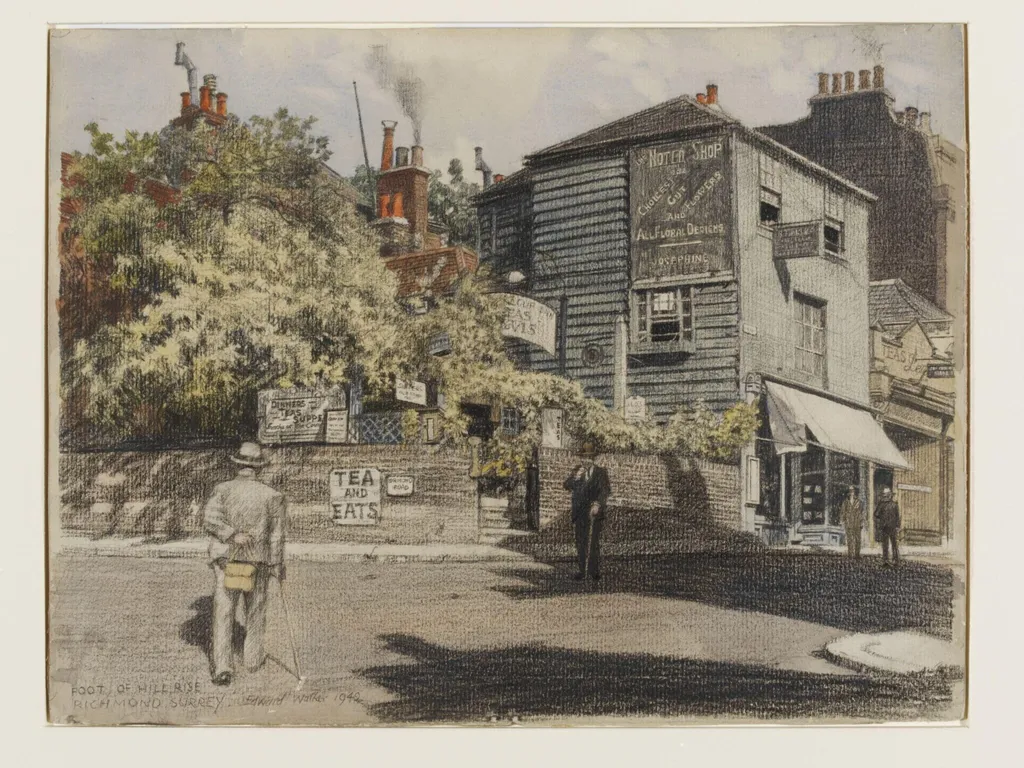
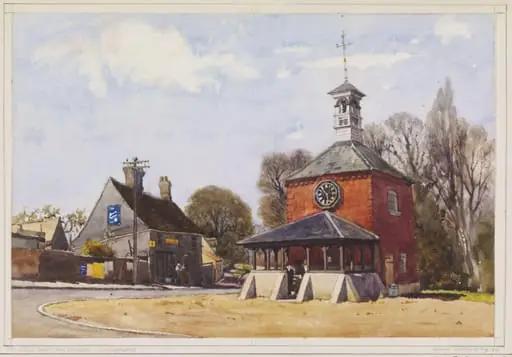
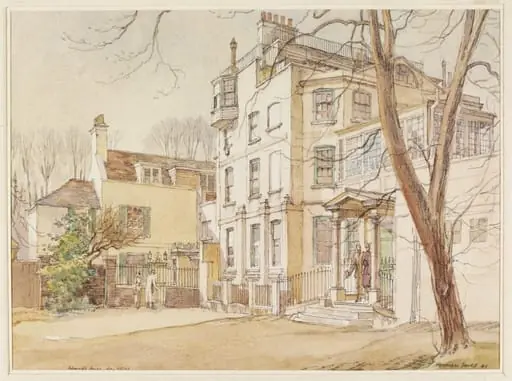
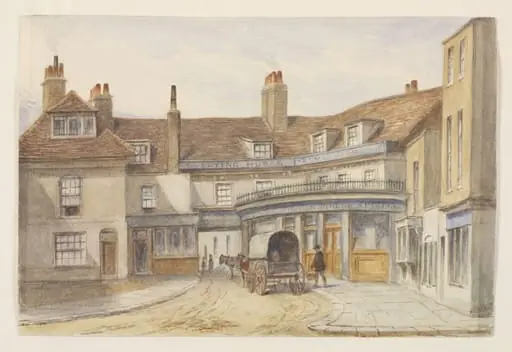
Foot of Hill Rise, Richmond is a watercolor work on paper by the Regionalist artist Walker. It dates from 1942 and is held in the collection of the Victoria and Albert Museum. Created in 1942, this watercolour portrays a modest riverside corner in Richmond during the early years of the Second World War.
About this work
Overview
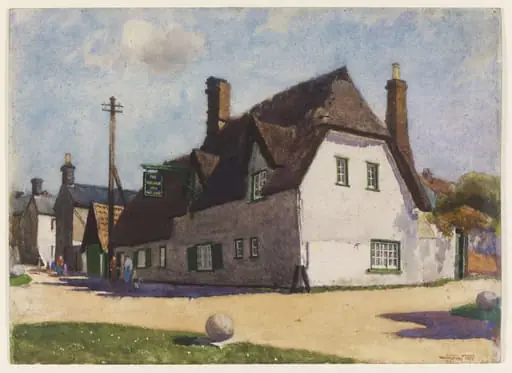
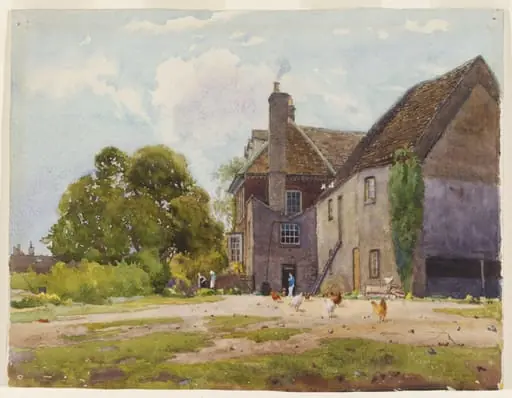
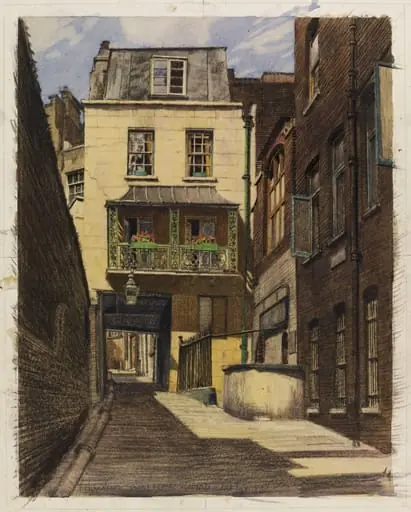
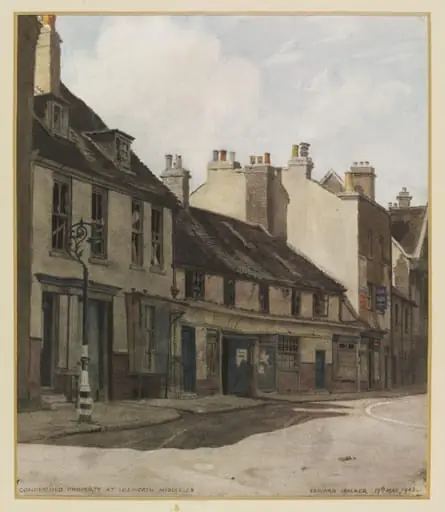
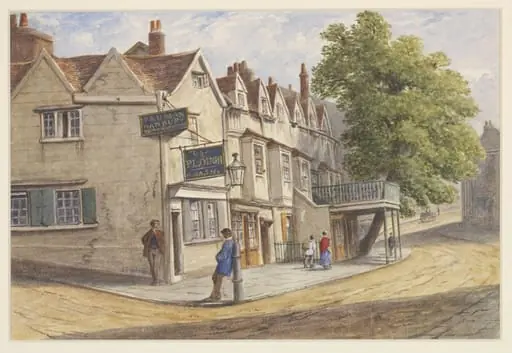
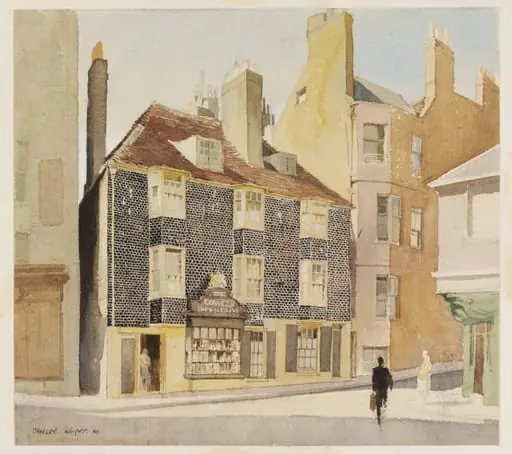
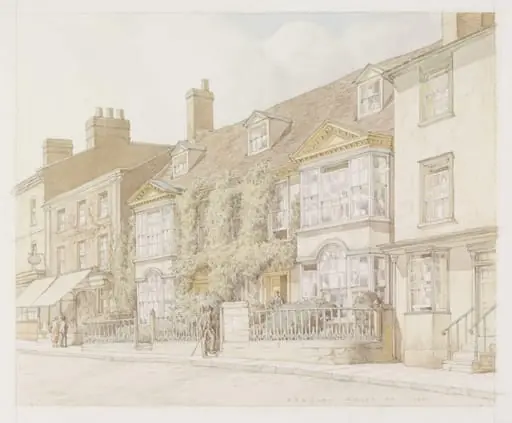
Created in 1942, this watercolour portrays a modest riverside corner in Richmond during the early years of the Second World War. The composition centers on a narrow street where a weathered shop, a small tea stall, and a solitary tree share space with a few passers‑by. A faint plume of smoke rises from a distant chimney, hinting at the industrial backdrop while the overall mood remains tranquil.
Subject & Meaning
The scene captures everyday life in wartime England, emphasizing the persistence of ordinary routines amid national upheaval. By focusing on a typical street corner, the work reflects the resilience of local communities and the continuity of commerce, even as the country faced broader social and economic pressures.
Technique & Style
Executed in transparent watercolour, the artist employs delicate washes to render the weathered façades and muted sky, while sharper brushwork defines the figures and signage. The palette of subdued earth tones and soft blues aligns with the British watercolour tradition, balancing documentary clarity with a modest lyrical quality.
History & Provenance
The painting was produced under the Recording Britain scheme, a wartime initiative directed by Sir Kenneth Clark to document sites of cultural significance. It is one of roughly 1,500 works commissioned from 97 artists, intended to preserve a visual record of the nation’s landscape and built environment during the conflict.
Context
Recorded during a period when many British locales were undergoing change due to wartime demands, the work contributes to a collective effort to archive the nation’s topography and heritage. Richmond’s riverside setting, with its mix of residential and commercial architecture, exemplifies the type of everyday scene the project sought to capture.
Legacy
As part of the larger Recording Britain collection, the watercolour serves both as a historical document and as an example of mid‑20th‑century British watercolour practice. It continues to inform scholars and the public about the visual character of wartime England and the role of state‑sponsored art in cultural preservation.
Artist & collection
Artist
An English watercolorist active in the early 1940s, this artist painted the spires, bridges, and inns of small-town England in quick, transparent washes.