Artwork
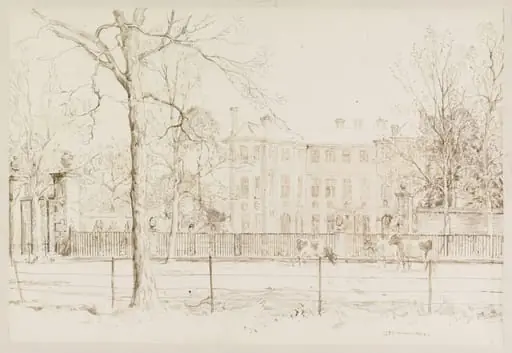
Admiral's House, Hampstead
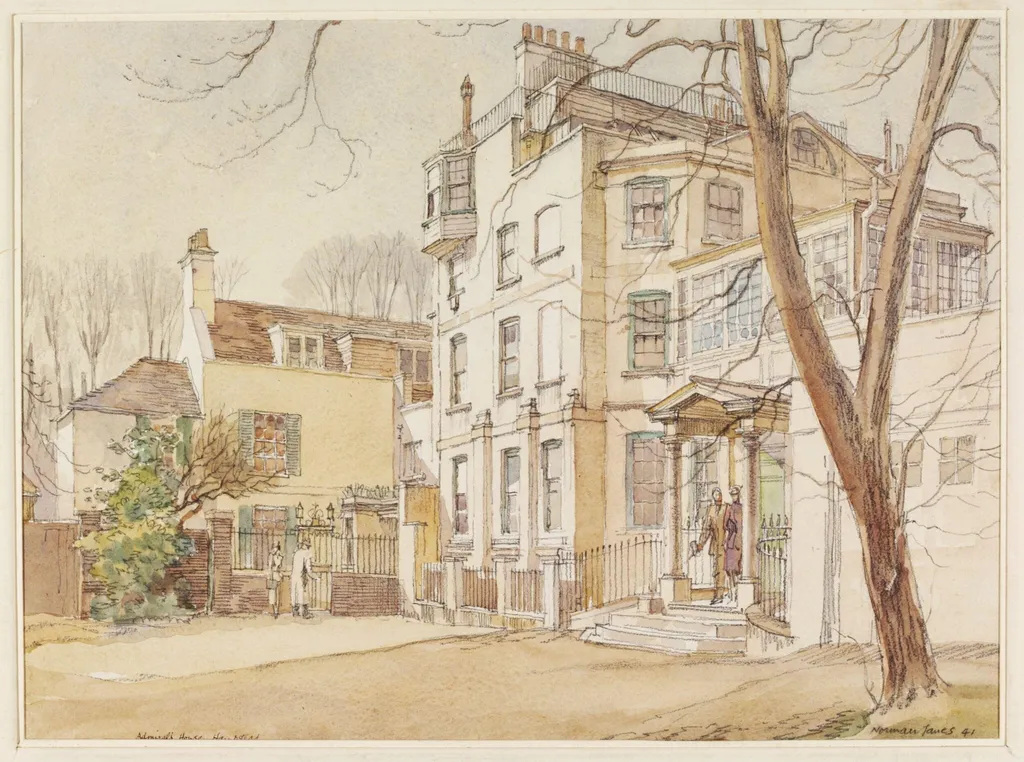
Admiral's House, Hampstead is a watercolor work on paper by the Social Realist artist Norman Thomas Janes. It dates from 1941 and is held in the collection of the Victoria and Albert Museum.
About this work
Overview
Admiral's House, Hampstead is a 1941 watercolour by Norman Thomas Janes, created as part of the Recording Britain project.
Subject & Meaning
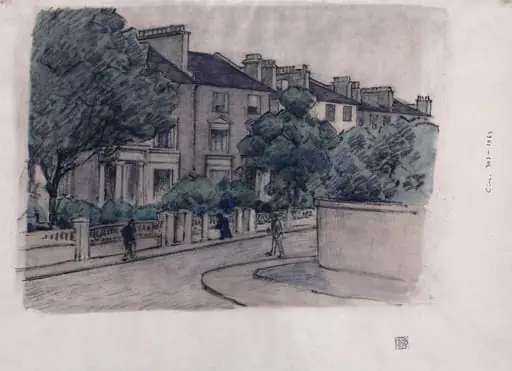
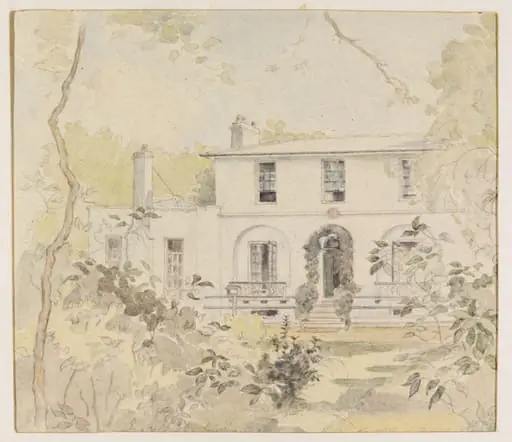
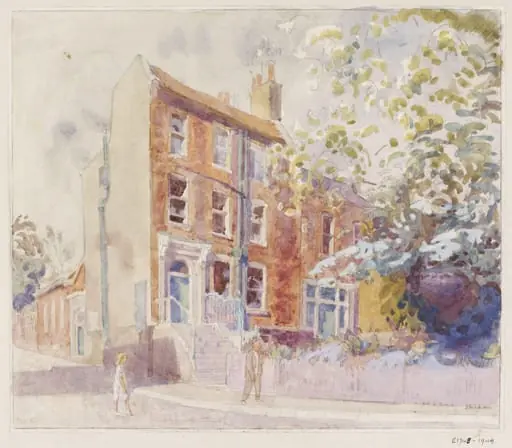
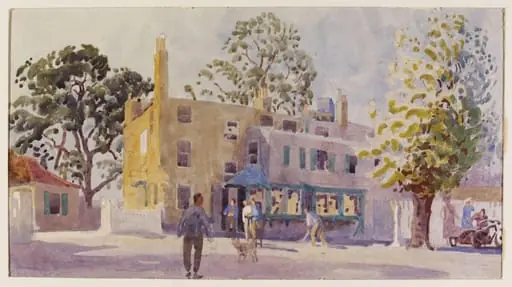
The painting depicts a serene street scene with two buildings: a tall, pale yellow house and a smaller adjacent brick house. A woman stands in the doorway of the larger house, gazing out. The leafless trees and bare branches evoke a winter atmosphere.
Technique & Style
Janes employed soft, light brushstrokes to capture the details of the buildings and the empty street, conveying a sense of calm and coldness.
History & Provenance
The work was commissioned under a Ministry of Labour scheme, funded by the Pilgrim Trust, to document British landscapes and buildings at risk from wartime damage or modernization.
Context
The Recording Britain project resulted in over 1,500 works by 97 artists, including John Piper and Rowland Hilder, during the Second World War.
Artist & collection
Artist
This British artist built quiet, intimate scenes in watercolour. In 1941 he captured the brick-and-slate calm of Admiral’s House in Hampstead, where slate roofs and overgrown gardens fold into soft northern light. It…

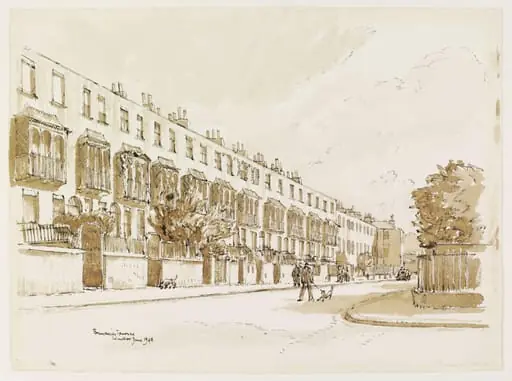 Brunswick Terrace, Windsor
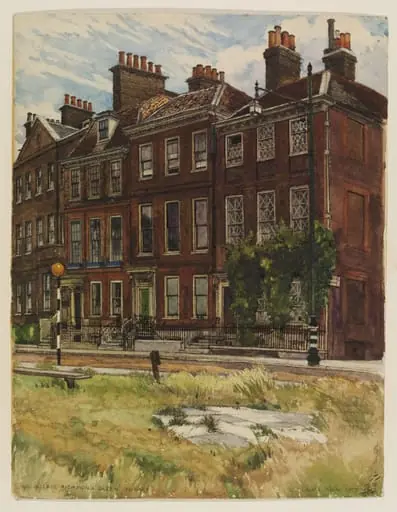 Nos 10, 11 & 12 Richmond Green, Surrey
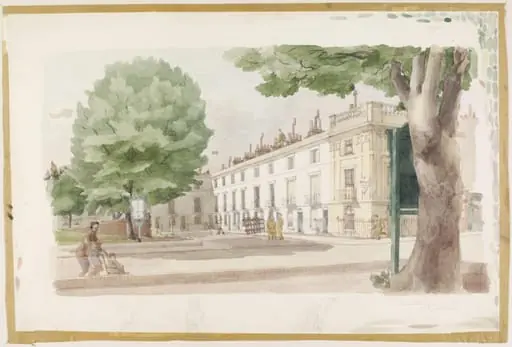 Munster Square, off Euston Road, N.W.1.
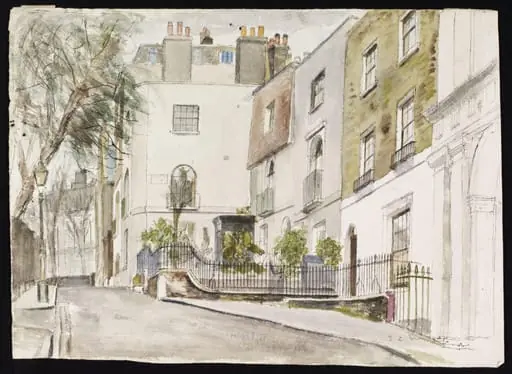 Hollyberry Walk, N.W.3.
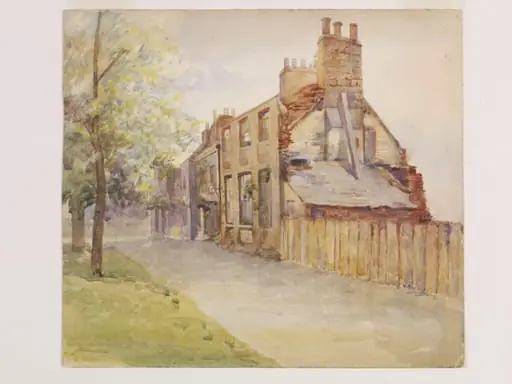 Old brick residences in the grounds of the South Kensington Museum (now the Victoria and Albert Museum)
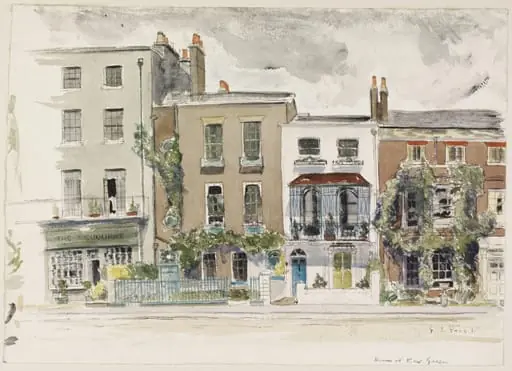 Houses on the Green, Kew
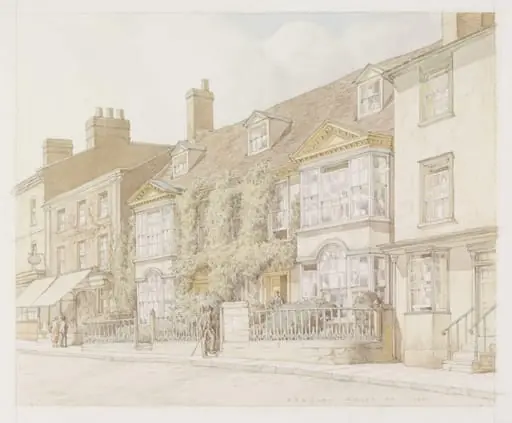 Georgian Houses, Market Hill, Buckingham
 Ham House