Artwork
Condemned Property at Isleworth
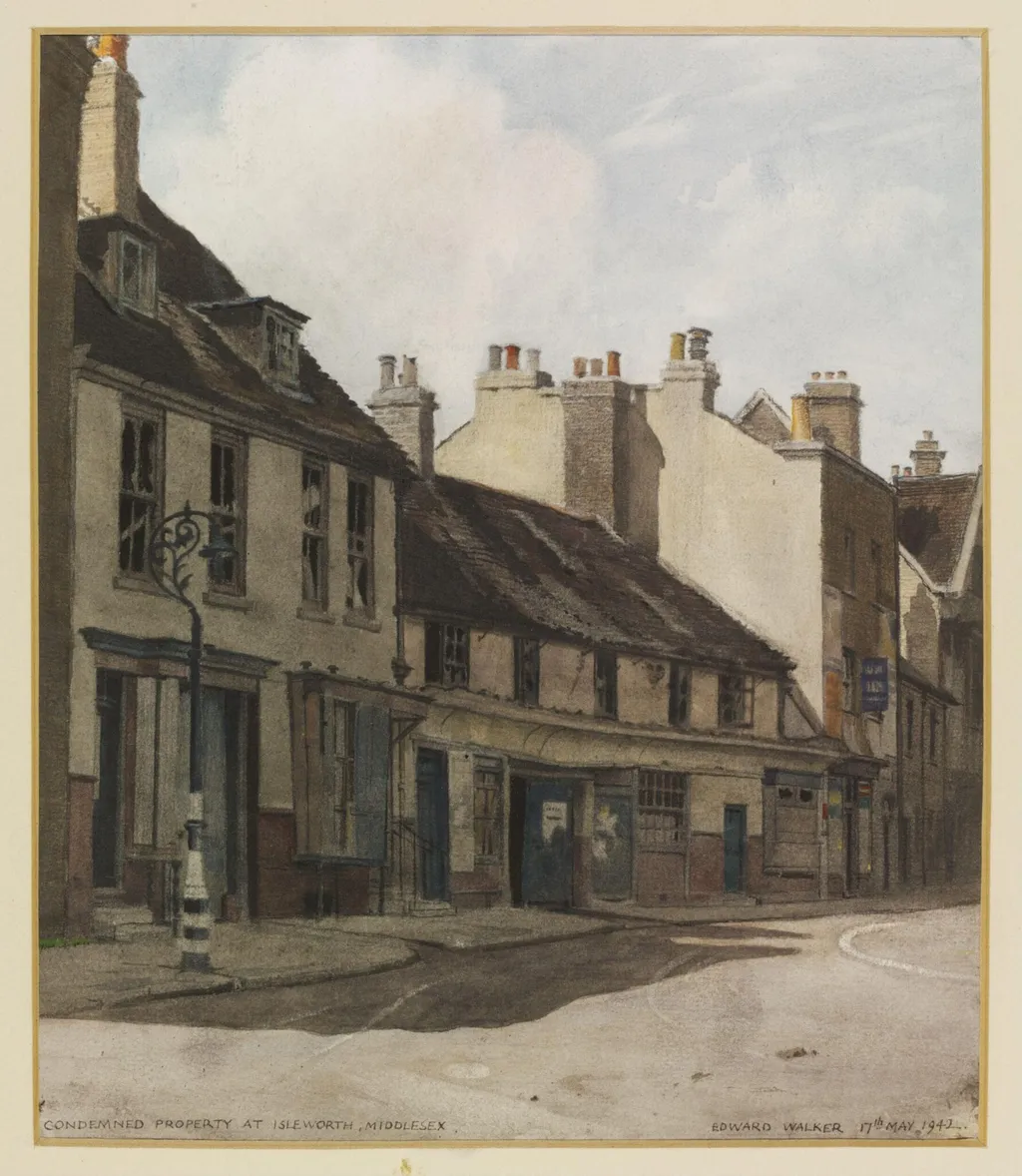
Condemned Property at Isleworth is a watercolor work on paper by the Social Realist artist Walker. It dates from 17 and is held in the collection of the Victoria and Albert Museum.
About this work
Overview
Funded by the Pilgrim Trust and overseen by Sir Kenneth Clark, the project enlisted nearly one hundred artists to record scenes deemed culturally significant.
This watercolour by Walker was produced during the early 1940s as part of the Recording Britain project, a government-backed initiative to visually archive landscapes and architecture at risk from wartime destruction and modernization. Funded by the Pilgrim Trust and overseen by Sir Kenneth Clark, the project enlisted nearly one hundred artists to record scenes deemed culturally significant. Walker’s contribution captures a quiet, deteriorating street in Isleworth, reflecting the project’s broader mission to preserve visual records of a changing nation.
Subject & Meaning
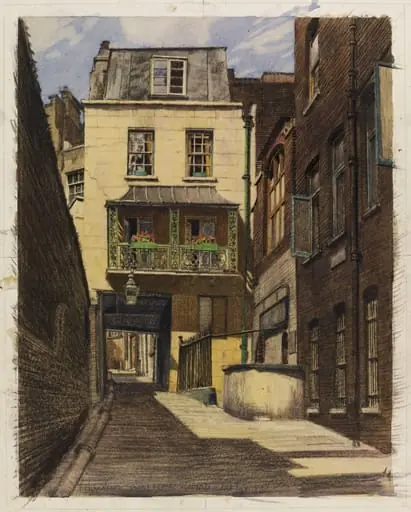
The painting portrays a modest urban street in Isleworth, lined with modest buildings showing signs of neglect, broken windows, uneven roofs, peeling plaster. There are no figures, no movement; the scene feels abandoned, suspended in time. The subject is not grand architecture but ordinary, fading structures, suggesting a meditation on impermanence.
The work implies a quiet urgency: these are not monuments, yet their loss would erase a layer of everyday British life.
Technique & Style
Walker employs transparent watercolour washes to convey subtle shifts in light and texture, favoring muted earth tones, ochres, greys, and browns, that reinforce the scene’s somber mood. Delicate brushwork defines architectural details without embellishment, while areas of bare paper suggest weathered surfaces and shadows. The composition is restrained, with the street receding gently into the distance, emphasizing isolation and stillness over dramatic effect.
History & Provenance
Created during the Second World War, the painting entered the Recording Britain collection, which was assembled between 1939 and 1943. After the war, the entire collection was donated to the Victoria and Albert Museum, where it remains accessible to the public. Walker’s work, like others in the series, was not intended for commercial display but as a documentary record. Its survival reflects the project’s success in safeguarding visual heritage during a period of national upheaval.
Context
The Recording Britain project emerged amid fears of widespread destruction from aerial bombing and the erosion of rural and historic environments due to wartime requisition and postwar planning. Artists were sent across the country to document buildings, lanes, and landscapes before they vanished. Walker’s depiction of Isleworth aligns with this mission, capturing not destruction yet, but the slow decay of places overlooked by official narratives of progress and resilience.
Legacy
The Recording Britain collection endures as a vital archive of mid-20th-century British topography, offering insight into how ordinary places were valued during crisis. Walker’s watercolour contributes to this legacy by illustrating the quiet dignity of neglected urban edges. It stands as a testament to the project’s belief that cultural memory resides not only in grand monuments but in the unremarkable, the worn, and the quietly disappearing.
Own this work as a print
Artist & collection
Artist
An English watercolorist active in the early 1940s, this artist painted the spires, bridges, and inns of small-town England in quick, transparent washes.

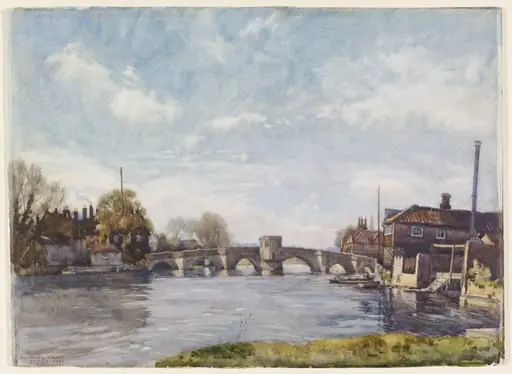
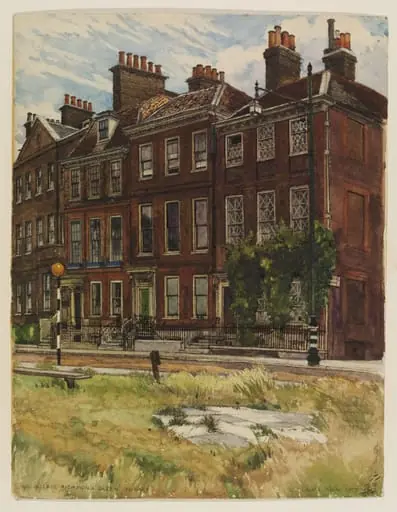
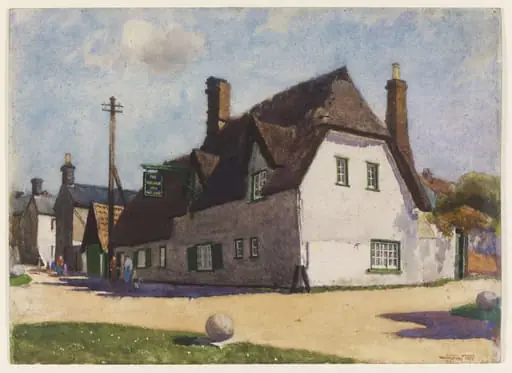
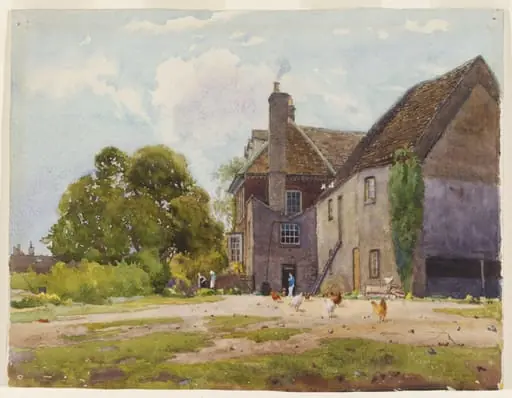
- Sheet Street, Windsor
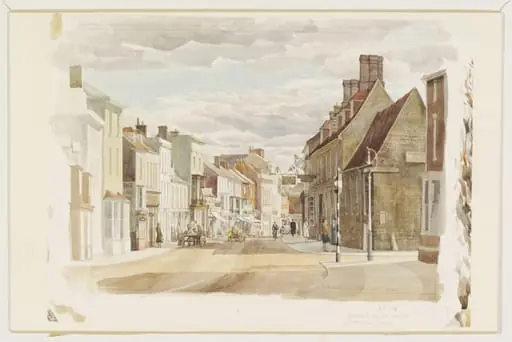 Towcester High Street from the Pomfret Arms Corner, Northamptonshire
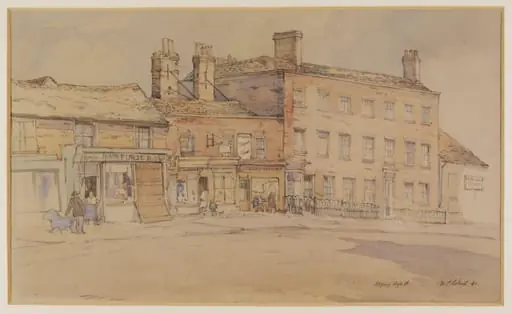 Epping High Street
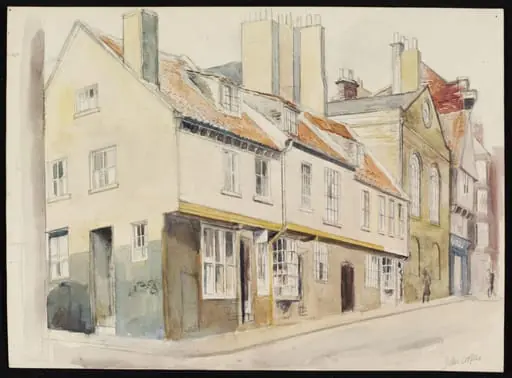 Tudor Houses, Church Street, Whitby
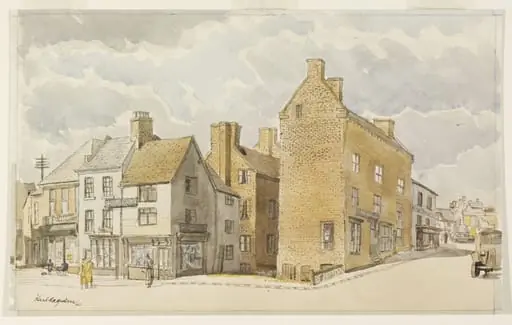 Ashbourne
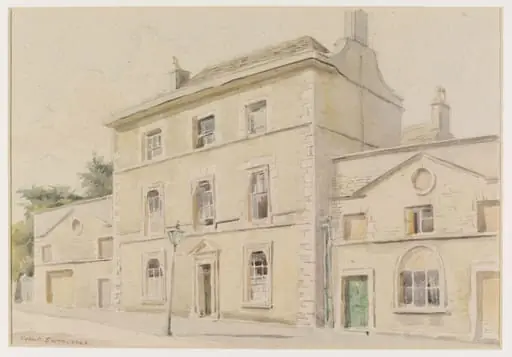 Georgian House, Cecily Hill, Cirencester
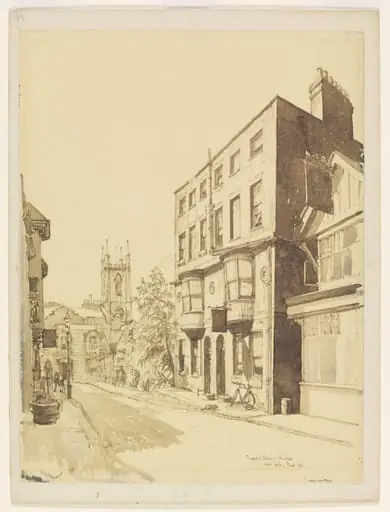 Church Street, (west side) Windsor
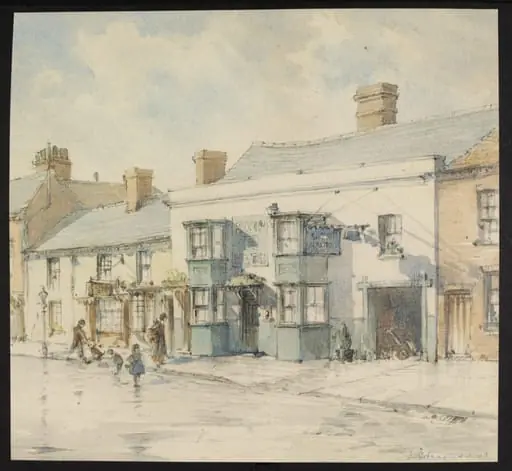 The Ship Inn, Tenbury Wells
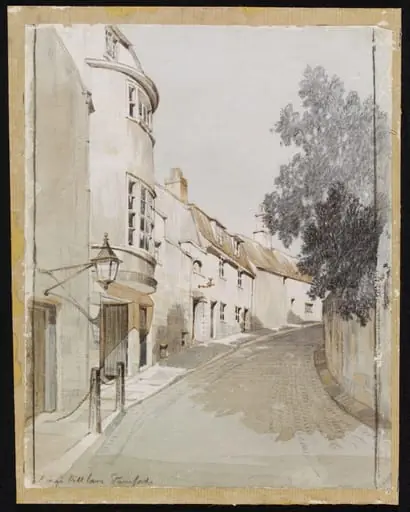 King's Mill Lane, Stamford, Rutlandshire
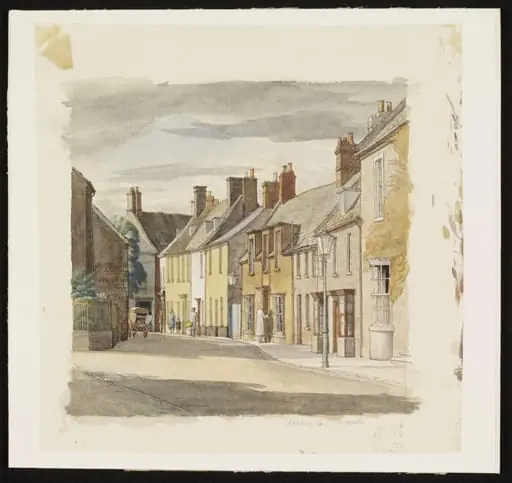 Chancery Lane, Thrapston
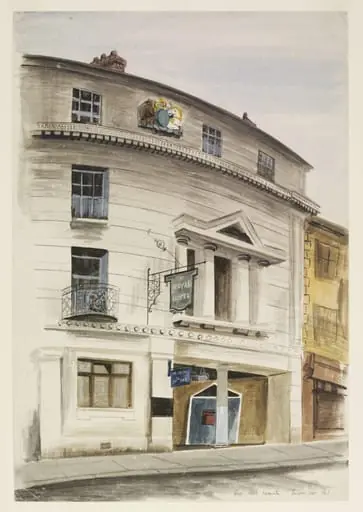 Royal Hotel, Falmouth