Artwork
Hemingford Mill
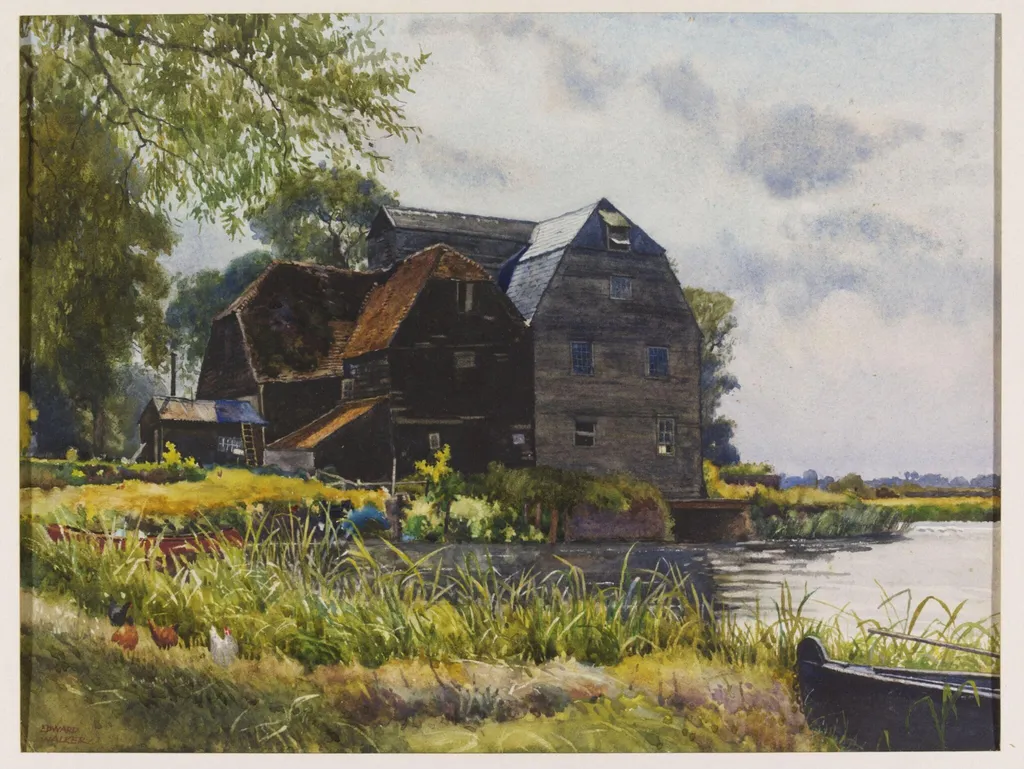
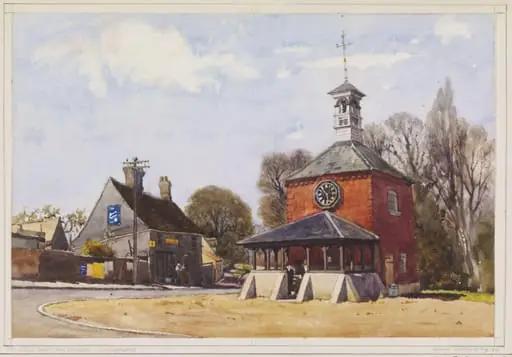
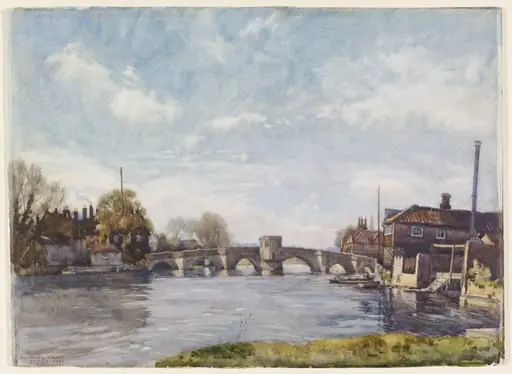
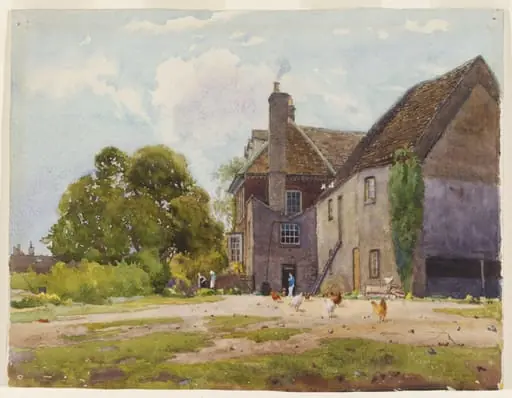
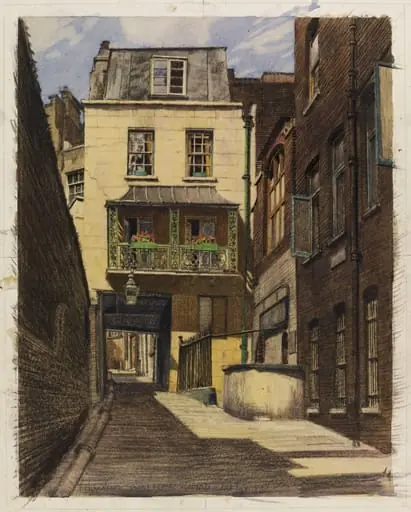
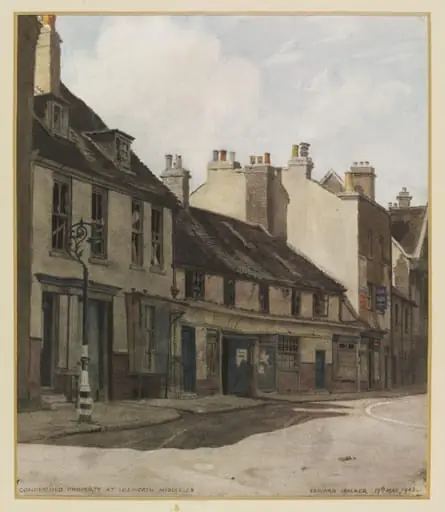
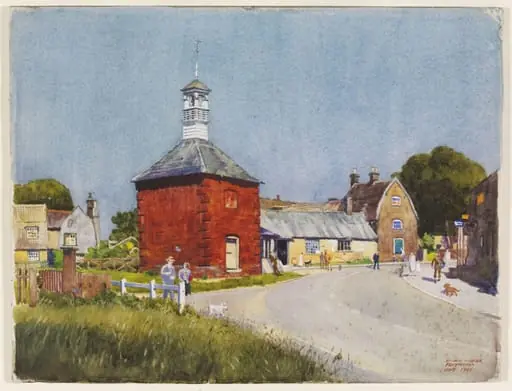
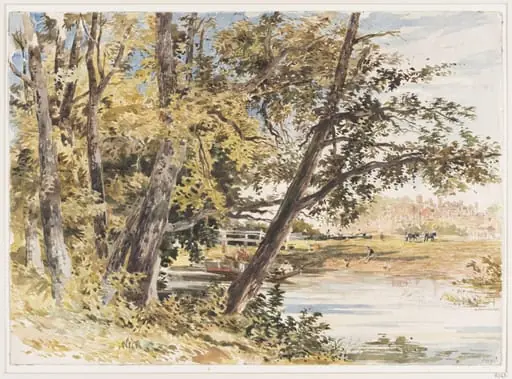
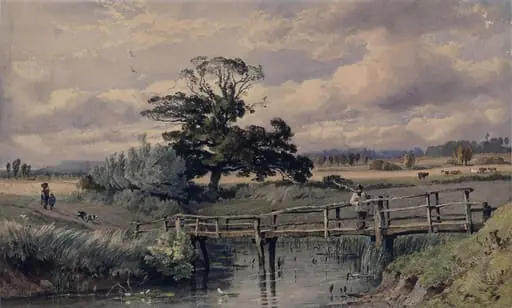
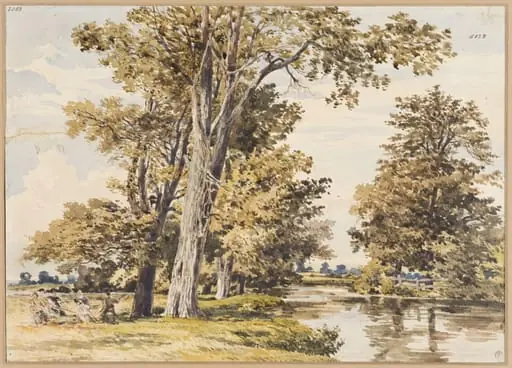
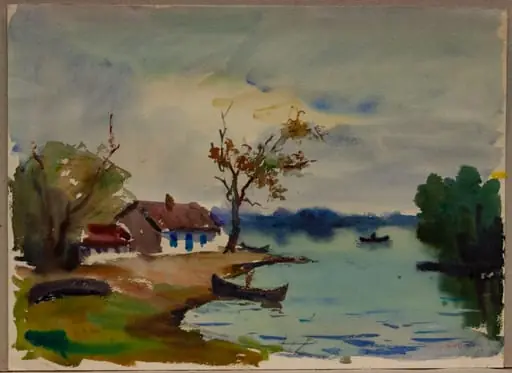
Hemingford Mill is a watercolor work on paper by the Regionalist artist Walker. It dates from 1941 and is held in the collection of the Victoria and Albert Museum.
About this work
Overview
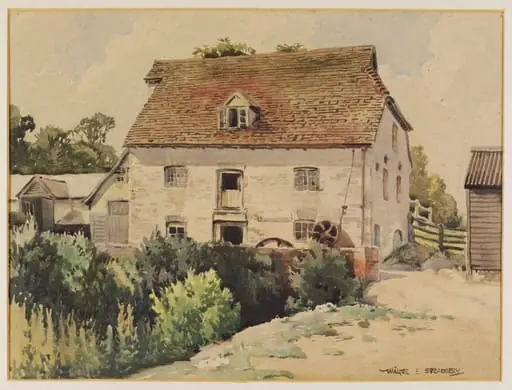
Painted in 1941 by John Walker, Hemingford Mill is a watercolour depicting a rural mill near Hemingford Grey, likely on the Great Ouse. Executed during wartime, it belongs to the Recording Britain project, which sought to preserve visual records of vulnerable landscapes. The work captures a quiet, undisturbed scene, emphasizing the mill’s solidity against the softness of its natural surroundings.
Subject & Meaning
The mill, a sturdy stone or brick structure with a hipped roof, stands as the focal point, surrounded by reeds, grasses, and scattered trees.
The mill, a sturdy stone or brick structure with a hipped roof, stands as the focal point, surrounded by reeds, grasses, and scattered trees. No human figures or signs of activity appear, reinforcing a sense of isolation and endurance. The painting reflects a quiet reverence for vernacular architecture and the English countryside, values central to the Recording Britain initiative’s mission of preservation.
Technique & Style
Walker employed transparent watercolour washes to model form with subtle gradations of light and shadow. The mill’s dark, solid mass contrasts with the luminous, loosely rendered vegetation along the water’s edge. Delicate brushwork defines reeds and grasses, while the water reflects ambient light without detail, enhancing the scene’s stillness and atmospheric calm.
History & Provenance
Created as part of the Recording Britain project, the painting was commissioned under the auspices of the Pilgrim Trust and administered by Sir Kenneth Clark’s Committee for the Employment of Artists in Wartime. It entered the Victoria and Albert Museum’s collection as part of this wartime archive, preserved alongside hundreds of other works documenting Britain’s threatened rural heritage.
Context
During World War II, fears of aerial bombardment and postwar development spurred efforts to visually document landscapes and buildings deemed at risk. Recording Britain mobilized artists to record scenes of quiet endurance, mills, churches, cottages, before they vanished. Hemingford Mill exemplifies this mission, capturing a place where time seemed suspended, untouched by conflict or change.
Legacy
The painting remains a key example of mid-20th-century British topographical art, valued for its documentary precision and emotional restraint. It contributes to an enduring visual record of rural England during a period of upheaval, offering insight into how artists responded to national anxiety through quiet observation rather than dramatic intervention.
Artist & collection
Artist
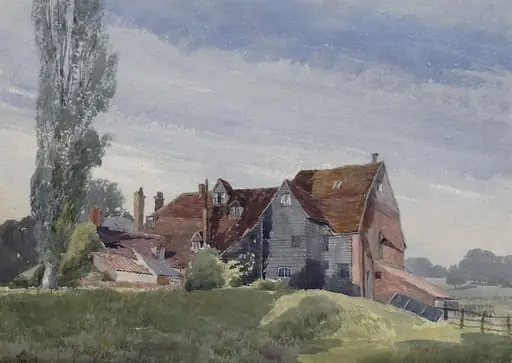
An English watercolorist active in the early 1940s, this artist painted the spires, bridges, and inns of small-town England in quick, transparent washes.