Artwork
元 王振鵬 維摩不二圖 卷|Vimalakirti and the Doctrine of Nonduality
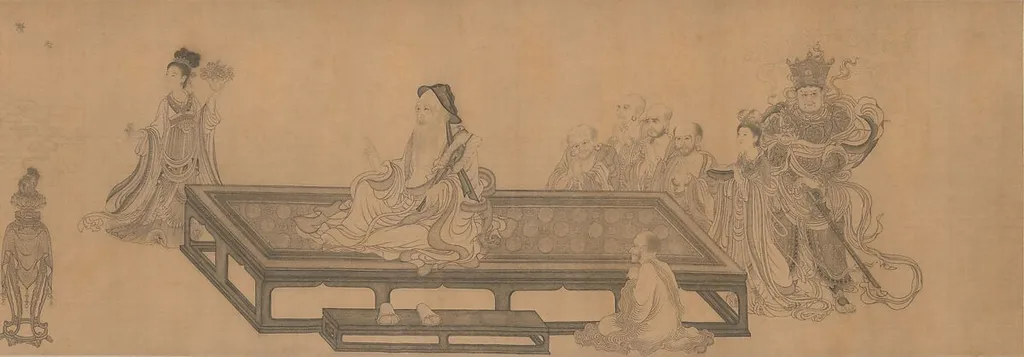
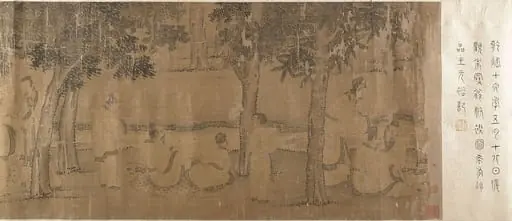
元 王振鵬 維摩不二圖 卷|Vimalakirti and the Doctrine of Nonduality is an ink painting by the Ming dynasty painting artist Wang Zhenpeng. It dates from 1308 and is held in the collection of the Metropolitan Museum of Art.
About this work
Subject & Meaning
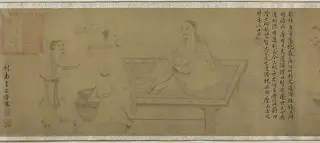
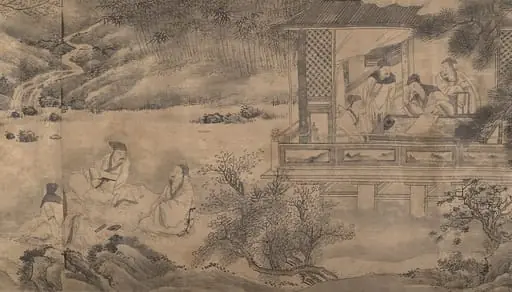
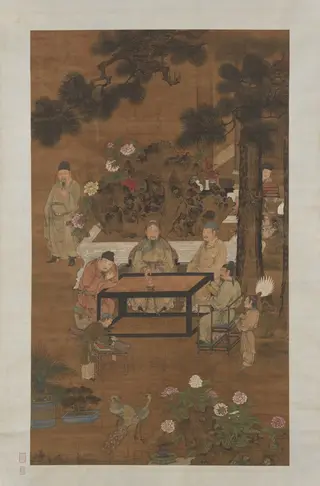
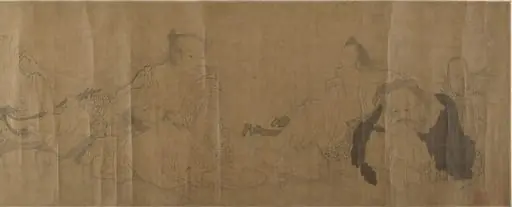
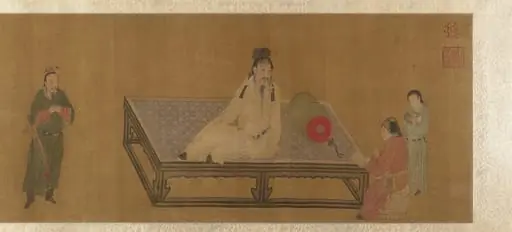
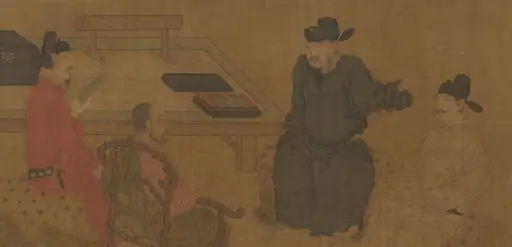
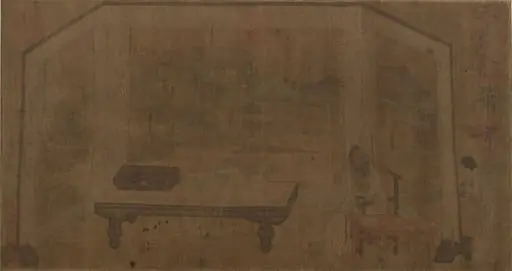
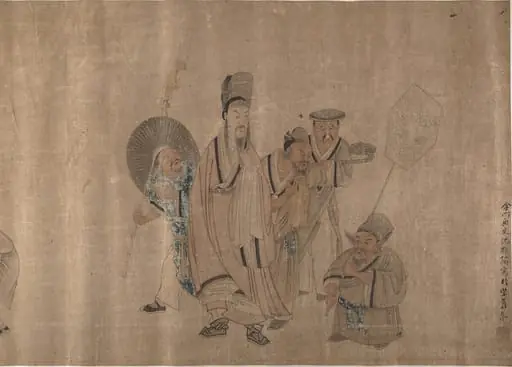
The handscroll depicts Vimalakirti, a lay bodhisattva shown as a man, in dialogue with the Bodhisattva Mañjuśrī, accompanied by a female figure.
The handscroll depicts Vimalakirti, a lay bodhisattva shown as a man, in dialogue with the Bodhisattva Mañjuśrī, accompanied by a female figure. These figures, identified as man, woman, and Bodhisattva/Mañjuśrī, correspond to the subjects listed in the work's catalogue data. The title, Vimalakirti and the Doctrine of Nonduality, indicates that the scene illustrates the sutra's teaching that wisdom and method, or self and other, are ultimately non-dual.
Thus the painting visualizes the core Mahayana concept of nonduality through its iconic grouping of the lay saint, the wisdom bodhisattva, and the feminine principle.
Technique & Style
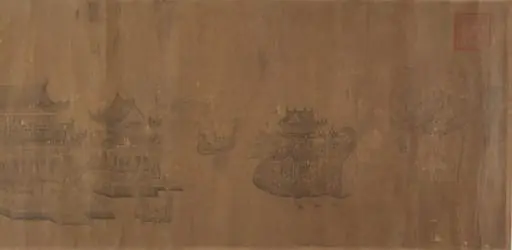
The work is executed as a handscroll in ink on silk, a traditional Chinese support that allows a continuous narrative to unfold. Dated to 1308, it exemplifies Yuan-dynasty religious painting, with the ink-on-silk medium calling for delicate brush control and subtle tonal variations. As a painting in the Metropolitan Museum of Art's collection, the piece retains the handscroll format intended for gradual unrolling and viewing in sections. Its religious genre and meticulous execution reflect the formal concerns of Chinese Buddhist illustration of the period.
History & Provenance
The handscroll 元 王振鵬 維摩不二圖 卷 was created by Wang Zhenpeng in 1308, as indicated by the work's date and inception recorded in the sources. Executed in ink on silk, it is a religious painting depicting Vimalakirti and the Doctrine of Nonduality. The work was made in China and is now part of the collection of the Metropolitan Museum of Art in New York. No further details about its commission, earlier owners, or provenance are provided in the available sources.
Context
Wang Zhenpeng's handscroll Vimalakirti and the Doctrine of Nonduality, executed in 1308 in China, exemplifies Yuan-period Buddhist narrative painting. The work, rendered in ink on silk, belongs to the religious genre and depicts the bodhisattva Vimalakirti alongside Mañjuśrī, a man and a woman, reflecting the themes of the Vimalakirti sutra. Its inclusion in the Metropolitan Museum of Art's collection underscores its significance as a surviving example of Chinese painting of the period.
Scholarship on the piece emphasizes its sophisticated composition and the integration of iconographic detail within the broader development of Buddhist subject matter in Chinese painting.
Overview
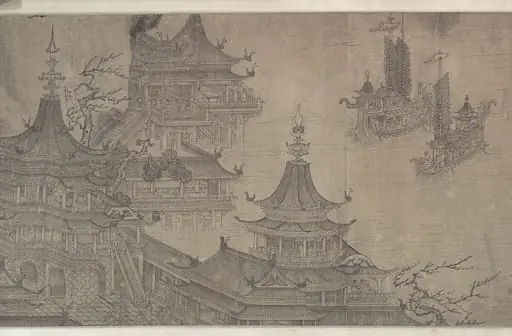
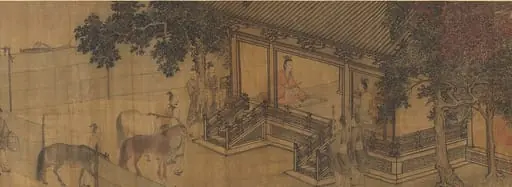
Created in 1308, the handscroll Vimalakirti and the Doctrine of Nonduality by Wang Zhenpeng depicts the legendary lay Buddhist Vimalakirti engaging in a philosophical debate with the bodhisattva Manjushri. The composition unfolds across a long, narrow silk format, presenting a dense assembly of monks, deities, and courtly figures gathered within an architectural setting. Executed in ink, the work is defined by Wang's signature 'iron-wire' line technique, characterized by extremely fine, uniform strokes that delineate the intricate folds of robes and the delicate features of the numerous figures with remarkable precision.
This piece is historically significant as one of the earliest surviving Chinese paintings explicitly signed and dated by the artist, establishing a clear chronology for Wang Zhenpeng's career during the Yuan dynasty. The subject matter draws from the Vimalakirti Sutra, illustrating the concept of nonduality through the silent response of the ailing Vimalakirti to Manjushri's inquiries. The scroll serves as a prime example of the revival of archaic styles and the high level of technical virtuosity favored by the Yuan court, bridging religious narrative with sophisticated draftsmanship.
Artist & collection

Artist
Wang Zhenpeng (simplified Chinese: 王振鹏; traditional Chinese: 王振鵬; pinyin: Wáng Zhènpéng; Wade–Giles: Wang Chên-p'êng); was a Chinese landscape painter who worked in the imperial court during the Yuan Dynasty (1271–1368).