Artwork
Panel for Edwin R. Campbell No. 4
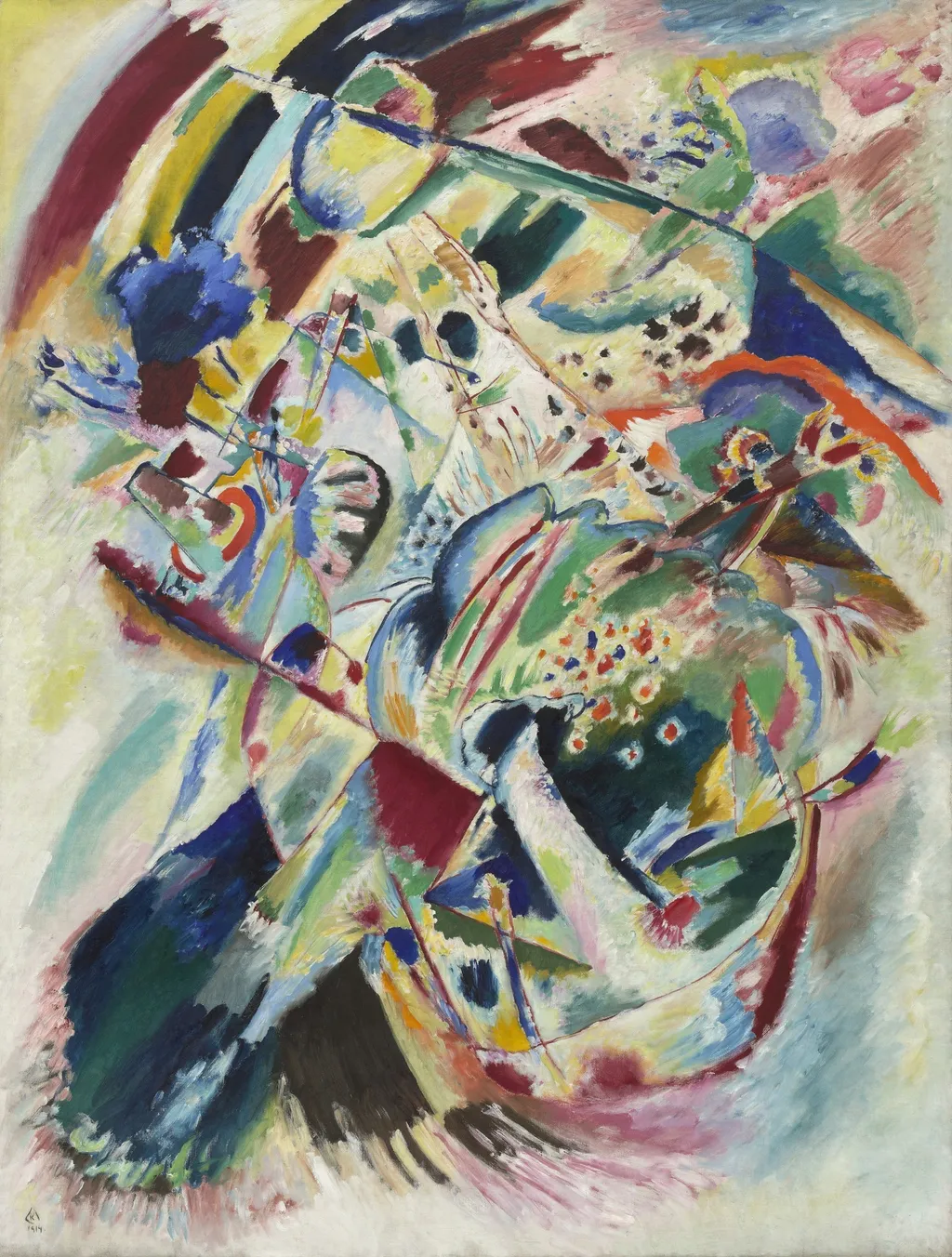
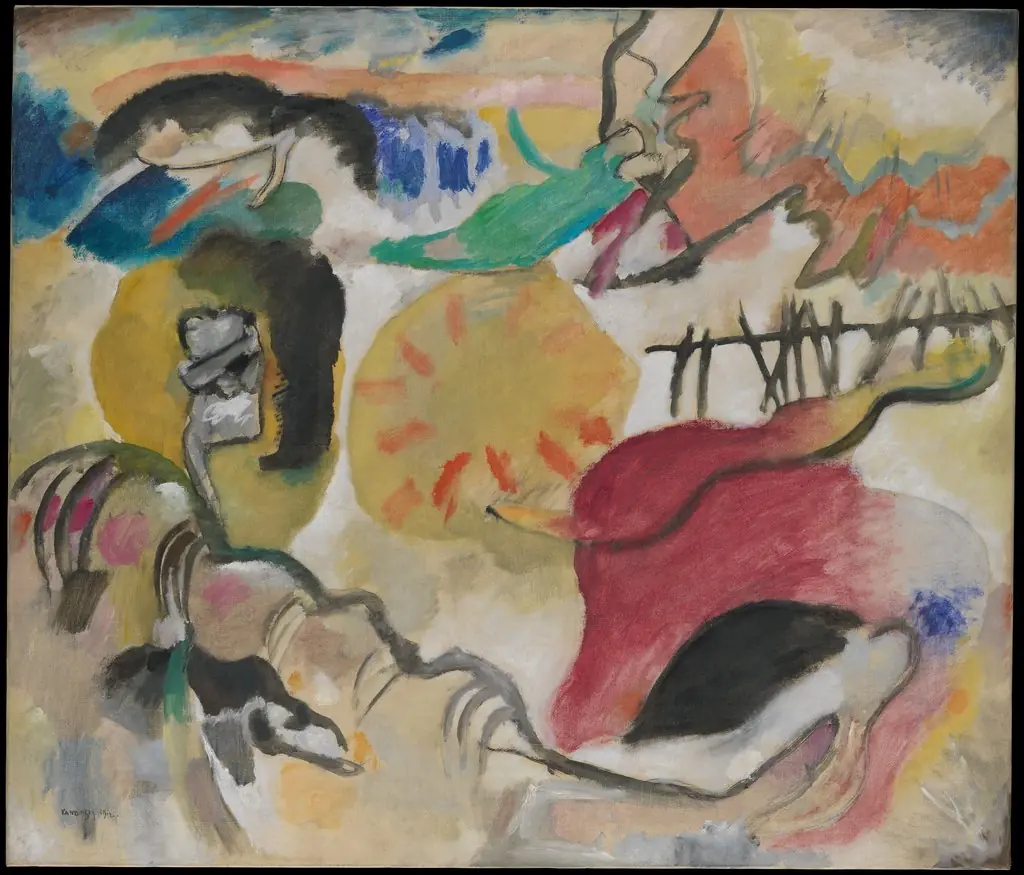
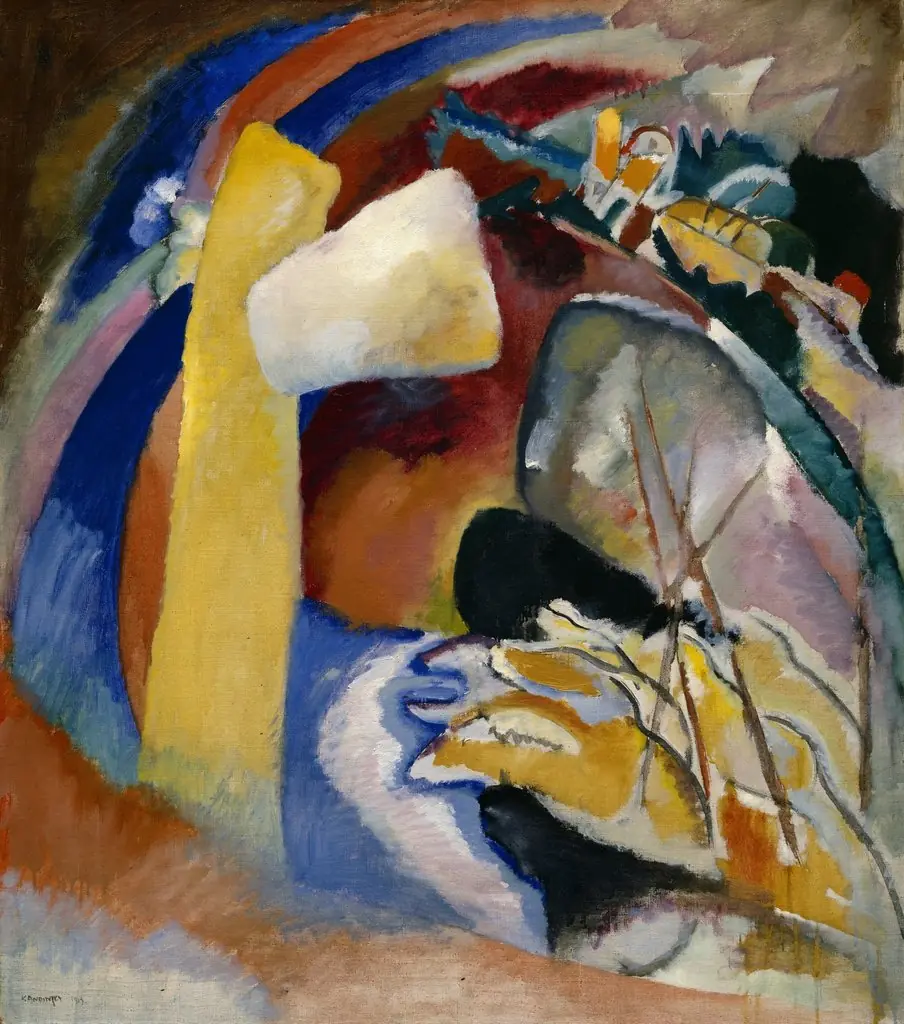
Panel for Edwin R. Campbell No. 4 is an oil painting by the Abstract Expressionist artist Wassily Kandinsky. It dates from 1914 and is held in the collection of the Museum of Modern Art. Created in 1914, Panel for Edwin R.
About this work
Overview
It resides in the Museum of Modern Art’s collection, where it stands as a key example of early 20th-century abstraction.
Created in 1914, Panel for Edwin R. Campbell No. 4 is an oil painting by Wassily Kandinsky, a Russian artist who shifted from legal studies to art in his thirties. The work is part of a series commissioned by the American collector Edwin R. Campbell and reflects Kandinsky’s evolving approach to non-representational form. It resides in the Museum of Modern Art’s collection, where it stands as a key example of early 20th-century abstraction.
Subject & Meaning
The painting does not depict recognizable objects but instead conveys emotional and spiritual resonance through color and form. Kandinsky believed that abstract elements could evoke inner experiences akin to music. Here, the interplay of shapes suggests a visual harmony or dissonance, inviting viewers to respond intuitively rather than analytically, aligning with his theoretical writings on art as a spiritual practice.
Technique & Style
Kandinsky applied oil paint in bold, energetic strokes, layering vibrant hues of blue, green, yellow, and red to create visual tension. Geometric and organic forms overlap and intersect, generating a sense of motion and rhythm. The brushwork is deliberate yet fluid, avoiding symmetry in favor of dynamic imbalance.
This technique reflects his move toward pure abstraction, where structure emerges from emotional impulse rather than external reference.
History & Provenance
Commissioned by American lawyer and art patron Edwin R. Campbell in 1914, the panel was one of several works Kandinsky produced for him during a period of intense creative experimentation. After Campbell’s death, the painting entered the collection of the Museum of Modern Art in New York, where it has remained since the mid-20th century. Its provenance underscores the transatlantic exchange of avant-garde ideas during the early modernist era.
Context
Painted on the eve of World War I, the work emerged amid rapid societal and artistic upheaval. Kandinsky, then in Munich, was influenced by contemporary developments in music, Theosophy, and Russian folk art. His abstraction rejected traditional representation, seeking instead to express universal truths through form and color. This piece aligns with broader European movements seeking new modes of perception beyond realism.
Legacy
Though not widely exhibited during Kandinsky’s lifetime, Panel for Edwin R. Campbell No. 4 became a touchstone for later abstract artists. Its emphasis on emotional expression through non-objective form helped legitimize abstraction as a serious artistic language. The painting continues to inform discussions on the relationship between color, movement, and spiritual expression in modern art.
Own this work as a print
Artist & collection
Artist
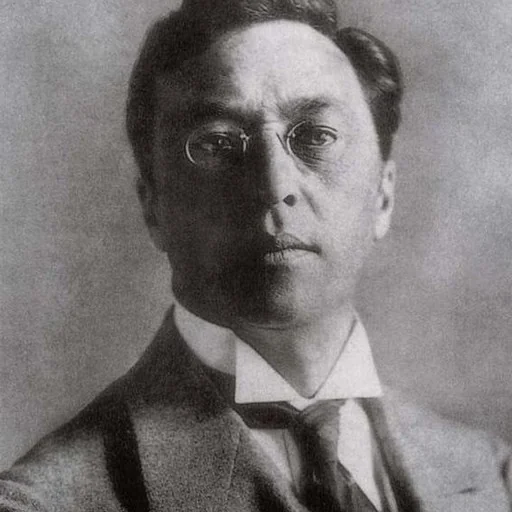
Wassily Wassilyevich Kandinsky (16 December 1866 – 13 December 1944) was a Russian painter and art theorist active in Germany during the late Belle Époque and Interwar eras.