Artwork
The Small Hamlet
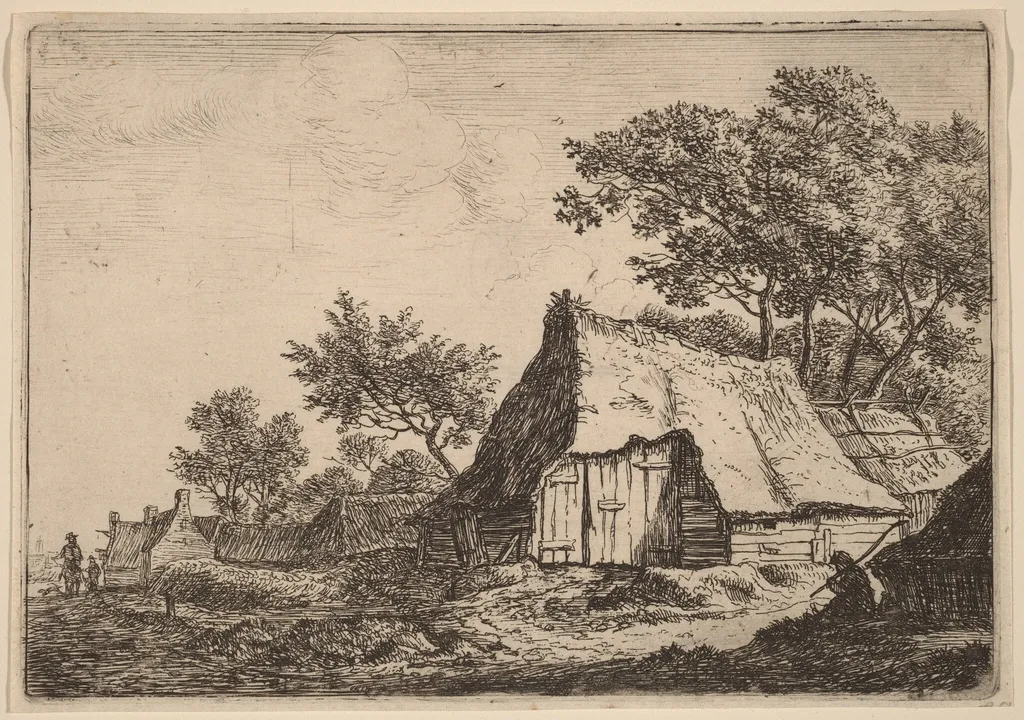
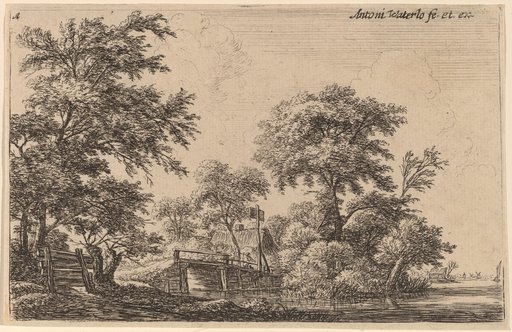
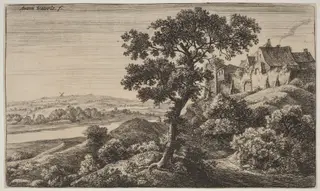
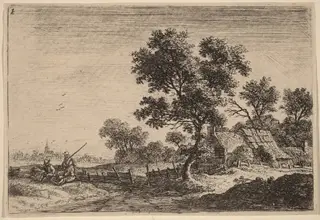
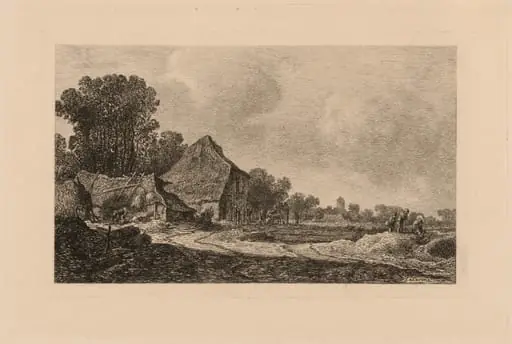
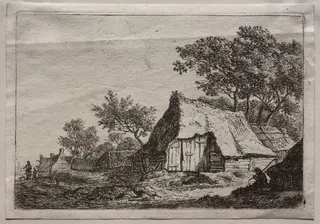
The Small Hamlet is an ink print by the Baroque artist Anthonie Waterloo. It dates from 1650 and is held in the collection of the National Gallery of Art.
About this work
Overview
A winding dirt path in the foreground guides the viewer's eye from the immediate landscape toward the settlement, establishing a clear sense of depth.
The Small Hamlet is an etching by the Dutch Golden Age artist Anthonie Waterloo, created in 1650. The work depicts a tranquil rural scene where a cluster of modest dwellings, including one with a distinct thatched roof, is nestled within a dense grove of trees. A winding dirt path in the foreground guides the viewer's eye from the immediate landscape toward the settlement, establishing a clear sense of depth.
The composition is characterized by Waterloo's meticulous attention to naturalistic detail, particularly in the rendering of foliage and the atmospheric treatment of the cloudy sky that dominates the upper portion of the plate. Executed during the height of his career, this print exemplifies Waterloo's specialization in small-scale landscape etchings that capture the quiet intimacy of the Dutch countryside. Unlike the grandiose vistas of some contemporaries, this work focuses on the harmonious integration of human habitation and nature, reflecting the 17th-century appreciation for pastoral simplicity.
The piece stands as a representative example of Waterloo's contribution to the development of landscape printmaking in the Netherlands, showcasing his ability to convey mood and texture through the precise control of line and cross-hatching.
Subject & Meaning
The work focuses on an unassuming village nestled among nature, emphasizing simplicity and harmony between human dwellings and the surrounding environment. The modest architecture and gentle foliage suggest a lifestyle rooted in agrarian modesty, inviting contemplation of rural tranquility and the everyday rhythms of 17th‑century life.
Technique & Style
Waterloo employs fine linear incisions and graduated hatching to model forms and suggest depth. Subtle tonal variations create texture on the thatched roof and foliage, while the interplay of light and shadow remains restrained. The overall effect is a measured use of Baroque sensibilities, favoring calm representation over dramatic chiaroscuro.
History & Provenance
Created in 1650, the etching is attributed to Dutch printmaker Anthonie Waterloo, whose oeuvre includes a range of landscape images. The piece has survived in several impressions held by European collections, reflecting its circulation among collectors of Dutch prints during the mid‑17th century.
Own this work as a print
Artist & collection