Artwork
Hugo van der Goes Painting the Portrait of Mary of Burgundy
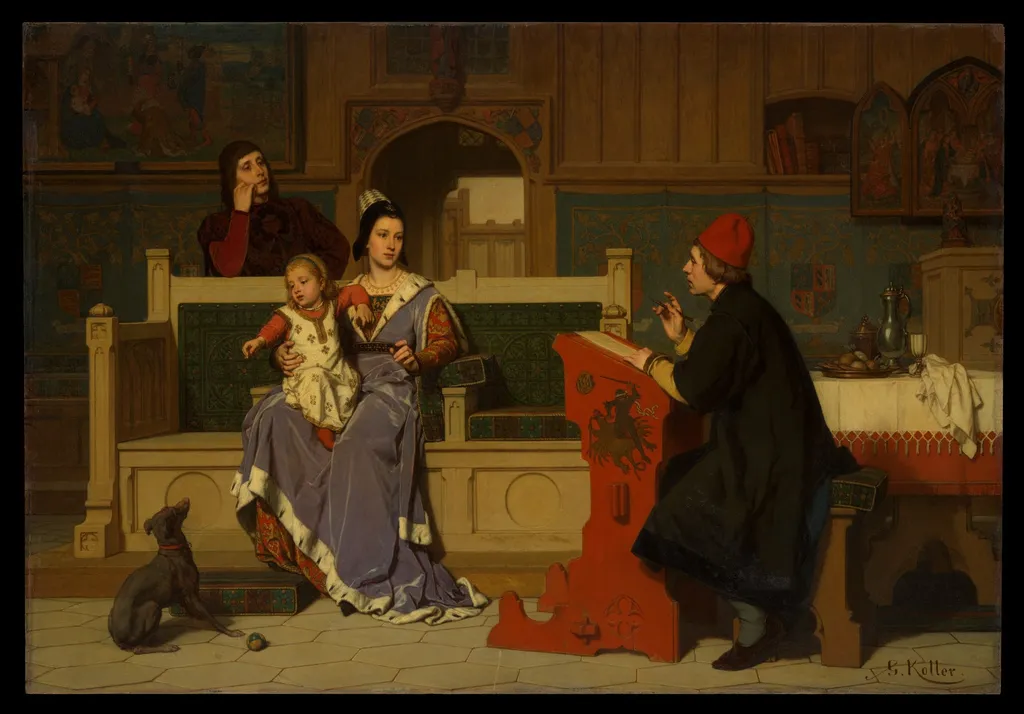
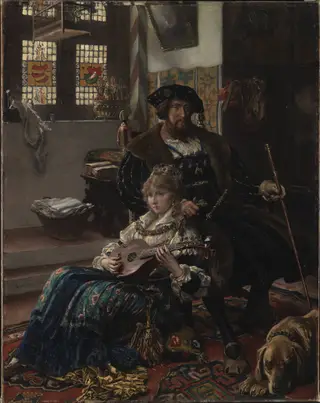
Hugo van der Goes Painting the Portrait of Mary of Burgundy is an oil painting by the Realist artist Wilhelm Koller. It dates from 1866 and is held in the collection of the Metropolitan Museum of Art.
About this work
Overview
The composition captures an intimate moment within a richly decorated interior, focusing on the act of artistic creation.
This oil painting, titled "Hugo van der Goes Painting the Portrait of Mary of Burgundy," was created by Wilhelm Koller. It presents a historical tableau, imagining the fifteenth-century Flemish painter Hugo van der Goes at work. The composition captures an intimate moment within a richly decorated interior, focusing on the act of artistic creation.
Koller's work serves as a window into an imagined past, depicting a significant figure in early Netherlandish art.
Subject & Meaning
The central narrative portrays the renowned artist Hugo van der Goes engaged in painting Mary of Burgundy. Mary is depicted seated upon a throne, holding a child in her lap, while a dog rests at her feet. Van der Goes stands attentively to her right, brush in hand, his gaze fixed on his royal subject.
This scene reconstructs a potential historical encounter, offering a visual interpretation of the artistic process and the relationship between patron and painter in a bygone era.
Technique & Style
Koller's approach to this historical subject is characterized by a meticulous rendering of details. The interior setting is adorned with elaborate patterns and a vibrant palette, contributing to the scene's opulent atmosphere. The artist demonstrates a keen observation in capturing the subtle nuances of expression on Mary of Burgundy's face.
Through a considered application of color and light, Koller imbues the composition with a sense of depth and three-dimensionality, enhancing the overall visual richness.
Own this work as a print
Artist & collection

- La despedida
 La reina Isabel la Católica presidiendo la educación de sus hijos
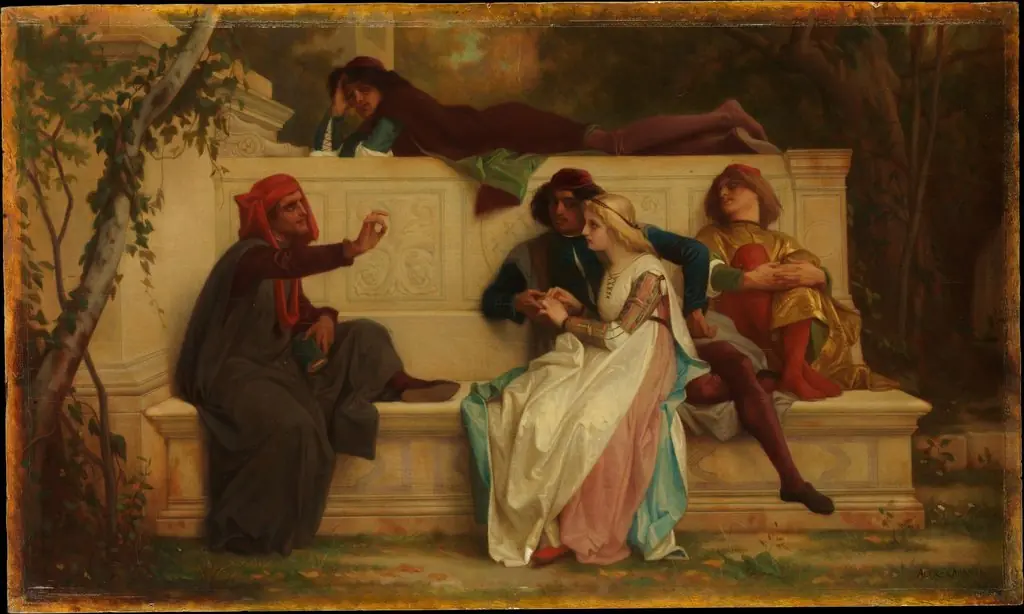 Florentine Poet
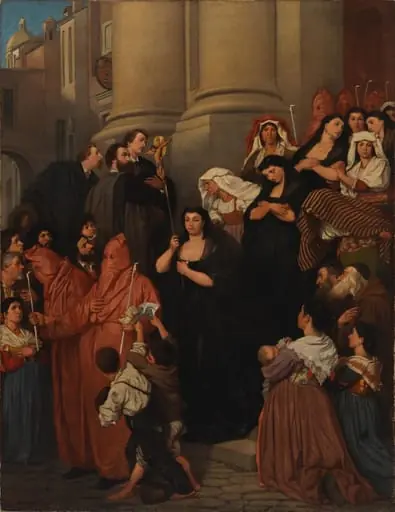 Juhlakulkue Roomassa
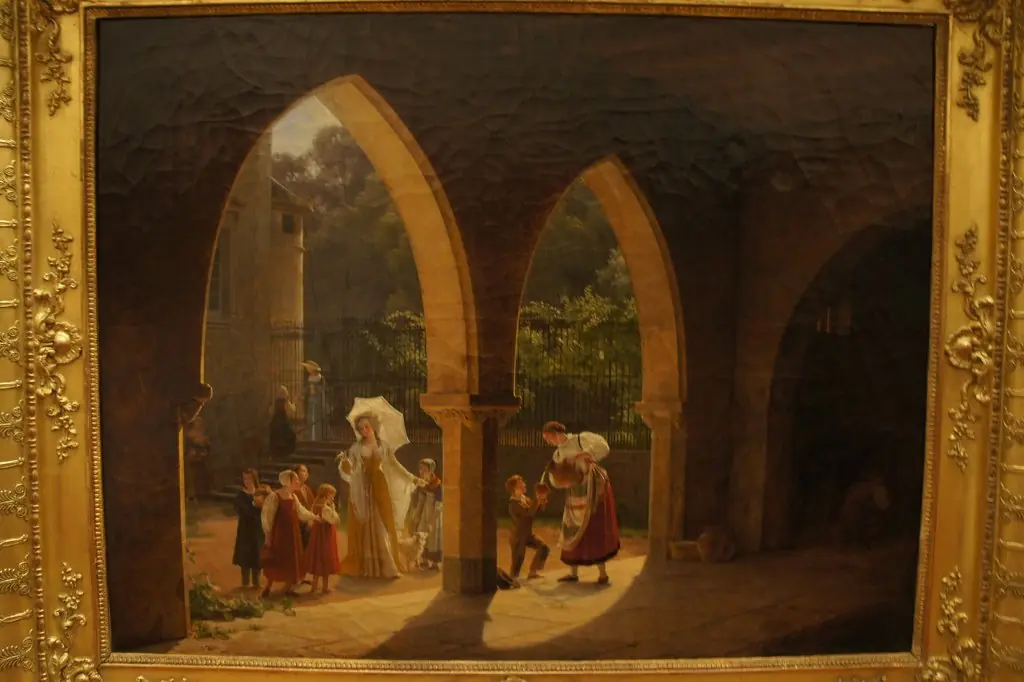 Madame Elisabeth de France assistant à la distribution du lait dans sa maison de Montreuil
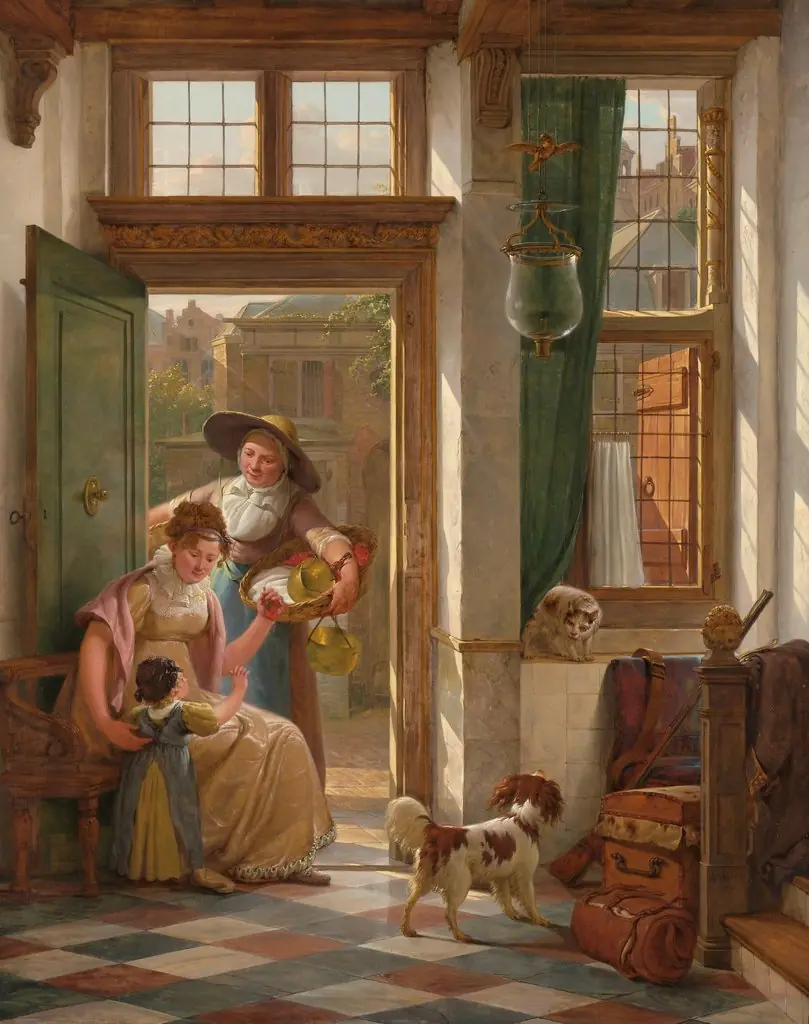 A Cherry Vendor at the Door
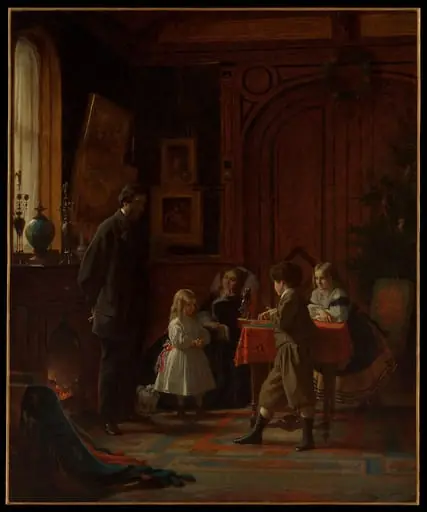 Christmas-Time, The Blodgett Family
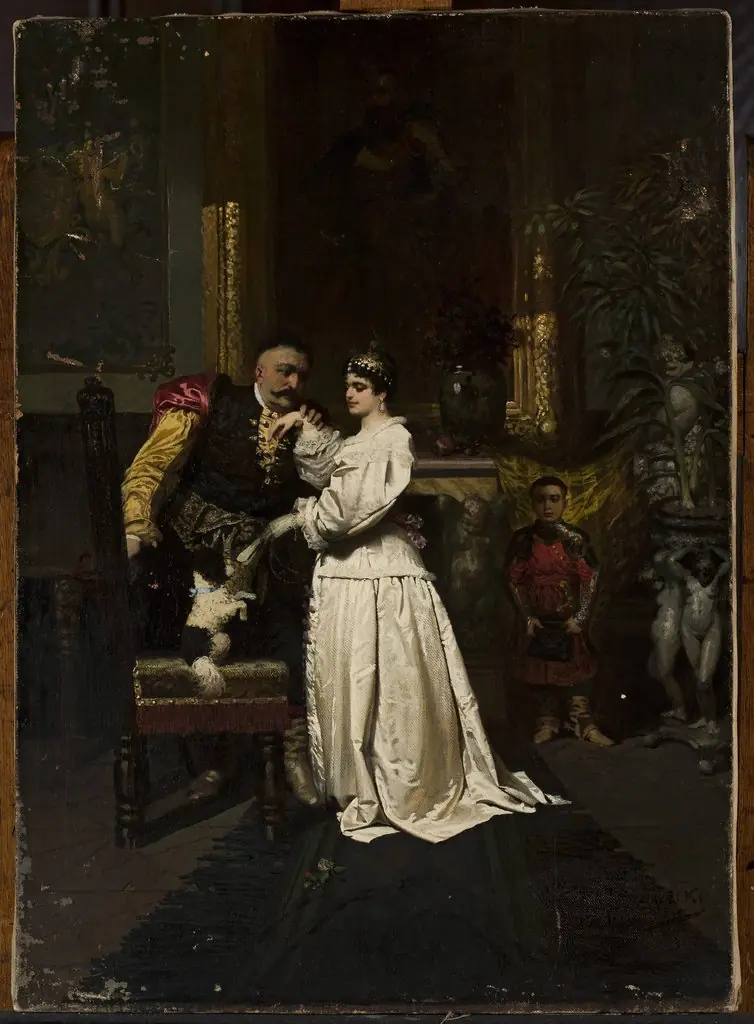 King John III Sobieski and Marysieńka
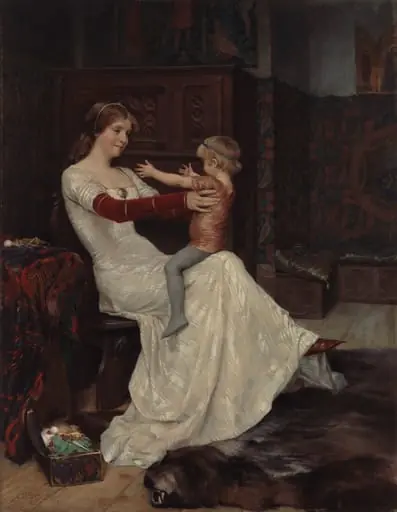 Kuningatar Blanka
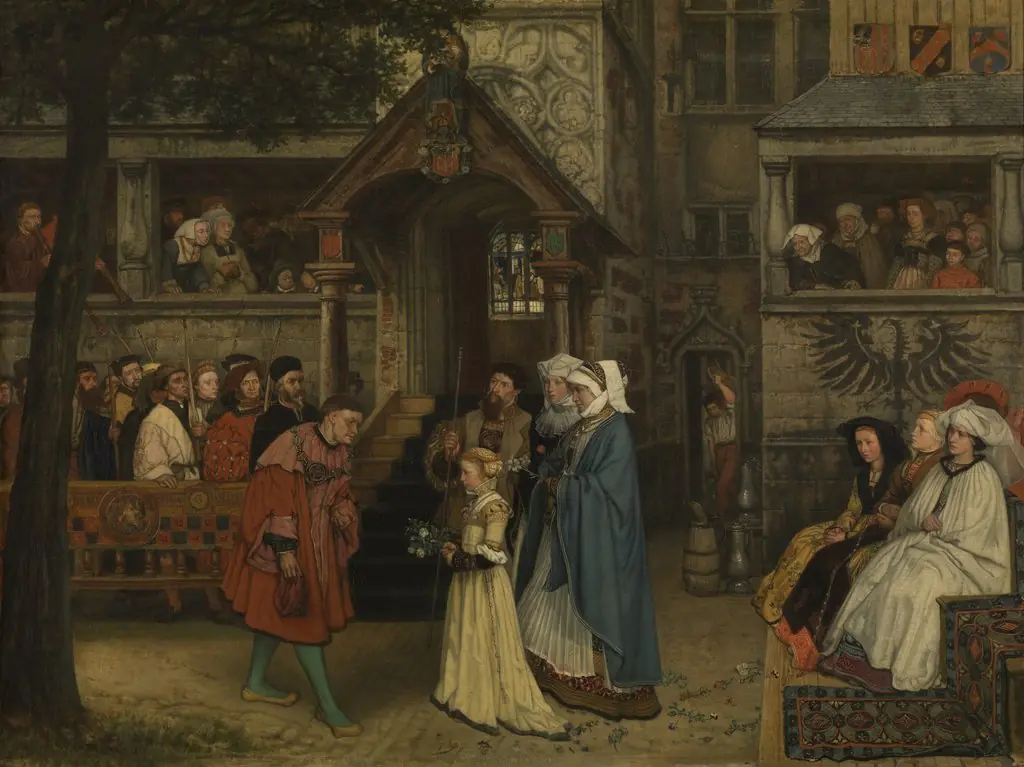 The Guild of the Archers Welcomes Margaret of Austria
 Offering to the fatherland by the Widow of Jacob van Artevelde
 Christian II og Dyveke