Artwork
Still Life with a Gilt Cup
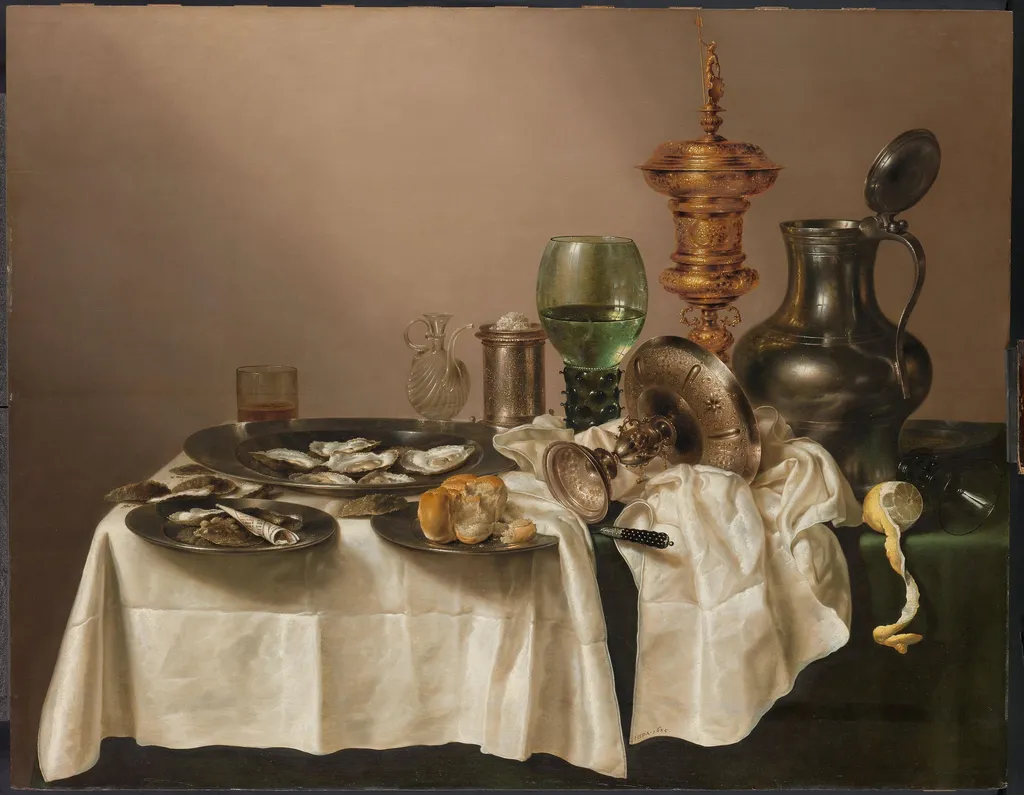
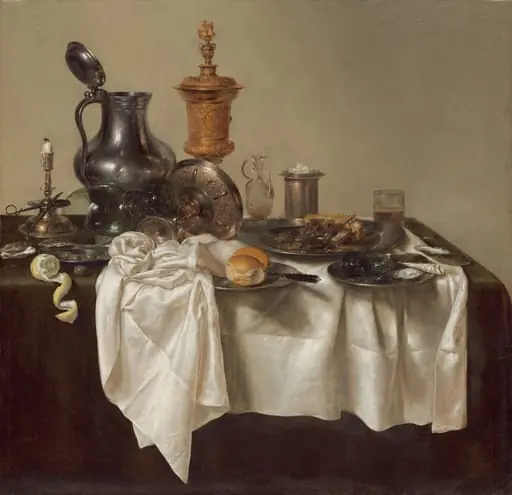
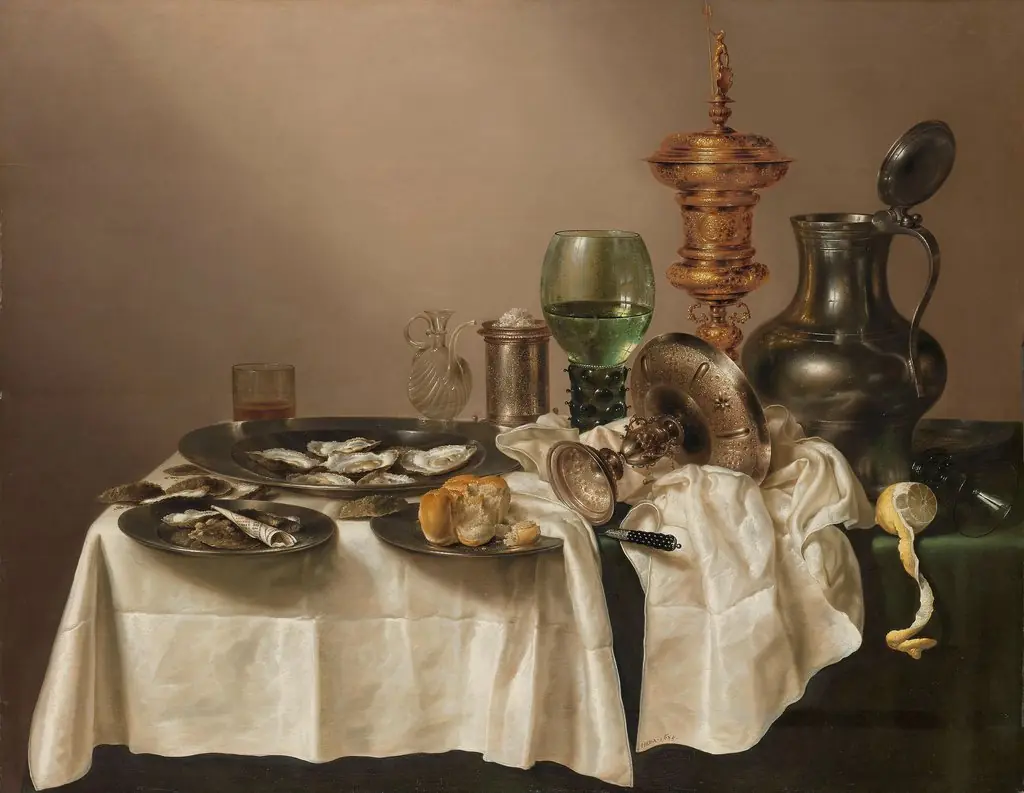
Still Life with a Gilt Cup is an unspecified painting by the Dutch Golden Age artist Willem Claesz Heda. It dates from 1635 and is held in the collection of the Rijksmuseum.
About this work
Technique & Style
The palette is restrained, dominated by silvers, ochres, and translucent whites, consistent with Heda’s monochromatic banketje still lifes of the 1630s.
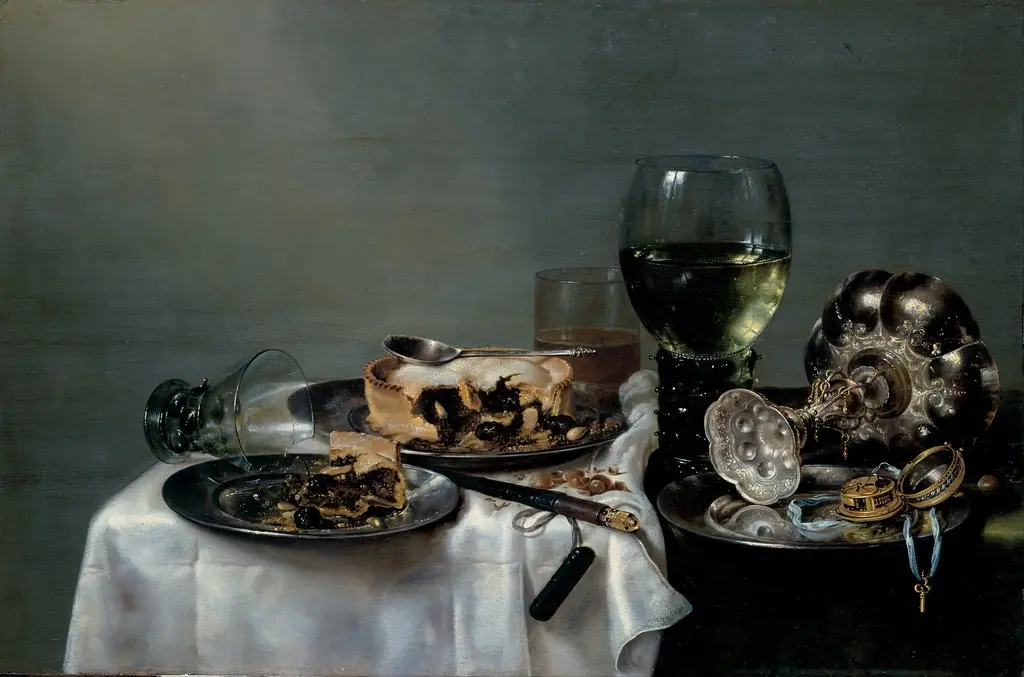
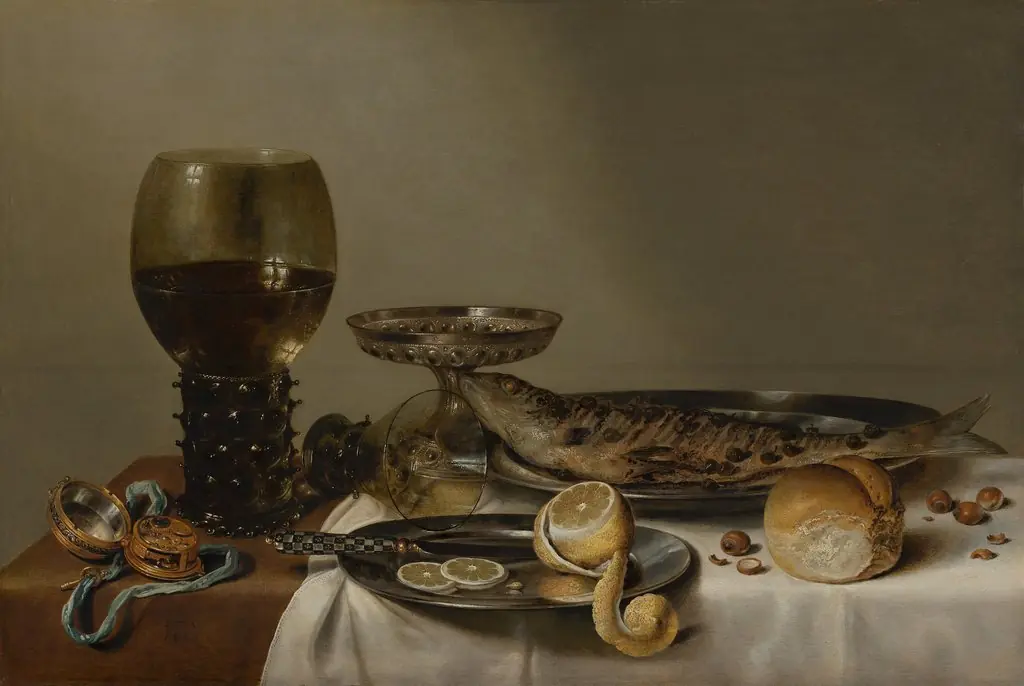
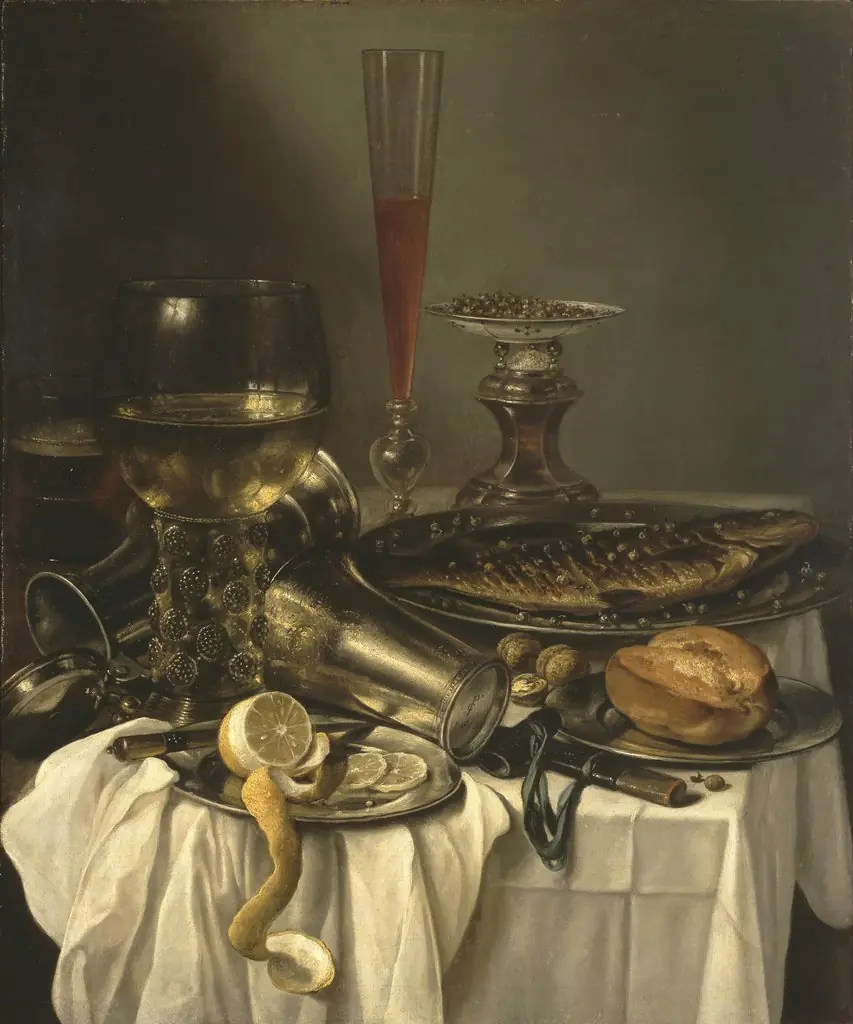
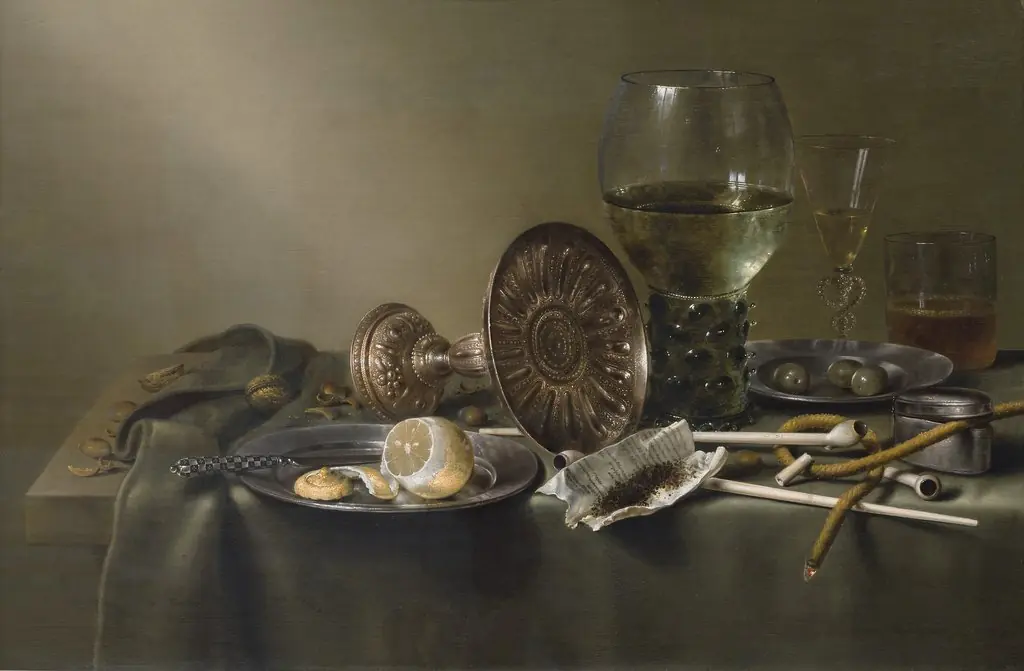
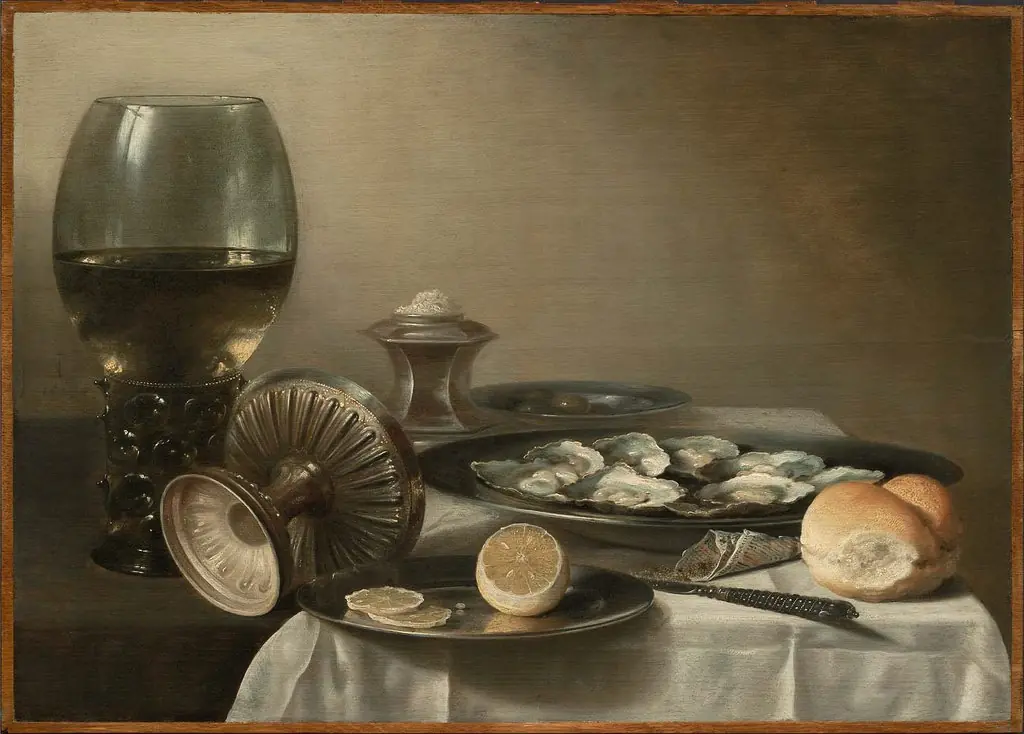
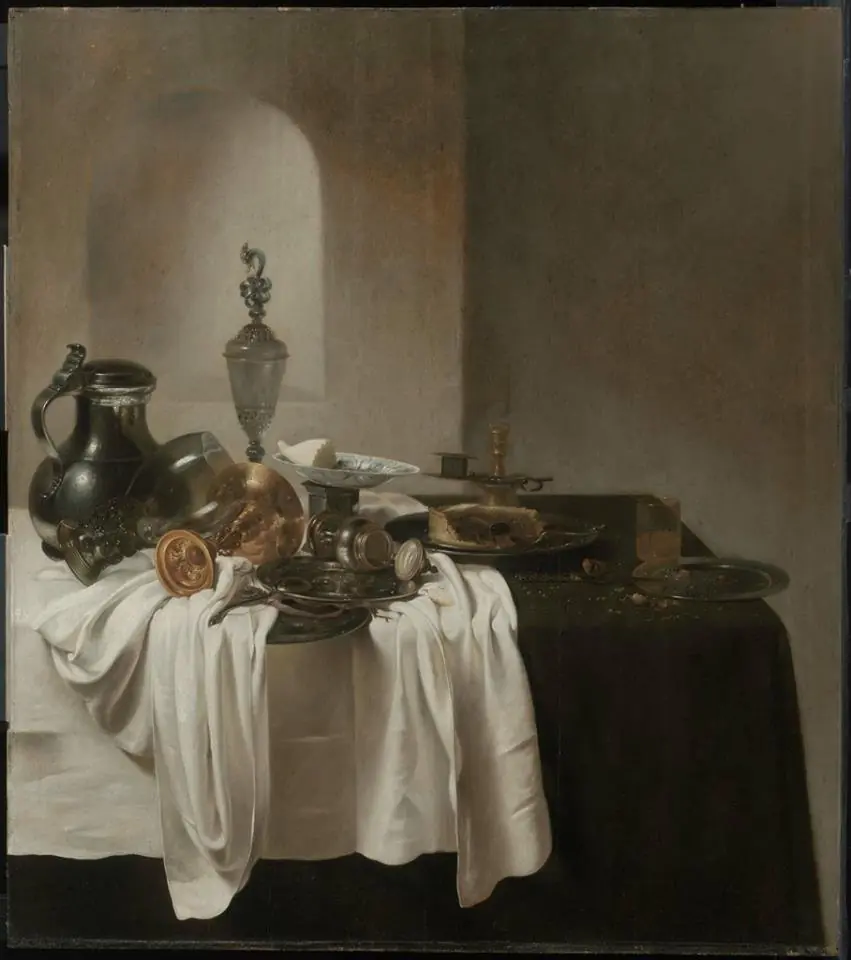
Still Life with a Gilt Cup is executed in oil on oak panel, a support typical of Heda’s early to mid-career works. The handling is characterized by fine, additive brushwork that renders reflections and textures with precision, particularly on the gilt surfaces and glass vessels. The composition is arranged in a balanced triangle, with the highest point anchored by the gilt cup at left, guiding the viewer’s eye across the silver plate, lemon peel, and glassware.
The palette is restrained, dominated by silvers, ochres, and translucent whites, consistent with Heda’s monochromatic banketje still lifes of the 1630s. The lighting is diffused yet incisive, emphasizing the tactile qualities of metal and glass while preserving a sense of quiet order amid the casually arranged objects.
History & Provenance
Willem Claesz. Heda created *Still Life with a Gilt Cup* in 1635. Executed in oil on wood, the work measures 88 by 113 centimeters and is currently held by the Rijksmuseum in Amsterdam. This piece belongs to Heda's mature period in the 1630s, following his early experiments with monochromatic breakfast scenes in the 1620s. The painting exemplifies his technical mastery of the *ontbijt* genre, characterized by the precise rendering of reflective surfaces such as the gilt cup and glassware. While the specific commissioning patron for this 1635 work is not identified in the available records, it reflects the artist's established reputation in Haarlem by that time. Heda, who joined the Haarlem Guild of St. Luke in 1631, was already recognized locally for his skill in depicting sumptuous metal and glass objects alongside foodstuffs.
Context
Willem Claesz. Heda is recognized as a primary representative of the Haarlem School alongside Pieter Claesz, known for pioneering the monochromatic 'ontbijt' or late breakfast genre. His 1635 work, *Still Life with a Gilt Cup*, exemplifies his mastery in rendering reflections and surface textures with a restrained palette. Contemporary recognition was immediate; poet Samuel Ampzing praised Heda in 1628 alongside Salomon de Bray and Pieter Claesz, and the artist served as a leader of the Haarlem Guild of St. Luke. While later biographers like Arnold Houbraken provided only brief accounts due to limited information, modern scholarship highlights Heda's evolution from early monochromatic compositions to the warmer, more complex arrangements seen in his later decades. His influence extended to students including his son Gerrit Willemsz. Heda, cementing his status as a central figure in Dutch Golden Age still life.
Own this work as a print
Artist & collection
Artist
Willem Claeszoon Heda (December 14, 1593/1594 – c. 1680/1682) was a Dutch Golden Age painter from the city of Haarlem devoted exclusively to the painting of still life. He is known for his innovation of the late…