Artwork
A Seated Woman with a Letter, a Gentleman Standing by Her
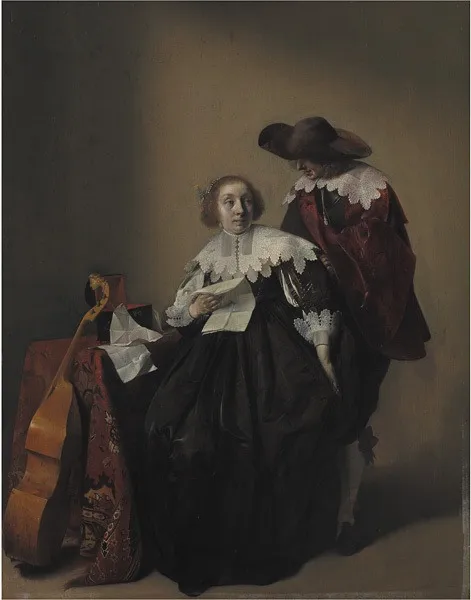
A Seated Woman with a Letter, a Gentleman Standing by Her is an oil painting by the Dutch Golden Age artist Willem Cornelisz Duyster. It dates from 1632 and is held in the collection of the Statens Museum for Kunst.
About this work
Subject & Meaning
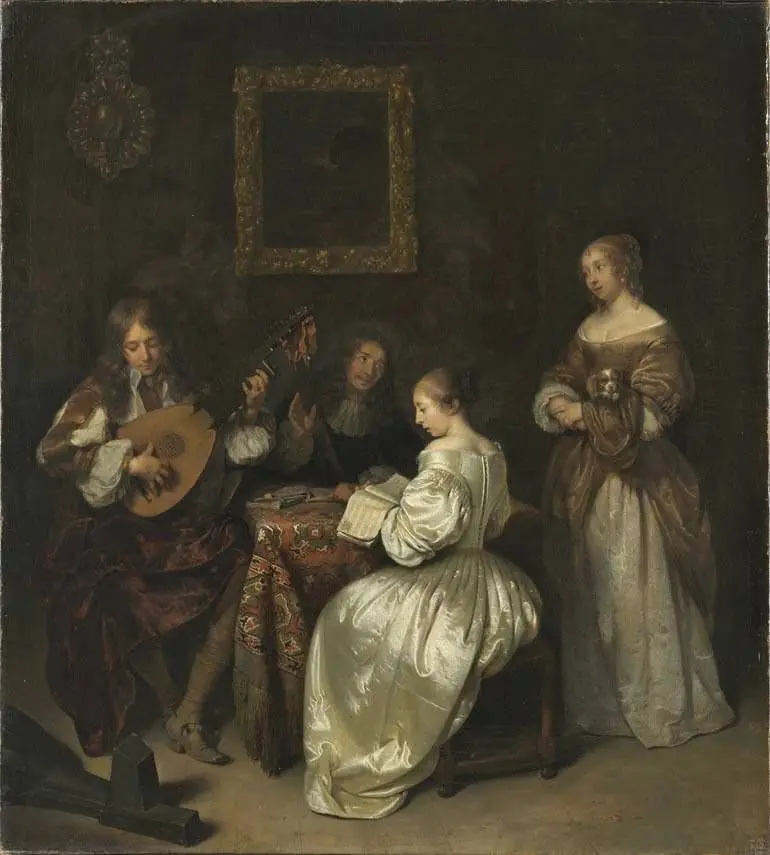
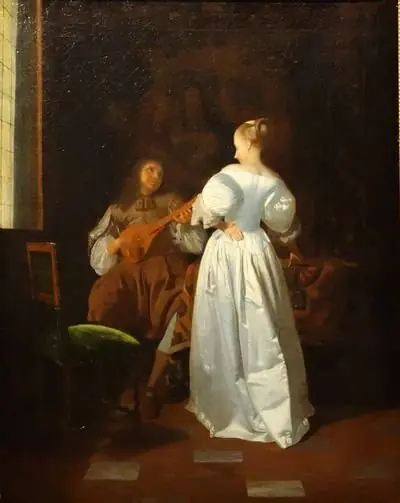
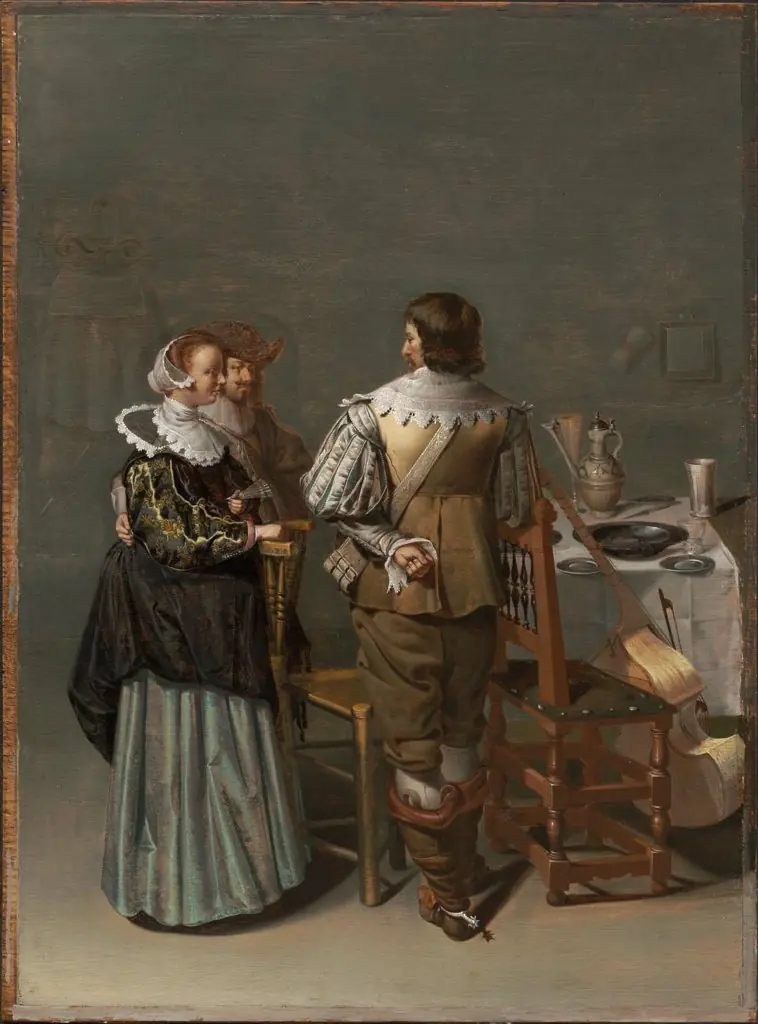
Unusually for such a domestic setting, the work includes a viola, an instrument often associated with courtship or the sense of hearing in allegorical contexts.
Created in 1632, this genre scene portrays an interior interaction between two figures: a seated woman holding a letter and a standing gentleman. The composition focuses on the social dynamic between the sexes, a common theme in Dutch Golden Age painting. Unusually for such a domestic setting, the work includes a viola, an instrument often associated with courtship or the sense of hearing in allegorical contexts.
The presence of the letter suggests a narrative centered on communication or romantic correspondence, while the standing man's posture implies he is either delivering the message or awaiting a response. Together, these elements construct a moment of quiet tension and social exchange within a private space.
Technique & Style
Willem Cornelisz Duyster created A Seated Woman with a Letter, a Gentleman Standing by Her in 1632 using oil paint on wood panel. The composition shows a seated woman holding a letter while a standing gentleman stands beside her, rendered in a genre scene style typical of Dutch Golden Age painting. The work measures 74.6 cm in height and 61.9 cm in width and was originally owned by Frederik Conrad Bugge.
Overview
Willem Cornelisz Duyster, an Amsterdam‑based painter active during the Dutch Golden Age, completed the oil on canvas titled A Seated Woman with a Letter, a Gentleman Standing by Her in 1632. The work is part of the Statens Museum for Kunst’s collection and exemplifies Duyster’s focus on intimate, everyday scenes.
History & Provenance
Created in 1632, the painting has remained in public ownership, eventually entering the collection of Denmark’s national gallery, the Statens Museum for Kunst. Its provenance reflects the 19th‑century interest in Dutch genre paintings among European collectors.
Context
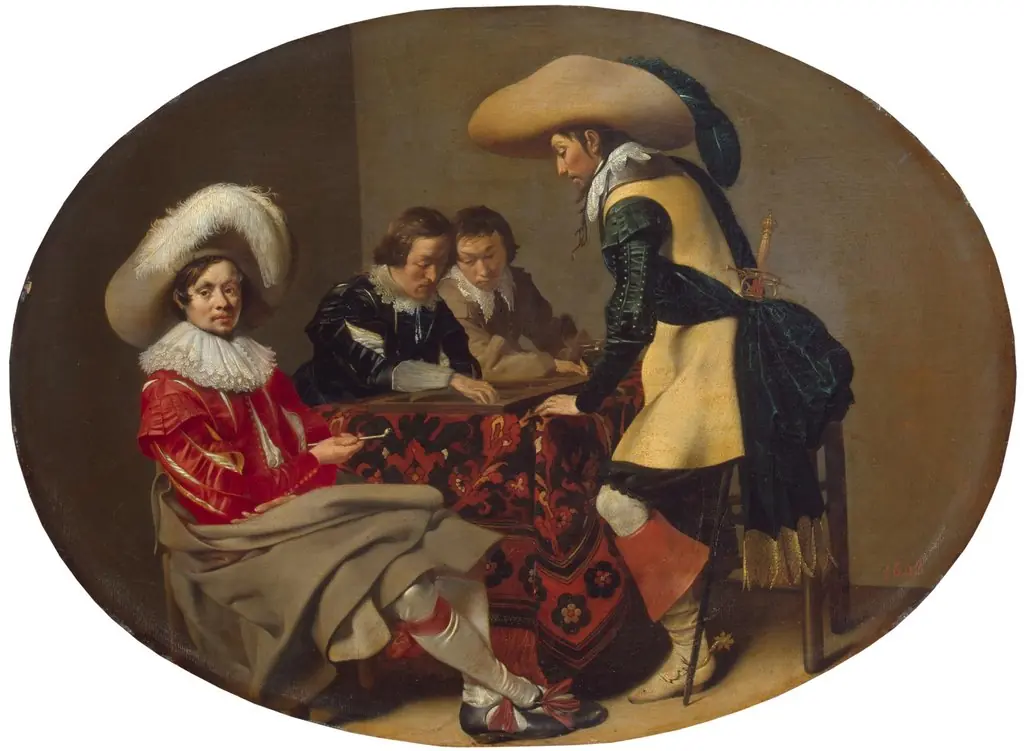
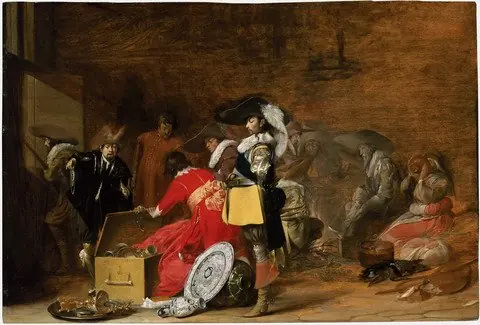
Although Duyster is best known for genre scenes featuring soldiers and tavern life, this work demonstrates his versatility in depicting domestic interiors. The inclusion of a musical instrument and a letter aligns with contemporary Dutch symbolism linking music, communication, and courtship.
Artist & collection
Artist
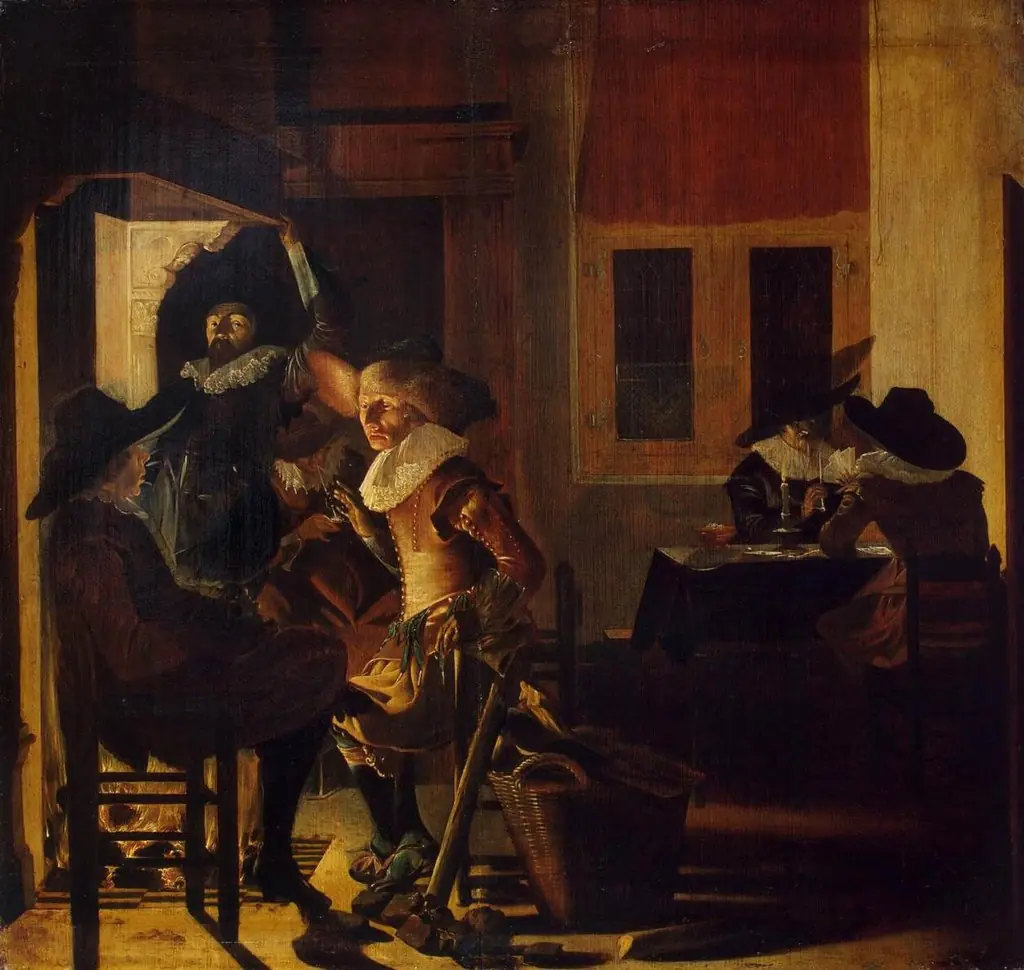
Willem Cornelisz Duyster (1599–1635) was a Dutch Golden Age painter from Amsterdam, best known for his "guardroom scenes" (cortegaarddje), genre paintings showing the military life.