Artwork
Tric-Trac Players
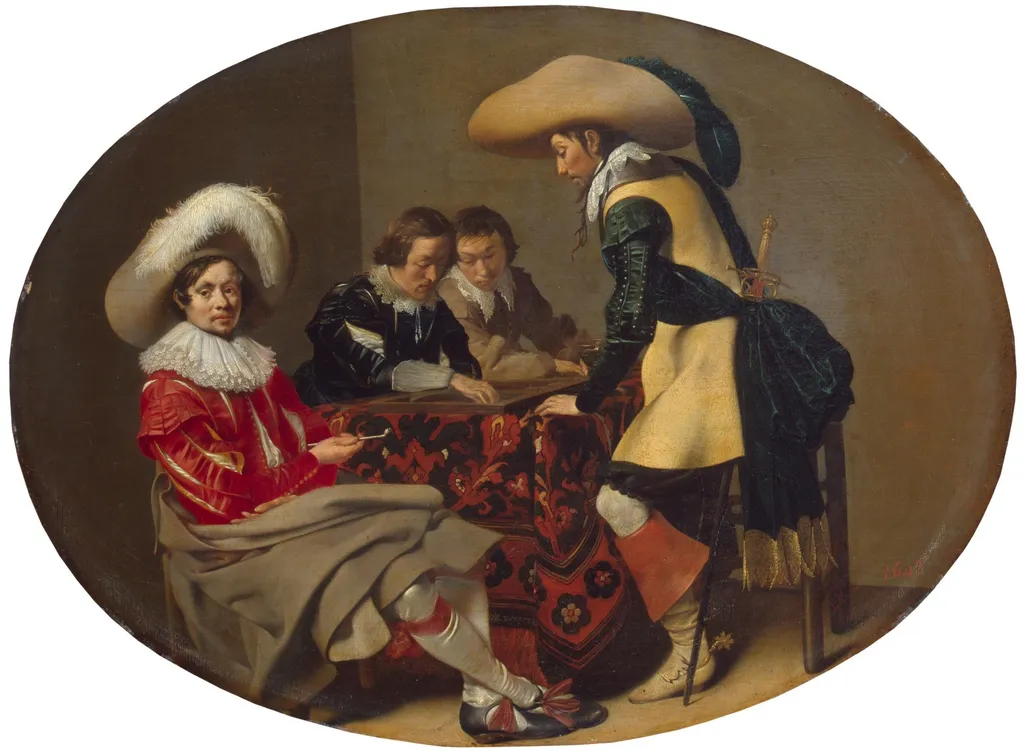
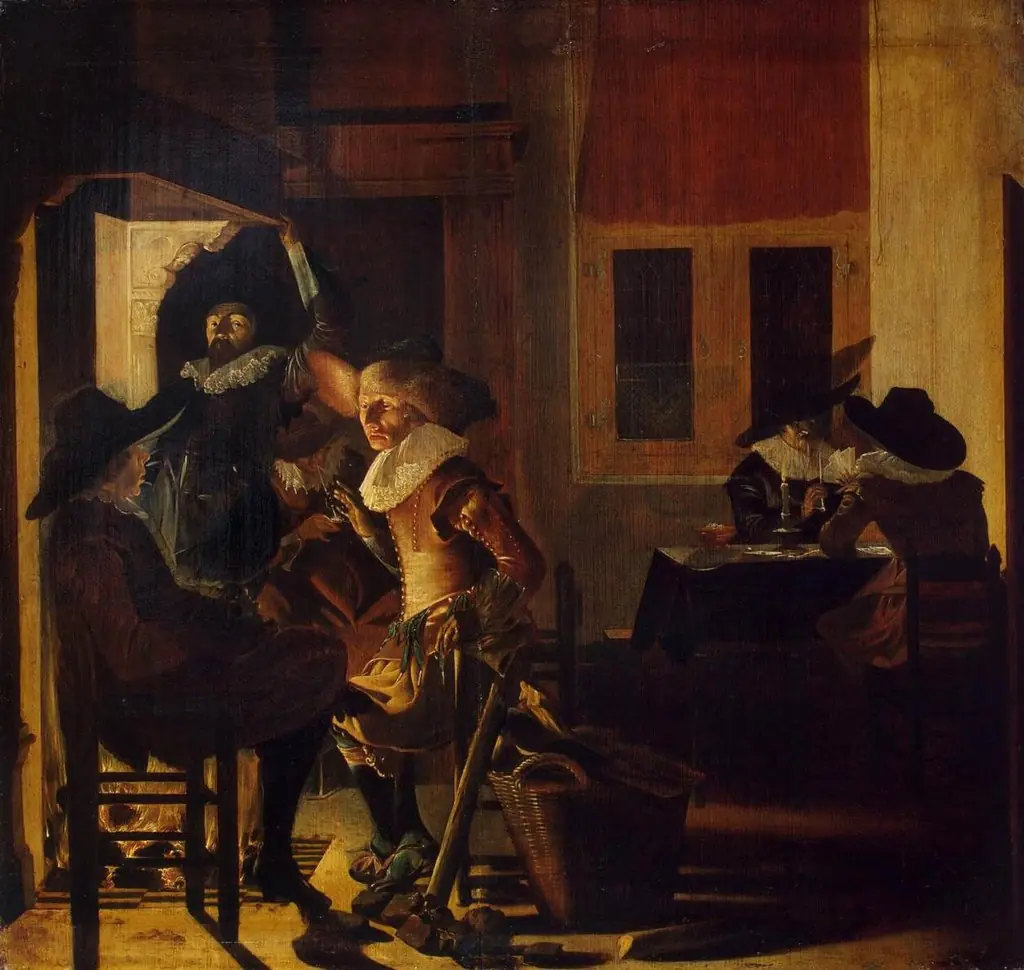
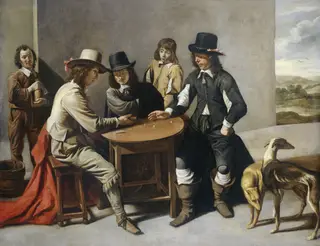
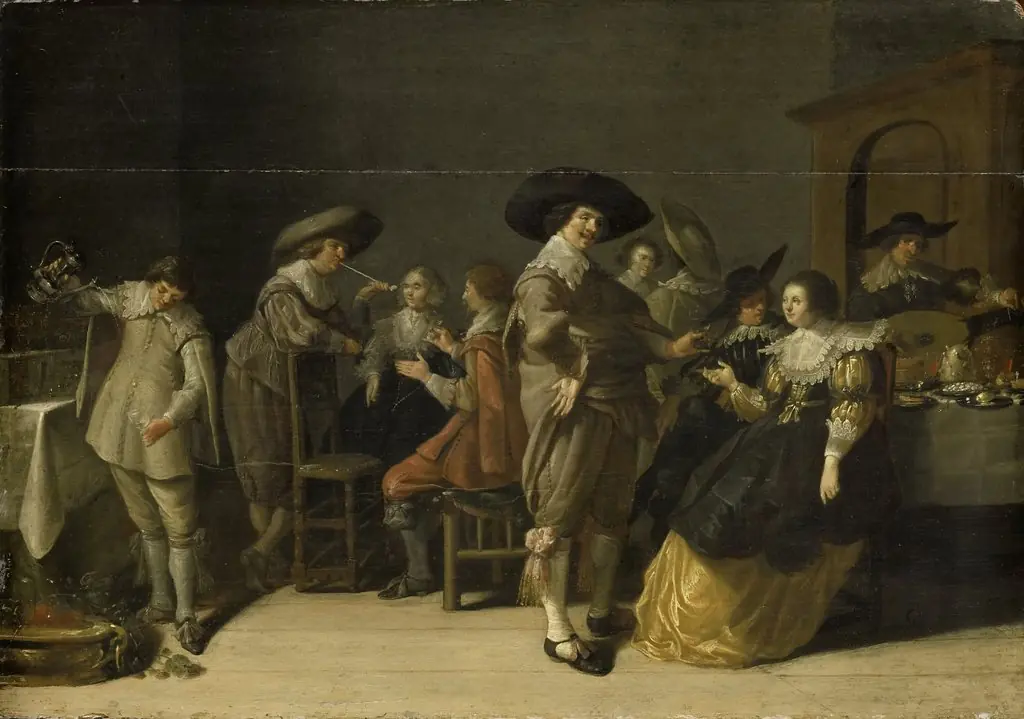
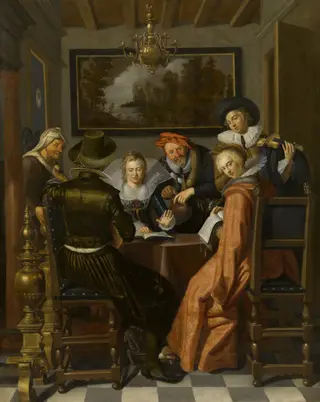
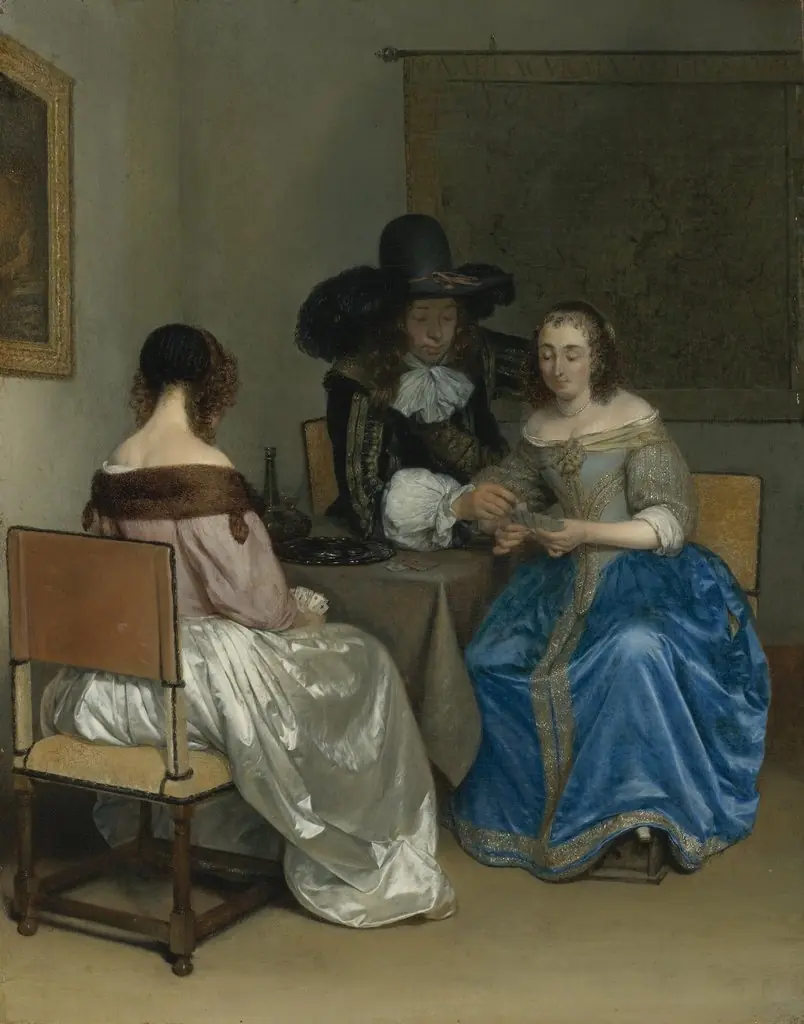
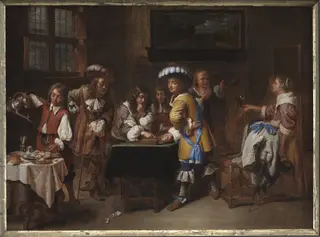
Tric-Trac Players is an oil painting by the Dutch Golden Age artist Willem Cornelisz Duyster. It dates from 1627 and is held in the collection of the Hermitage Museum.
About this work
Subject & Meaning
The game itself carries symbolic weight, representing fortune, chance, and the fleeting nature of time, common themes in Dutch art of the period.
The painting depicts two men engaged in a game of tric-trac, an early form of backgammon, at a table in an interior setting. One player stands, leaning forward to roll dice, while the other sits, holding a tankard, suggesting a moment of leisure and social interaction. The inclusion of a soldier among the figures aligns the scene with contemporary Dutch genre painting, which often portrayed everyday life and pastimes during the 17th century.
The game itself carries symbolic weight, representing fortune, chance, and the fleeting nature of time, common themes in Dutch art of the period. The players’ absorbed focus on the game underscores the cultural significance of domestic recreation in early modern society.
Technique & Style
Executed in 1627, this genre scene is rendered in oil paint on a wooden panel. The work measures 31.5 cm in height and 42.5 cm in width. Stylistically, the composition focuses on a group of figures, specifically depicting soldiers and men engaged in a game of tric-trac.
The piece is attributed to Willem Cornelisz Duyster, with some records also associating Jacob Duck with its creation. Produced in the Netherlands, the painting utilizes the standard materials of the period to capture a candid moment of leisure.
History & Provenance
The painting Tric-Trac Players was created in 1627 by Willem Cornelisz Duyster in the Netherlands, executed in oil paint on panel. It depicts a scene of soldiers engaged in the game of Tric-Trac and measures 31.5 cm in height by 42.5 cm in width. The work was produced by Duyster in collaboration with Jacob Duck, a contemporary genre painter active in Amsterdam during the 1620s. It entered the collection of the Hermitage Museum, where it remains today.
The painting is documented in the Hermitage's holdings as part of their genre art collection, reflecting the popularity of tavern and merrymaking scenes in Dutch Golden Age art. Its creation date of 1627 is corroborated by archival records and material analysis of the panel. The work was likely commissioned or acquired by a private patron before entering the Hermitage's collection, though specific commissioning details are not recorded in available sources.
Willem Cornelisz Duyster's painting Tric-Trac Players, created in 1627, is held in the collection of the Hermitage Museum. The work is executed in oil on panel and measures 31.5 cm in height by 42.5 cm in width. While the Hermitage Museum is the confirmed location, the provided sources do not list a specific inventory or accession number for this piece. Furthermore, no exhibition history is recorded in the available documentation.
Overview
Willem Cornelisz Duyster, an Amsterdam‑based painter of the Dutch Golden Age, executed the oil painting Tric‑Trac Players in 1627. The work depicts a small group of men gathered around a table for a game, rendered in the detailed, domestic style characteristic of his genre scenes. It is part of the State Hermitage Museum’s collection.
Context
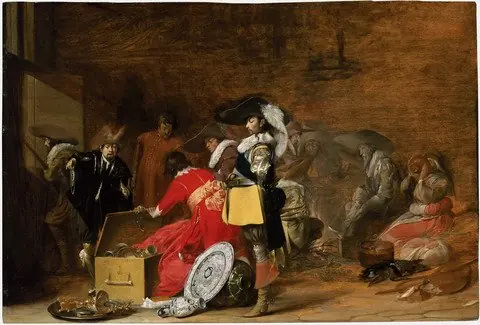
While Duyster is better known for guardroom scenes that portray military life, Tric‑Trac Players illustrates a more intimate, recreational aspect of soldiers’ daily existence. The work aligns with a broader Dutch interest in depicting ordinary activities, emphasizing moral and social themes through everyday moments.
Own this work as a print
Artist & collection
Artist
Willem Cornelisz Duyster (1599–1635) was a Dutch Golden Age painter from Amsterdam, best known for his "guardroom scenes" (cortegaarddje), genre paintings showing the military life.