Artwork
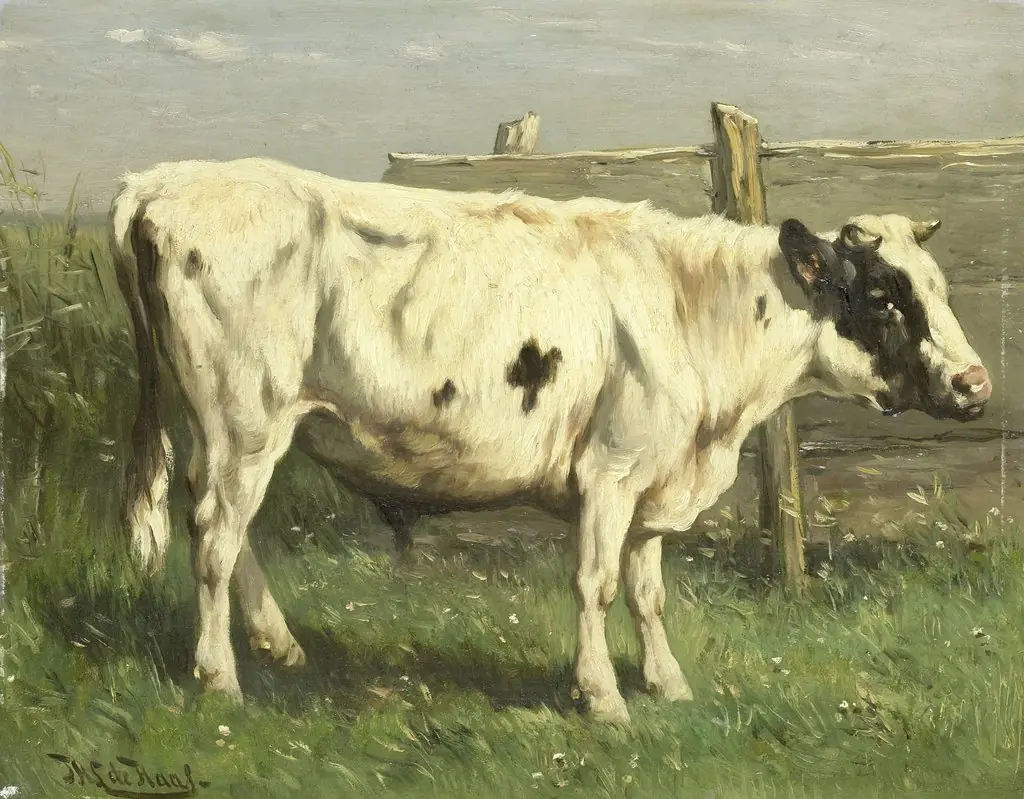
White Cow
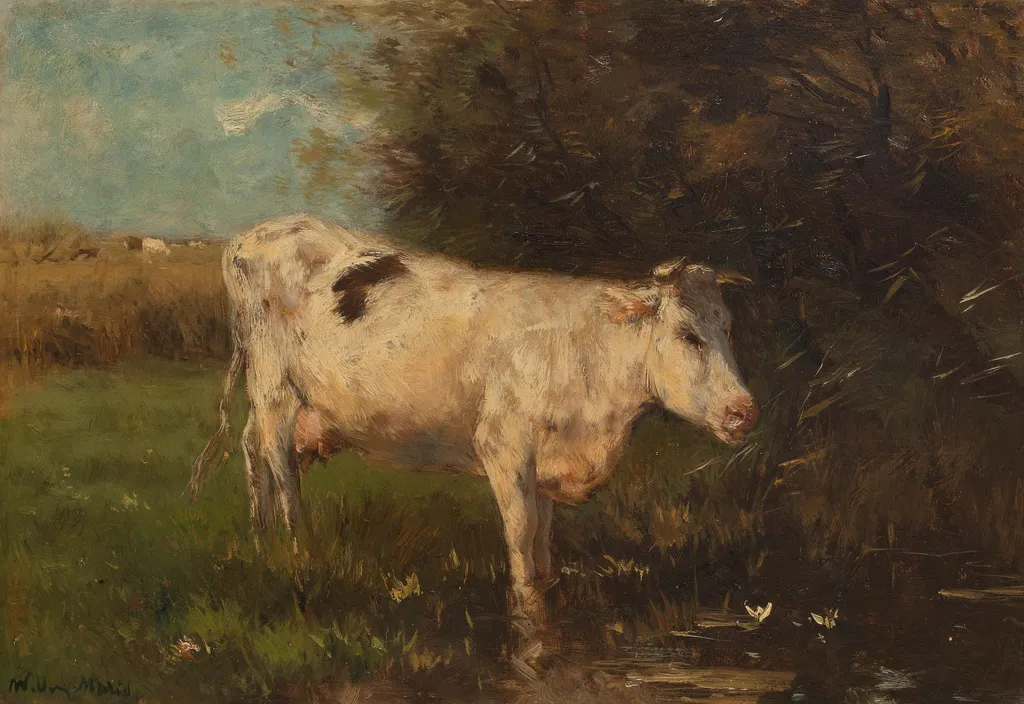
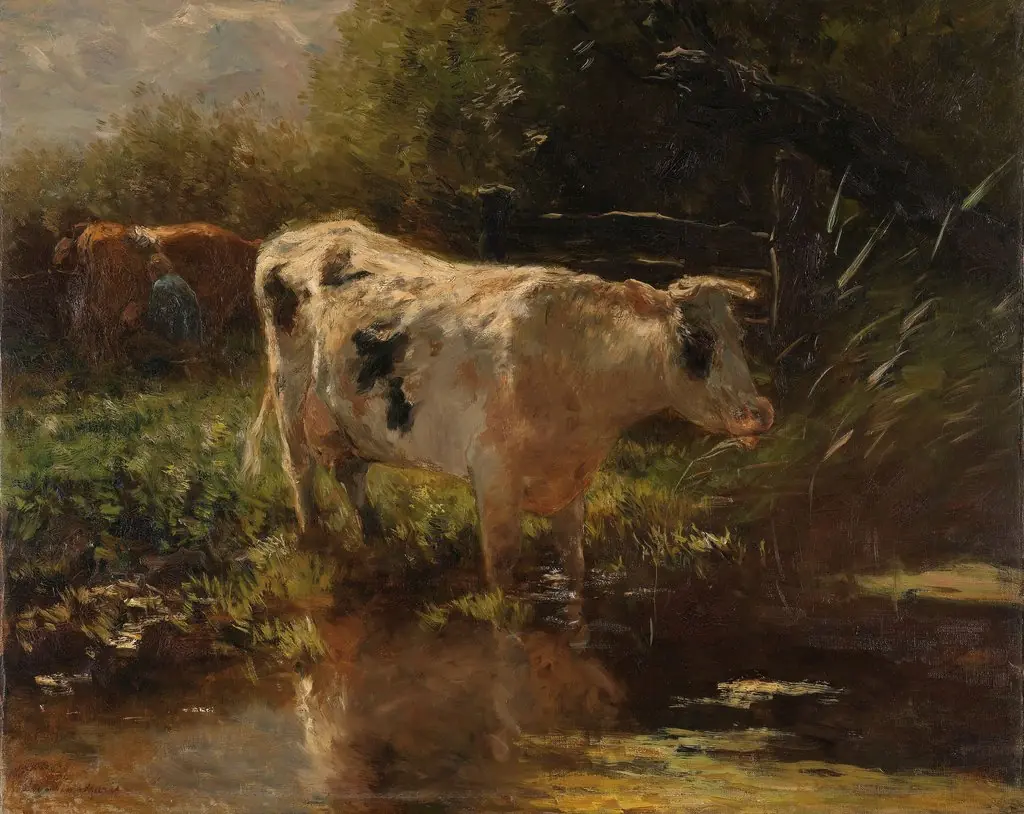
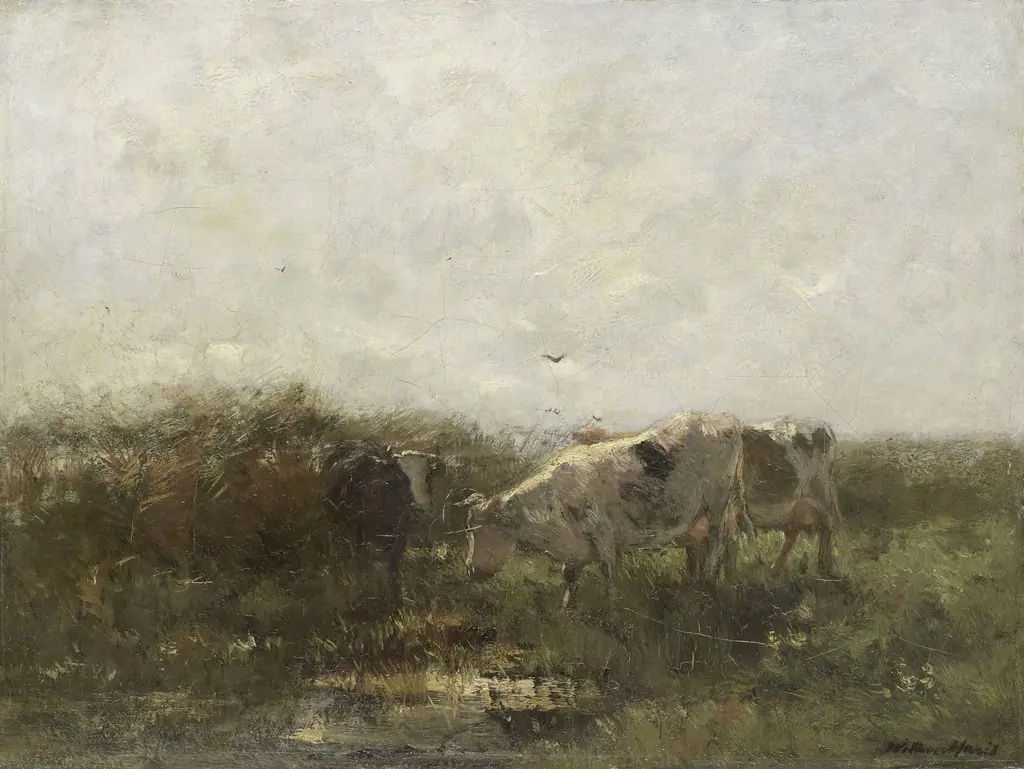
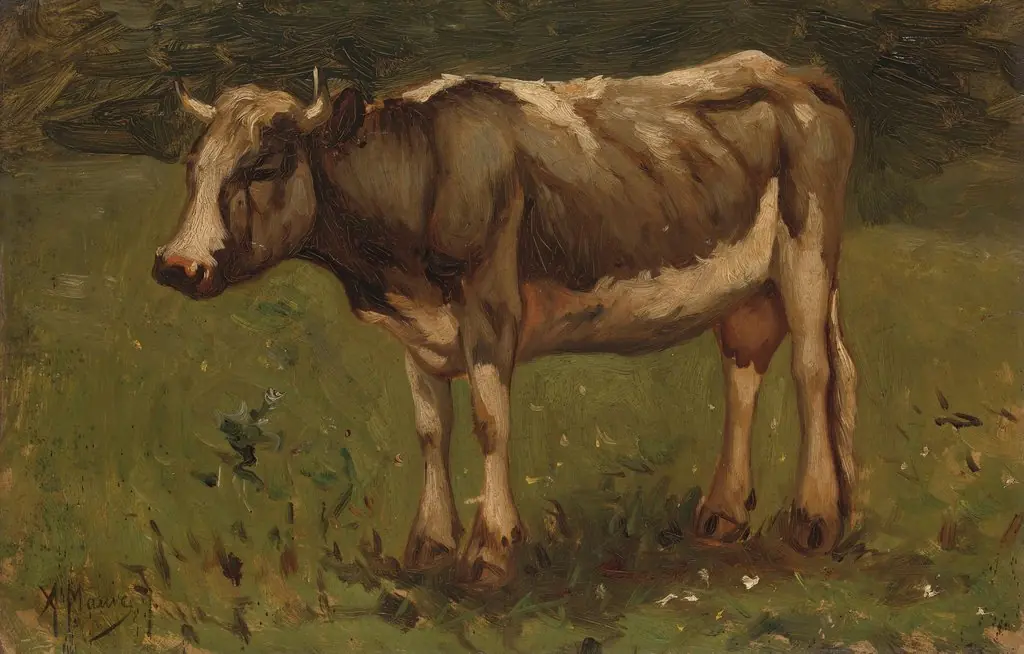
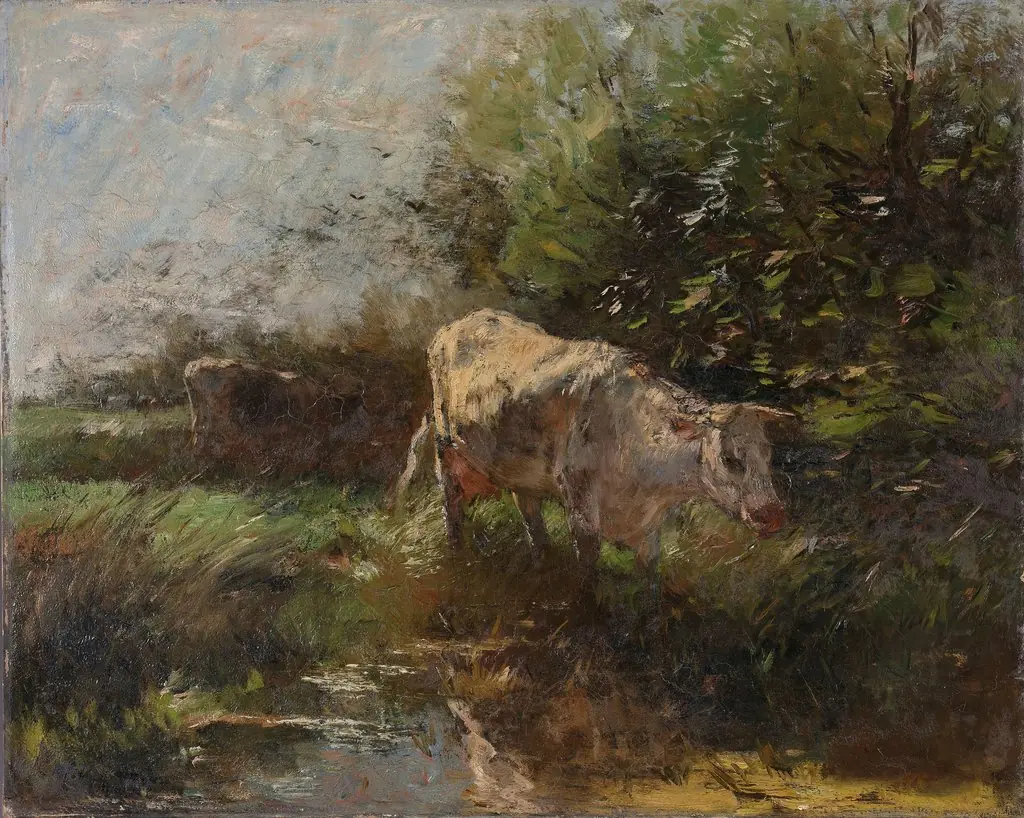
White Cow is an unspecified painting by the Hague School artist Willem Maris. It dates from 1880 and is held in the collection of the Rijksmuseum. The canvas presents a solitary white bovine set against a muted green meadow and a pale sky.
About this work
Subject & Meaning
The animal functions as a naturalistic motif rather than a symbolic figure, reflecting the movement's interest in everyday pastoral scenes.
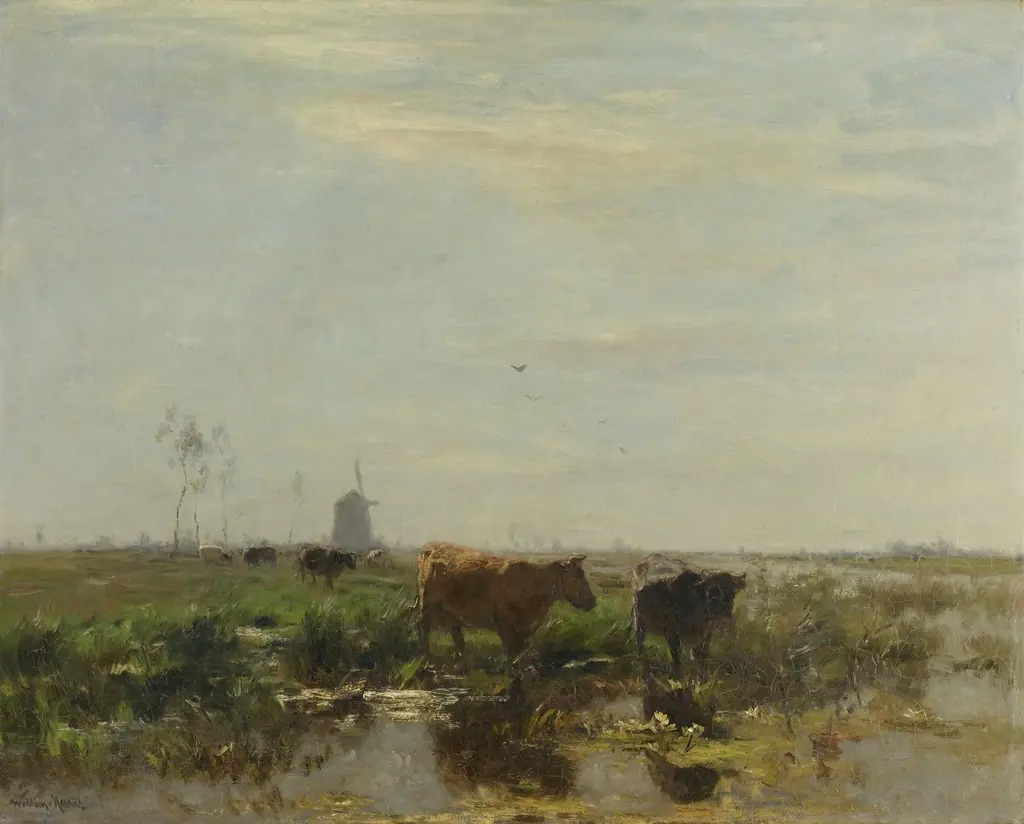
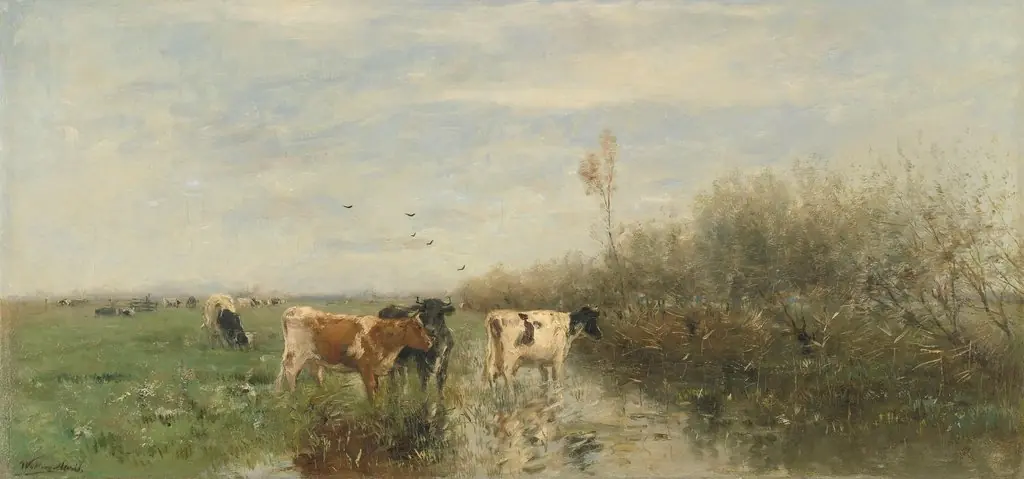
The painting White Cow depicts a domestic bovine in a typical Dutch meadow landscape, a subject central to Willem Maris' oeuvre and emblematic of the Hague School's focus on rural scenery and animal life. The animal functions as a naturalistic motif rather than a symbolic figure, reflecting the movement's interest in everyday pastoral scenes. Maris' recurring theme of cattle in meadows underscores his fascination with light effects on familiar countryside elements, as expressed in his own words about painting 'effects of light' rather than the animals themselves. This approach situates his work within the broader impressionistic tendencies of the school while maintaining a distinct realist grounding in Dutch agrarian settings.
Technique & Style
Willem Maris employed an oil on canvas technique to render White Cow, a work reflecting his Hague School focus on light and atmosphere. His brushwork evolved from precise anatomical detail in early phases to broader, impasto strokes by the late 1870s, emphasizing luminous effects over literal representation. The painting exemplifies his signature 'impressionist' approach within the school, using gradations of green and dynamic color to capture natural settings with cows or calves in meadows, rivers, or ponds. This formal style aligns with his lifelong dedication to landscape subjects, where he prioritized 'effects of light' rather than literal depictions of livestock.
Context
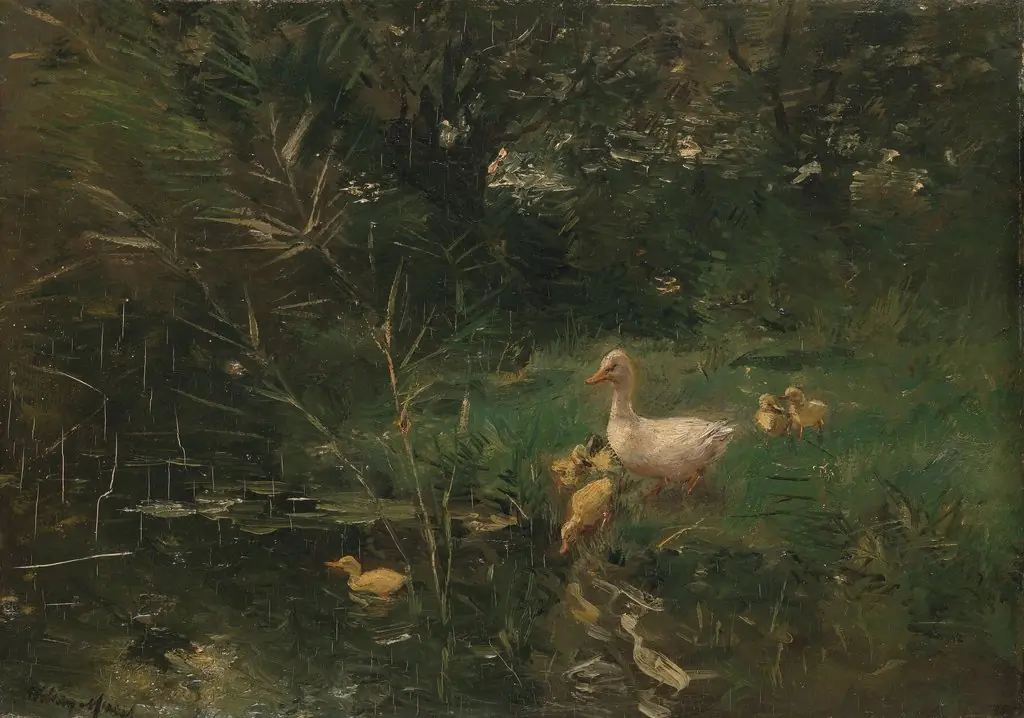
Willem Maris was a Dutch landscape painter of the Hague School, known primarily for his meadow scenes featuring cows and other livestock rendered with a focus on light effects rather than anatomical precision. His work emerged within the broader context of 19th-century Dutch landscape painting, where he was regarded as the most impressionistic yet also the most realistic of the Maris brothers, distinguished by broader brushwork, impasto technique, and a vibrant palette that contrasted with the 'gray mood' of contemporaries. Maris maintained a lifelong dedication to subjects chosen in youth, meadow landscapes with willows, ditches, cows, calves, ducks, and chickens, often depicting them in cool, misty atmospheres before evolving toward looser, sunlit compositions. He was deeply influenced by Paulus Potter’s 17th-century cattle paintings, collaborated closely with Anton Mauve, and mentored figures such as George Hendrik Breitner and his son Simon Willem. His legacy is anchored in major public collections including the Rijksmuseum, National Gallery, London, and Museum Boijmans Van Beuningen, and was highlighted in the 2012 exhibition 'Willem Maris, Impressionist van de Haagse School' at Gemeentemuseum Den Haag.
Own this work as a print
Artist & collection