Artwork
Elegant Couples Courting
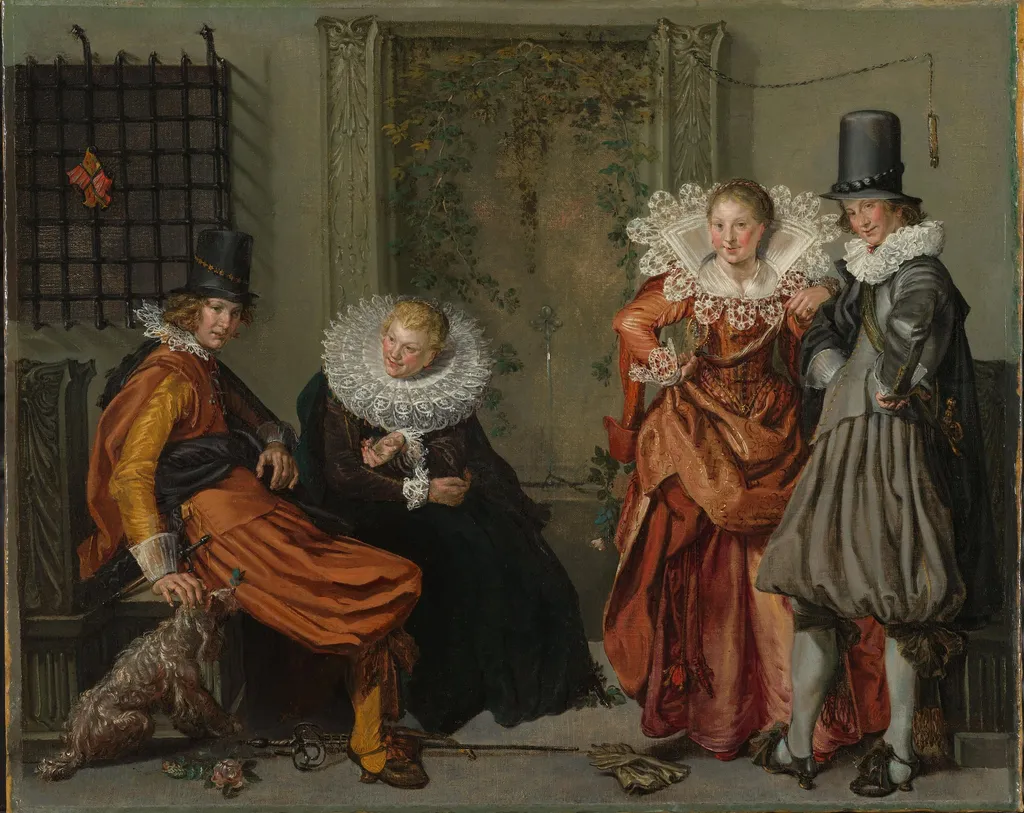
Elegant Couples Courting is an unspecified painting by the Baroque artist Willem Pieterszoon Buytewech. It dates from 1616 and is held in the collection of the Rijksmuseum. The canvas presents a garden scene divided into two narrative strands.
About this work
Technique & Style
His approach to composition and figure drawing shows the strong influence of Frans Hals, evidenced by Buytewech's numerous drawn copies after Hals's works.
Elegant Couples Courting is an oil painting executed on canvas. The work measures 56 × 70 cm. Stylistically, the piece belongs to the Dutch Golden Age and is classified as a genre scene, specifically depicting a merry company. Buytewech, often called the inventor of Dutch genre painting, was primarily a graphic artist, making his surviving oil paintings rare.
His approach to composition and figure drawing shows the strong influence of Frans Hals, evidenced by Buytewech's numerous drawn copies after Hals's works. The painting dates from approximately 1616 to 1620, a period when the artist was active in Rotterdam after training in Haarlem.
History & Provenance
The painting is held in the collection of the Rijksmuseum, Amsterdam. Its inventory number is SK-C-1013.
It was included in the exhibition “Willem Buytewech 1591–1624,” shown at Museum Boijmans Van Beuningen, Rotterdam (30 November 1974–12 January 1975) and at the Institut Néerlandais, Paris (24 January–9 March 1975).
Overview
The canvas presents a garden scene divided into two narrative strands. In the foreground, a woman extends a handful of rosebuds toward a young man, while he diverts his attention to a dog perched at his side. Behind them, another pair walks away, leaving a single glove on the ground, a visual cue linked to matrimonial vows.
Subject & Meaning
The work contrasts two approaches to love: the first couple engages in a tentative, perhaps courtly flirtation, with the woman’s offering and the man’s cautious disengagement. The second pair embodies a more reckless intimacy, symbolized by the discarded glove that traditionally signified marriage, suggesting a disregard for formal commitment.
Context
During the period when the glove represented matrimonial bonds, artists often used such objects to comment on social customs surrounding courtship. By juxtaposing the two couples, the painting engages with contemporary debates about the virtues of measured affection versus impulsive passion.
Own this work as a print
Artist & collection
Artist
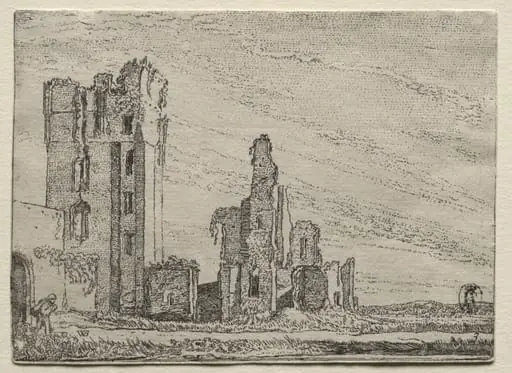
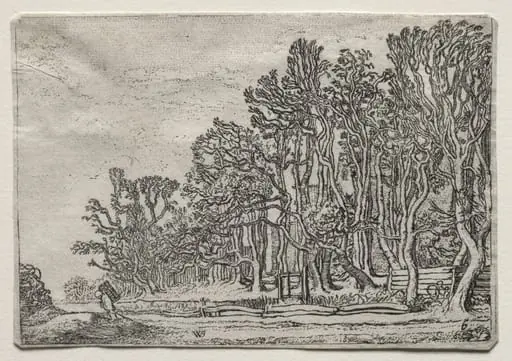
Willem Pieterszoon (abbr. Pietersz.) Buytewech (1591/'92 – 23 September 1624) was a Dutch Golden Age painter, draughtsman and etcher. He is one of the early specialists in the merry company type of subject in Dutch…

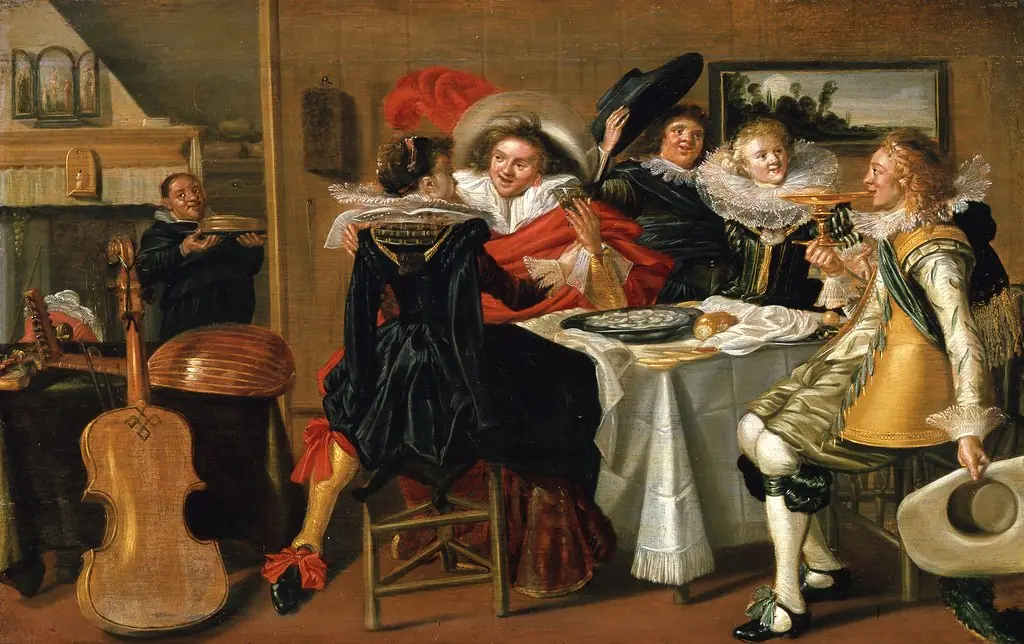 Elegant company drinking in an interior
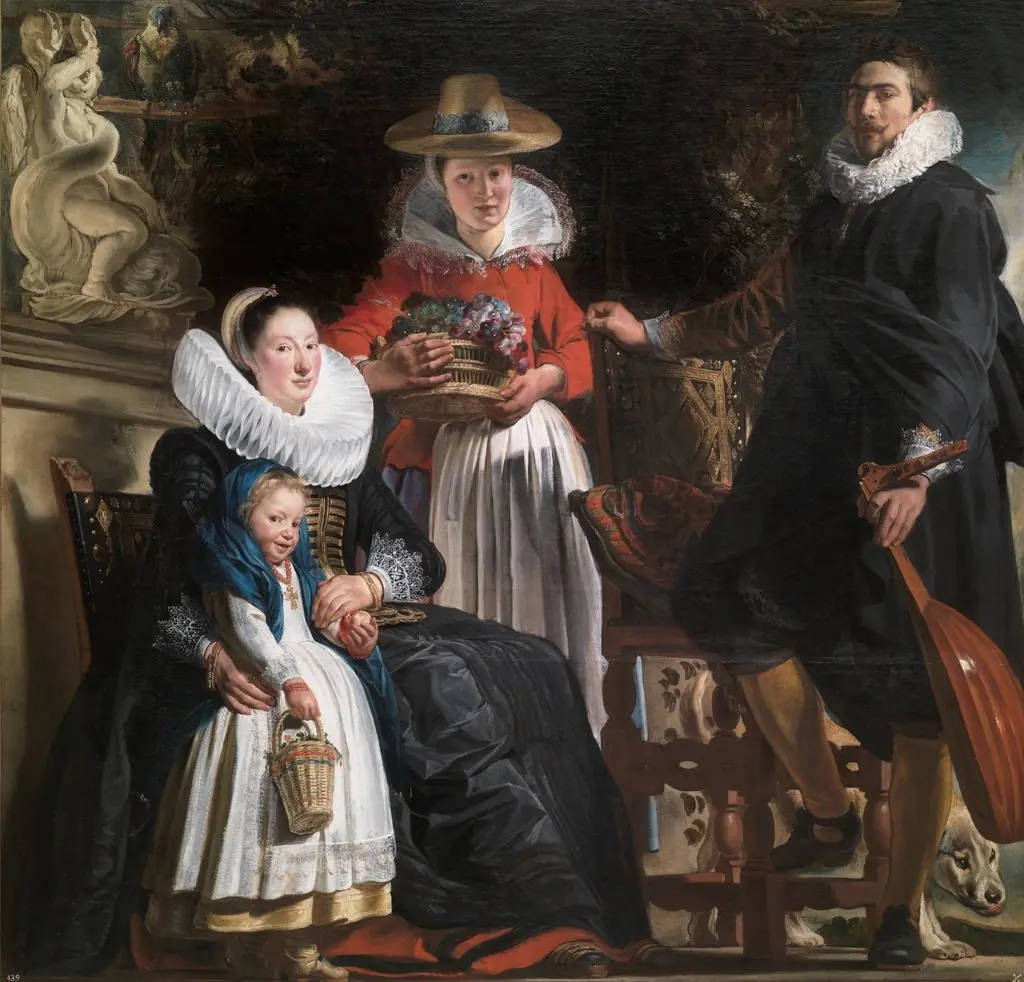 Portrait of the artist with his family
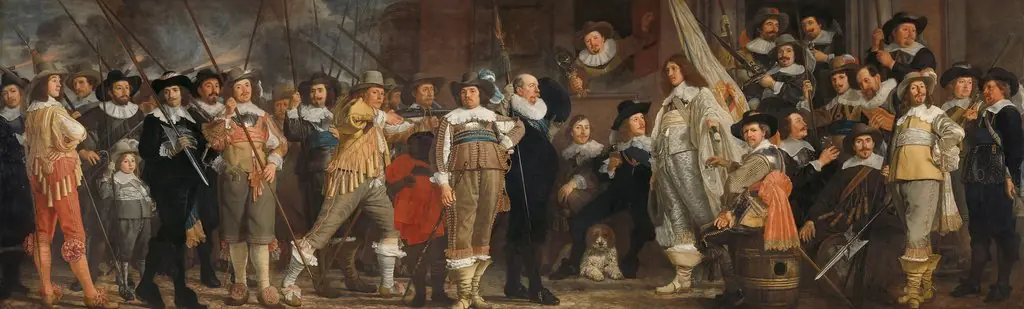 Militia Company of District VIII under the Command of Captain Roelof Bicker
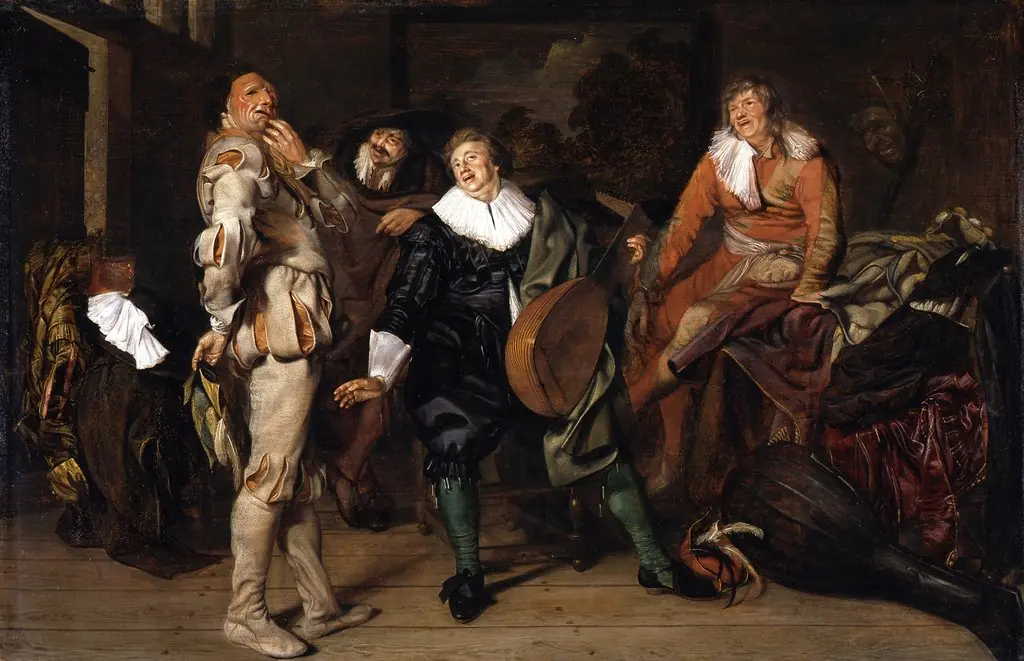 Merry actors and musicians in an interior
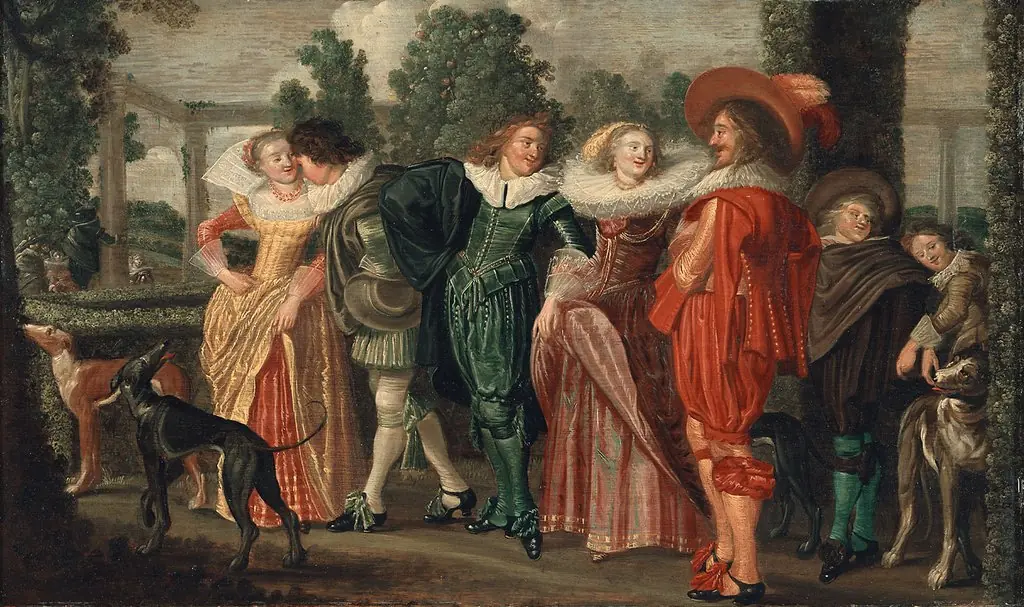 Spaziergang im Garten
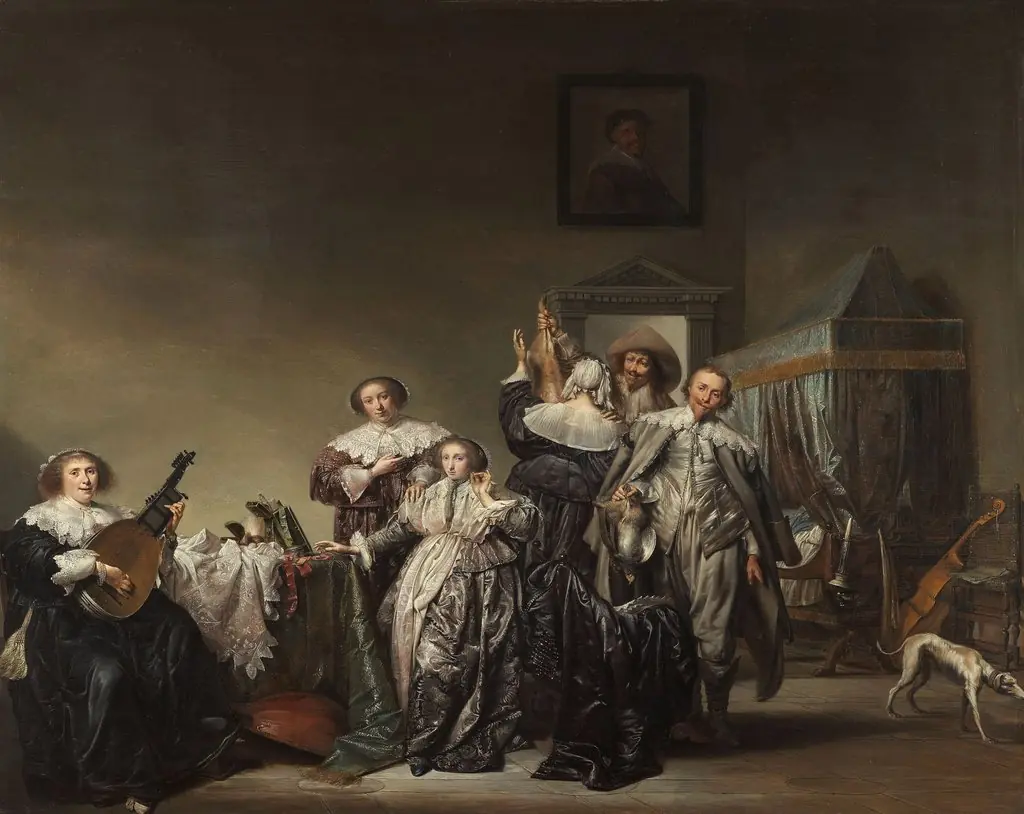 Gallant Company
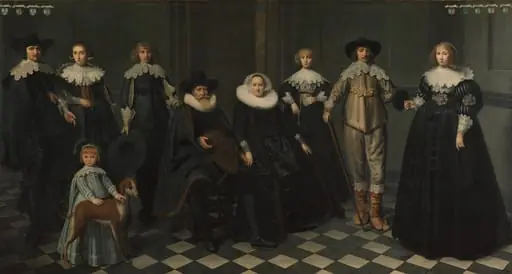 Portrait of the Family of Dirck Bas Jacobsz, Burgomaster of Amsterdam
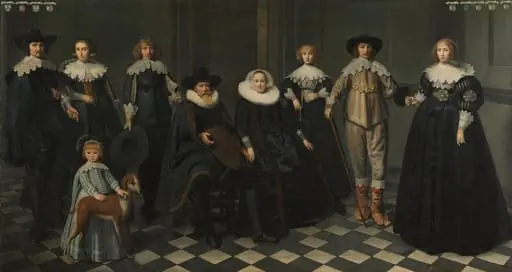 Portrait of the Family of Dirck Jacobsz Bas (1569-1637), Burgomaster of Amsterdam, and Margriet Snoeck (1588-1645)
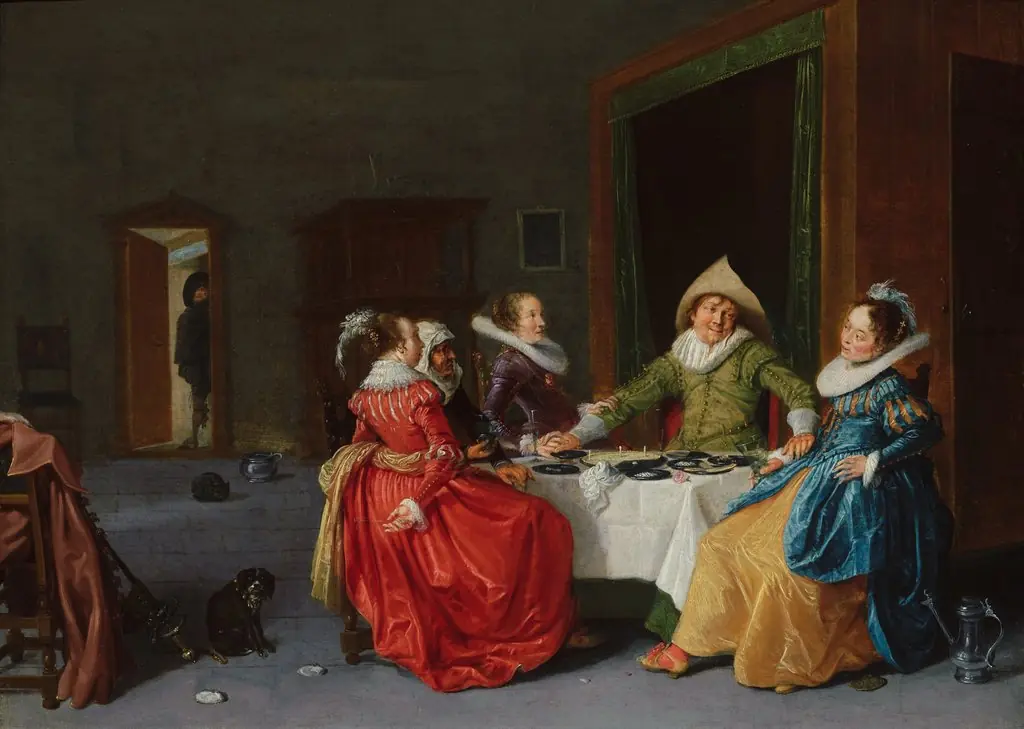 Merry Company in a Brothel
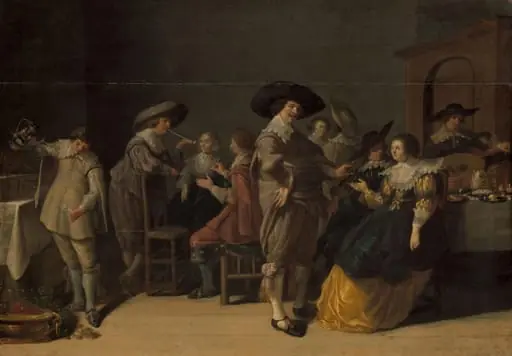 Distinguished Company in a Room
 Distinguished company in a room