Artwork
Merry Company
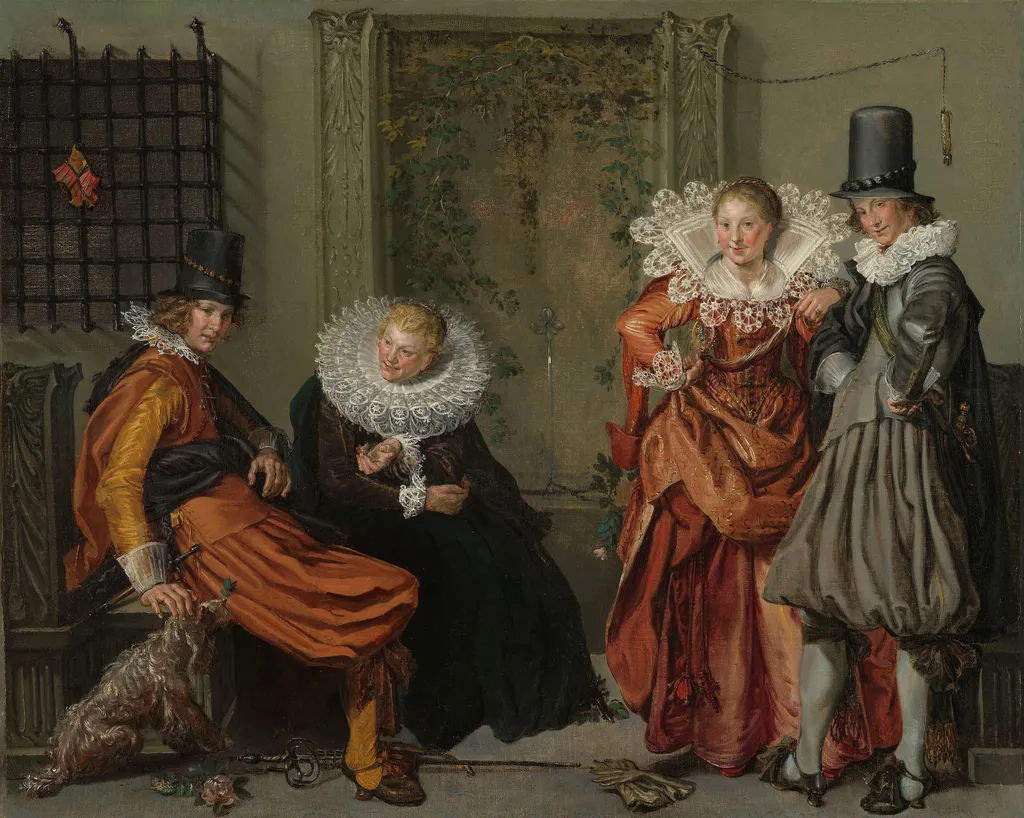
Merry Company is an oil painting by the Dutch Golden Age artist Willem Pieterszoon Buytewech. It dates from 1618 and is held in the collection of the Rijksmuseum.
About this work
Subject & Meaning
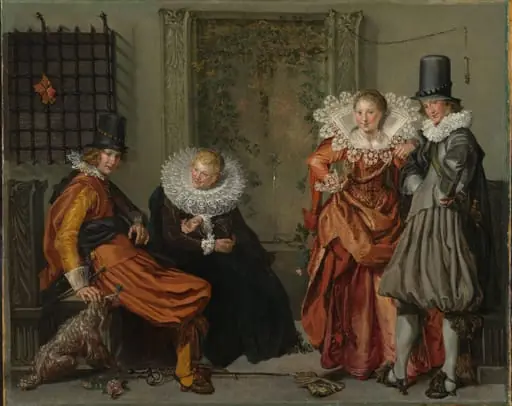
The painting depicts a genre scene featuring four elegantly dressed figures in an outdoor courtyard or terrace, distinguished by a window grille and a fountain.
The painting depicts a genre scene featuring four elegantly dressed figures in an outdoor courtyard or terrace, distinguished by a window grille and a fountain. The composition illustrates two distinct stages of courtship: the pair on the right appears to be an established couple, while those on the left remain in the courtship phase. Specific objects scattered on the ground reinforce this narrative symbolism; weapons and roses are placed near the courting pair on the left, whereas gloves and a dog are situated by the formed couple on the right. This arrangement highlights the virtuosic rendering of the figures and their social interactions within a domestic setting.
Technique & Style
Merry Company is an oil painting executed on canvas, measuring 56.3 by 70.5 cm. The work belongs to the genre painting tradition, depicting four elegantly dressed figures rendered with a virtuosic handling of fabric and costume. The composition is set in an outdoor space, a courtyard or terrace, identified by a window grille and a fountain. Buytewech arranges symbolic objects on the ground with deliberate care: weapons and roses appear near the courting couple on the left, gloves lie beside the already-formed couple on the right, and a dog occupies the scene.
The painting was reattributed to Buytewech in the twentieth century after stylistic comparison with his drawings, having previously been ascribed to Frans Hals or Dirck Hals.
History & Provenance
The work titled Merry Company was painted by Willem Pieterszoon Buytewech in 1618 as an oil on canvas genre scene. It entered the collection of the Rijksmuseum where it remains on display. Early 20th-century attributions to Frans Hals or Dirck Hals were revised after stylistic comparison with Buytewech’s drawings confirmed the present authorship.
Merry Company is held in the collection of the Rijksmuseum in Amsterdam. According to the Wikidata record for the painting, its location is listed as the Rijksmuseum, and the work is catalogued among that institution's holdings. The painting, dated 1618, is executed in oil paint on canvas and measures 56.3 cm in height by 70.5 cm in width.
No specific accession number is recorded in the available sources, and the provided materials do not document a formal exhibition history for the work. The Italian-language source notes only that the painting was previously attributed in the early twentieth century to Frans Hals or Dirck Hals before being reattributed to Willem Pieterszoon Buytewech on the basis of stylistic comparisons with his drawings, but this earlier attribution history is not part of the work's documented display record.
Context
Although now firmly attributed to Willem Pieterszoon Buytewech, this genre scene was misidentified by early twentieth-century scholars as a work by either Frans Hals or Dirck Hals. The correction of this attribution relied on comparative analysis demonstrating strong stylistic affinities between the painting and Buytewech's known drawings. Art historical analysis highlights the artist's virtuoso technique in rendering the elegant attire of the four figures depicted.
The composition is situated within an outdoor setting, indicated by architectural elements such as a window grate and a fountain. Symbolic objects scattered on the ground, including weapons, roses, and gloves, serve to differentiate the stages of courtship between the two pairs of figures, reflecting the nuanced narrative approach characteristic of Buytewech's contribution to Dutch genre painting.
Legacy
The work's reputation underwent a significant shift during the early twentieth century. Initially, the painting was misattributed to either Frans Hals or Dirck Hals, two prominent genre painters of the same era. This early assessment was later revised when scholars identified strong stylistic similarities between the painting and known drawings by Willem Pieterszoon Buytewech.
These visual parallels facilitated the work's reattribution to Buytewech, correcting the historical record and securing its place within his recognized oeuvre.
Overview
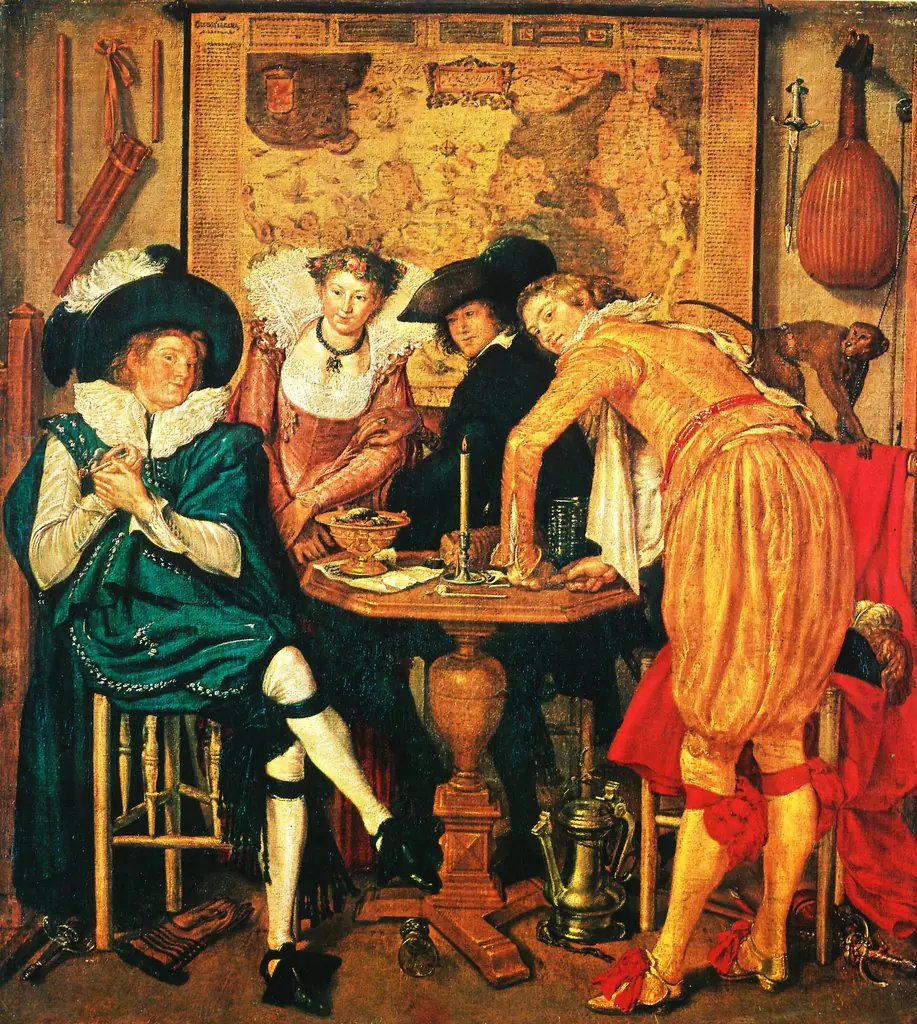
Merry Company is a 1618 oil painting by Willem Pieterszoon Buytewech, a prominent Dutch Golden Age painter. The work depicts a genre scene of four individuals in a dimly lit, cozy room, characterized by the artist's attention to light and shadow, creating a lively yet intimate atmosphere.
Own this work as a print
Artist & collection
Artist
Willem Pieterszoon (abbr. Pietersz.) Buytewech (1591/'92 – 23 September 1624) was a Dutch Golden Age painter, draughtsman and etcher. He is one of the early specialists in the merry company type of subject in Dutch…