Artwork
Llangollen, North Wales
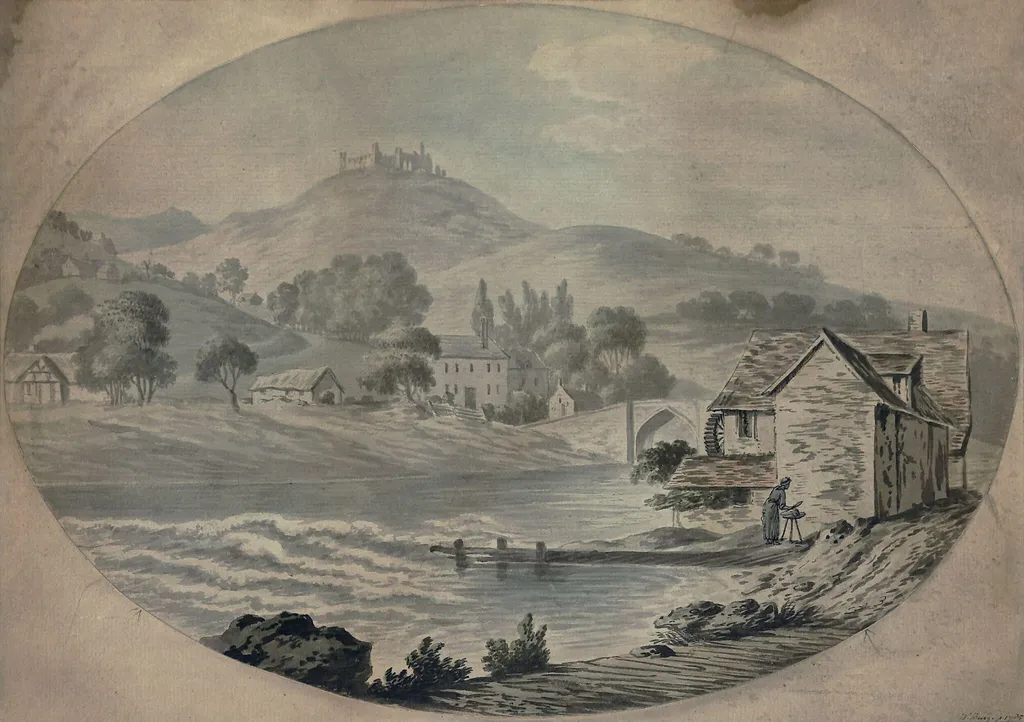
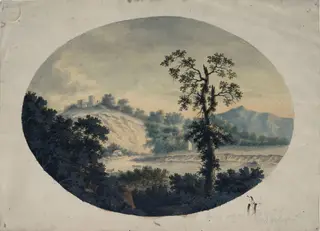
Llangollen, North Wales is a watercolor work on paper by the Rococo painting artist William Burgess. It dates from 1785 and is held in the collection of the Victoria and Albert Museum.
About this work
Overview
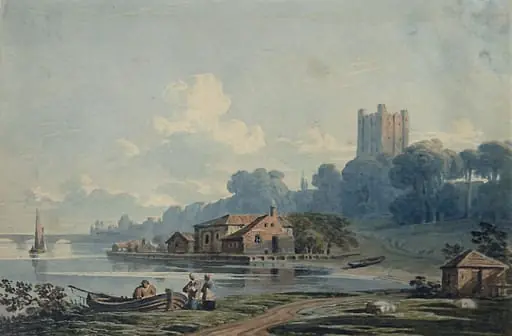
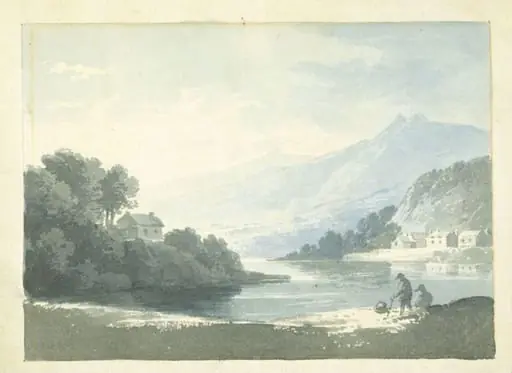
Created in 1785, this oval watercolour by William Burgess captures the Welsh town of Llangollen with quiet precision. Executed in soft, muted tones of gray and pale blue, the work reflects a deliberate restraint in color and composition. Signed and dated by the artist, it belongs to a tradition of topographical watercolours that valued observation over dramatic flourish.
Subject & Meaning
The absence of human activity beyond this figure emphasizes stillness, suggesting an appreciation for quiet, unremarkable landscapes as worthy of attention.
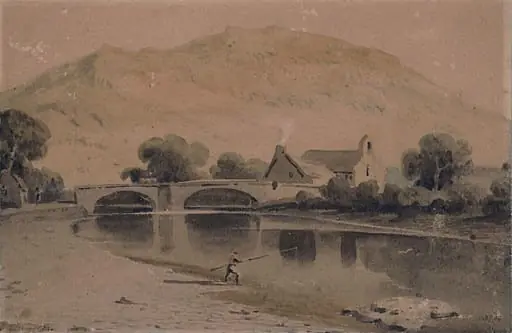
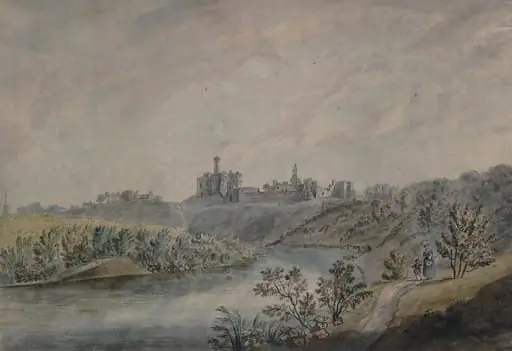
The scene portrays a tranquil riverside setting with modest buildings, scattered trees, and a distant hill crowned by a ruined tower. A solitary figure stands at the water’s edge, possibly sketching, echoing the artist’s own act of observation. The absence of human activity beyond this figure emphasizes stillness, suggesting an appreciation for quiet, unremarkable landscapes as worthy of attention.
Technique & Style
Burgess employed watercolour with delicate washes, allowing the paper’s texture to suggest light and atmosphere. Lines are subtle, forms softened, and details minimized to convey mood rather than topographic accuracy. The composition’s balance and muted palette reflect an emerging sensitivity to natural light and quietude, aligning with early Romantic sensibilities without overt emotionalism.
History & Provenance
The work is documented as an original watercolour by William Burgess, signed and dated 1785. Its survival in relatively intact condition suggests it was likely kept in private collections rather than exhibited publicly. No record of public display or major acquisition exists, indicating its status as a personal or local study rather than a commissioned piece.
Context
In late 18th-century Britain, watercolour was gaining traction as a medium for documenting landscapes, especially in Wales and the Lake District. Artists like Burgess contributed to a growing interest in regional scenery, often motivated by antiquarian curiosity or personal travel. Llangollen, known for its ruins and pastoral beauty, was a modest but meaningful subject within this trend.
Legacy
Though not widely known today, Burgess’s work contributes to a broader understanding of how British artists engaged with rural landscapes before the full emergence of Romanticism. Its restraint and attention to everyday quietude offer a precursor to later movements that elevated the ordinary natural world as a subject of contemplation.
Own this work as a print
Artist & collection