Artwork
The Triumph of the Innocents
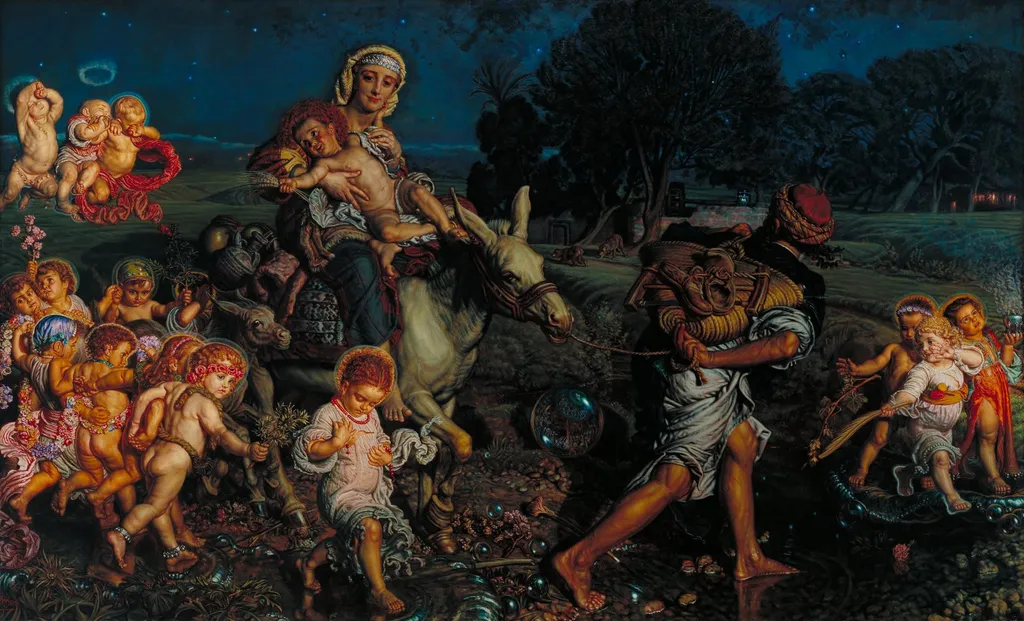
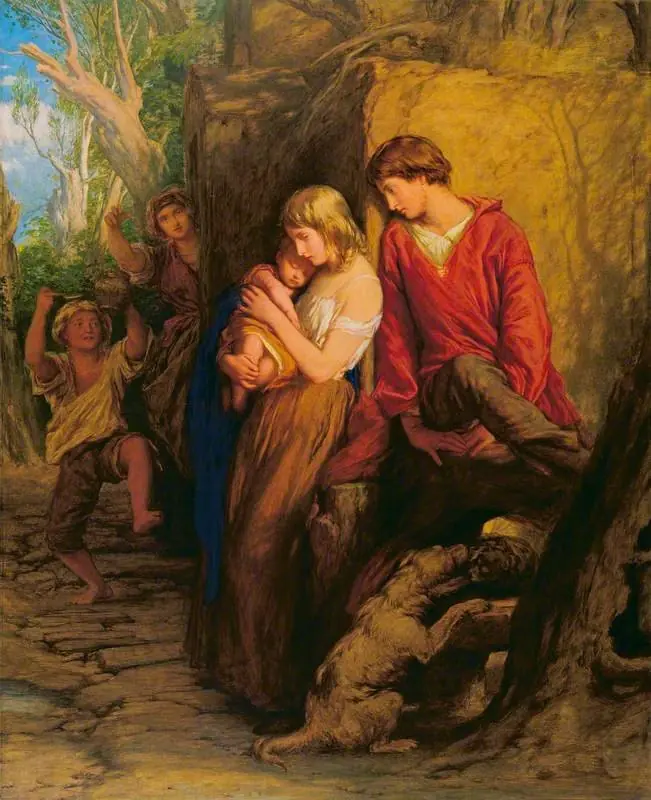
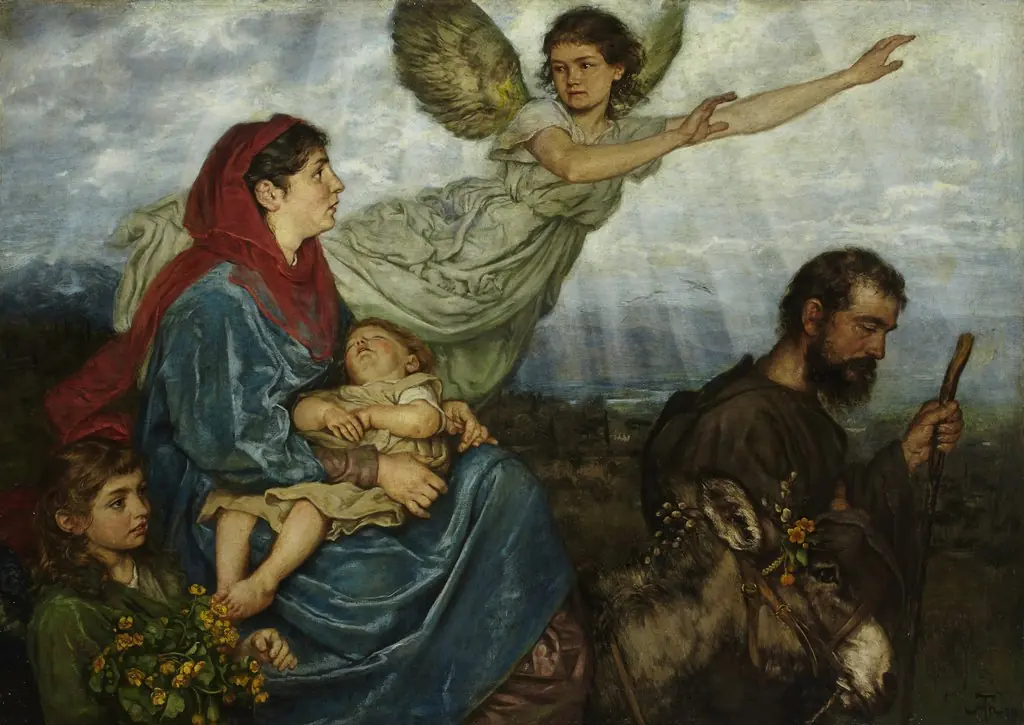
The Triumph of the Innocents is an oil painting by the Pre-Raphaelite artist William Holman Hunt. It dates from 1892 and is held in the collection of the National Gallery.
About this work
Overview
The scene unfolds under a luminous star, with figures moving through a shadowed desert, their robes blending into the muted tones of night.
Painted in 1892 by William Holman Hunt, The Triumph of the Innocents is an oil-on-canvas work that reimagines the biblical Flight into Egypt as a nocturnal procession. Unlike traditional depictions, Hunt frames the journey not as escape but as a solemn, collective passage guided by divine light. The scene unfolds under a luminous star, with figures moving through a shadowed desert, their robes blending into the muted tones of night.
Subject & Meaning
The painting illustrates the moment when the souls of the slain Innocents, according to apocryphal tradition, are led by angels to meet the Holy Family on their journey. The children among the procession, though dead, appear serene, while the living figures, Mary, Joseph, and the donkey, move forward under celestial guidance. The star above symbolizes divine purpose, transforming grief into spiritual triumph.
Technique & Style
Hunt employed meticulous brushwork and layered glazes to achieve rich, jewel-like colors and deep atmospheric depth. Chiaroscuro defines the forms, with the star’s glow casting sharp contrasts against the darkened landscape. The palette favors cool blues and purples, enhancing the night’s stillness, while the figures’ drapery is rendered with precise texture, reflecting Pre-Raphaelite devotion to naturalistic detail.
History & Provenance
Completed in 1892 after years of study and revision, the painting was acquired by the Tate Gallery in 1893, shortly after its exhibition. Hunt had previously explored the theme in sketches and smaller works, refining the composition over time. Its acquisition by Tate Britain ensured its preservation within a major British art institution, where it remains part of the permanent collection.
Context
Hunt, a founding member of the Pre-Raphaelite Brotherhood, was influenced by the moral seriousness of John Ruskin and Thomas Carlyle, who saw art as a vehicle for spiritual truth. In this period, he moved away from early literalism toward symbolic narratives rooted in theological interpretation. The painting reflects his lifelong interest in reconciling faith with visual representation, responding to Victorian anxieties about mortality and redemption.
Legacy
Though less widely known than Hunt’s earlier works, The Triumph of the Innocents stands as a culmination of his symbolic approach. It influenced later artists seeking to merge religious narrative with psychological depth and atmospheric lighting. Its presence in Tate Britain continues to invite scholarly attention for its complex layering of myth, faith, and visual poetry.
Artist & collection
Artist
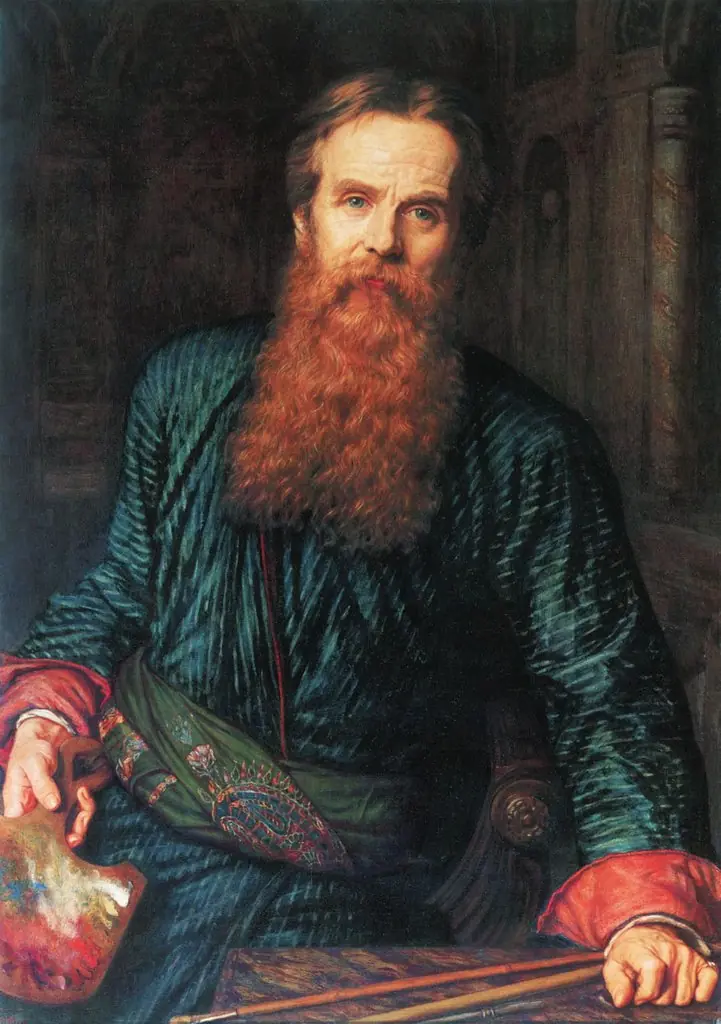
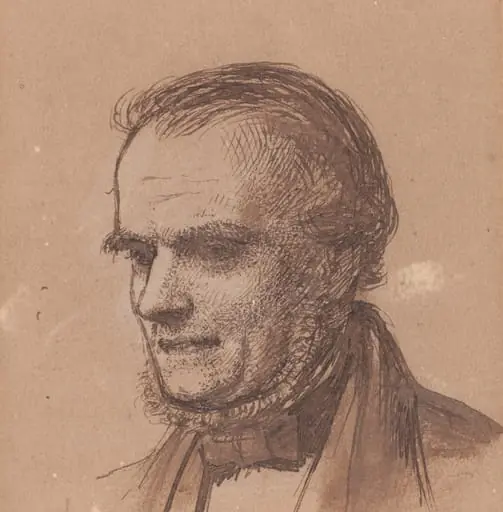
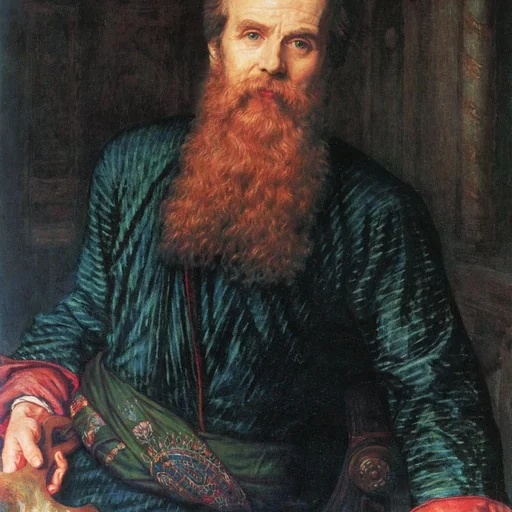
William Holman Hunt (2 April 1827 – 7 September 1910) was an English painter and one of the founders of the Pre-Raphaelite Brotherhood.