Artwork
The Awakening Conscience
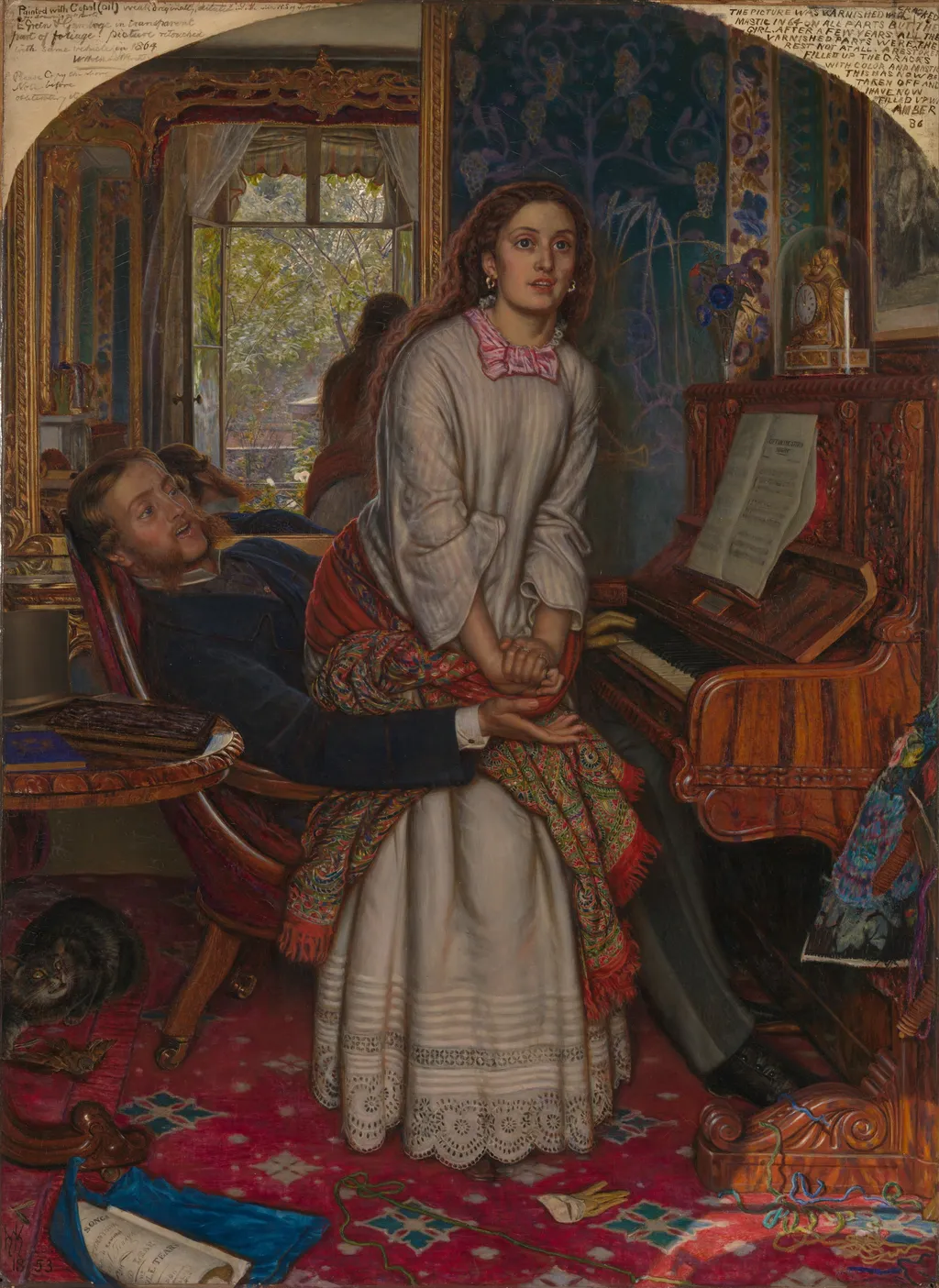
The Awakening Conscience is an oil painting by the Pre-Raphaelite artist William Holman Hunt. It dates from 1853 and is held in the collection of the Tate Britain.
About this work
Overview
It portrays a moment of psychological shift in a young woman who has just risen from the lap of a man seated in a richly furnished Victorian parlor.
Painted in 1853, The Awakening Conscience is an oil-on-canvas work by William Holman Hunt, a founding member of the Pre-Raphaelite Brotherhood. It portrays a moment of psychological shift in a young woman who has just risen from the lap of a man seated in a richly furnished Victorian parlor. The scene captures a silent, interior turning point, rendered with meticulous detail and symbolic precision characteristic of Hunt’s early style.
Subject & Meaning
The woman, dressed in white with a red shawl, gazes toward the window as if struck by a sudden awareness, her posture tense and upright. The man, slumped in shadowed attire, remains oblivious. The scene suggests a moral reckoning, possibly the realization of her entrapment in a relationship of social and emotional dependence.
Objects in the room, including a discarded glove and a cat chasing a bird, reinforce themes of innocence lost and suppressed desire.
Technique & Style
Hunt employed fine brushwork and intense color to render textures: the plush carpet, polished wood, and fabric folds. Light enters through the window, illuminating the woman while leaving the man partially in shadow, heightening the emotional contrast. The composition uses diagonal lines and spatial depth to draw attention to her gaze, while the detailed interior reflects Pre-Raphaelite devotion to naturalism and symbolic accuracy.
History & Provenance
Completed in 1853, the painting was exhibited the following year to critical attention for its moral subject and technical rigor. It entered the collection of the Tate Britain in 1890, following earlier ownership by a private patron. Its preservation and public display have ensured its place as a key example of Victorian narrative painting and Pre-Raphaelite social commentary.
Context
Created during a period of growing public concern over prostitution and the exploitation of women, the painting reflects contemporary debates about morality and gender roles. Hunt, influenced by religious and social reformers, sought to depict psychological truth through visual symbolism. The domestic setting contrasts sharply with the implied moral transgression, challenging viewers to interpret the woman’s silent epiphany.
Legacy
The Awakening Conscience remains a touchstone for discussions of gender, agency, and moral ambiguity in 19th-century art. Its psychological depth and symbolic richness influenced later realist and narrative painters. While not widely imitated, its unflinching portrayal of a woman’s internal crisis helped redefine the potential of genre painting to convey complex ethical questions.
Own this work as a print
Artist & collection
Artist
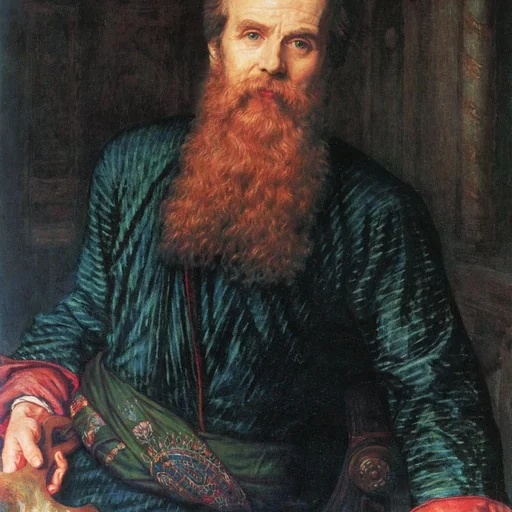
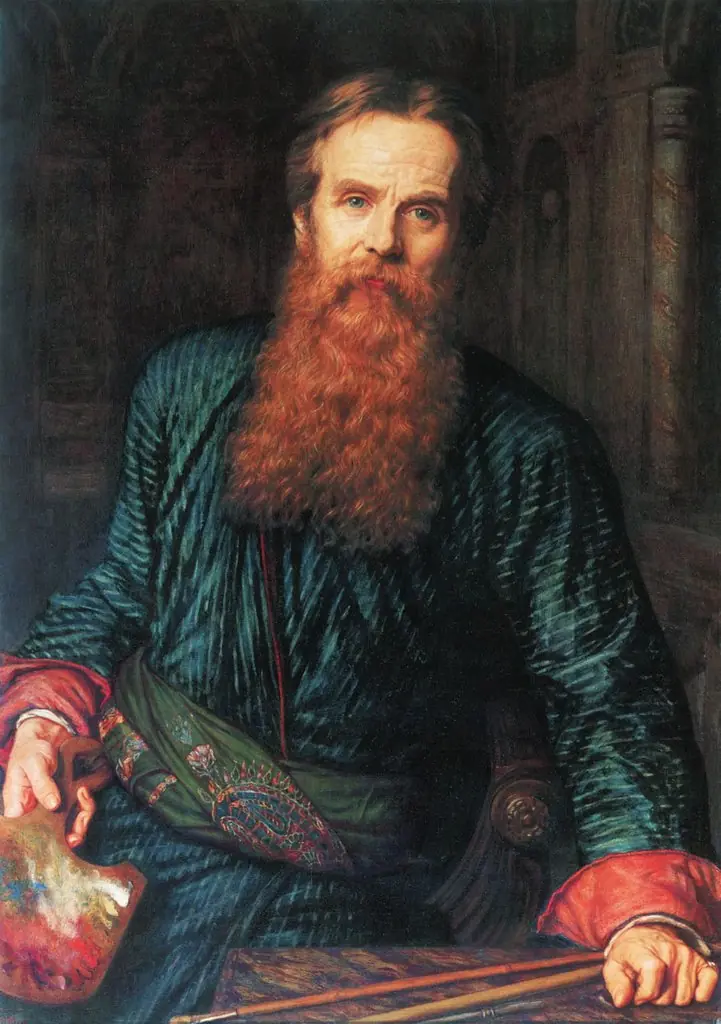
William Holman Hunt (2 April 1827 – 7 September 1910) was an English painter and one of the founders of the Pre-Raphaelite Brotherhood.

 Compared in the Pre-Raphaelites course