Artwork
The importunate neighbour
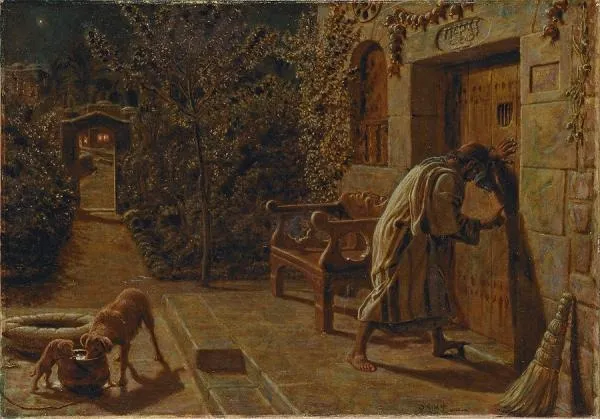
The importunate neighbour is an oil painting by the Pre-Raphaelite artist William Holman Hunt. It dates from 1898 and is held in the collection of the National Gallery of Victoria.
About this work
Overview
The painting is part of the National Gallery of Victoria’s collection, reflecting Hunt’s lifelong engagement with biblical narratives and moral urgency.
Painted in 1898 by William Holman Hunt, this oil on canvas work depicts a scene from Luke’s Gospel in which a man persistently seeks help from a neighbor at night. Hunt, a key figure in the Pre-Raphaelite movement, rendered the moment with intense realism and symbolic precision. The painting is part of the National Gallery of Victoria’s collection, reflecting Hunt’s lifelong engagement with biblical narratives and moral urgency.
Subject & Meaning
The scene illustrates the parable of the friend at night, where persistence in asking yields response. The figure’s physical strain, face pressed to the wall, hand raised in urgent knock, conveys spiritual desperation. The closed door and dim interior suggest reluctance, while the dog and broom imply ordinary life continuing unbothered. Hunt frames the moment as both literal and allegorical: a plea for divine grace amid human indifference.
Technique & Style
Hunt employed chiaroscuro to heighten emotional tension, isolating the figure’s face in a sliver of interior light while the rest of the scene recedes into shadow. His brushwork is exacting, capturing the texture of fabric, stone, and wood with near-scientific care. The composition’s asymmetry, dog to the left, broom to the right, anchors the viewer’s gaze on the central act of knocking, reinforcing the narrative’s quiet intensity.
History & Provenance
Completed late in Hunt’s career, the painting reflects his enduring focus on scriptural themes after decades of religious subjects. It entered the National Gallery of Victoria’s collection in the early 20th century, likely through acquisition or donation. Unlike many Pre-Raphaelite works, it received less public attention in its time, but its quiet power has since drawn scholarly interest for its psychological depth and restrained symbolism.
Context
Hunt painted this during a period when Victorian society grappled with faith, doubt, and moral responsibility. Influenced by Ruskin’s emphasis on truth to nature and Carlyle’s moral seriousness, he avoided theatricality in favor of intimate, grounded scenes. The work aligns with his broader project of using visual detail to evoke spiritual inquiry, resisting sentimentality in favor of sober, lived experience.
Legacy
Though less celebrated than his earlier works, this painting exemplifies Hunt’s mature style: disciplined observation fused with theological intent. It stands as a quiet testament to his belief that art could convey moral truths without grandeur. Its preservation in a major Australian institution underscores its role in the global reception of British religious art beyond Europe.
Artist & collection
Artist
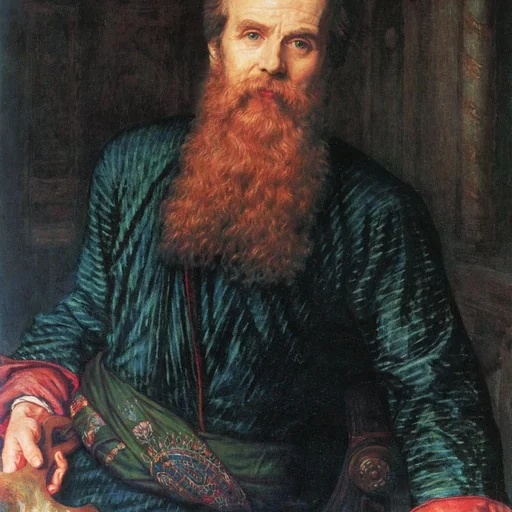
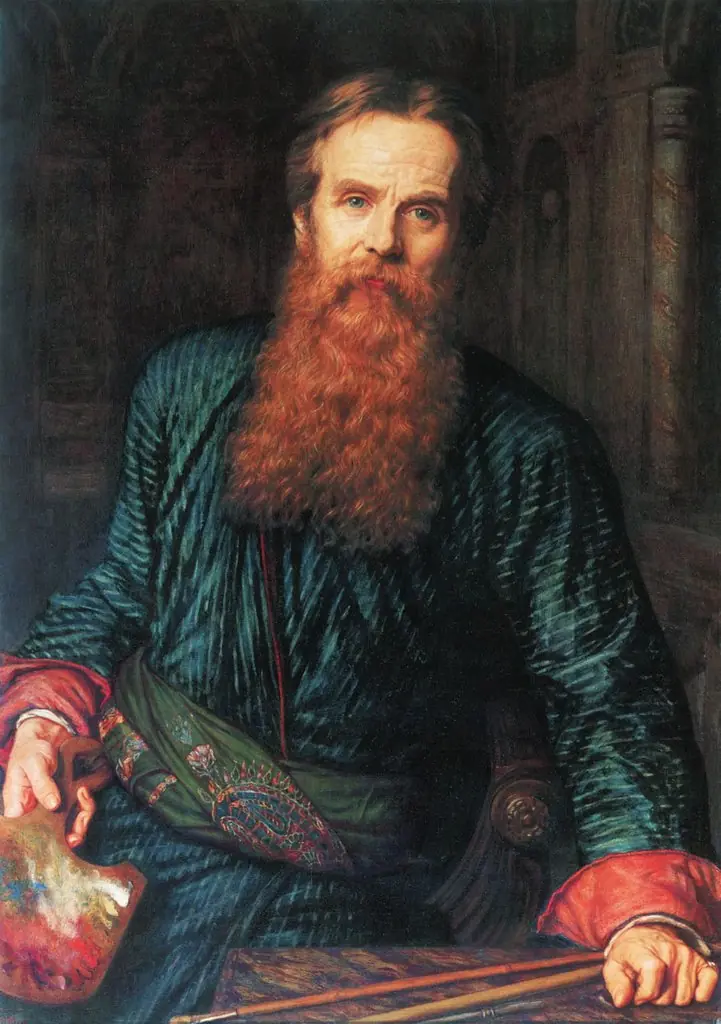
William Holman Hunt (2 April 1827 – 7 September 1910) was an English painter and one of the founders of the Pre-Raphaelite Brotherhood.

- A Lady of Cairo Visiting
 Tavera va utcoruca
 Inhabited Ruins
 Beggars by a Door
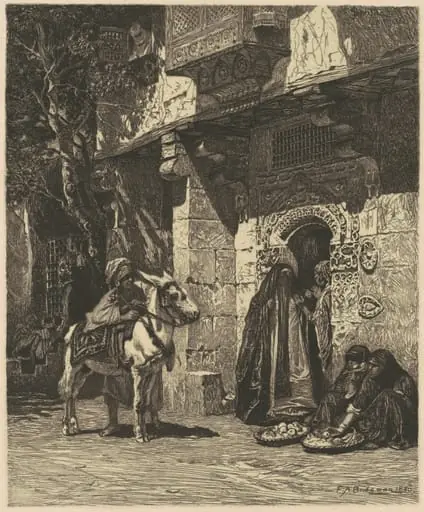
 Arab and a donkey at the wall of a house
 The Holy Women Returning from Christ's Grave
 An Oriental, with performing monkeys
 Beggars by a Door
 Leaving the Sheep Pen
 Joosef ja hänen veljensä
 Parable of the Wicked Servant
 Standing Young Man at the Window in his Study Reading, known as"The Student"