Artwork
The Flight into Egypt
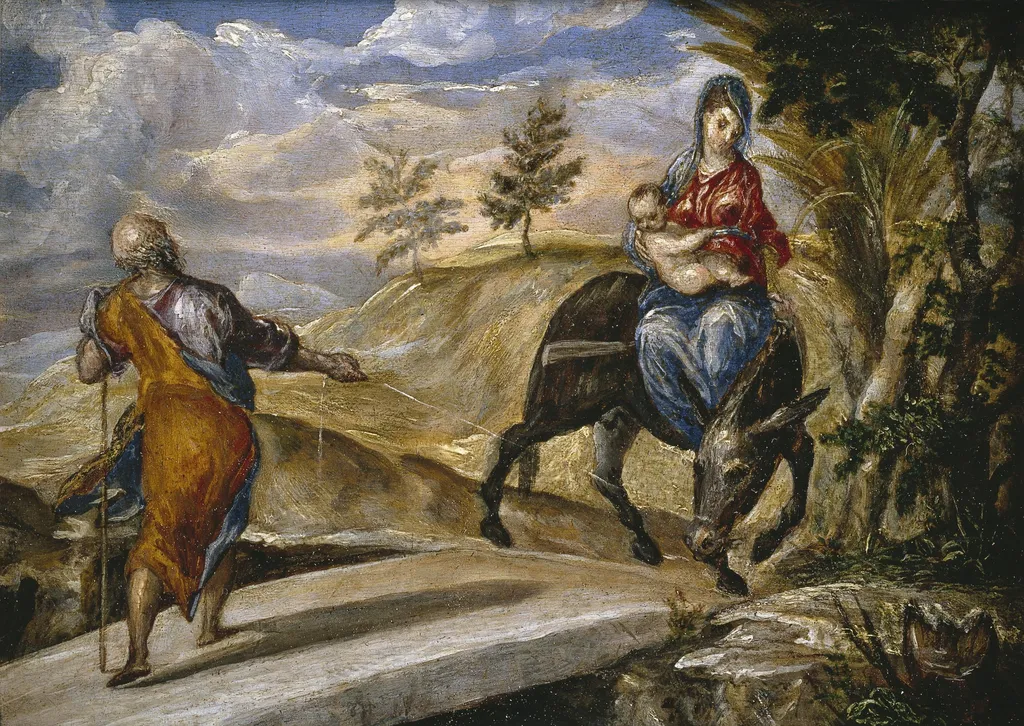
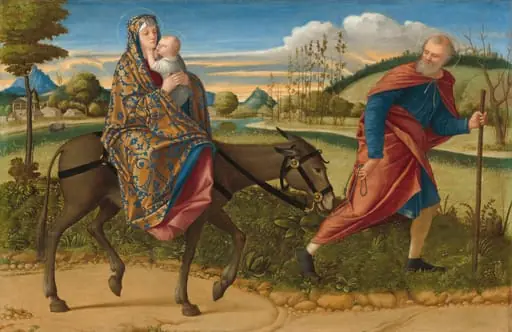
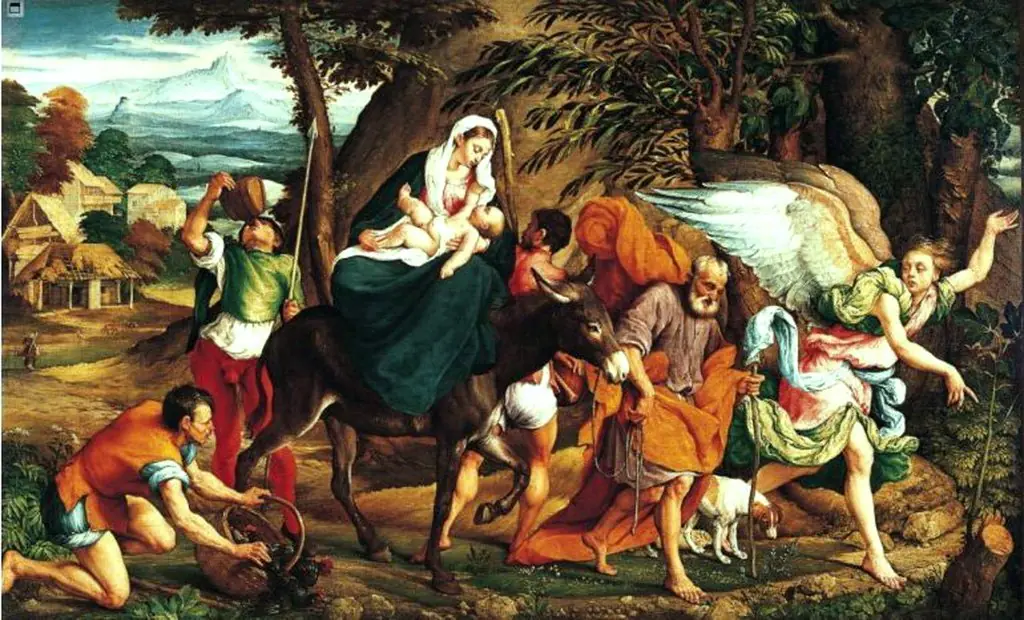
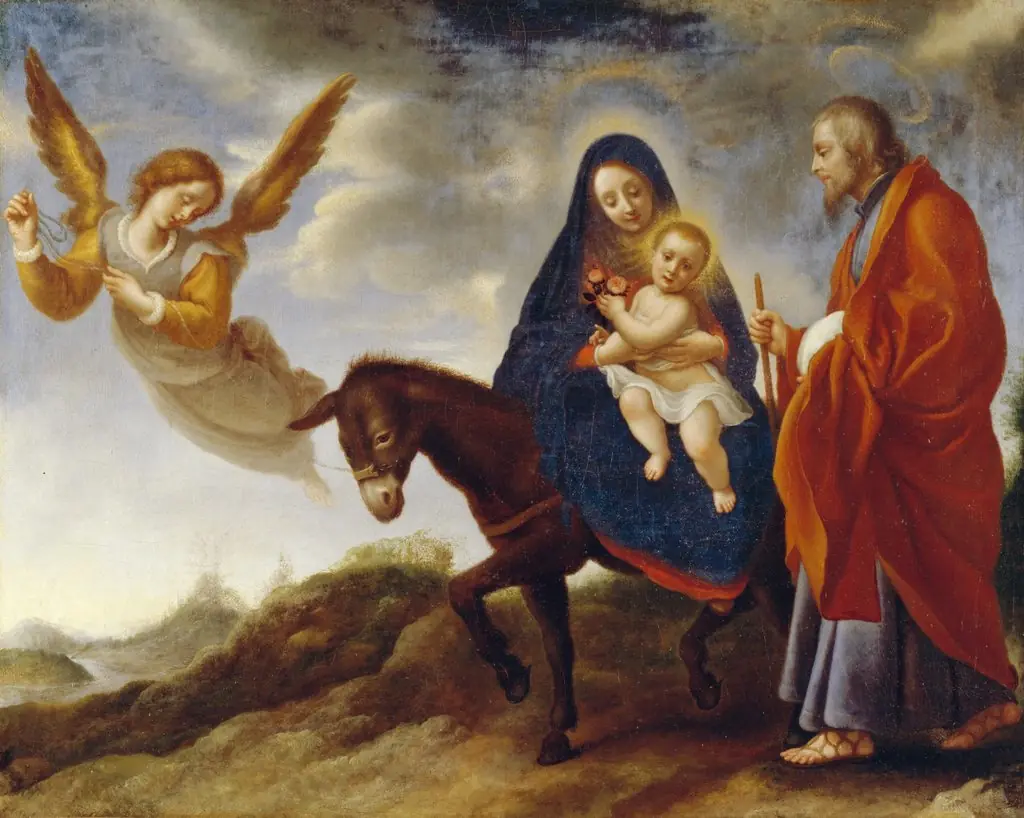
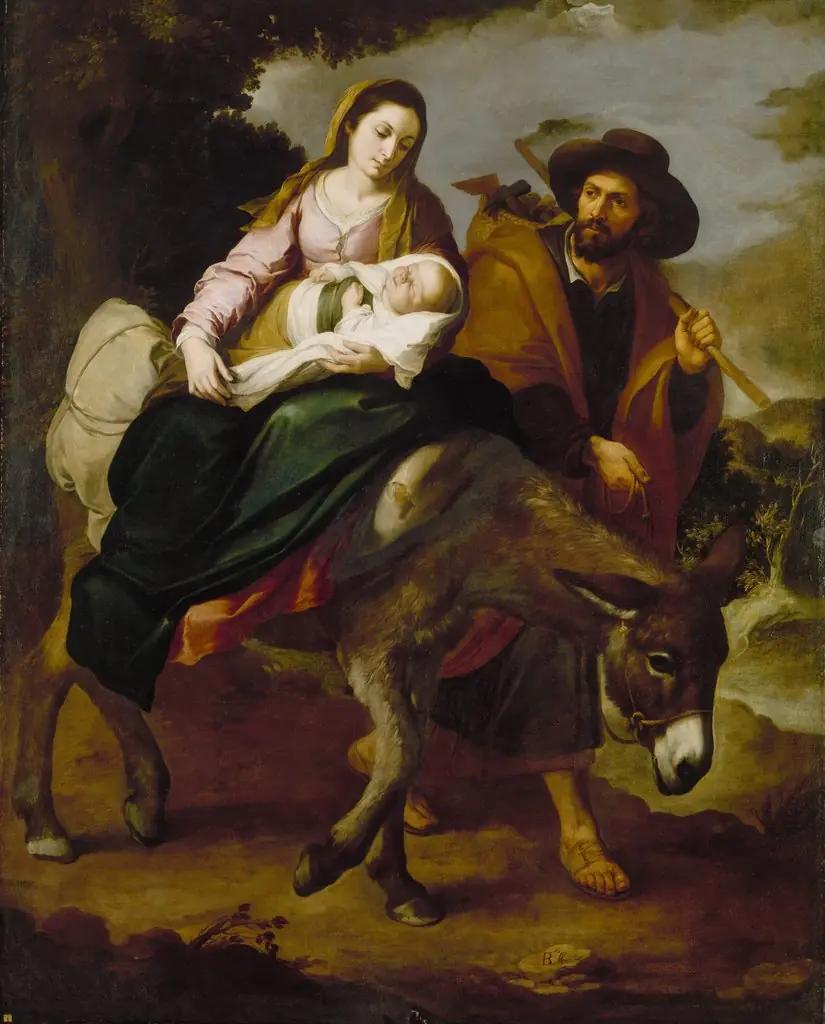
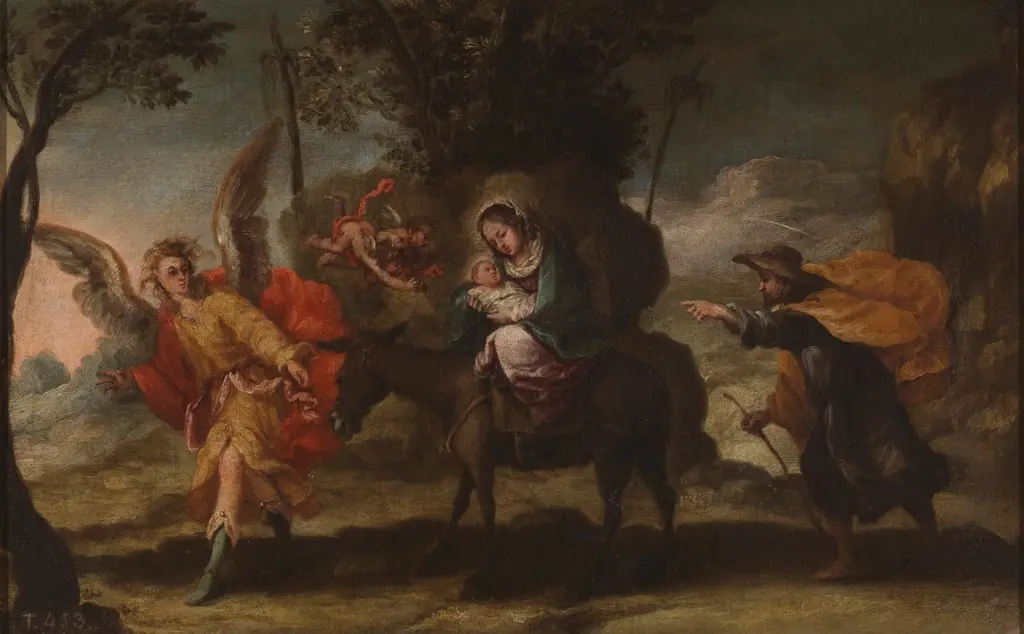
The Flight into Egypt is an oil painting by the Mannerist artist El Greco. It dates from 1570 and is held in the collection of the Museo del Prado. Created around 1570, this oil on canvas depicts the biblical episode of the Holy Family’s departure for Egypt.
About this work
Subject & Meaning
The figures are arranged in a novel diagonal formation rather than a standard linear procession, emphasizing movement and directional change.
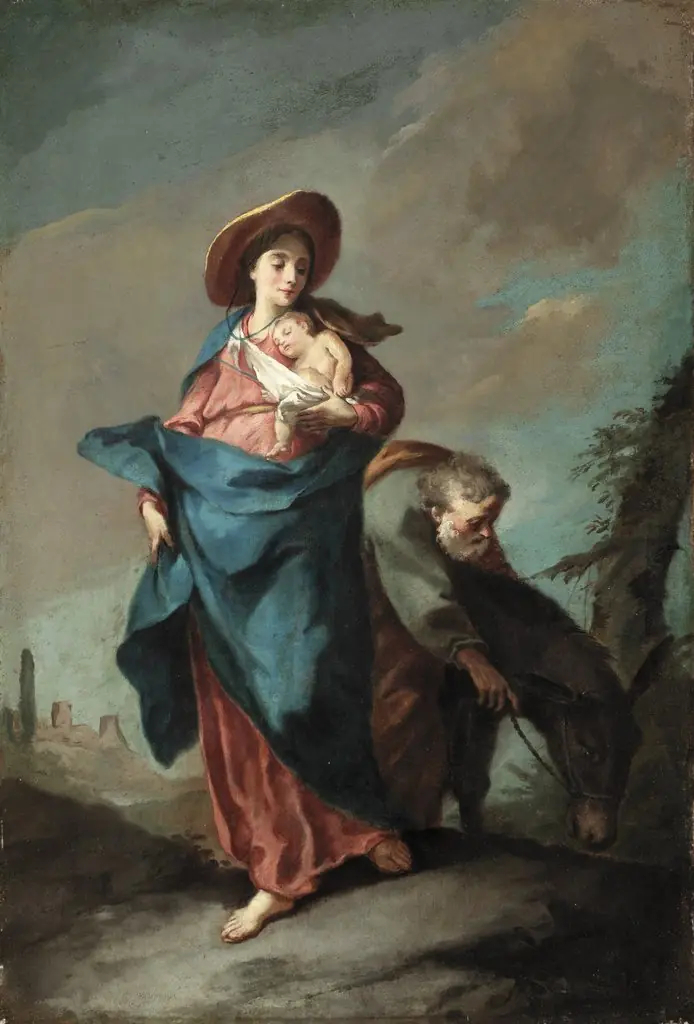
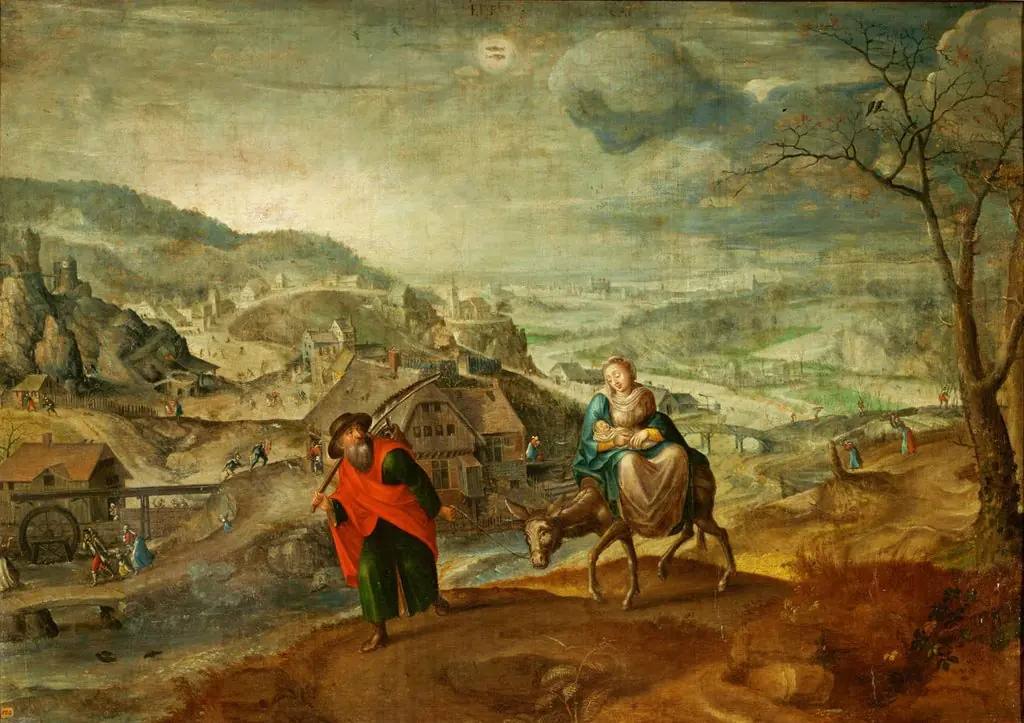
The painting depicts the biblical episode of the Flight into Egypt, narrated exclusively in the Gospel of Matthew (2:13-15), where the Holy Family flees to escape King Herod. While the subject traditionally forms part of sequential Christological cycles, this work presents it as an independent scene, a format that originated in Byzantine icons before appearing in Western European art. Visually, the composition balances the sacred narrative with a rustic, almost comedic tone; the donkey's rebellion and the landscape setting evoke a peasant life scene, yet the imposing presence of the Virgin and Child maintains the religious gravity. The figures are arranged in a novel diagonal formation rather than a standard linear procession, emphasizing movement and directional change. This unique arrangement, featuring the Virgin in a pink tunic and blue mantle alongside a robust, elderly Joseph, enriches the traditional iconography with the specific stylistic traits of El Greco's Venetian period.
Technique & Style
Executed in oil paint on a pine wood panel, this small-scale work measures 15.9 by 21.6 cm. The piece demonstrates El Greco's transition from traditional tempera to the oil techniques of the Venetian Cinquecento. Stylistically, the composition features an asymmetrical balance with a central void, contrasting with the typical linear arrangements of the period. The figures form a slight diagonal, creating a dynamic sense of movement and directional change characteristic of Mannerism. The landscape background exhibits strong influences from Tintoretto and Jacopo Bassano, particularly in the depiction of trees and terrain. Chromatic choices include yellow and pale grey reflections, distant blue hills, and white and yellow clouds set against a blue sky. The Virgin's mantle displays an intense blue, while her tunic is rendered in pink, and Joseph wears a yellow suit with a blue lining over a neutral grey with violet touches.
History & Provenance
Created circa 1570 during El Greco's Venetian period, this oil on pine panel measures 15.9 by 21.6 cm. Scholars debate the precise dating, with estimates ranging from a first Venetian stay (1569-1570) to a second residence (1572-1575). The work bears the monogram DGH on its reverse, indicating former ownership by Gaspar Méndez de Haro, though it does not appear in his known inventories. The painting subsequently passed through the collections of Antonio Gorostiza in Bilbao, Marie Sterner in New York, and Baron von Hirsch in Basel. It was sold at Sotheby's in London in June 1978 before being acquired by the Spanish State at Christie's in December 2000. The artwork was assigned to the Museo del Prado in 2001. The Flight into Egypt is held in the collection of the Museo del Prado in Madrid. The Spanish State acquired the painting at a Christie's auction in London on December 13, 2000, and it was assigned to the museum in 2001. Earlier provenance records indicate the work belonged to Gaspar Méndez de Haro, whose monogram appears on the reverse of the panel. Subsequent owners included Antonio Gorostiza in Bilbao, Marie Sterner in New York, and Baron von Hirsch in Basel. The painting was also offered for sale at Sotheby's Parke Bernet in London on June 21, 1978, before its eventual purchase by the state.
Context
Created circa 1570 during El Greco's Venetian period, this panel represents the artist's only known surviving treatment of the Flight into Egypt. While initially attributed to Jacopo Bassano when it entered the collection of Gaspar Méndez de Haro, modern scholarship unanimously accepts it as an early work by El Greco. The painting illustrates the artist's transition from tempera to oil and reveals a synthesis of influences; the landscape composition and tree forms demonstrate the impact of Tintoretto and Bassano, while the chromaticism and cloud formations recall his Healing of the Man Born Blind. Simultaneously, the tonalities reflect the enduring influence of Raphael and Michelangelo. Art historians note the work's novel diagonal composition and asymmetrical balance, which introduce a dynamic movement characteristic of Mannerism, distinguishing it from traditional sequential depictions of the Holy Family.
Own this work as a print
Artist & collection
Artist
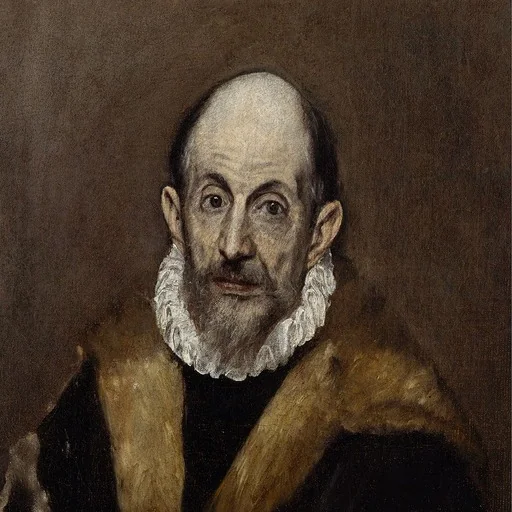
Doménikos Theotokópoulos was born in 1541 in Candia (modern Heraklion), the capital of Venetian-ruled Crete, where he was trained in the post-Byzantine tradition of icon painting.