Artwork
Battersea
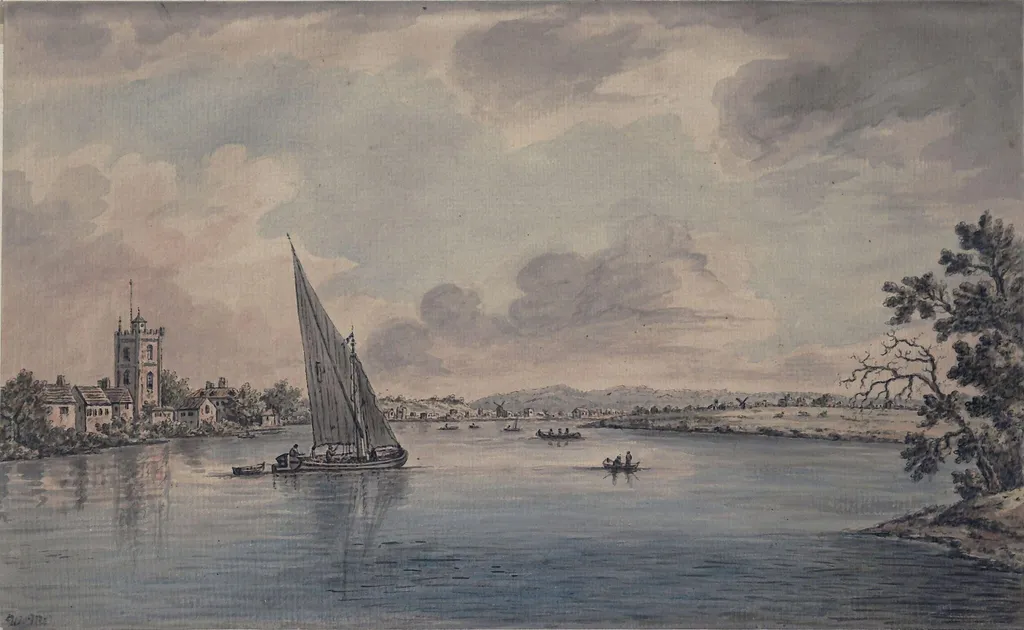
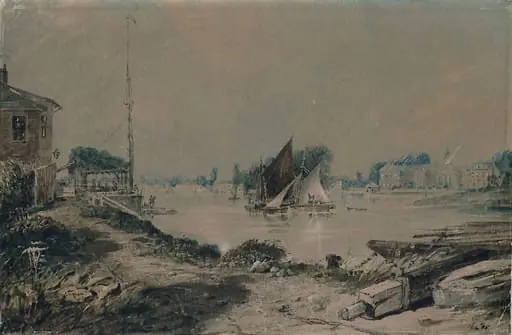
Battersea is a watercolor work on paper by the Rococo painting artist William Marlow. It dates from 1760 and is held in the collection of the Victoria and Albert Museum.
About this work
Overview
Battersea is a watercolour painting created by William Marlow in 1760, capturing a serene riverside scene in the Battersea area, signed by the artist.
Subject & Meaning
The painting portrays a tranquil landscape featuring a large tree on the right, a few detailed buildings on the left, and a small boat on the calm river, which reflects the sky above. The composition emphasizes depth and perspective, particularly through the tree's branches extending towards the water.
Technique & Style
Marlow employed a muted colour palette dominated by blues and greens, characteristic of his style. The simple yet detailed rendering of architectural elements and the natural setting aligns with his approach to romantic landscapes.
History & Provenance
Created in 1760, the painting is attributed to William Marlow based on signature and stylistic affinity. Specific provenance details are not provided.
Context
The work reflects 18th-century English romantic landscape painting, with Marlow's interpretation of a serene, everyday scene.
Legacy
While not individually renowned in the provided context, 'Battersea' contributes to Marlow's body of work, exemplifying his contribution to English romantic landscape art.
Artist & collection

 Chelsea Hospital from the Red House, Battersea
 Ryde, Isle of Wight
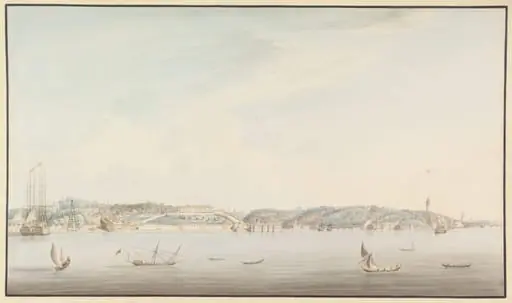 Kasim Pasa, the former Ottoman Naval Arsenal, from the Golden Horn
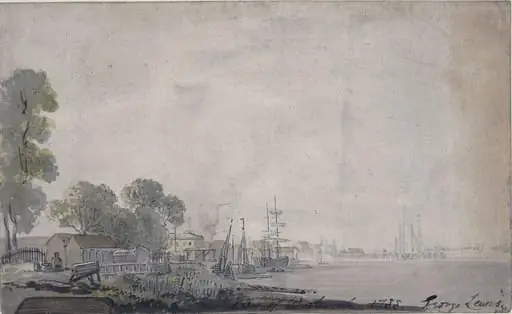 View of Woolwich
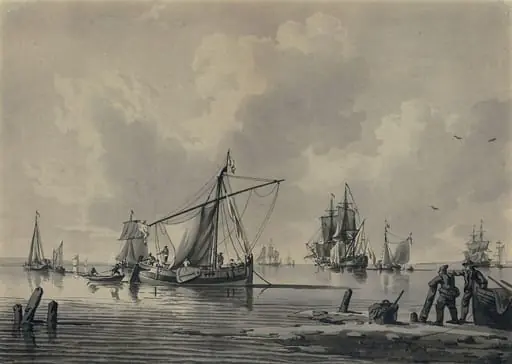 River with Shipping
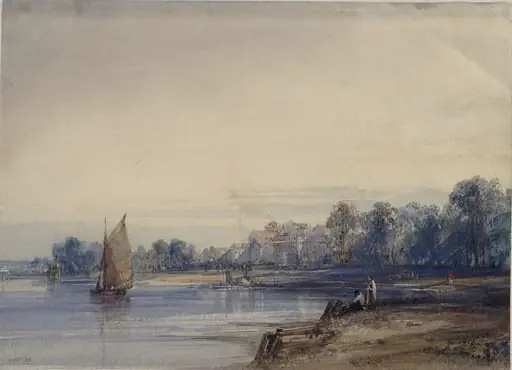 On the Thames
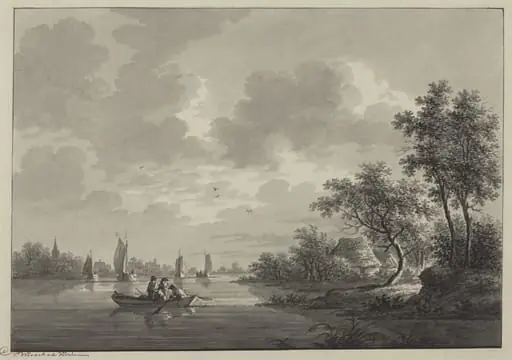 Ameide on the River Lek
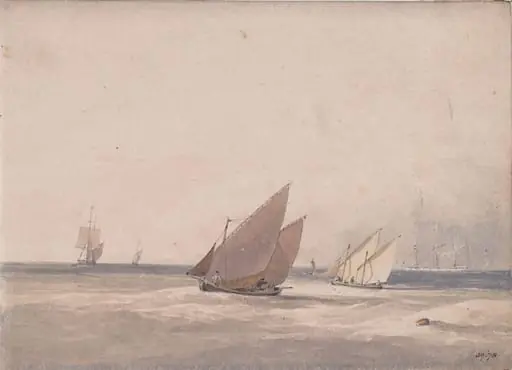 Leith Roads with Shipping
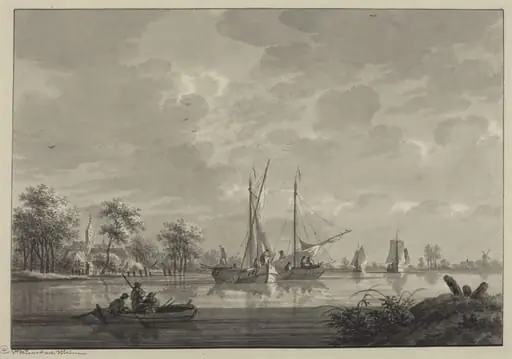 Tull on the River Waal
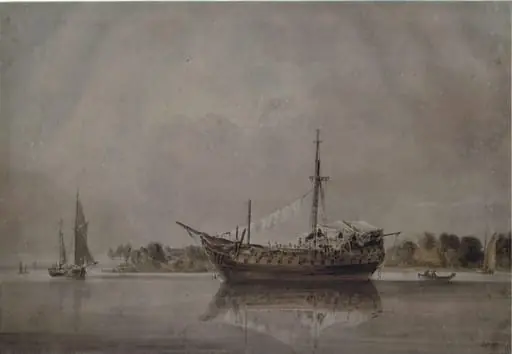 Dismantled vessel lying at anchor off a low point of land