Artwork
Landscape with Figures
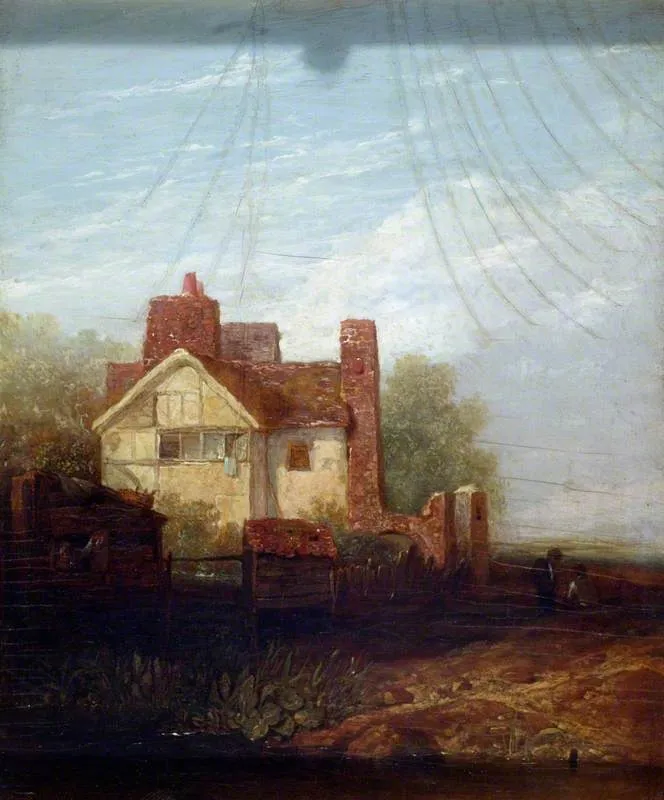
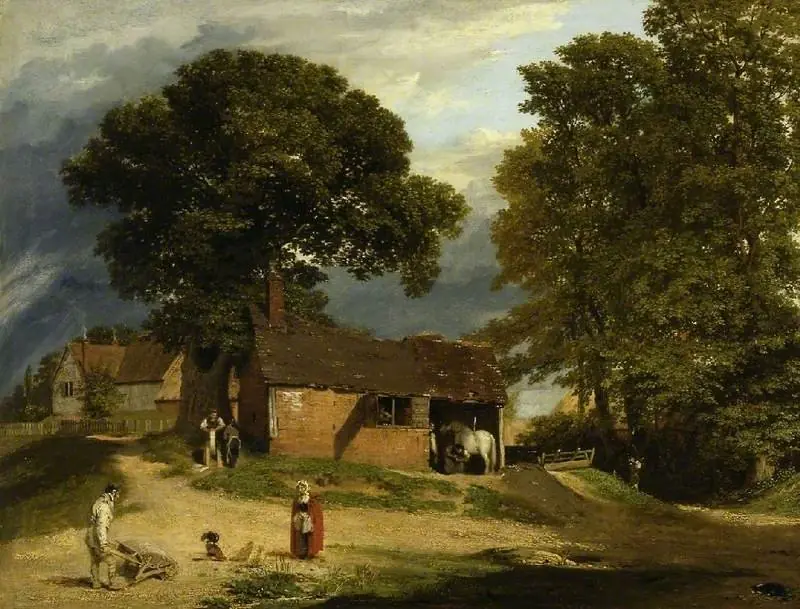
Landscape with Figures is an oil painting by William Mulready. It dates from 1834 and is held in the collection of the Victoria and Albert Museum.
About this work
Overview
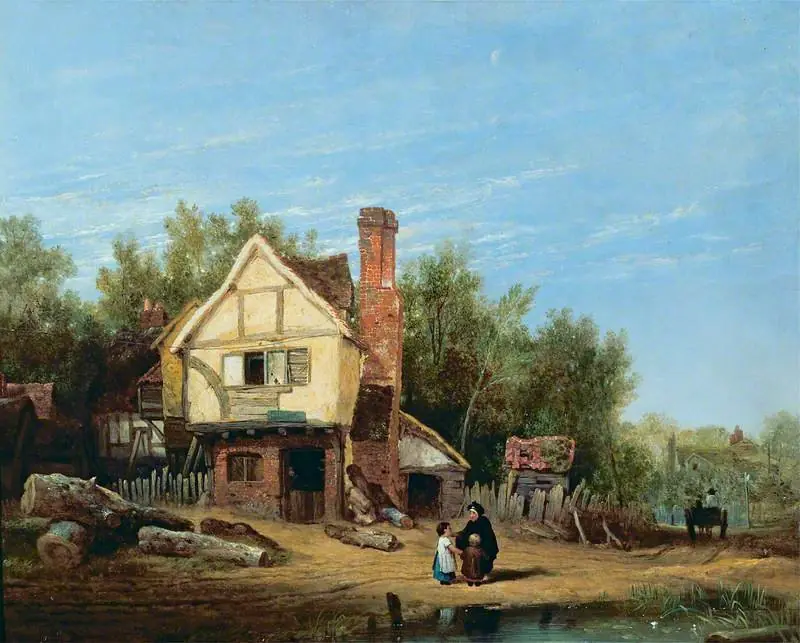
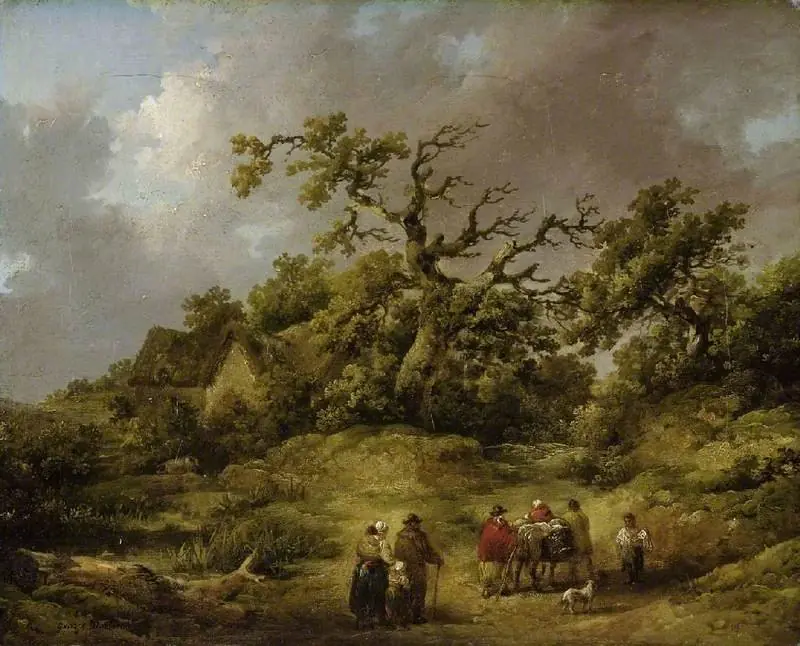
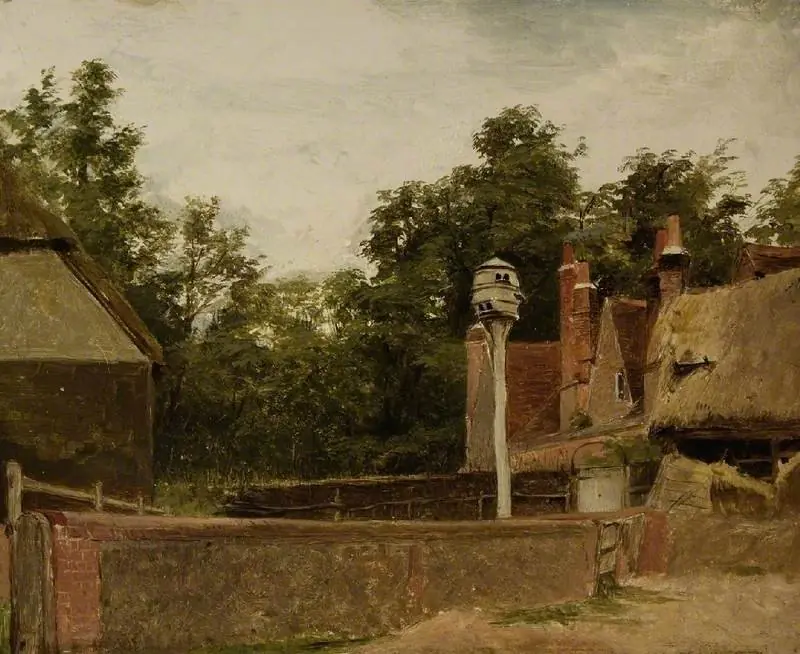
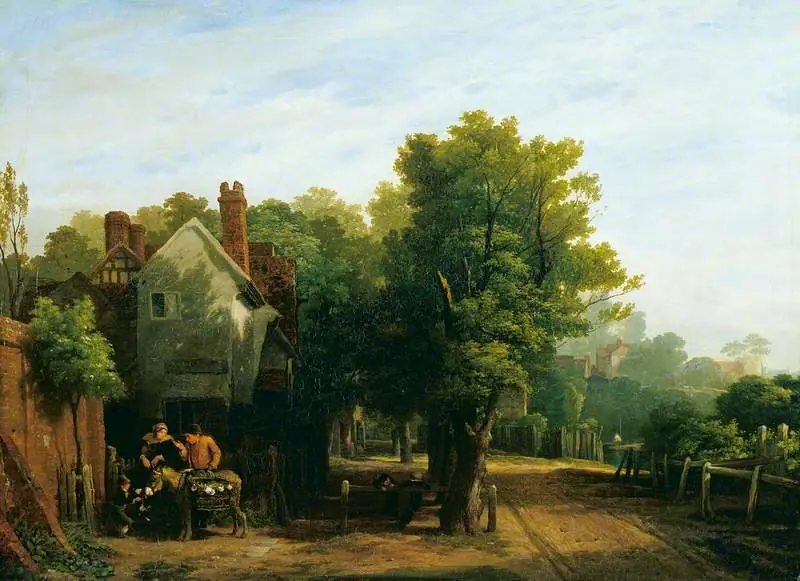
The work presents a quiet rural scene dominated by a substantial house of red brick and beige stone, set amid verdant foliage and a gently winding dirt track.
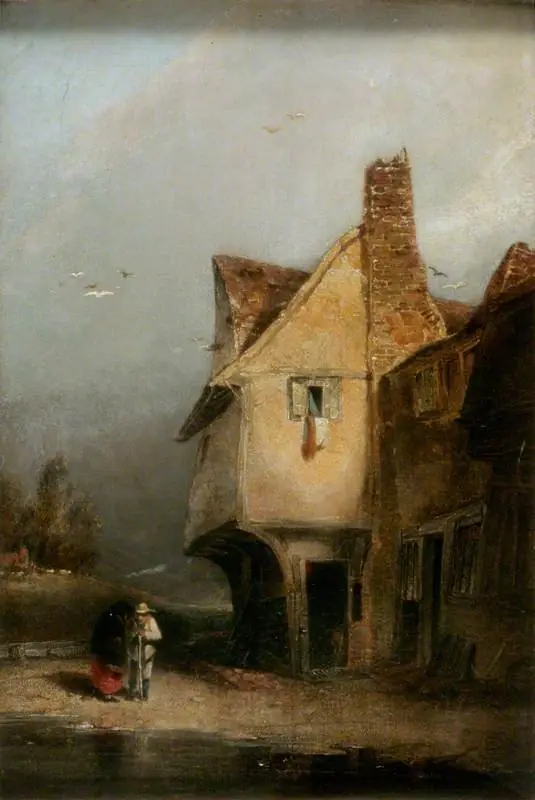
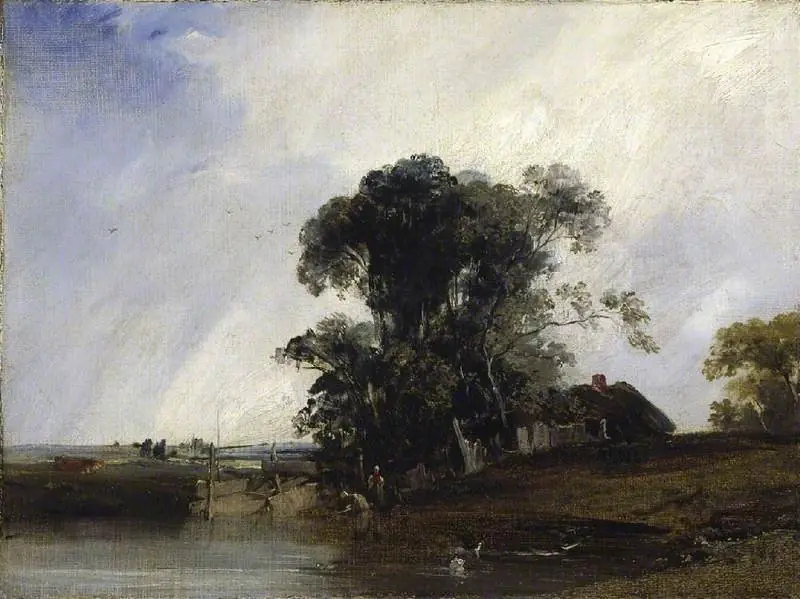
William Mulready’s oil painting, Landscape with Figures, dates to around 1834 and is part of the Victoria and Albert Museum’s collection. The work presents a quiet rural scene dominated by a substantial house of red brick and beige stone, set amid verdant foliage and a gently winding dirt track. A clear blue sky with scattered clouds completes the composition, conveying a calm, inviting atmosphere.
Subject & Meaning
The canvas centers on a domestic building that anchors the landscape, while a few distant figures suggest human presence without dominating the view. The surrounding trees, bushes, and the modest path hint at everyday rural life, emphasizing a harmonious relationship between architecture and nature. The overall mood is one of peaceful retreat, inviting contemplation of simple, bucolic pleasures.
Technique & Style
Mulready employs a restrained palette of warm earth tones, reds, beiges, and browns, balanced by soft blues in the sky. Brushwork is gentle and fluid, allowing foliage and sky to blend seamlessly while retaining enough definition to suggest depth. The composition uses linear perspective through the receding path, guiding the eye toward the house and reinforcing a sense of spatial order.
History & Provenance
Created in the early 1830s, Landscape with Figures entered the Victoria and Albert Museum’s holdings at an unspecified later date, where it remains on display. The painting reflects Mulready’s broader oeuvre of genre and landscape scenes, illustrating his skill in rendering tranquil, narrative-driven environments for a 19th‑century audience.
Artist & collection
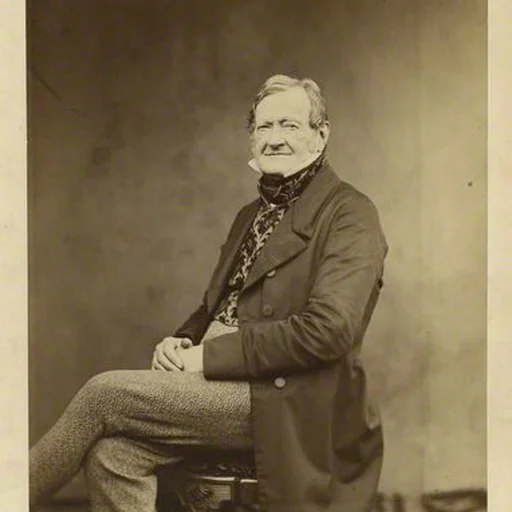
Artist
William Mulready was an Irish genre painter living in London. He is best known for his romanticising depictions of rural scenes, and for creating Mulready stationery letter sheets, issued at the same time as the Penny Black postage stamp.