Artwork
Man and Child (from McGuire Scrapbook)
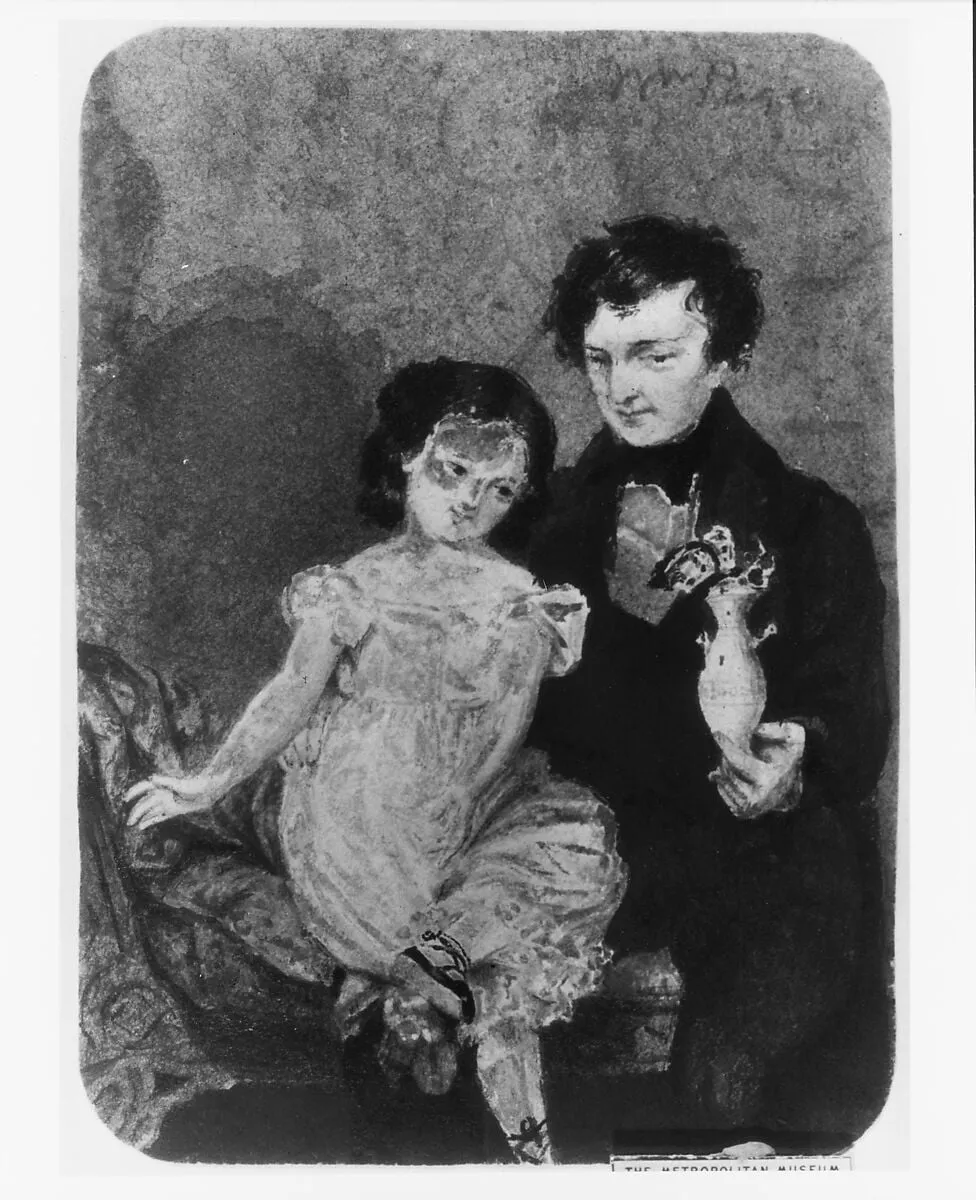
Man and Child (from McGuire Scrapbook) is a watercolor work on paper by the Realist artist William Page. It dates from 1848 and is held in the collection of the Metropolitan Museum of Art.
About this work
Overview
9 x 9 cm), was executed in watercolor, white gouache, and gum arabic on heavy weight brown wove paper.
Man and Child (from McGuire Scrapbook) is a watercolor portrait by American artist William Page (1811-1885), created in the mid-19th century and now held in The Metropolitan Museum of Art's American Wing. The small-scale work, measuring 5 1/16 by 3 9/16 inches (12.9 x 9 cm), was executed in watercolor, white gouache, and gum arabic on heavy weight brown wove paper. It entered the museum in 1926 as a gift from James C. McGuire and bears the object number 26.216.83. As a intimate double portrait from a prominent American portraitist, the piece offers insight into Page's domestic imagery and the broader tradition of American watercolor painting in the antebellum period.
Subject & Meaning
The composition depicts two figures seated in close proximity against an indistinct, atmospheric background. On the left, a young child wears a light, short-sleeved dress with ruffled edges and ribbon-tied shoes, her body angled toward the right with one hand resting on draped fabric. To her right sits an adult male in dark formal attire with a high collar and light cravat, holding a small vase containing several flowers; his head turns slightly downward toward the child. The relationship between the figures suggests a familial bond, likely father and daughter, though the specific identities remain unrecorded. The vase of flowers held by the male figure may carry conventional associations with domesticity, transience, or affection within 19th-century American visual culture. The downward gaze of the adult and the child's receptive posture create a psychologically tender moment, emphasizing intimacy and intergenerational connection rather than formal social presentation. The restricted palette of blacks, whites, and grays focuses attention on tonal relationships and emotional atmosphere rather than descriptive color, lending the scene a contemplative, almost memorial quality characteristic of certain strands of American romantic portraiture.
Technique & Style
Page employed watercolor as his primary medium, reinforced with white gouache for highlights and gum arabic as a binder, on heavy weight brown wove paper. The support's brown tone likely served as a middle value, allowing the artist to work both upward toward lights with opaque gouache and downward toward darks with fluid watercolor washes. Visual examination reveals soft, fluid brushwork with blended tonal transitions, particularly in the loosely defined, mottled background executed with atmospheric washes. The handling suggests confidence and economy, with forms suggested rather than minutely delineated. The rounded corners of the image indicate its origin as part of a bound album or scrapbook format, a common vehicle for intimate watercolor production in the period. The palette's restriction to prefix blacks, whites, and grays demonstrates Page's interest in tonal harmony over chromatic variety, aligning his practice with contemporaneous developments in both American and European watercolor traditions that emphasized mood and atmosphere. The small scale, at just over five inches in height, demands close viewing and reinforces the work's private, contemplative character.
History & Provenance
The work's specific date of creation is unknown, though it falls within Page's active career spanning 1830 to 1885. The title's parenthetical reference to the McGuire Scrapbook indicates its original context as part of a compiled album, a common format for preserving watercolors and drawings in 19th-century American culture. James C. McGuire, the donor, presented the work to The Metropolitan Museum of Art in 1926; the credit line records this as a gift, suggesting McGuire's role as collector or descendant of the original compiler. The object number 26.216.83 places it within a larger accession group from that year. The label visible at the bottom edge reading "THE METROPOLITAN MUSEUM" confirms its institutional framing after acquisition. No exhibition history is recorded in the available sources, and the work's presence in reproduction markets indicates its status as a public domain image within the museum's open access collection.
Context
William Page was born in Albany, New York in 1811 and died in Staten Island, New York in 1885, working primarily as a portraitist during a period of significant expansion in American visual culture. His career encompassed the era of the Hudson River School and the rise of photography, positioning his watercolor practice within a transitional moment in American art. The McGuire Scrapbook format reflects the widespread 19th-century practice of compiling intimate images in bound volumes, often by families or collectors, creating private archives of visual experience that paralleled the public exhibition culture of the period. Page's choice of watercolor rather than oil for this portrait aligns him with a growing American watercolor movement that gained institutional recognition through the founding of the American Watercolor Society in 1866. The Metropolitan Museum's classification of the work in The American Wing underscores its significance within narratives of American artistic identity and domestic culture. Scholarly attention to such scrapbook watercolors has increased as historians have turned to material culture and private forms of image-making to understand broader patterns of visual consumption and familial representation in the antebellum and Civil War eras.
Legacy
The work's afterlife has been shaped primarily by its institutional preservation and digital dissemination rather than by sustained individual critical attention. As part of The Metropolitan Museum of Art's open access collection, it has become available for unrestricted commercial and noncommercial use, entering the broader visual economy through reproduction markets. Multiple vendors now offer hand-painted oil reproductions, canvas prints, and peel-and-stick wall decals based on the image, a common fate for public domain museum holdings that extends their visibility while potentially distancing them from their original material and historical specificity. The work's presence in these markets testifies to a continuing appetite for 19th-century American imagery of domestic intimacy, even as the specific circumstances of its creation remain obscure. For art historians, Man and Child (from McGuire Scrapbook) represents a valuable, if modest, document of William Page's watercolor practice and the broader culture of album-based image preservation in antebellum America, offering material for ongoing research into the social functions of small-scale portraiture and the gendered dynamics of familial representation.
Artist & collection


 Ferdinand Sands and his Son Joseph
 The children of the 6th Lord Essex
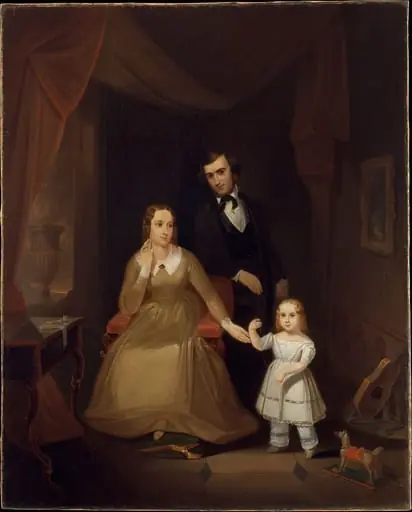 The Williamson Family
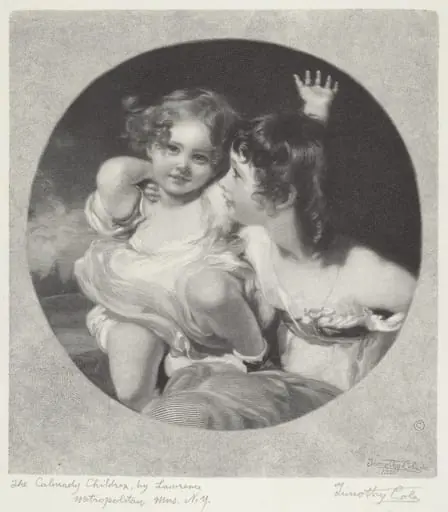 The Calmady Children
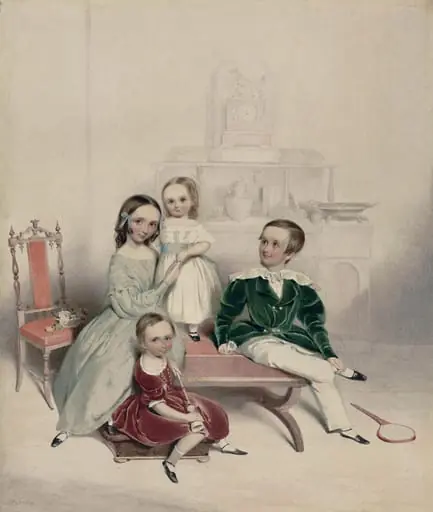 A group of children
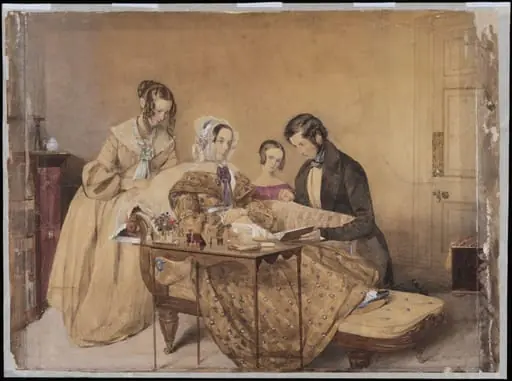 Portrait of the Maurice Family in Lloran House, High Street Marlborough, Wiltshire
 Lady Louth with her daughter
 Portret van een voornaam man met zijn dochter en een jachthond
 Quand on a un père farceur
 Virginia A. and George Simmons
 Gruppebillede af kunstnerens børn
- Two Children