Artwork
Franconia Notch, New Hampshire
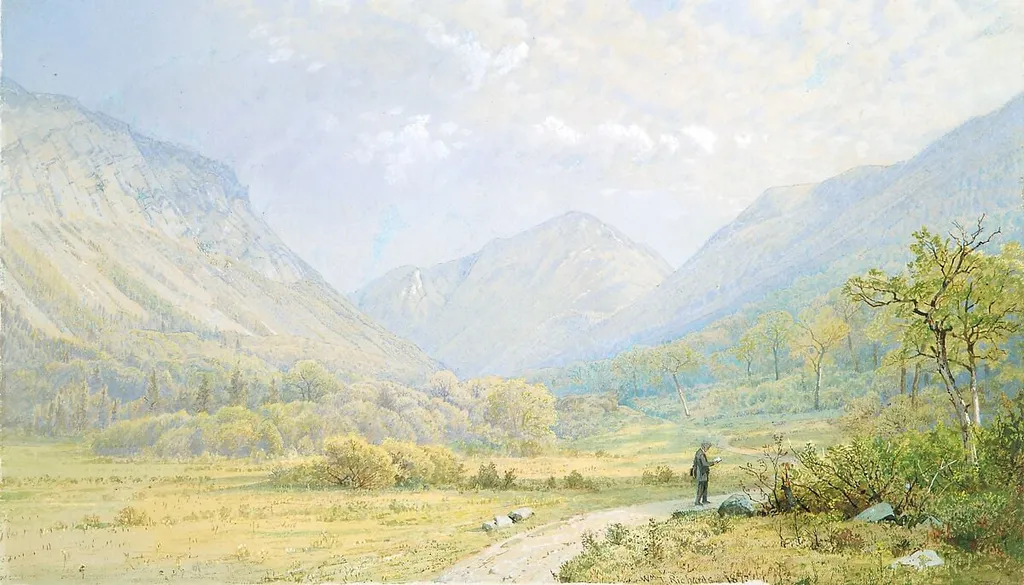
Franconia Notch, New Hampshire is a watercolor work on paper by the Hudson River School artist William Trost Richards. It dates from 1872 and is held in the collection of the Metropolitan Museum of Art.
About this work
The watercolor looks almost like a photograph, crisp edges, soft light, because Richards layered thin, see-through washes, a method called glazing.
You see a quiet road winding through a mountain pass, two men walking beside it, and mist clinging to the rocky slopes.
Richards painted this in 1872, right after the Civil War, when Americans were eager to claim wild places as their own. The watercolor looks almost like a photograph, crisp edges, soft light, because Richards layered thin, see-through washes, a method called glazing.
If you like this, look up landscapes next.
Subject & Meaning
Franconia Notch, New Hampshire is a landscape depiction of the Franconia Notch mountain pass, rendered in watercolor, gouache, and graphite. The scene centers on the natural topography of the notch, a mountain pass in New Hampshire, with the rugged terrain of the White Mountains forming the principal visual subject. A road winds through the composition, providing a human pathway into the wilderness, while a small figure of a man appears within the landscape, emphasizing the scale of the surrounding mountains.
This pairing of a lone traveler and a road with the imposing mountain scenery reflects the conventions of nineteenth-century American landscape art, in which the natural majesty of a specific locale is celebrated while a human presence suggests accessibility and the experience of place. The work thus represents both the topographical identity of Franconia Notch and the broader Romantic ideal of the American wilderness as a site of awe and contemplation.
Technique & Style
Created in 1872, Franconia Notch, New Hampshire is executed in watercolor, gouache, and graphite on light tan wove paper. This combination of transparent and opaque pigments on a textured support allows for a detailed rendering of the landscape genre. The work measures 20.8 by 36.2 centimeters and depicts a mountainous scene featuring a road and a solitary figure. The formal qualities emphasize the natural topography of the notch through precise draftsmanship and layered color application.
History & Provenance
William Trost Richards painted Franconia Notch, New Hampshire in 1872, employing watercolor, gouache and graphite on light‑tan wove paper (1). The work measures 20.8 cm by 36.2 cm and is classified as a landscape within the American Wing (1). It entered the collection of the Metropolitan Museum of Art, where it remains on view (2).
The painting depicts a man on a road beside a mountain in Franconia Notch, a scene recorded in the museum’s catalogue (2). No documentation of a specific commission for the piece is known.
The watercolor and gouache Franconia Notch, New Hampshire by William Trost Richards (1872) is held by The Metropolitan Museum of Art, New York, with accession number 1975.1.219. The work entered the museum’s collection in 1975 through an acquisition that postdates its initial creation by more than a century. As of the documented records, no exhibition history for this specific work has been recorded in the cited sources.
Legacy
The painting’s placement in The American Wing of the Metropolitan Museum of Art has elevated its status as a representative work of 19th‑century American landscape painting. As part of the Met’s collection since 1872, the work is frequently referenced in scholarship on American Romanticism, reinforcing its reputation as a key example of the genre. Its depiction of Franconia Notch, New Hampshire, continues to be reproduced in exhibition catalogs and academic texts, underscoring its lasting influence on the perception of New England scenery.
Overview
William Trost Richards's 1872 watercolor, Franconia Notch, New Hampshire, captures a serene mountain pass. Executed with watercolor, gouache, and graphite on light tan wove paper, the artwork presents a quiet road winding through the landscape, accompanied by two figures. Mist gently envelops the rocky slopes, contributing to the atmospheric quality of this American scene.
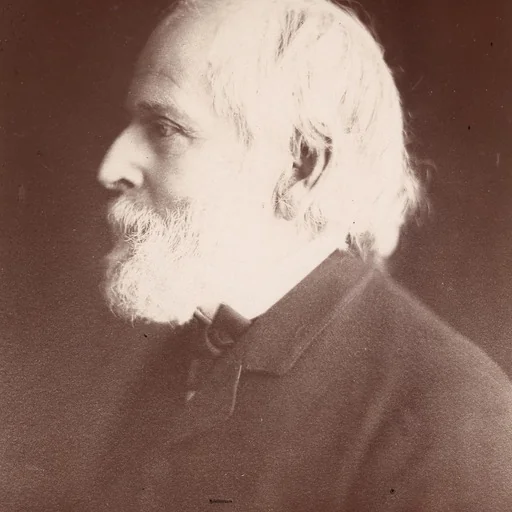
Artist & collection

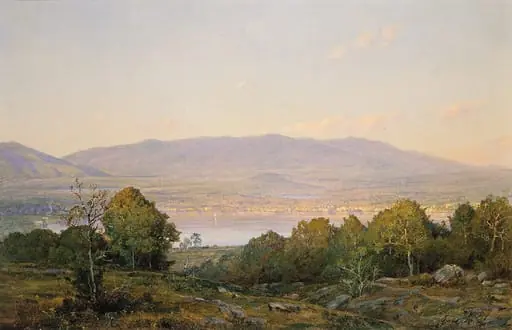
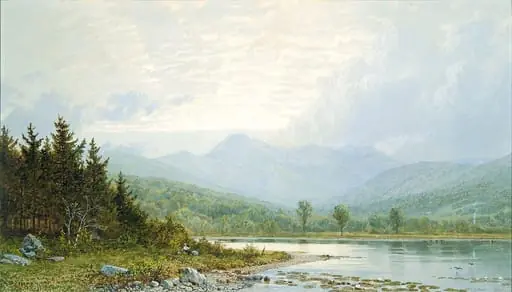
- Sunset on Mount Chocorua, New Hampshire
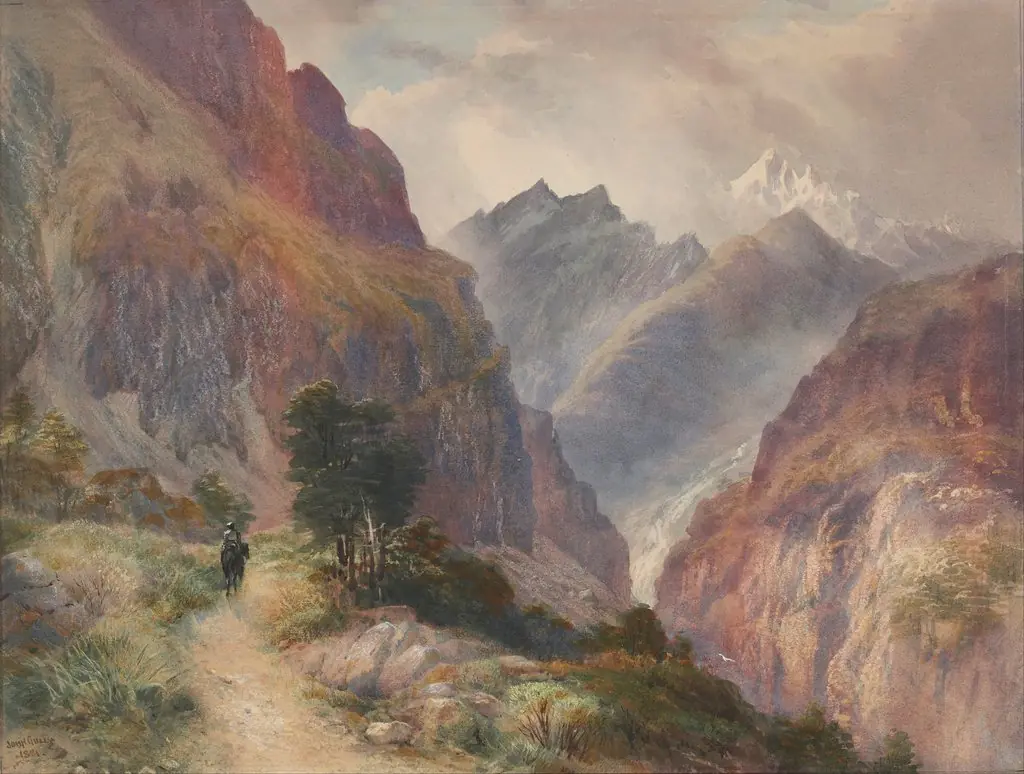 In the Southern Alps
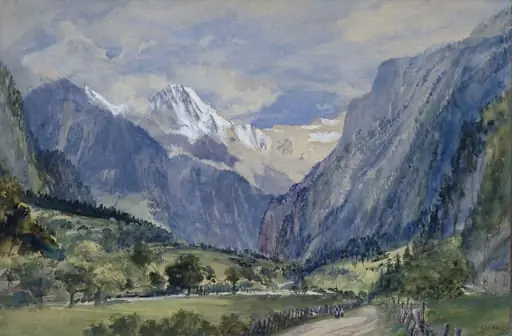 The Jungfrau from Interlaken in Switzerland
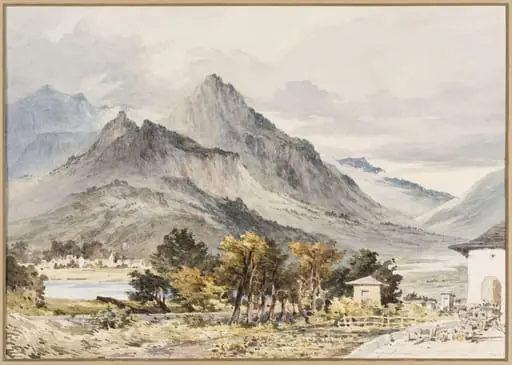 View of Naters from Brieg Switzerland
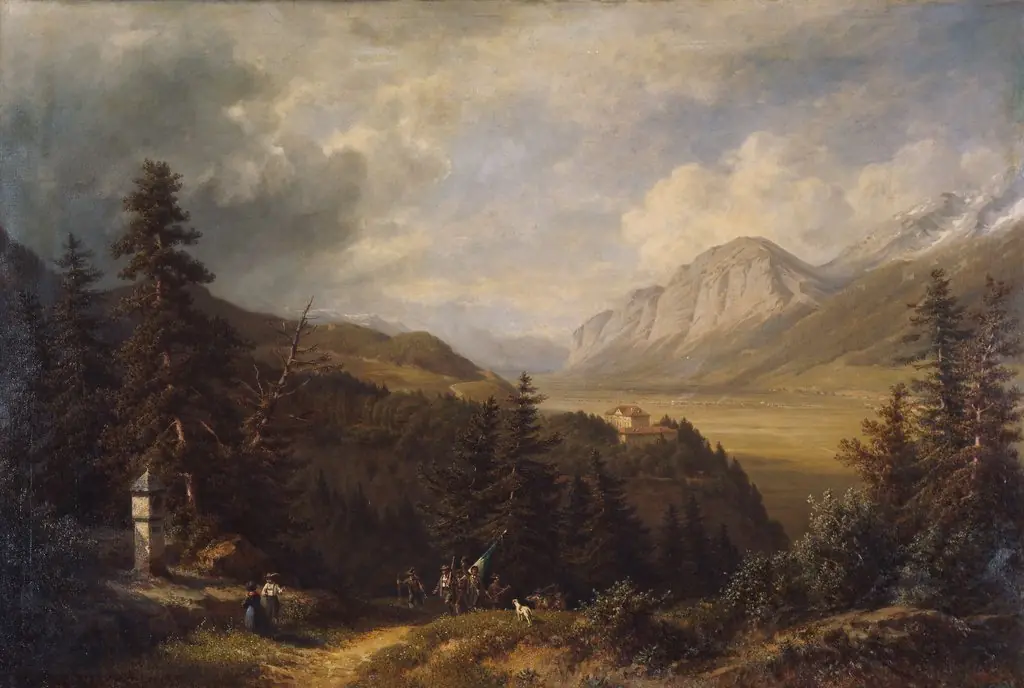 Bergisel
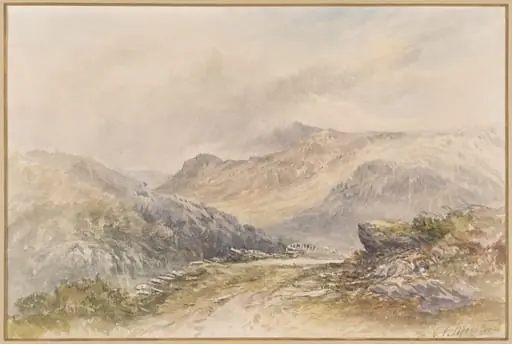 View on the Conway
 Llanrhychwyn, near Trefriw, North Wales
 Landscape with distant mountains
 Rocky landscape
 The Mount Washington Range, from Mount Kearsarge
 The Trifaen, Llyn Ogwen
 Mountain View