Artwork
Bouquet Valley, Adirondack Mountains
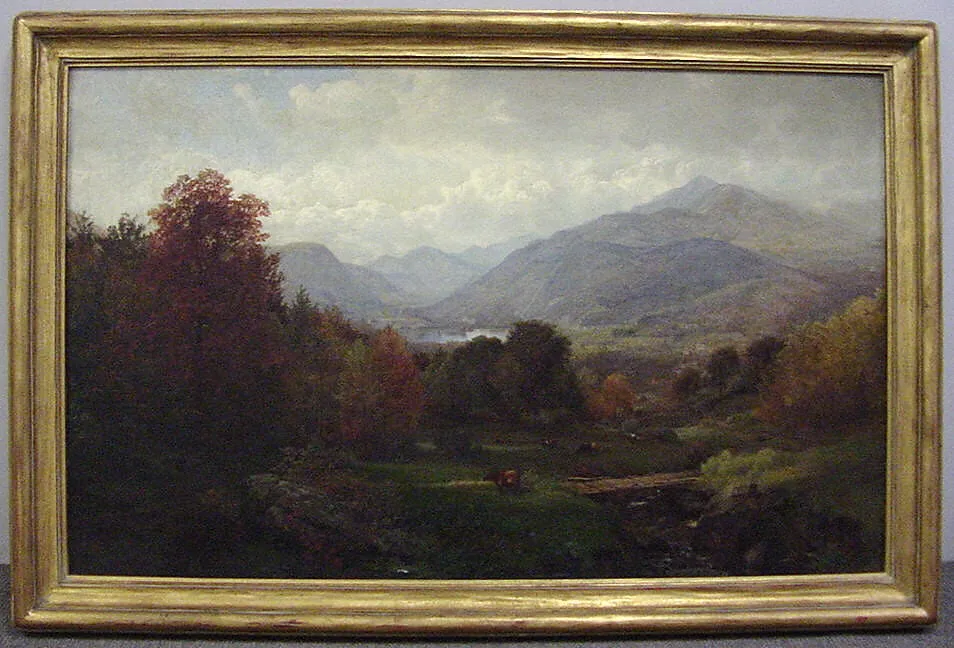
Bouquet Valley, Adirondack Mountains is an oil painting by the Hudson River School artist William Trost Richards. It dates from 1877 and is held in the collection of the Metropolitan Museum of Art.
About this work
A quiet valley in upstate New York: steep green hills, a winding river, and a sky full of soft clouds. Richards painted the whole thing outdoors in 1877, when most artists still finished big canvases in the studio. His tiny brushstrokes make the leaves shimmer as if moving in the breeze.
Subject & Meaning
The painting depicts a broad Adirondack valley framed by distant mountains and dense forest, a scene Richards recorded during summer sketching trips.
The painting depicts a broad Adirondack valley framed by distant mountains and dense forest, a scene Richards recorded during summer sketching trips. Its iconography emphasizes the unspoiled character of the region, with tall evergreens and deciduous foliage framing a sunlit meadow that recedes toward layered ridges. The composition reads as a celebration of the Catskill–Adirondack wilderness at a moment of rising American environmental consciousness, aligning with contemporaneous efforts to preserve such landscapes.
The work’s quiet grandeur, devoid of human presence, foregrounds the sublime scale and ecological richness of the valley, conveying a Romantic ideal of nature as both refuge and national patrimony.
Technique & Style
The work is an oil painting on canvas executed in 1877 by William Trost Richards. The handling combines precise, controlled brushwork with a subdued palette to render the Adirondack landscape, emphasizing the dense forest and layered mountain ridges. Richards employs fine, linear detailing in foliage and rock formations while modulating tone to articulate atmospheric recession.
The composition’s formal structure directs the eye through a central valley flanked by ascending slopes, reinforcing a balanced, almost geometric organization within the natural scene. No evidence of significant abrasion or overpainting is recorded, suggesting the canvas remains in stable condition.
History & Provenance
Bouquet Valley, Adirondack Mountains is an oil-on-canvas landscape painting created by William Trost Richards in 1877. The work measures 58.4 cm in height and 94 cm in width. It currently resides in the collection of the Metropolitan Museum of Art, where it is housed within the American Wing.
The painting depicts a mountainous landscape featuring trees, characteristic of Richards' focus on American scenery during the late nineteenth century. While the specific commission details and the full chain of ownership prior to its museum acquisition are not detailed in the available records, the work's creation is firmly dated to 1877. Its inclusion in the American Wing signifies its recognized status within the canon of American landscape art.
Bouquet Valley, Adirondack Mountains is held by the Metropolitan Museum of Art, where it belongs to the institution's American Wing. The painting is catalogued in the museum's collection as an oil-on-canvas landscape by William Trost Richards, dated 1877, measuring 58.4 by 94 centimeters. The sources confirm its location and collection assignment but do not provide a specific accession number or inventory identifier, nor do they document any exhibition history, loans, or prior displays of the work.
Legacy
Bouquet Valley, Adirondack Mountains (1877) by William Trost Richards, an oil on canvas landscape, is housed in the Metropolitan Museum of Art’s American Wing, where its inclusion among canonical 19th‑century American vistas reinforces the artist’s standing within the genre. The work’s meticulous rendering of mountain terrain and foliage exemplifies the Hudson River School’s influence while anticipating later naturalist approaches, contributing to the broader narrative of American landscape painting that shaped subsequent generations of artists. Its continued display underscores its reputation as a representative piece of American artistic identity.
Overview
William Trost Richards's Bouquet Valley, Adirondack Mountains captures a tranquil scene in upstate New York. Executed in oil on canvas in 1877, the painting depicts a serene valley characterized by verdant, steep hillsides, a meandering river, and a sky filled with soft, diffused clouds. This work exemplifies a detailed observation of nature, reflecting the artist's engagement with the American landscape.
Context
Created during a period when American landscape painting was a prominent genre, this work contributes to a rich tradition of artists interpreting the nation's natural beauty. Its inclusion in collections focused on American art, such as the American Wing, underscores its significance within this artistic lineage. Richards's commitment to direct observation in Bouquet Valley also reflects evolving artistic practices of the late 19th century.
Artist & collection


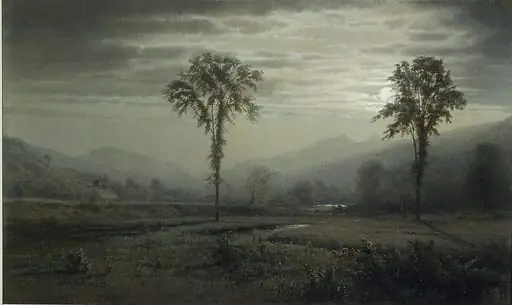
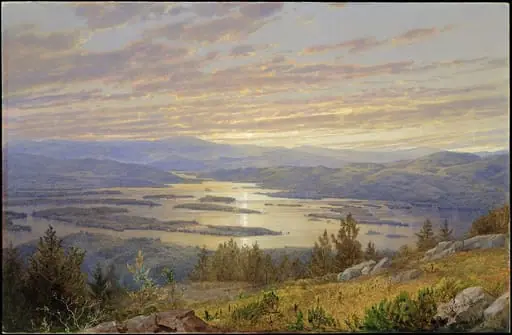

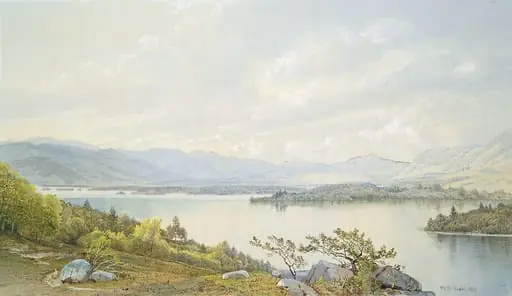
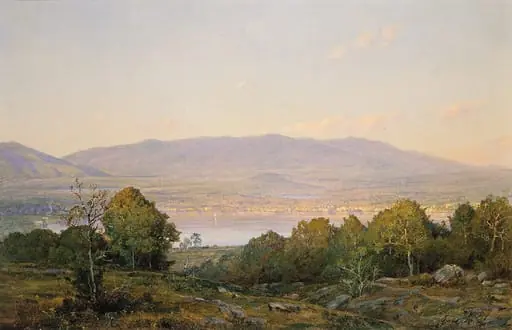

- Mount Washington, New Hampshire
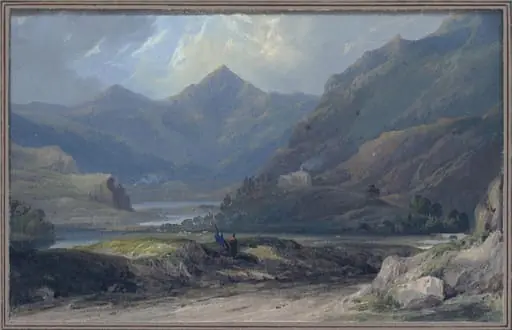 Capel Curig, North Wales
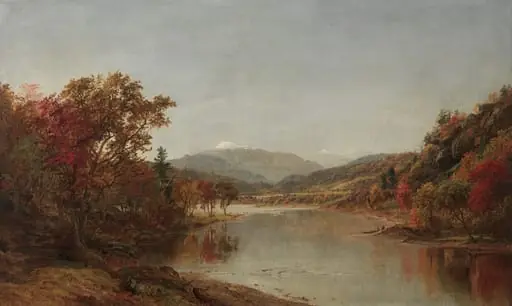 Mount Washington, New Hampshire
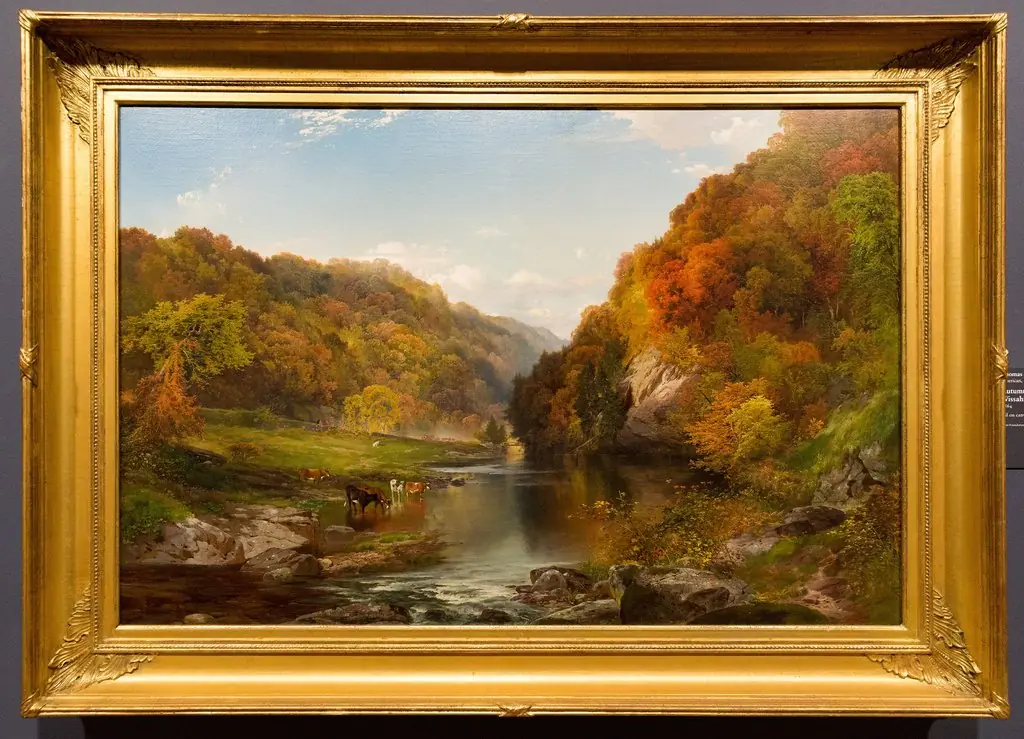 Autumn Afternoon, the Wissahickon
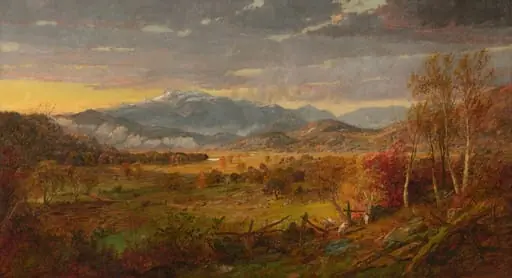 View of Mt. Washington
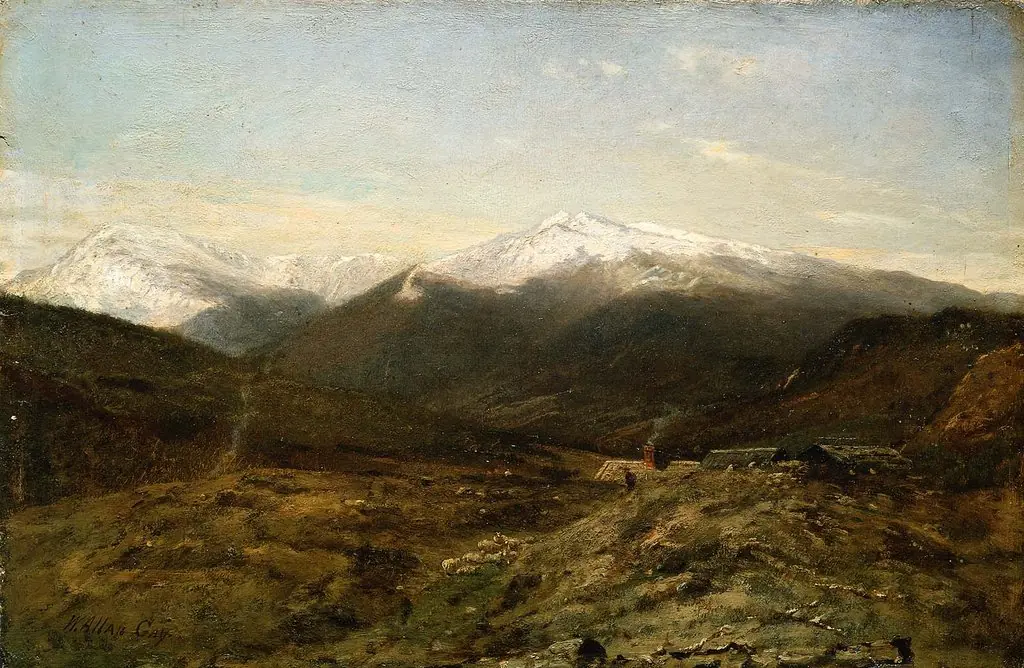 Presidential Range in Early Autumn
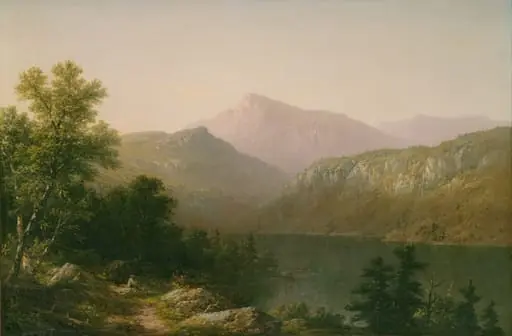 View on Lake George
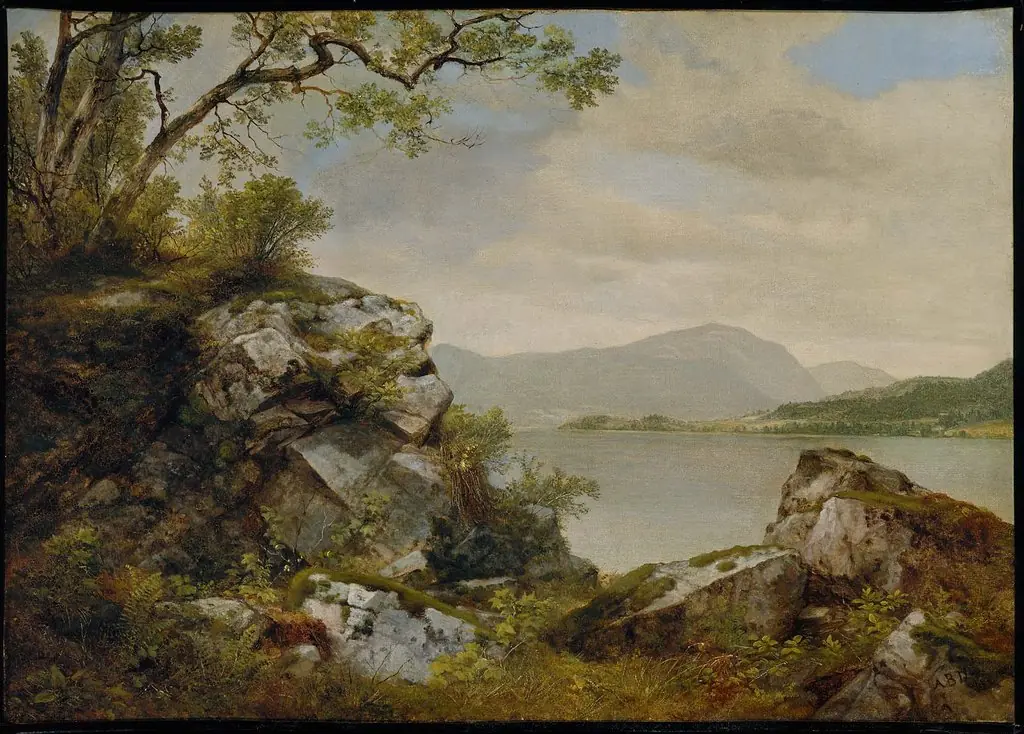 Lake George, New York
 Hudson River Landscape
 Landscape near Blokhus, Jutland
 Langdale peaks from Windermere
 Landscape