Artwork
New Jersey Beach
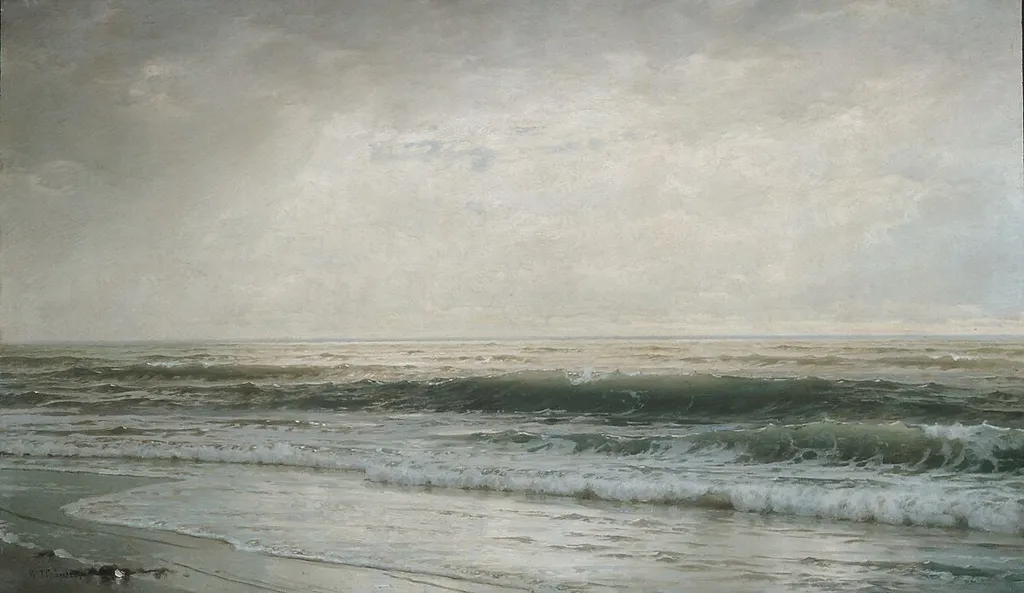
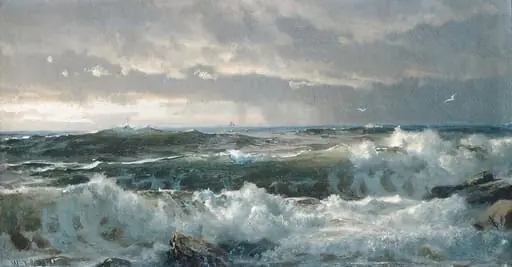
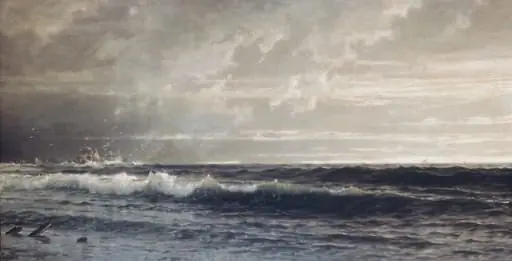
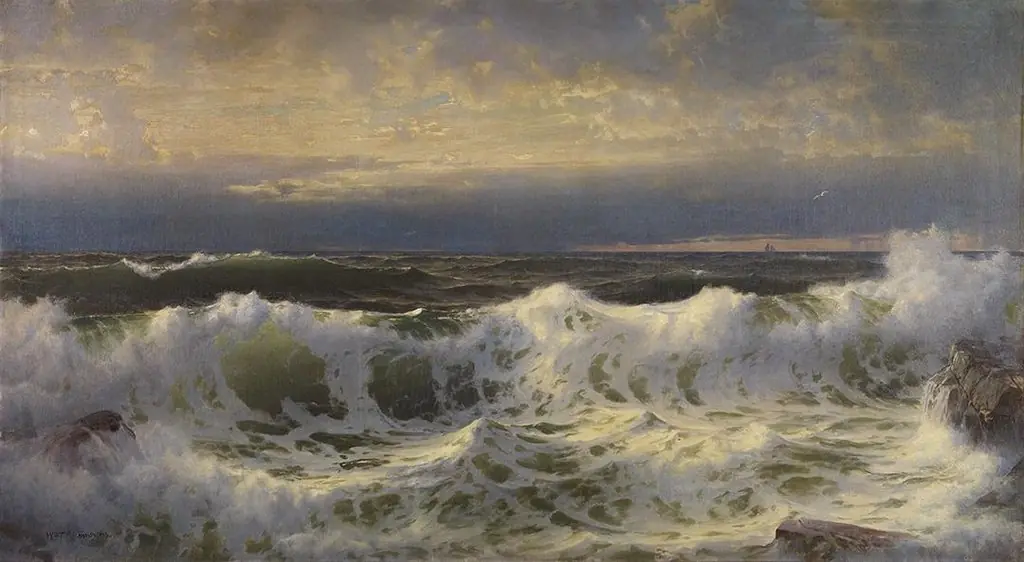
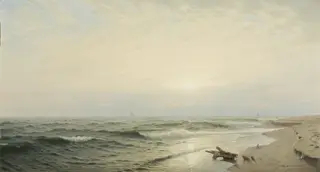
New Jersey Beach is an oil painting by the American Impressionist artist William Trost Richards. It dates from 1901 and is held in the collection of the Metropolitan Museum of Art.
- Accession no.
- 32.73.1
- Credit line
- Gift of Mrs. William T. Brewster, 1932
About this work
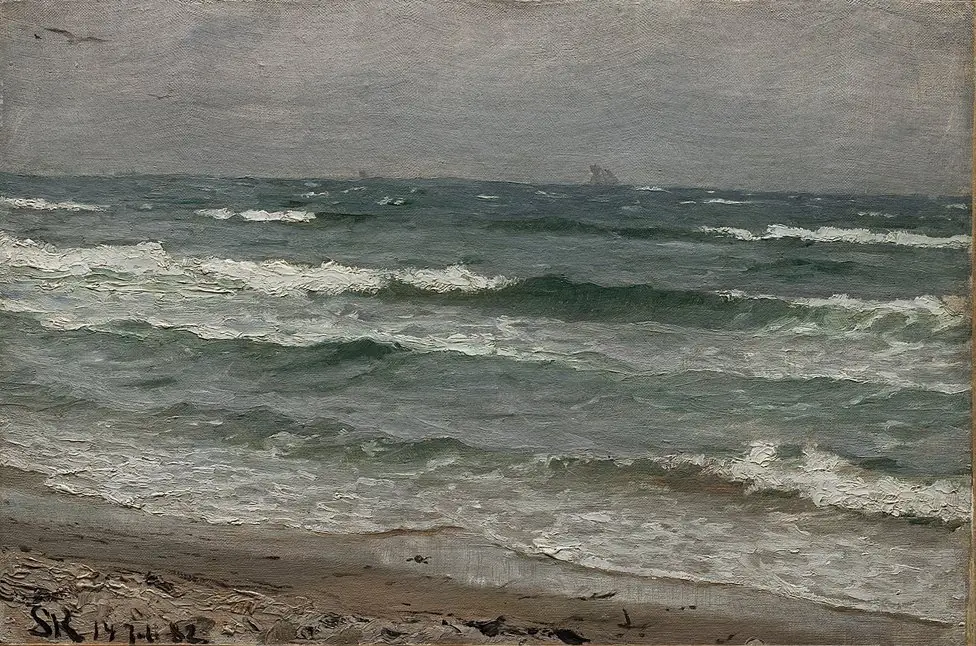
A quiet stretch of sand, low waves, and a pale sky, with no people and no drama. Richards painted it in 1901, when many artists chased storms and sunsets; he chose a plain day instead and let the light do the work. Tiny brushstrokes build the water's shimmer without flashy color.
Subject & Meaning
The painting New Jersey Beach (1901) by William Trost Richards portrays a coastal shoreline defined by a wind‑driven sea surface, situating the work within the marine‑art tradition and the broader American landscape genre. By rendering the beach as a mutable expanse of sand and surf, Richards emphasizes the natural forces that shape the Jersey coast, suggesting both the region's scenic appeal and the fleeting quality of coastal light. The composition functions as an icon of early‑20th‑century American seaside scenery, reflecting contemporary interest in documenting and idealizing shoreline environments.
Technique & Style
Its formal composition emphasizes a wind‑driven shoreline, integrating beach, marine art, and wave motifs into a cohesive atmospheric scene.
William Trost Richards executed New Jersey Beach in 1901 using oil paint applied to a canvas support. The work measures 71.8 cm by 122.6 cm and belongs to the American Wing's landscape genre at the Metropolitan Museum of Art. Its formal composition emphasizes a wind‑driven shoreline, integrating beach, marine art, and wave motifs into a cohesive atmospheric scene.
The painting's handling reflects Richards's attention to atmospheric effects and precise brushwork, while its stylistic approach combines realistic detail with a subtle tonal harmony characteristic of late‑19th‑century American seascape painting.
History & Provenance
William Trost Richards created the oil-on-canvas painting New Jersey Beach in 1901. Currently held in the collection of the Metropolitan Museum of Art's American Wing, the piece measures 71.8 cm in height and 122.6 cm in width. The painting remains part of the museum's permanent holdings, representing Richards's engagement with coastal subjects during the early 20th century.
Context
William Trost Richards painted New Jersey Beach in 1901, an oil on canvas landscape that records a wind‑driven shoreline. The work is catalogued in The American Wing of the Metropolitan Museum of Art, where it is classified as a marine‑genre painting that emphasizes wave dynamics and beach ambience. Contemporary scholarship identifies the piece as an American example of beach genre painting and links it to Richards's broader fascination with atmospheric effects in coastal settings, positioning him within the Luminist tradition.
Overview
William Trost Richards's "New Jersey Beach," an oil on canvas from 1901, presents a tranquil coastal scene. The painting depicts a quiet expanse of sand meeting gentle, low waves under a pale sky, devoid of human presence or dramatic meteorological events. This work exemplifies a serene approach to marine art, characteristic of the artist's later career, offering a contemplative view of the natural environment.
Artist & collection