Artwork
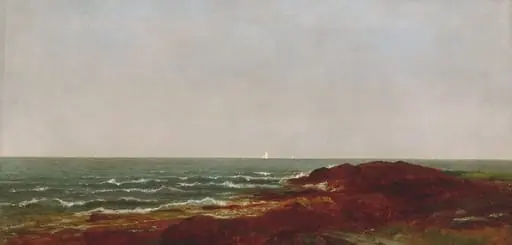
Near Land's End, Cornwall
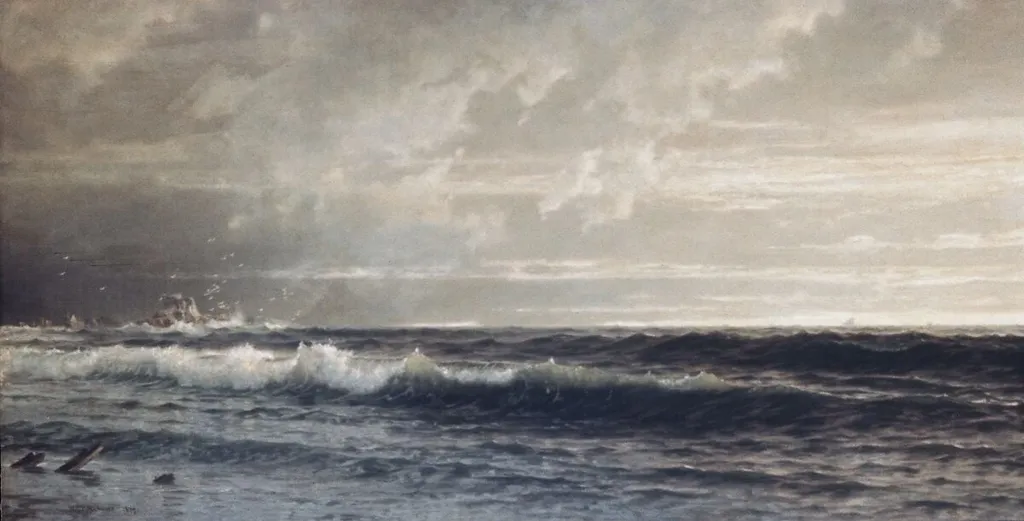
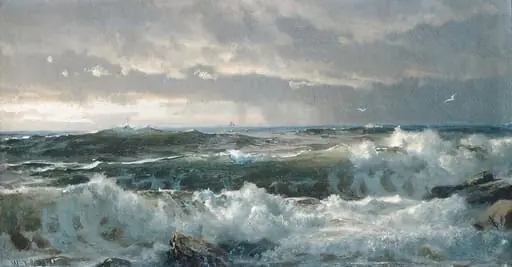
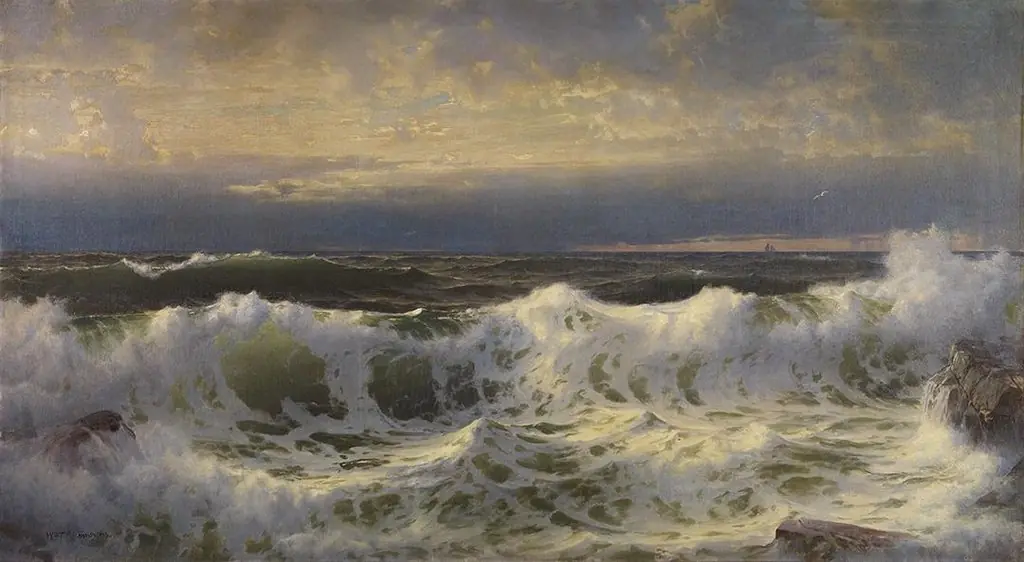
Near Land's End, Cornwall is an oil painting by the American Impressionist artist William Trost Richards. It dates from 1879 and is held in the collection of the Metropolitan Museum of Art.
- Accession no.
- 50.9
- Credit line
- Gift of T. S. Matthews, 1950
About this work
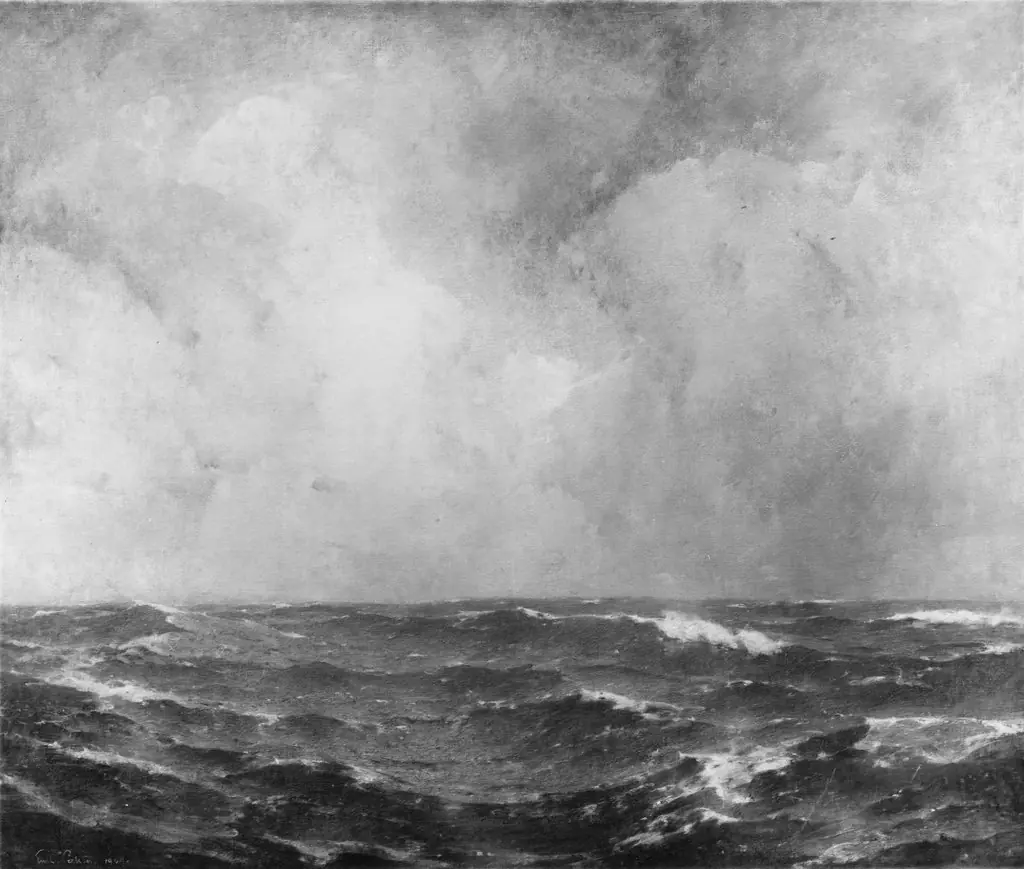
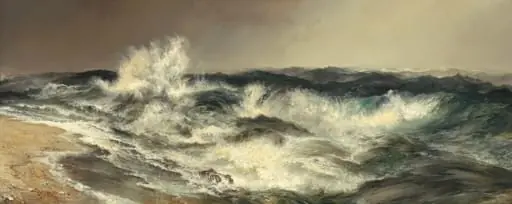
You see a wild ocean under a stormy sky, waves crashing against dark cliffs near Land’s End, Cornwall.
You see a wild ocean under a stormy sky, waves crashing against dark cliffs near Land’s End, Cornwall.
Richards painted this in 1879, when most artists stayed indoors. He lugged his easel to the edge of the cliffs, working fast to catch the light before the rain came. The tiny white flecks in the waves are actually thick blobs of paint, you can almost feel the spray.
If you like this, look up other works in the subject seascapes.
Subject & Meaning
The painting depicts a sweeping view of the rugged Cornish coastline near Land's End, emphasizing the raw power of the sea and sky. The composition centers on towering cliffs and crashing waves, rendered with meticulous detail to evoke the sublime forces of nature. The turbulent waters and swirling winds symbolize the uncontrollable, majestic energy of the ocean, a recurring theme in Richards's marine works.
The expansive sky, often overcast, reinforces a sense of isolation and the sublime, inviting contemplation of nature's dominance over human presence.
Technique & Style
Created in 1879, Near Land's End, Cornwall is executed in oil paint on canvas, mounted on masonite for additional support. The painting measures 59.1 cm in height and 112.4 cm in width. As a marine landscape, Richards employs oil paint to depict wind waves and coastal scenery with the characteristic detail of the American landscape tradition.
The work is held in the American Wing of the Metropolitan Museum of Art, reflecting its status as a significant example of 19th-century American marine art.
History & Provenance
Near Land's End, Cornwall was executed in 1879 by American landscape artist William Trost Richards, an oil on canvas mounted on masonite, measuring 59.1 × 112.4 cm. The work is currently held in the American Wing of the Metropolitan Museum of Art in New York. No documentation indicates a specific commission for the piece; the sources do not record the provenance chain prior to its entry into the museum's collection.
Overview
Near Land's End, Cornwall (1879) by William Trost Richards is a landscape oil painting depicting the rugged Atlantic coastline of Cornwall, England. The composition features a turbulent sea with white-capped waves crashing against dark, precipitous cliffs under a brooding, storm-laden sky. Richards, a prominent figure associated with the Hudson River School and American Luminism, executed this work during a period of intense plein air practice.
Unlike many contemporaries who relied on studio sketches, Richards frequently traveled to remote coastal locations to capture the immediate effects of light and weather directly from nature. Painted in 1879, the work exemplifies his mature style, characterized by meticulous attention to geological detail and atmospheric realism. The artist employed rapid brushwork to render the transient movement of the surf and the shifting quality of the light before the weather could change.
This piece reflects Richards' dedication to the sublime power of nature and his technical mastery in translating the specific drama of the British coast onto canvas, bridging American landscape traditions with European coastal subjects.
Artist & collection