Artwork
Purgatory Cliff
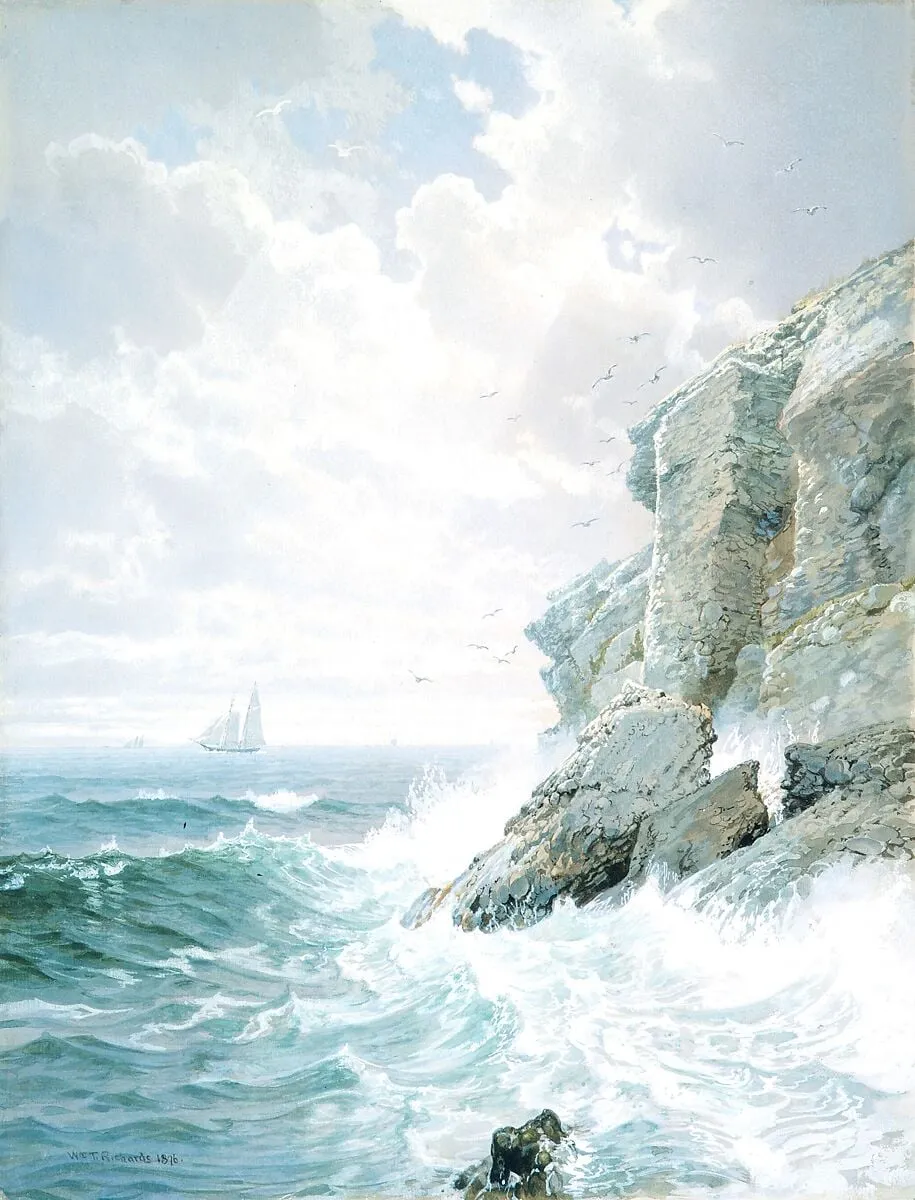
Purgatory Cliff is a watercolor work on paper by the Hudson River School artist William Trost Richards. It dates from 1876 and is held in the collection of the Metropolitan Museum of Art.
- Accession no.
- 67.55.141
- Credit line
- Bequest of Susan Dwight Bliss, 1966
About this work
Technique & Style
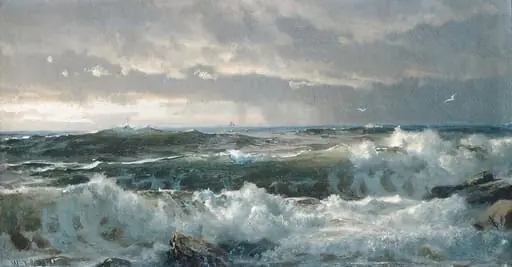
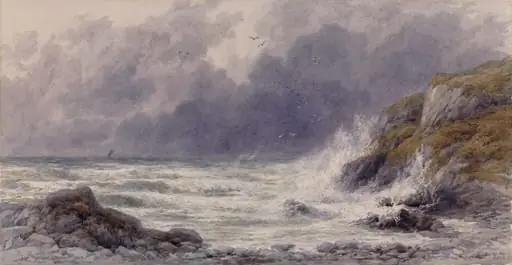
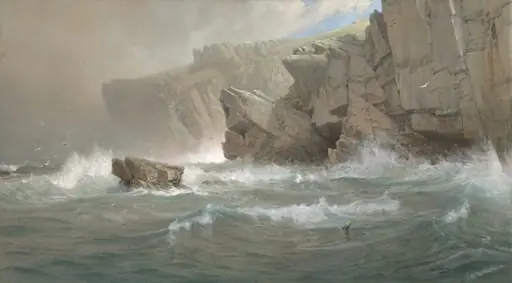
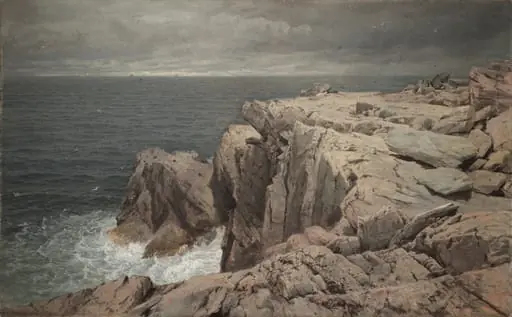
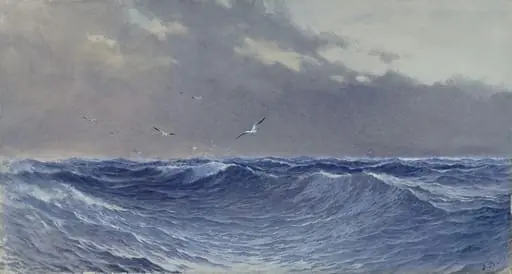
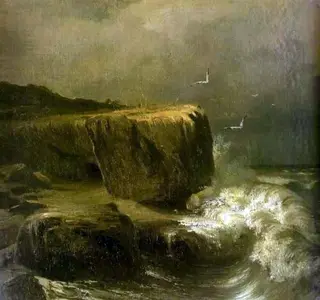
As a landscape, the composition formally depicts a dramatic cliff face rising above the ocean, with a boat situated within the waters.
Created in 1876, Purgatory Cliff is executed in watercolor and gouache on a support of light tan wove paper. The work measures 33 cm in height and 25.4 cm in width. As a landscape, the composition formally depicts a dramatic cliff face rising above the ocean, with a boat situated within the waters.
The combination of transparent watercolor with opaque gouache allows for varied textural effects, capturing the specific geological and atmospheric qualities of the coastal scene.
History & Provenance
William Trost Richards created the watercolor and gouache work Purgatory Cliff in 1876. Executed on light tan wove paper, the piece depicts a coastal scene featuring a boat, a cliff, and the ocean. The artwork is currently held in the collection of the Metropolitan Museum of Art, where it is classified within the American Wing. The work measures 33 cm in height and 25.4 cm in width.
Purgatory Cliff is held in the collection of the Metropolitan Museum of Art, where it is classified under the American Wing. The work, created in 1876, measures 33 cm in height and 25.4 cm in width. While the museum's acquisition confirms its current location, the provided records do not list a specific inventory or accession number for the piece. Furthermore, no details regarding the artwork's exhibition history are available in the current documentation.
Overview
William Trost Richards’ 1876 work Purgatory Cliff is a modest‑sized watercolor and gouache composition on light‑tan wove paper. The scene presents a small boat caught on a steep, cresting wave beneath a turbulent sky, with a cliff rising in the background.
Subject & Meaning
The painting captures a moment of maritime tension: a lone vessel is tilted by a foaming wave, suggesting the precarious balance between human endeavor and the sea’s power. The cliff and stormy atmosphere amplify the sense of isolation and the precariousness of the journey.
Context
During the late nineteenth century, American landscape painters like Richards often sought to depict the sublime aspects of nature. Purgatory Cliff reflects this interest, focusing on the dramatic interaction of sea, sky, and rock rather than a panoramic vista.
Artist & collection