Artwork
A Rocky Coast
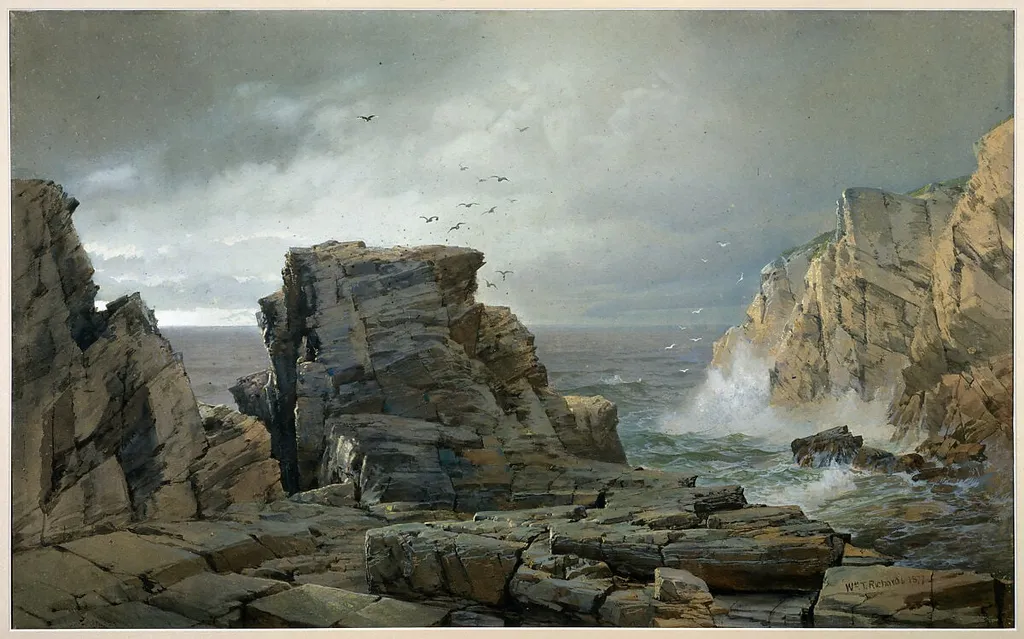
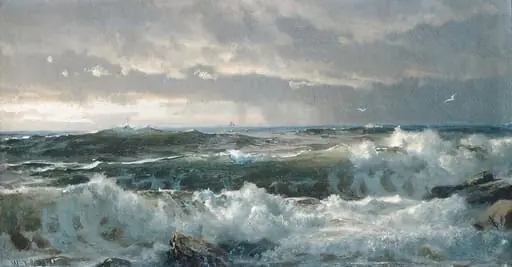
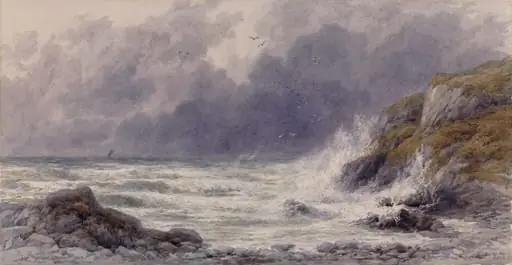
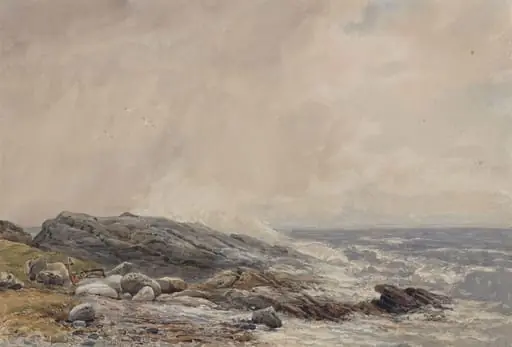
A Rocky Coast is a watercolor work on paper by the Hudson River School artist William Trost Richards. It dates from 1877 and is held in the collection of the Metropolitan Museum of Art.
About this work
Subject & Meaning
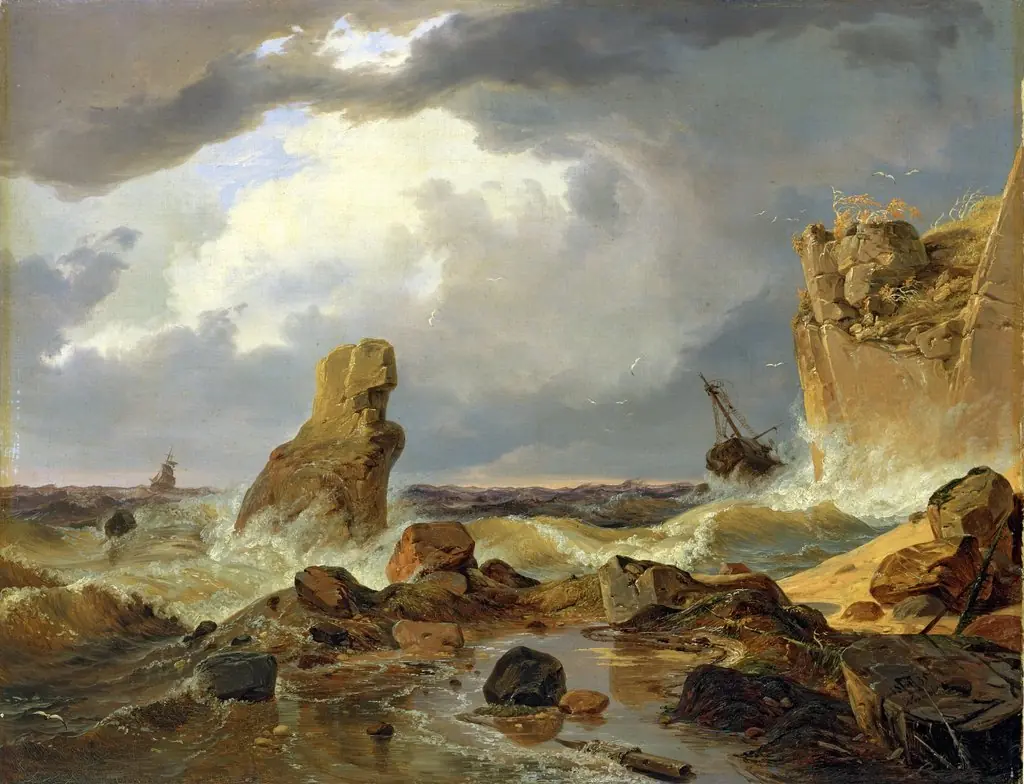
The watercolor A Rocky Coast portrays a rugged shoreline and turbulent sea, embodying the romantic fascination with untamed coastal scenery characteristic of 19th-century American landscape painting. The work's depiction of marine art underscores the era's interest in capturing the sublime forces of nature, reflecting broader cultural themes of exploration and the spiritual resonance of the American wilderness.
Richards' precise rendering of rocky formations and foaming surf conveys both the physical drama of the coast and an implicit symbolism of resilience amid adversity, aligning with contemporary artistic discourses on national identity and environmental awe.
Technique & Style
The work is classified within the tradition of marine art and is held in the collection of the Metropolitan Museum of Art's American Wing.
A Rocky Coast is executed in watercolor and gouache on fibrous brown wove paper. The choice of a toned, textured support influences the handling of the medium, allowing the artist to work in both transparent washes and more opaque, body-color passages typical of gouache. The work is classified within the tradition of marine art and is held in the collection of the Metropolitan Museum of Art's American Wing.
The combination of fluid watercolor with the denser, matte qualities of gouache on a warm-toned ground is consistent with Richards's mature approach to coastal subjects, producing a richly varied surface suited to the rendering of rock, water, and atmosphere.
History & Provenance
The watercolor painting A Rocky Coast was created by William Trost Richards in 1877. Executed in watercolor and gouache on fibrous brown wove paper, the work is currently held within the collection of the Metropolitan Museum of Art in New York. The artwork is classified under the museum's American Wing and depicts a marine landscape scene.
No specific information regarding the original commission, the identity of the initial patron, or the detailed chain of ownership prior to its acquisition by the museum is provided in the available records.
A Rocky Coast (1877) is a watercolor and gouache on fibrous brown wove paper landscape held by the Metropolitan Museum of Art. It is cataloged in the museum's collection as part of The American Wing.
The work entered the museum's inventory with no publicly disclosed accession number and has been exhibited in gallery settings dedicated to American landscape painting.
Depicting marine art, the piece was created in 1877 and remains part of the museum's permanent holdings.
Context
William Trost Richards painted A Rocky Coast in 1877, a watercolor and gouache work depicting a marine landscape now held by the Metropolitan Museum of Art as part of The American Wing collection. The composition exemplifies 19th-century American landscape painting's focus on atmospheric coastal scenes and reflects Richards' role in advancing realist marine art within the Hudson River School tradition. His treatment of rocky shorelines and turbulent seas contributed to evolving aesthetic approaches to maritime subjects in American art during the late 19th century.
The work's precise rendering of geological forms and luminous tonal effects influenced contemporaries and reinforced the genre's significance in documenting the American coastline. Its inclusion in The American Wing underscores its importance in institutional narratives of American artistic heritage.
Overview
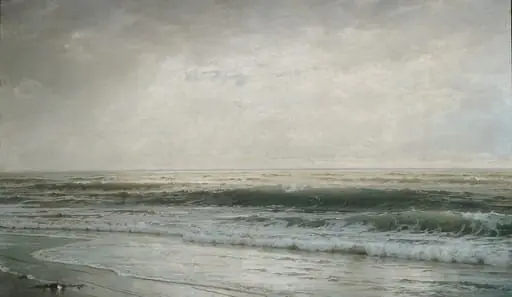
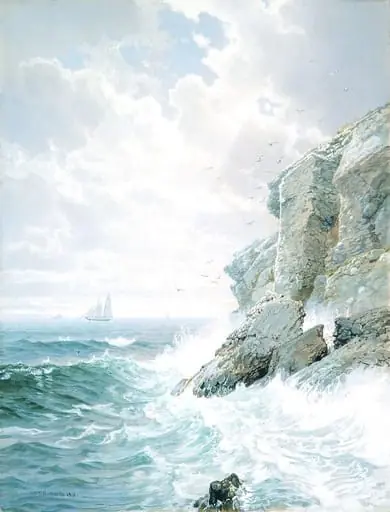
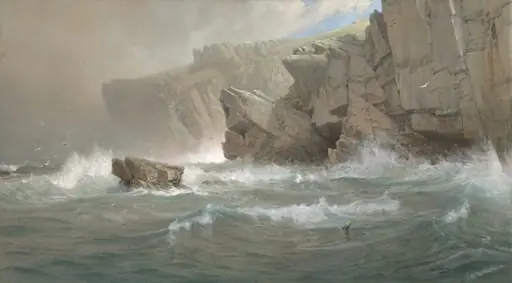
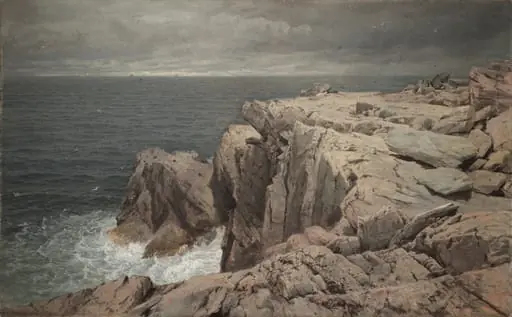
Painted in 1877, A Rocky Coast is a watercolor and gouache work by American artist William Trost Richards, a key figure in the Hudson River School and American landscape tradition. The composition depicts a rugged shoreline where jagged, dark cliffs descend into turbulent, churning waves. Richards employs a technique characteristic of his mature style, working rapidly with a wet brush to layer thin, translucent glazes that create atmospheric depth.
The surface texture emphasizes the physical properties of the scene: the foam appears thick and wet, contrasting with the sharp, solid forms of the rocks. Light interacts with the water in distinct, streaky bands, evoking the reflection of sunlight on wet sand. Executed on fibrous brown wove paper, the medium allows the warm tone of the support to influence the overall mood, unifying the cool blues of the sea with the earthy tones of the coast.
This work exemplifies Richards' shift toward a more precise, scientific observation of nature, capturing the dynamic energy of the Atlantic coast with both geological accuracy and poetic sensitivity.
Artist & collection