Artwork
Searchlight on Harbor Entrance, Santiago de Cuba
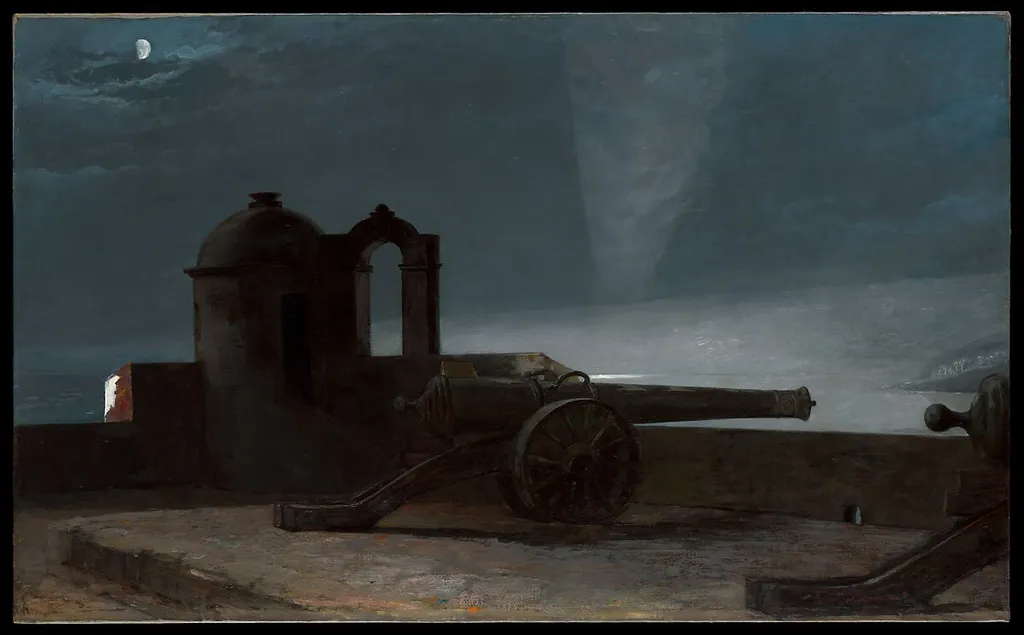
Searchlight on Harbor Entrance, Santiago de Cuba is an oil painting by the American Impressionist artist Winslow Homer. It dates from 1902 and is held in the collection of the Metropolitan Museum of Art.
About this work
Subject & Meaning
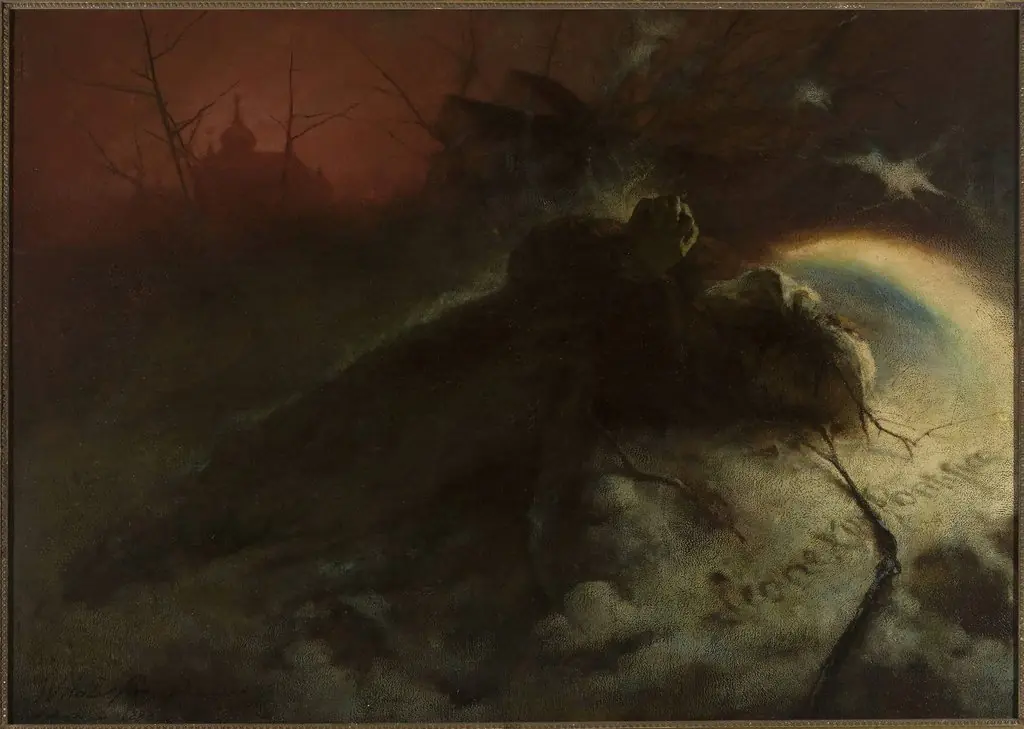
The painting shows a nocturnal harbor view at Santiago de Cuba, centered on a searchlight and two cannon positioned on the Morro fortress (Moon, cannon, night).
The painting shows a nocturnal harbor view at Santiago de Cuba, centered on a searchlight and two cannon positioned on the Morro fortress (Moon, cannon, night). The cannon symbolize the coastal defense that played a decisive role in the 1898 Battle of Santiago de Cuba, where the U.S. Navy destroyed a Spanish fleet, an event that attracted intense public scrutiny in 1901. Executed from sketches made in 1895 and completed in 1901, the work reflects Winslow Homer’s response to wartime publicity and his interest in naval power.
The moonlit atmosphere and the prominent cannon convey both the strategic importance of the harbor and the triumph of the American forces. The canvas, now displayed in Gallery 767 of the Metropolitan Museum of Art, preserves this historical narrative.
Technique & Style
Searchlight on Harbor Entrance, Santiago de Cuba (1901) is an oil on canvas painting executed by Winslow Homer from sketches made in 1895. The work is painted in oil paint on a canvas support and measures roughly 77.5 × 128.3 cm, as recorded in the Metropolitan Museum of Art catalog. It portrays two cannon atop the Morro fortress at night, with a moonlit sky that emphasizes the marine genre and the dramatic lighting of a naval battle.
The composition combines precise detail of the fort’s architecture with an atmospheric night scene, reflecting Homer’s interest in maritime subjects and the historical context of the 1898 Battle of Santiago de Cuba. The painting is part of the Metropolitan Museum of Art’s collection and is displayed in Gallery 767.
History & Provenance
Winslow Homer executed Searchlight on Harbor Entrance, Santiago de Cuba in 1901 as an oil on canvas painting. Although the final work dates to 1901, it was created using sketches the artist originally made during his visit to Cuba in 1895. The painting's creation was prompted by the renewed public interest in the Battle of Santiago de Cuba, which occurred in 1898, specifically following a 1901 court of inquiry that sought to assign credit among American naval commanders.
The artwork depicts the Morro Castle fortress and was acquired by the Metropolitan Museum of Art, where it remains part of the collection. The specific commission details regarding a private patron are not mentioned in the available sources, but the work was produced in response to the political and military discourse surrounding the 1898 naval engagement.
Searchlight on Harbor Entrance, Santiago de Cuba is held in the collection of the Metropolitan Museum of Art in New York, where it is classified within The American Wing. The oil-on-canvas work, created in 1901, is currently on view in Gallery 767 of the museum. While specific accession numbers are not provided in the available records, the painting's presence in the Met's collection is confirmed as of 2018.
The artwork, measuring 77.5 cm in height and 128.3 cm in width, depicts a night scene featuring cannons and the moon at the Morro Castle in Cuba. Its display in Gallery 767 situates it among other significant American works, reflecting its status as a notable marine painting by Winslow Homer.
Overview
Winslow Homer's "Searchlight on Harbor Entrance, Santiago de Cuba" is an oil on canvas painting from the early 20th century. It captures a nocturnal scene at the entrance to Santiago de Cuba's harbor, featuring a historic Spanish fortress and the beam of a searchlight cutting through the darkness. This work is part of the Metropolitan Museum of Art's collection.
Artist & collection
Artist
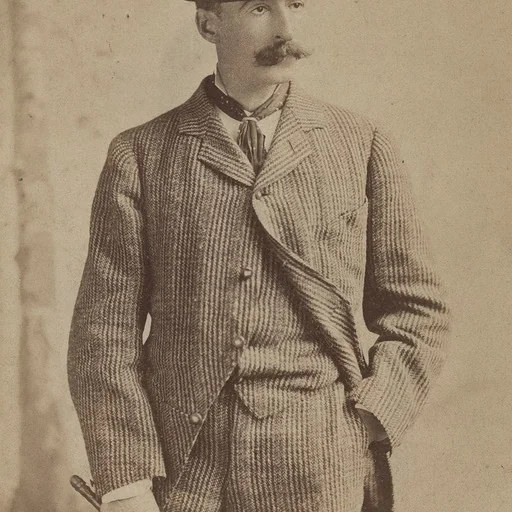
Winslow Homer (February 24, 1836 – September 29, 1910) was an American landscape painter and illustrator, best known for his marine subjects.