Artwork
The Brierwood Pipe
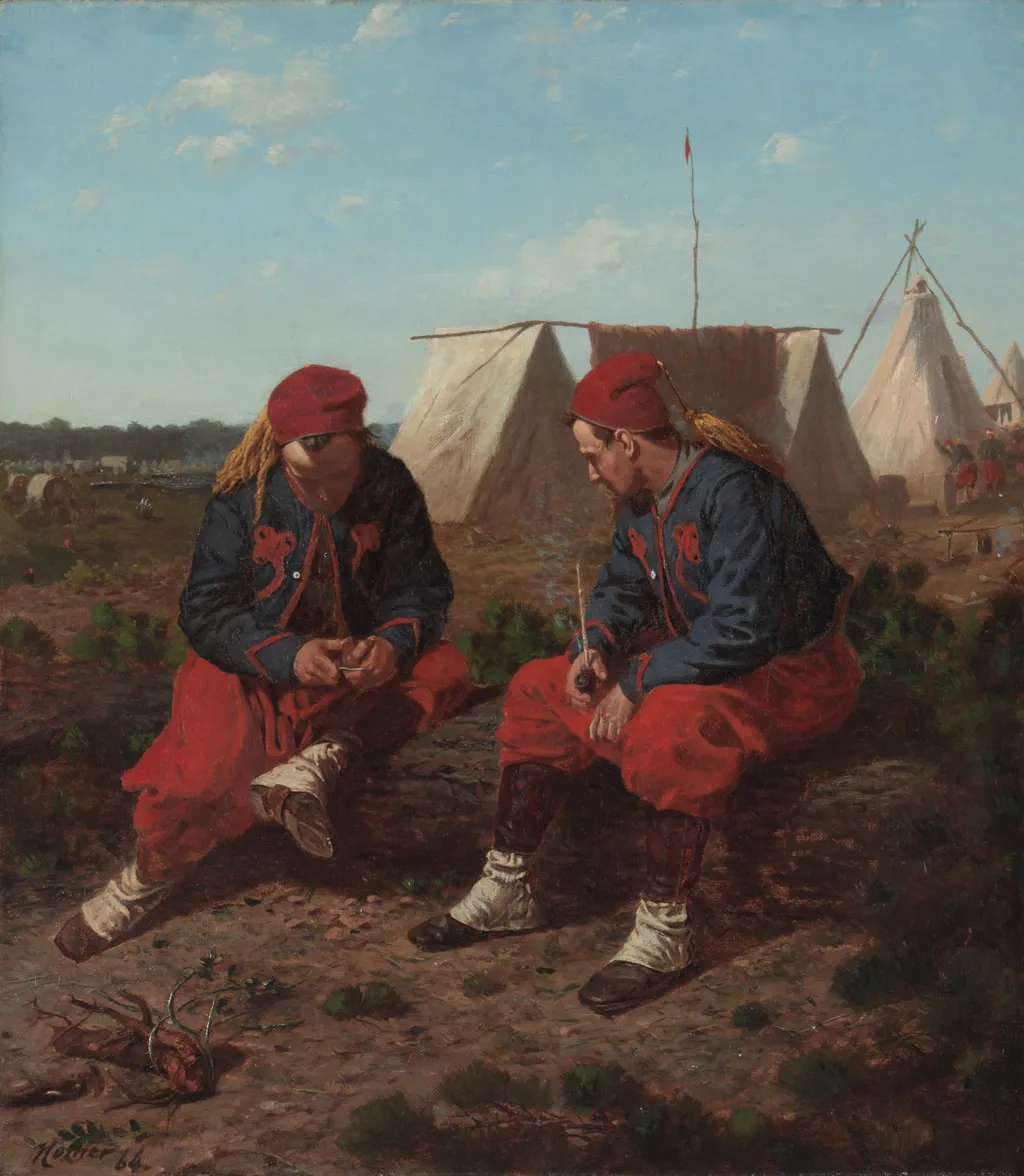
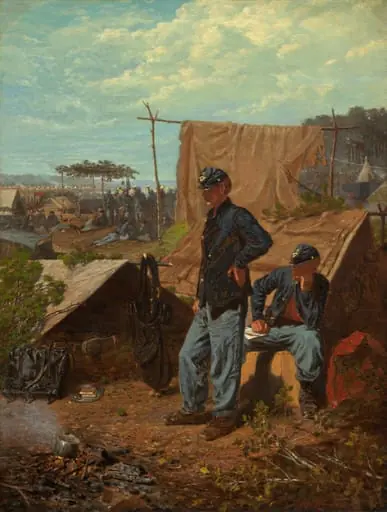
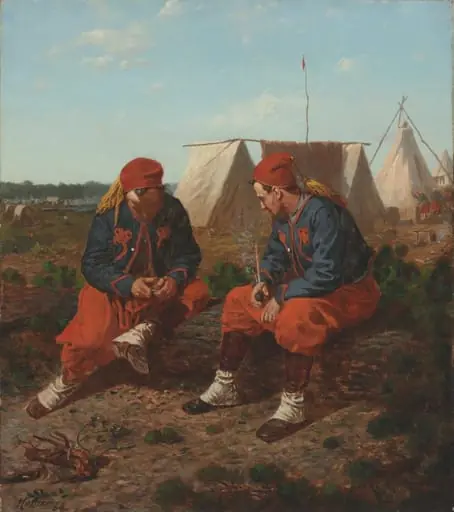
The Brierwood Pipe is an oil painting by the American Realist artist Winslow Homer. It dates from 1864 and is held in the collection of the Cleveland Museum of Art.
About this work
Subject & Meaning
The title echoes a contemporary poem, "The Brier-Wood Pipe," that celebrated the same regiment, linking the visual image to popular culture.
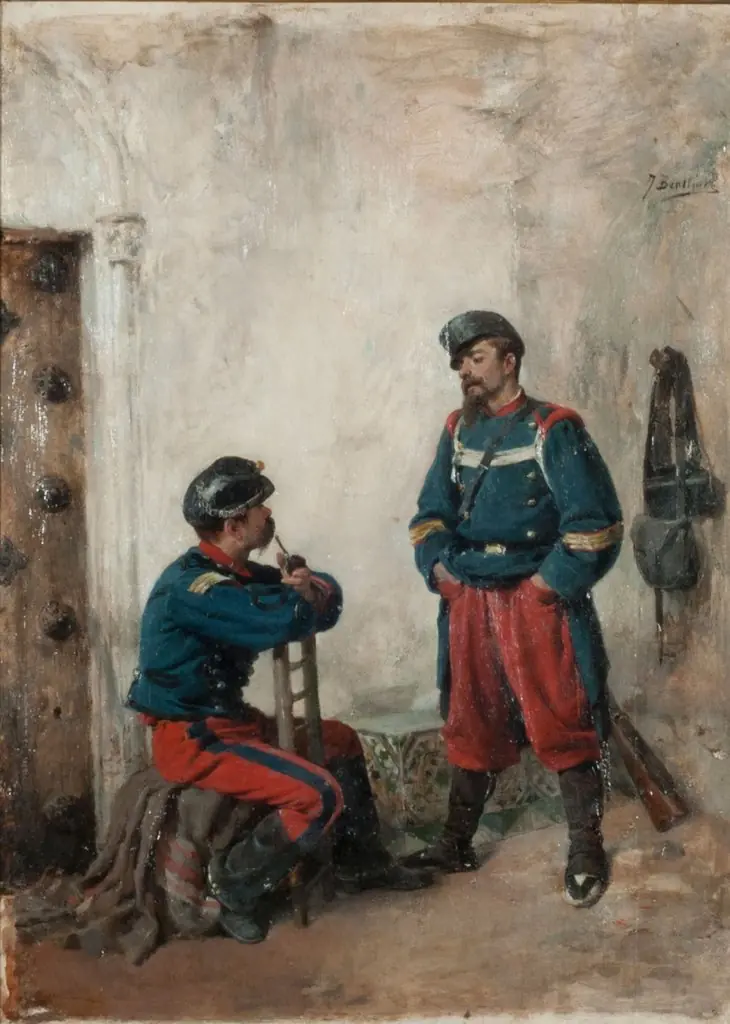
The Brierwood Pipe shows two Union soldiers from the 5th New York Volunteer Infantry, known as the Duryee Zouaves, seated while fashioning a smoking pipe from brier root. Their distinctive Zouave uniforms and the pipe-making activity identify the work as a genre scene of Civil-War-era camp life. The title echoes a contemporary poem, "The Brier-Wood Pipe," that celebrated the same regiment, linking the visual image to popular culture.
By portraying the soldiers engaged in a quiet, craft-like pastime, Homer highlights camaraderie and the everyday humanity behind the military façade, suggesting that even amid war, moments of ordinary industry and leisure persisted.
Technique & Style
The Brierwood Pipe is executed in oil paint on a stretched canvas support, a technique typical of Winslow Homer's mid-19th-century practice. The work belongs to the genre-scene category and exemplifies American realism through its precise rendering of light and texture. Homer depicts two members of the Duryee Zouaves, a subject drawn from the 5th New York Volunteer Infantry, rendered with careful brushwork that emphasizes the folds of uniform and the tactile quality of the pipe. The composition balances figure and background, creating a narrative moment within a modest interior space.
History & Provenance
The Brierwood Pipe is an oil painting on canvas completed by Winslow Homer in 1864, depicting two members of the 5th New York Volunteer Infantry (Duryee Zouaves). The work was created in the United States and entered a series of private collections, Helen Foster, Zabdiel Boylston Adams, Annie Adams Fields, and James Thomas Fields, before joining the Cleveland Museum of Art's holdings. As of 2012, the canvas has been on loan to and on display at the Smithsonian American Art Museum, though it remains part of the Cleveland Museum of Art's collection.
Context
The Brierwood Pipe belongs to Winslow Homer's early Civil War-era production, painted in 1864 during his engagement with military subjects. The work is classified as genre art within the movement of American realism, depicting two Zouaves of the 5th New York Volunteer Infantry (Duryee Zouaves), one of the most recognizable uniformed units in the Army of the Potomac. Its title alludes to a popular contemporary poem about the 5th New York Zouaves titled "The Brier-Wood Pipe."
The painting is also known under variants such as Making Brier-root Pipes and Making Brierwood Pipes, reflecting its identification with the everyday ritual of pipe-making among soldiers. Held in the Cleveland Museum of Art and exhibited at the Smithsonian American Art Museum, the canvas occupies a place within Homer's broader documentary output from the period, linking vernacular military life to literary and popular culture of the day.
Overview
The Brierwood Pipe is an oil painting created by American artist Winslow Homer in 1864. The work portrays two soldiers from the 5th New York Volunteer Infantry, known as the Duryee Zouaves. They are depicted in a military camp, with one man holding a pipe while the other observes.
This piece offers a glimpse into the daily life of Union soldiers during the American Civil War, rendered with a focus on detail and color.
Own this work as a print
Artist & collection
Artist
Winslow Homer (February 24, 1836 – September 29, 1910) was an American landscape painter and illustrator, best known for his marine subjects.