Artwork
Northeaster
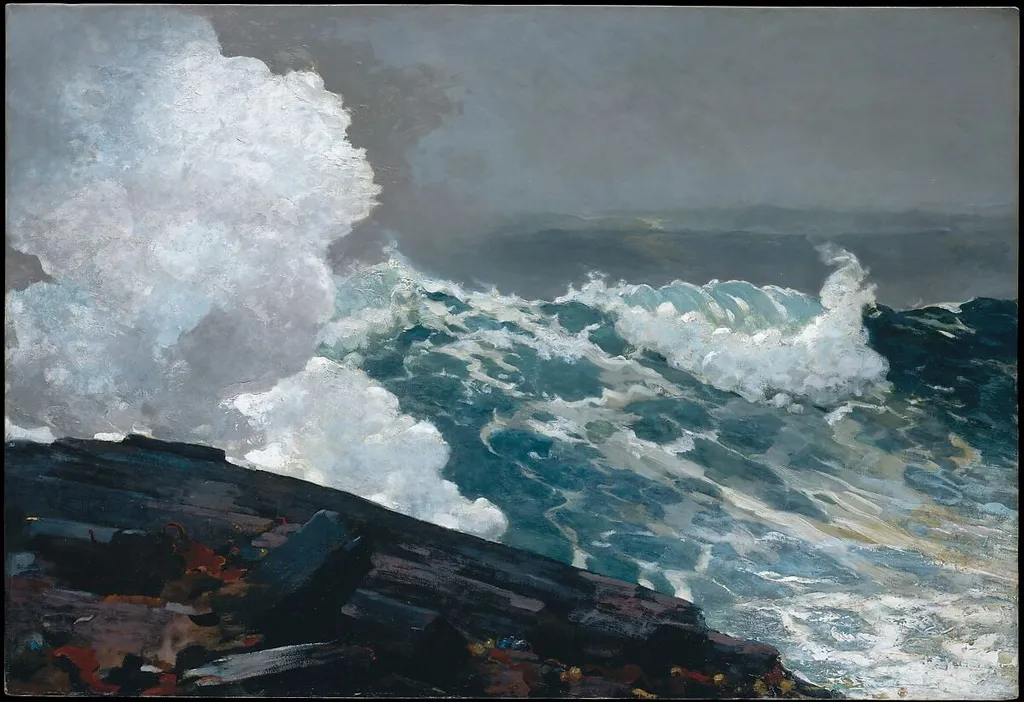
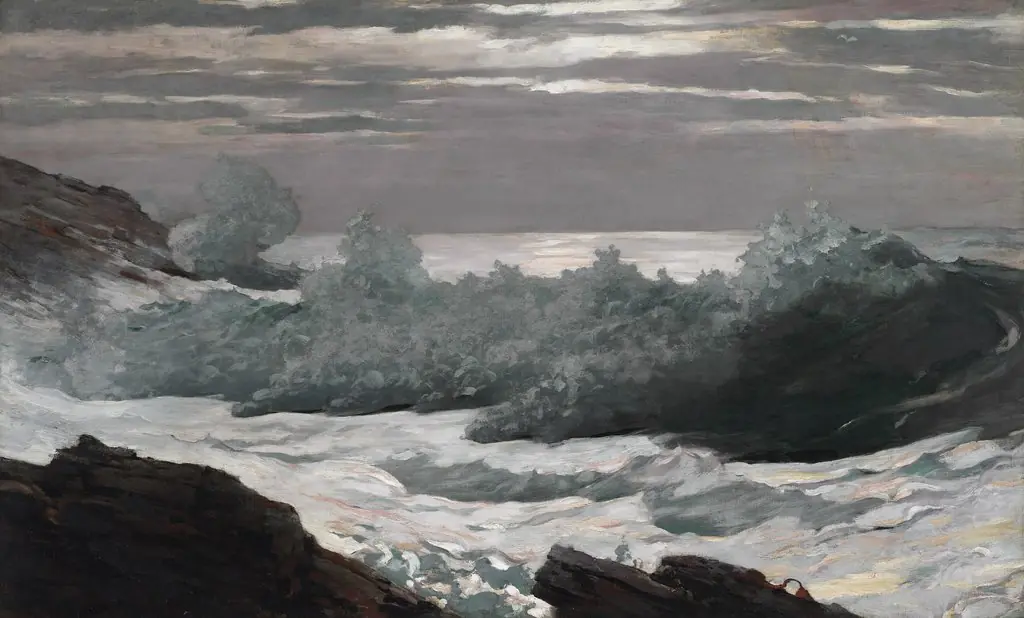
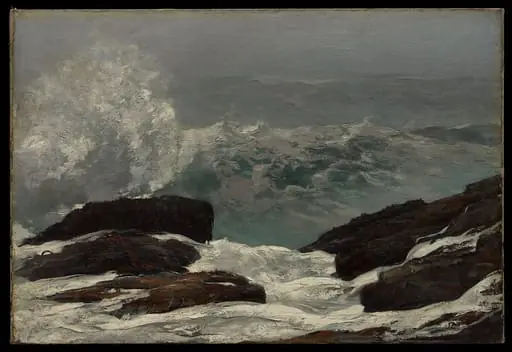
Northeaster is an oil painting by the American Impressionist artist Winslow Homer. It dates from 1895 and is held in the collection of the Metropolitan Museum of Art.
About this work
Subject & Meaning
Homer renders the nor’easter storm that sweeps the northeastern United States, emphasizing the relentless force of wind and water.
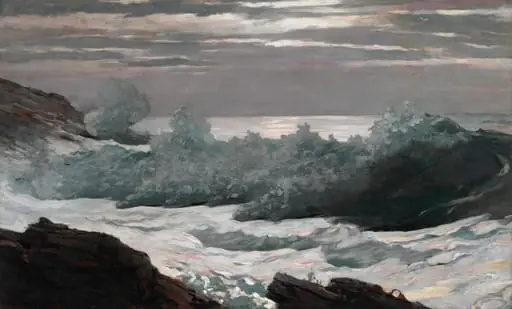
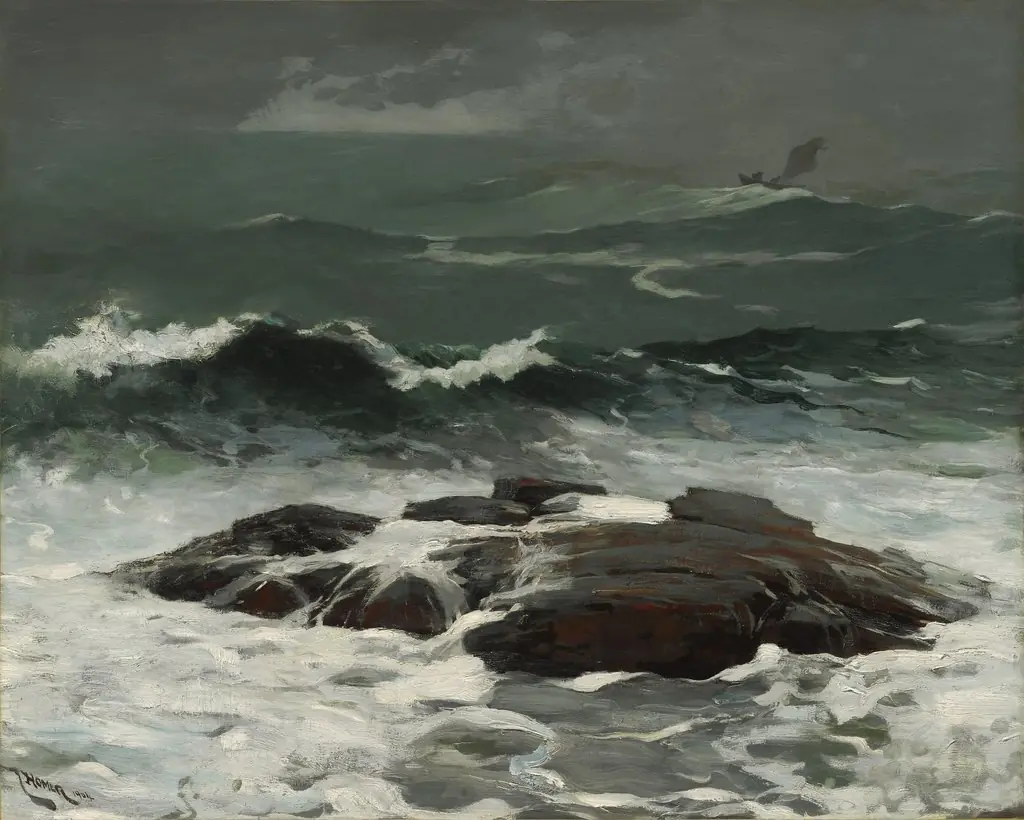
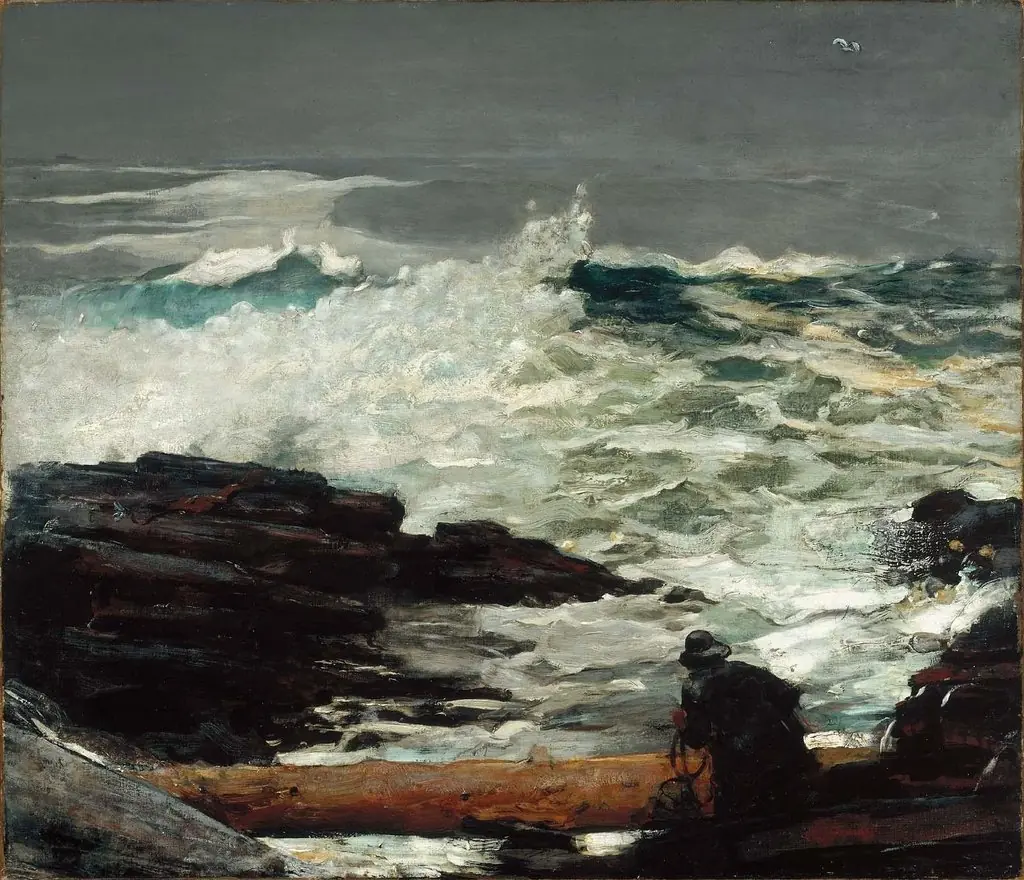
The painting shows a tempestuous Atlantic coast, with towering waves crashing against jagged rocks under a dark sky. Homer renders the nor’easter storm that sweeps the northeastern United States, emphasizing the relentless force of wind and water. The composition dramatizes the clash between sea and shore, symbolizing nature’s raw power and the precarious relationship between human activity and the marine environment.
By focusing on the struggle of elements, the work conveys both the danger and the sublime beauty of the ocean, reflecting Homer’s fascination with the sea’s dual capacity to endanger and inspire awe.
Technique & Style
Winslow Homer executed Northeaster using oil paint on a canvas support, a medium consistent with his late-19th-century marine works. The painting measures 34.5 by 50 inches and is classified within the American Barbizon school movement. Stylistically, the work focuses on the dramatic confrontation between the sea and a rocky shore, depicting the raw power of a northeaster storm with crashing wind waves.
Homer, who settled in Maine in 1884, increasingly isolated the sea as his primary subject during this period, moving away from human figures to capture the dangerous beauty of nature. The composition emphasizes the struggle of elements, rendering the turbulent atmosphere of the storm. Although the work is often associated with the year 1895, historical records indicate that Homer reworked the canvas as late as 1901 to refine its final appearance.
History & Provenance
Winslow Homer painted Northeaster during his long residence at Prouts Neck, Maine, where he had a purpose-built studio completed in 1884. The work was initially dated 1895 but Homer reworked it by 1901. Its documented ownership begins with M. Knoedler and Company in New York in 1895, after which it passed to Thomas B. Clarke, also in New York, between 1895 and 1896.
The canvas was then returned to Homer in Maine, before re-entering the stock of Knoedler in 1900. From 1901 to 1910 the painting was held by the New York collector George A. Hearn, who subsequently gave it to the Metropolitan Museum of Art, where it remains in the American Wing.
Northeaster is housed in the Metropolitan Museum of Art in New York, where it is part of the American Wing collection (The American Wing classification). The painting was originally sold through M. Knoedler and Company in 1895, subsequently owned by Thomas B. Clarke, returned to Winslow Homer, then exhibited through Knoedler again in 1900 before being acquired by George A. Hearn, who donated it to the museum in 1910. It has been on view in the museum’s American Wing since the donation, allowing public access to the work.
Context
Northeaster is one of Winslow Homer’s late‑19th‑century marine paintings, created during his residence at Prouts Neck, Maine, where he turned increasingly to stormy seas and the struggle between waves and rocky shore. Contemporary commentary has called his seascapes “among the strongest expressions in all art of the power and dangerous beauty of the sea,” reflecting a critical appreciation of his dramatic treatment of nature. Scholarship on the work is signaled by further‑reading references to studies by Nicolai Cikovsky Jr., Elizabeth Johns, and Randall C. Griffin.
Situated within the American Barbizon school, the painting exemplifies Homer’s realist marine oeuvre and, as part of the Metropolitan Museum of Art’s collection, holds a recognized place in the history of American art.
Legacy
Following its acquisition by New York collector George A. Hearn in 1901, Northeaster entered the Metropolitan Museum of Art in 1910 through Hearn’s bequest. By the mid-twentieth century, scholars positioned Homer’s late seascapes, including Northeaster, as canonical expressions of American naturalism, emphasizing their raw depiction of elemental struggle. Later art criticism has cited the painting as a defining image of the dangerous beauty of the North Atlantic, aligning it with Homer’s broader legacy in marine art.
Its frequent inclusion in major American art surveys and exhibitions has reinforced its status as a touchstone for discussions of late nineteenth-century realism and environmental drama.
Overview
Northeaster, an oil on canvas by late-19th-century American painter Winslow Homer, captures a dramatic seascape. It depicts the intense interaction between a stormy ocean and a rugged coastline. This work is one of several marine subjects Homer created while living in Maine and is currently displayed in The American Wing of the Metropolitan Museum of Art.
Artist & collection
Artist
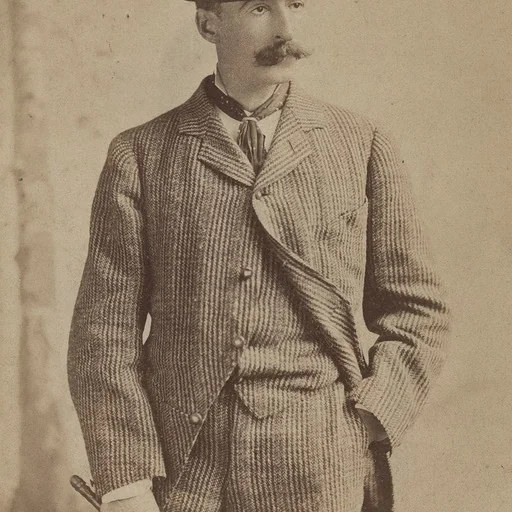
Winslow Homer (February 24, 1836 – September 29, 1910) was an American landscape painter and illustrator, best known for his marine subjects.