Artwork
Unidentified British Navy Officer
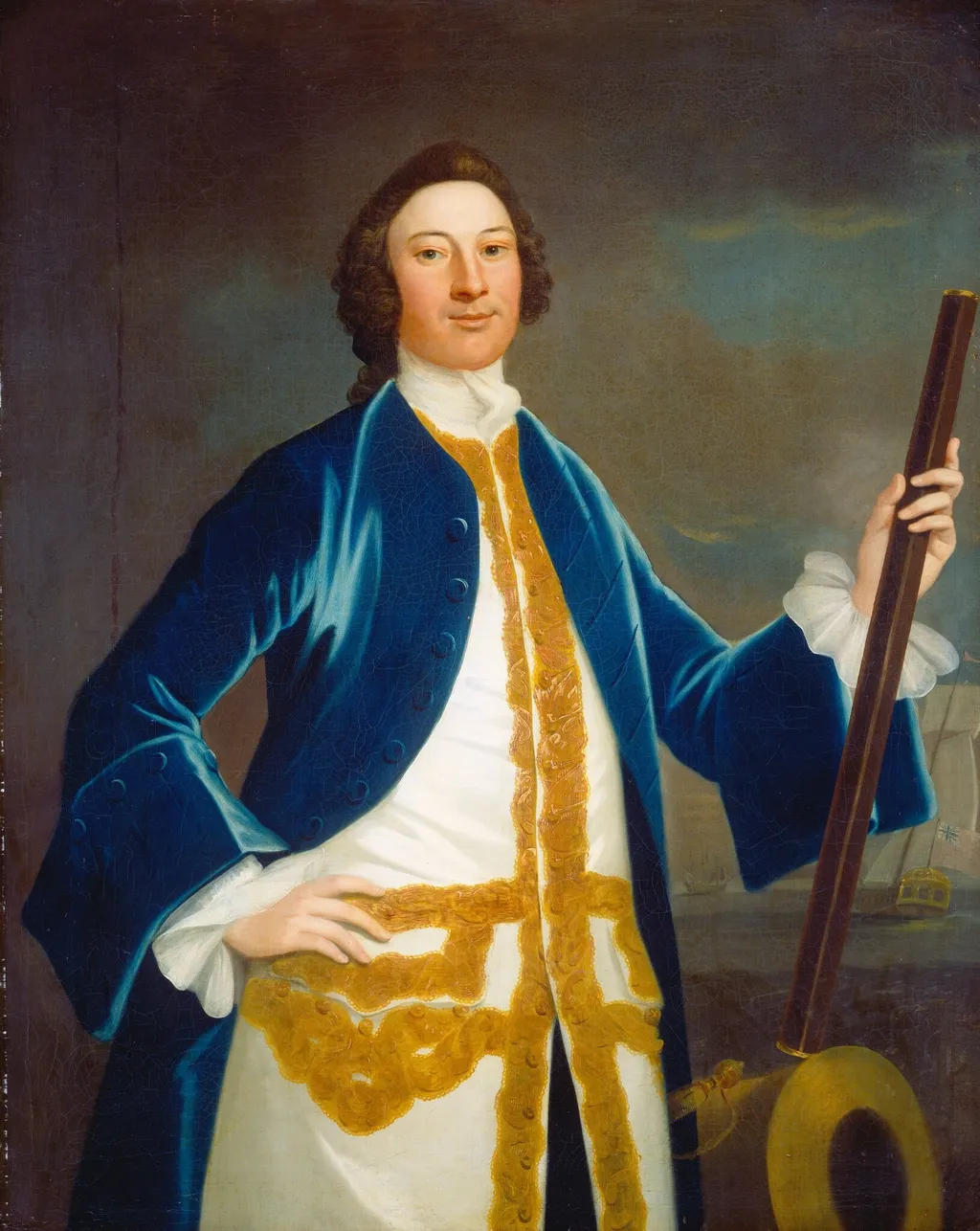
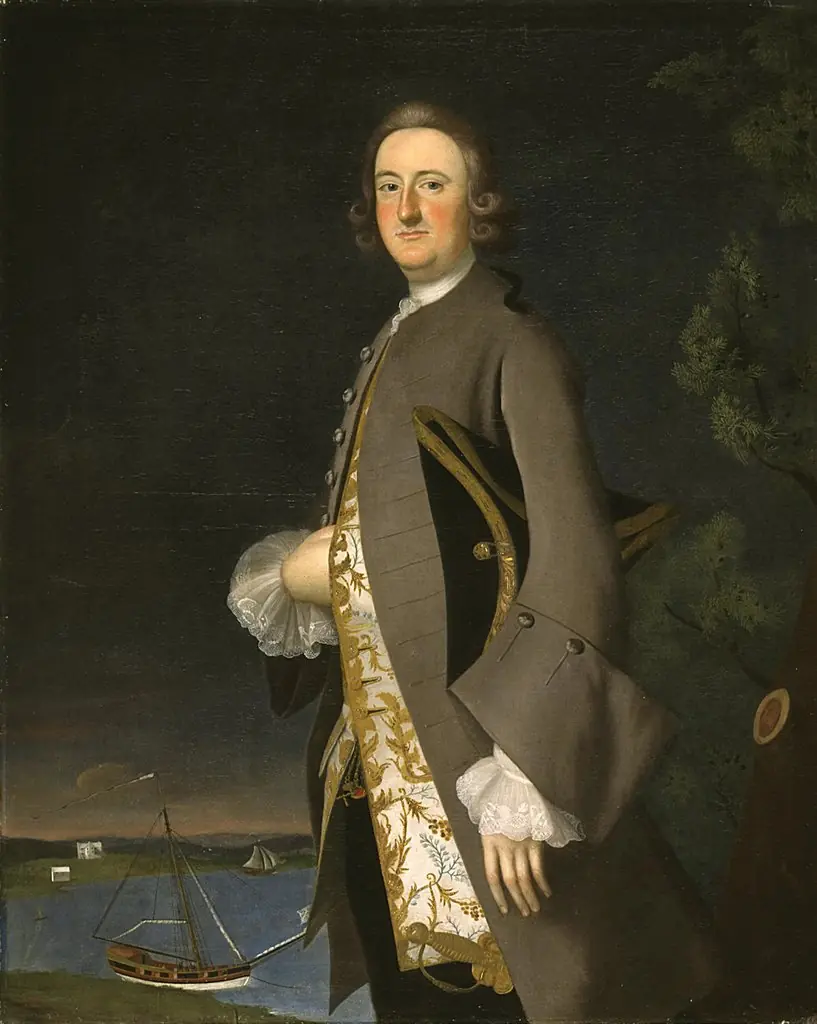
Unidentified British Navy Officer is an oil painting by the Baroque artist John Wollaston. It dates from 1745 and is held in the collection of the National Gallery of Art.
About this work
Subject & Meaning
This anonymity invites speculation about the sitter's role within the navy and the broader cultural values of representation and status in Georgian Britain.
A mid-eighteenth-century oil on canvas portrait shows an unidentified British naval officer in formal attire, reflecting contemporary expectations of rank and authority. The sitter's uniform and posture convey notions of honor and service, while the lack of personal identifiers leaves his precise identity unknown. This anonymity invites speculation about the sitter's role within the navy and the broader cultural values of representation and status in Georgian Britain.
Technique & Style
Painted in 1745, this portrait is executed in oil on canvas. The work measures 127.3 cm in height and 101.9 cm in width, adhering to the standard half-length format typical of eighteenth-century British portraiture. As a formal portrait by John Wollaston, the piece employs the medium's capacity for rich texture and detailed rendering of naval attire and facial features.
The painting remains part of the Andrew W. Mellon collection at the National Gallery of Art in Washington, D.C., preserving its original material integrity.
History & Provenance
John Wollaston painted the unidentified British Navy officer in 1745. The work entered the collection of Thomas B. Clarke in March 1927, acquired from M. Knoedler & Co. and recorded in his estate's records. It was subsequently sold from Clarke's collection on 29 January 1936 through the same dealer and transferred to the A.W. Mellon Educational and Charitable Trust.
The painting was gifted to the National Gallery of Art in 1947, where it remains in the Andrew W. Mellon collection today.
The painting is held by the National Gallery of Art in Washington, D.C., as part of the Andrew W. Mellon Collection. It entered the Mellon holdings in 1936, when it was sold through M. Knoedler & Co., New York, as part of the Thomas B. Clarke collection to The A.W. Mellon Educational and Charitable Trust, Pittsburgh. The work was subsequently given to the National Gallery of Art in 1947.
Prior to its acquisition by Clarke on 2 March 1927, the portrait was owned by Rose M. (Mrs. Augustus) de Forest in New York. Mrs. de Forest supplied a provenance tracing the work from the sitter's second wife Anne Watts Kennedy to her cousin Stephen de Lancey in North Salem, New York, and through subsequent family descendants; however, no evidence has been found to support that history for this group of portraits.
The painting was exhibited in 1928 at the Philadelphia Museum of Art as part of the catalogue _Portraits by Early American Artists of the Seventeenth, Eighteenth and Nineteenth Centuries Collected by Thomas B. Clarke_.
Overview
John Wollaston’s oil portrait, dated to around 1745, depicts an unidentified officer of the British Navy. Rendered in a formal pose, the figure stands before a dark, muted backdrop, his gaze directed straight at the viewer, conveying a sense of composure and authority.
Context
During the 1740s, British naval officers often commissioned portraits to assert status and commemorate service. Wollaston’s work aligns with this practice, offering a visual record of naval attire and the aesthetic conventions of the period.
Own this work as a print
Artist & collection


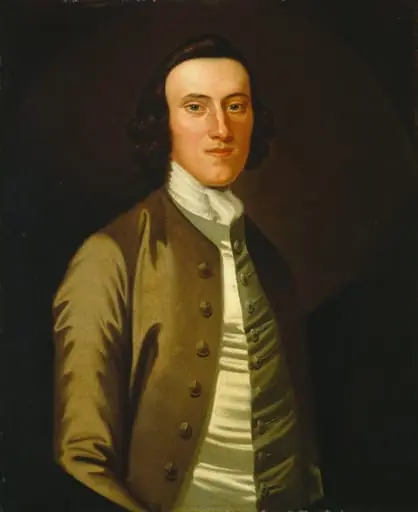
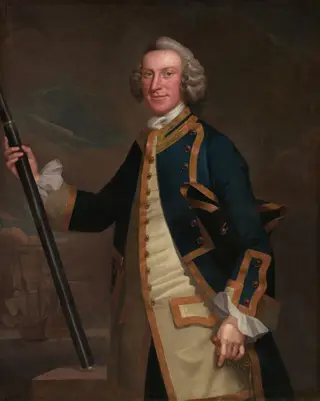
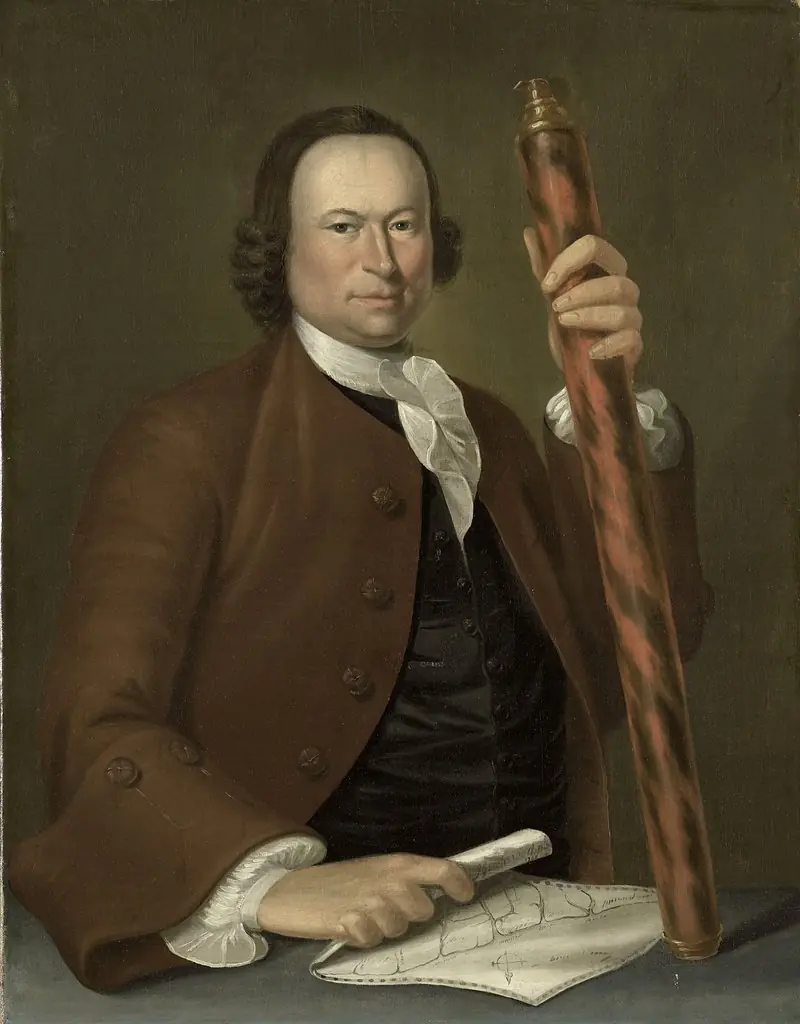 Portrait of an officer at sea with a map and binoculars in hand
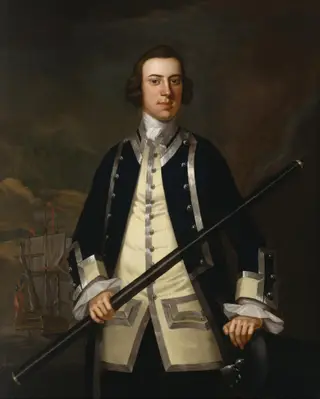 Portrait of a Naval Officer, Known as Augustus Keppel
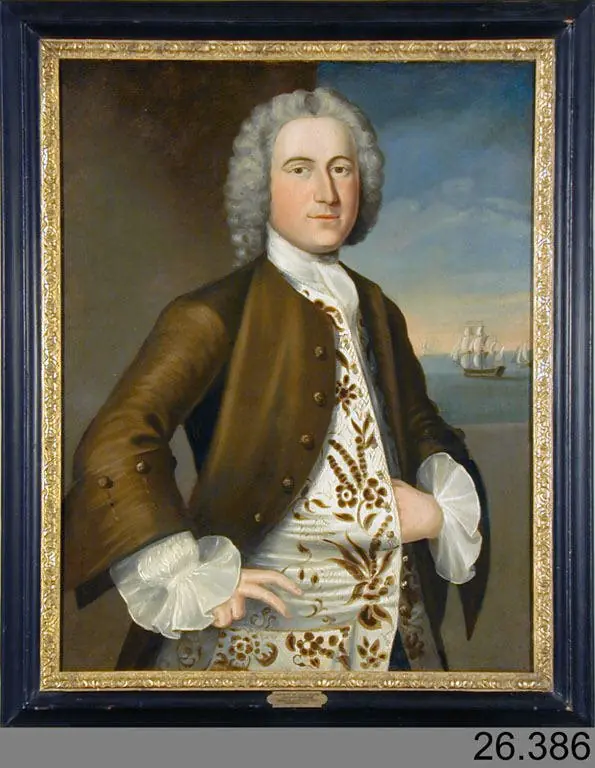 John Adams
 Portrait of Captain John Pigott
 William Axtell
 Thomas Dongan
 Portrait of William Pepperrell
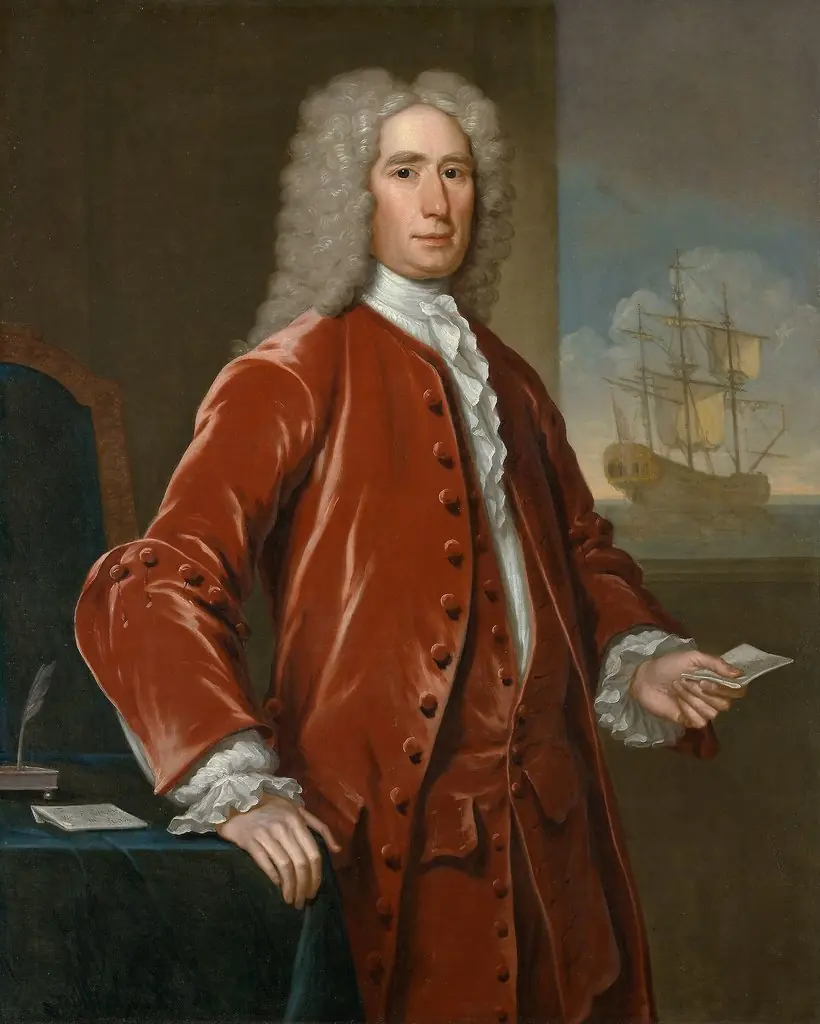 Richard Bill
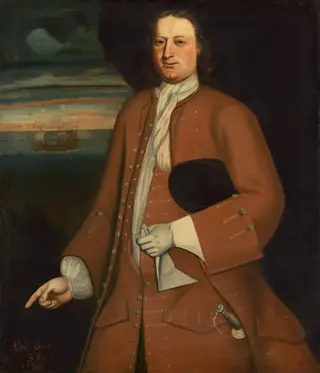 Mr. Willson
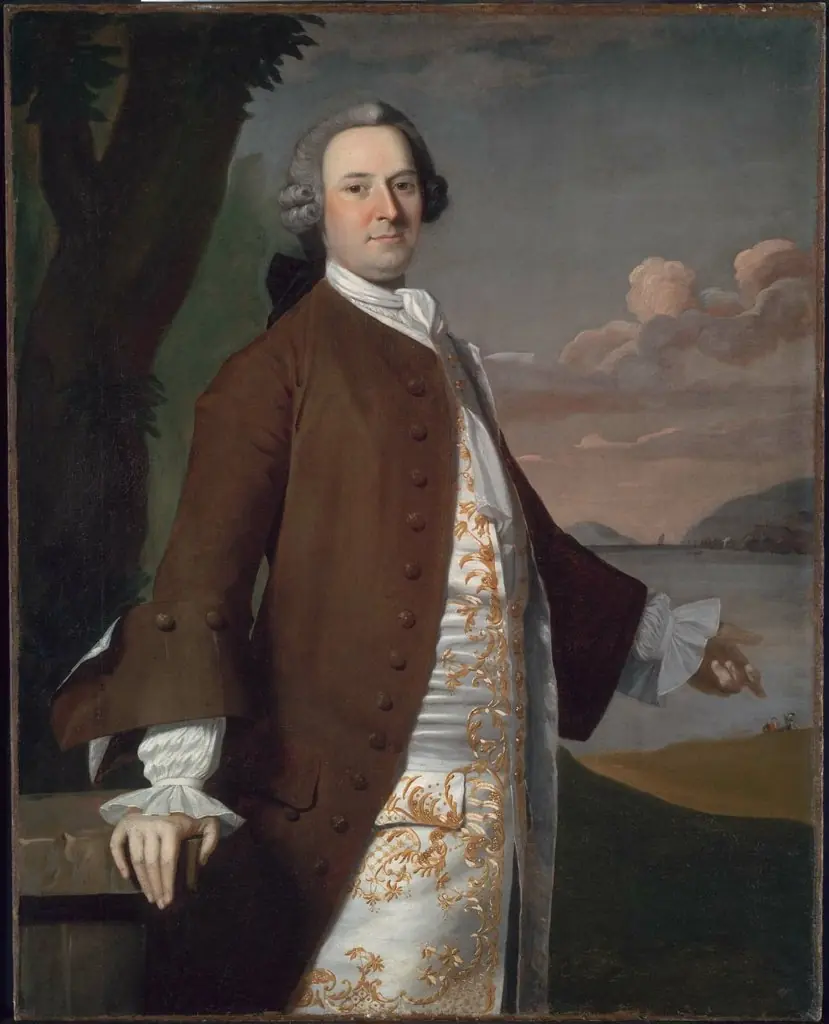 Isaac Winslow
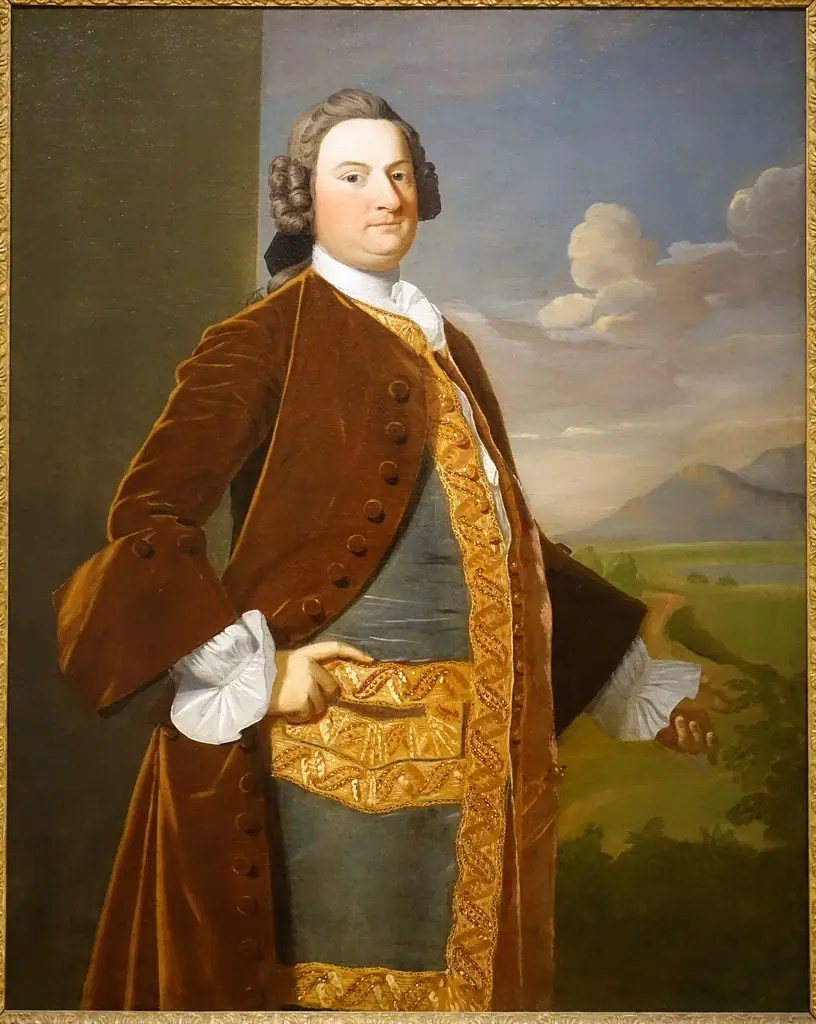 Judge Richard Saltonstall by Robert Feke
- Portrait of a Naval Officer